

Store managers are the backbone of every retail location. They are responsible for staffing, merchandising, compliance, and customer experience, often all at once and all day long. Yet for many, the reality of the role looks less like leadership and more like firefighting.
Email threads go unread. Spreadsheets sit untouched. Paper checklists disappear between shifts. The tools meant to support store operations haven’t kept up with the complexity of the job, and managers are left to fill the gaps themselves.
It’s no surprise that 40% of retail managers report daily stress and burnout due to workload and lack of support, and that 67% admit they sometimes have to “make it up as they go along” when coordinating store operations.
This isn’t a reflection of store managers’ ability. It’s the result of operational systems that were never designed for the pace of modern retail.
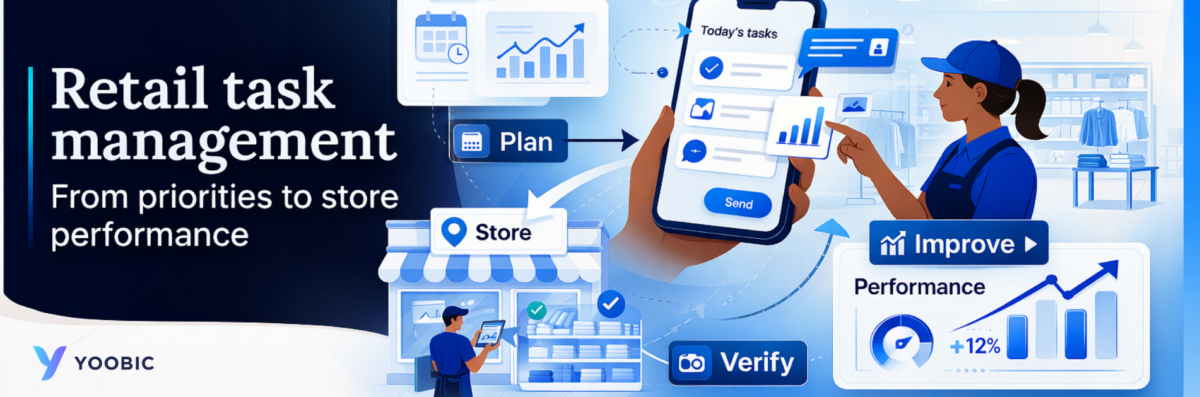
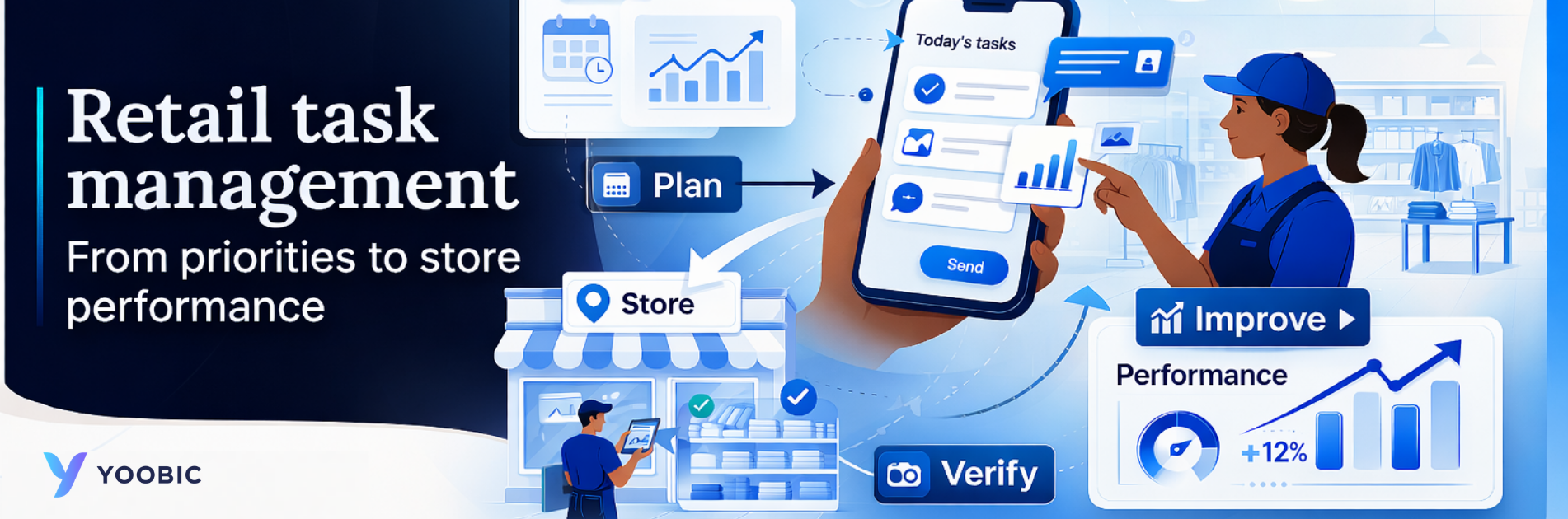
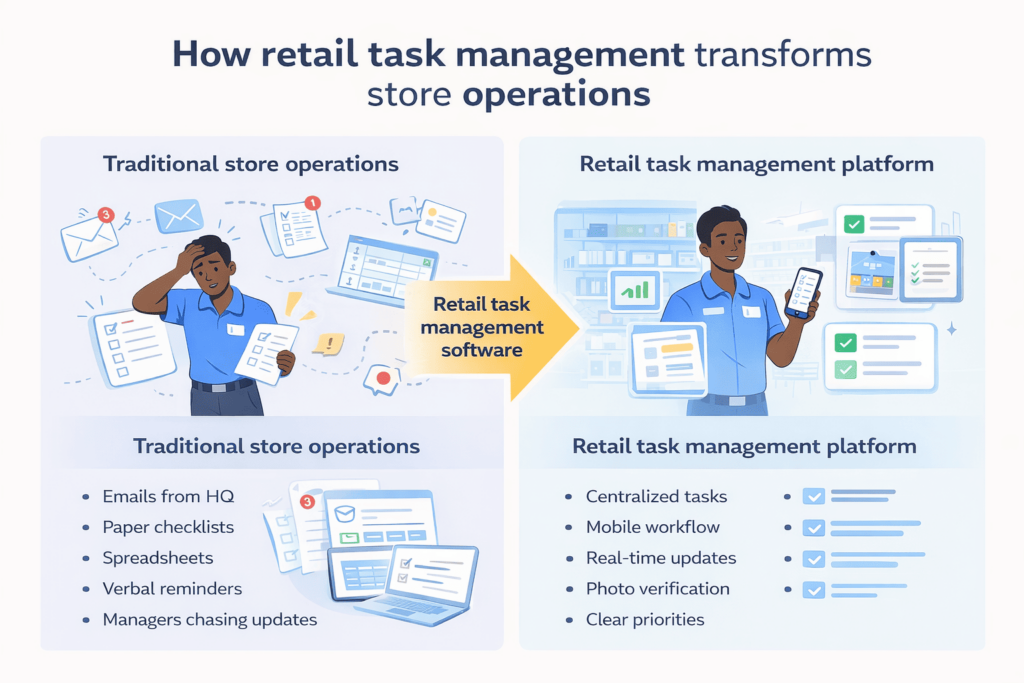
Retail task management software changes that. Instead of juggling scattered instructions, store managers gain a single mobile system to coordinate work, assign tasks, verify execution, and track store performance directly from the sales floor.
→ For a deeper look at how these systems work in practice, see our complete guide to retail task management.
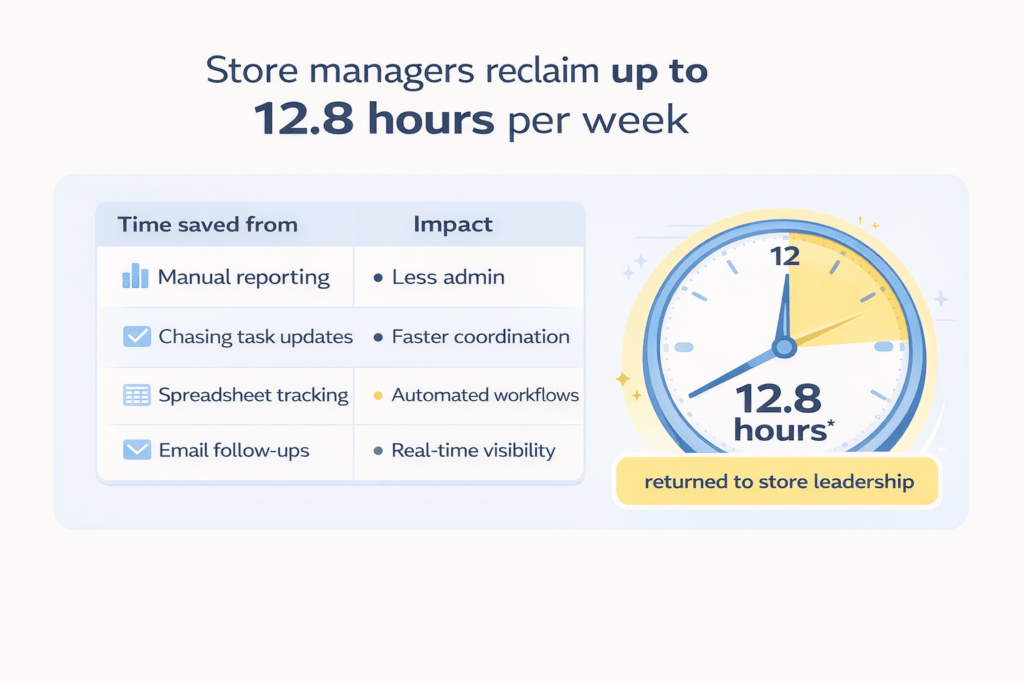
When store operations are digitized the way managers actually work, the impact is immediate. Managers can reclaim up to 12.8 hours per week previously lost to administrative coordination, time that can be reinvested in coaching teams, supporting customers, and running a store with confidence.
TL;DR:
Retail task management software gives store managers a structured way to run daily store operations without relying on scattered emails, spreadsheets, or paper checklists.
Instead of chasing updates or piecing together instructions, managers use a single mobile platform to:
- prioritise daily store operations and opening or closing workflows
- coordinate tasks across frontline teams during each shift
- verify execution in real time through checklists, photos, and audits
- manage compliance, maintenance requests, and operational reporting
- monitor store performance and operational trends
By turning operational standards into clear, trackable tasks, these platforms remove much of the invisible administrative workload that slows managers down.
The result is faster execution, stronger accountability across the store, and more time for managers to focus on what actually drives performance: coaching teams, supporting customers, and leading the sales floor.
What does retail task management software allow store managers to do?
At its core, retail task management software gives store managers a structured way to run daily store operations. Instead of coordinating work through scattered tools and verbal reminders, operational standards are turned into clear, trackable tasks that the entire team can see and act on.
This structure allows managers to move from reactive problem-solving to coordinated execution across the store.
Prioritise daily store operations
Every store day starts with a long list of responsibilities: merchandising updates, stock checks, safety procedures, promotional launches, and more.
Without a clear system, these tasks often arrive through multiple channels. A message from headquarters in one email. A merchandising guideline buried in a document. A reminder from a regional manager during a call.
Retail task management software consolidates these instructions into a single workflow. Managers can review daily priorities, opening procedures, and operational updates in one place, helping the team focus on the work that matters most first.
This structure also reduces “task completion bias,” the tendency for teams to complete easier tasks before the most important ones when priorities are unclear.
Assign and coordinate work across the team
Once priorities are clear, managers need to coordinate how that work gets done across the team.
Task management platforms allow store managers to assign tasks based on:
- shift schedules
- store zones or departments
- operational priorities
As the day unfolds, managers can adjust workloads in real time, reassign tasks, and track progress across the store.
Because most platforms are mobile-first, managers can coordinate these activities directly from the sales floor rather than returning to the back office to update spreadsheets or send emails.
Verify execution across the store
In retail, assigning tasks isn’t enough. Execution has to be verified.
Retail task management software provides built-in validation tools that allow managers to confirm that work has been completed to standard. This often includes:
- photo uploads of completed displays or store areas
- digital checklists for operational procedures
- compliance confirmations for safety and regulatory tasks
These verification steps create a clear audit trail and prevent “pencil-whipping,” where tasks are marked complete without actually being done.
The result is more consistent execution across stores and better visibility for both store and regional leadership.
Manage operational issues and store reporting
Beyond daily tasks, store managers constantly deal with unexpected operational issues.
Retail task management platforms give managers a structured way to handle these situations, including:
- submitting maintenance requests
- managing product recalls or compliance alerts
- logging incidents or safety issues
- submitting end-of-day operational reports
Instead of writing manual emails or compiling spreadsheets, managers can complete these workflows directly in the platform. Data such as sales metrics or staffing levels can often be pulled in automatically, reducing the time spent on administrative reporting.
For many retailers, this shift alone can return hours of time to store managers each week, time that can be reinvested in coaching teams and supporting customers.
→ One example of this in practice comes from Mattress Firm, where automated task management reduced 90-minute administrative routines to just 10 minutes across their store network.
Why does retail task management software give store managers time back on the sales floor?
Retail task management software reduces the hidden administrative workload that consumes much of a store manager’s day. By centralising operational tasks, reporting, and team coordination into a single system, managers spend less time managing processes and more time leading teams on the sales floor.
Retail managers often deal with what researchers call “invisible work.” This includes resolving scheduling conflicts, responding to corporate requests, troubleshooting systems, and following up on incomplete tasks.
Individually, these activities seem minor. Together, they consume hours of the workday and pull managers away from the sales floor.
Digital task management platforms reduce this coordination burden by turning store standards into structured workflows. Tasks, priorities, and completion status all live in one place, removing the need to track responsibilities across multiple tools or rely on memory.
The time impact can be significant. Retailers implementing task management systems report up to 12.8 hours per week returned to store managers, previously spent on manual coordination and administrative work.
That time allows managers to focus on the work that actually drives store performance:
- coaching associates
- supporting customers
- monitoring execution during peak trading periods, often called “golden hours”
Reclaiming a manager’s time on the floor becomes even more critical during high-pressure trading periods like the holiday rush.
→ Our playbook on empowering frontline teams explores how retailers maintain consistent execution when store traffic, promotions, and operational demands all peak at once.
Instead of operating as back-office administrators, store managers can spend more time leading teams directly on the floor. In retail, that leadership presence often makes the difference between average execution and exceptional store performance.
How does retail task management software improve store execution?
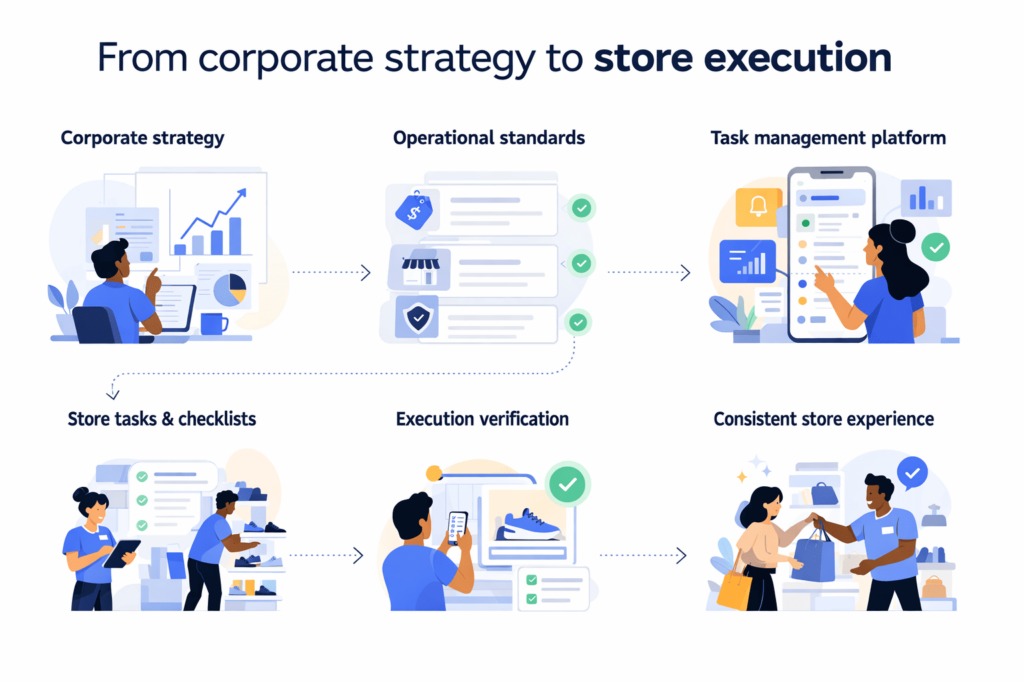
Retail task management software improves store execution by turning operational standards into clear, trackable tasks that store teams can follow and verify. This allows retailers to ensure merchandising, compliance, and operational routines are executed consistently across every location.
In retail, the challenge is rarely defining what should happen in stores. The difficulty is ensuring those standards are implemented the same way across dozens or hundreds of locations.
Store managers must coordinate merchandising updates, promotional launches, operational routines, and compliance tasks while managing a live retail environment. Without a clear system, execution can vary significantly between stores, creating inconsistencies in presentation, service, and operational efficiency.
These daily inconsistencies might seem minor, but they accumulate rapidly across a large network.
→ Read our in-depth analysis to uncover how the retail execution gap costs retailers up to $40M a year and what you can do to close it.
Digital task management platforms help close this gap by translating operational expectations into actionable work that frontline teams can follow throughout the day.
This directly supports several areas that influence store performance:
- store presentation: ensuring merchandising standards, signage, and promotional displays are implemented correctly
- staff availability: coordinating tasks so associates remain available to support customers
- checkout efficiency: maintaining operational routines that reduce bottlenecks during busy trading periods
- daily store operations: ensuring replenishment, cleaning, and safety checks are completed reliably
Because managers can see progress and completion in real time, issues are identified earlier and corrected faster. Over time, this visibility helps retailers reduce the execution gaps that often appear across large store networks.
However, visibility only works when information is organized in a way that teams can actually act on. When store teams are overwhelmed by disjointed data and competing updates, execution can break down just as quickly.
→ Our guide on the retail execution gap explores why information overload often sits at the centre of the problem and how retailers can simplify execution for frontline teams.
The result is not simply better task completion, but more consistent store performance and a more reliable customer experience across every store.
The bottom line for store managers
Retail rarely fails because of strategy. More often, it breaks down at the point of store execution.
Promotions are planned, merchandising standards are defined, and operational procedures are documented. But without the right systems, those plans can become inconsistent once they reach the store floor.
Retail task management software helps close that gap. By turning operational expectations into clear, trackable tasks, it gives store managers a practical way to coordinate teams, verify execution, and maintain consistency across the store.
When store execution becomes visible and structured, managers can spend less time coordinating work and more time leading teams on the sales floor where it matters most.
→ Explore our complete guide to learn how retail task management acts as the connective tissue between corporate strategy and shop floor reality.