

Retail store visit problems are the systemic failures in how area managers plan, execute, and follow up on store visits. These failures prevent individual visits from translating into consistent execution improvements across the network. When store visits are poorly structured, inconsistently applied, or focused on documentation rather than performance, the result is an execution gap between what headquarters plans and what actually happens in stores. For large retailers, that gap costs between $10 million and $40 million annually.
That gap is not theoretical. It shows up in missed promotions, empty shelves, and stores that score well on paper while consistently underdelivering in practice.
Most retail leaders believe their store networks are executing at a high standard. In reality, actual promotional compliance typically falls in the 55–65% range, despite leadership teams estimating it at 80–85%.
Area managers sit at the center of this gap. They are responsible for more stores, across wider geographies, with leaner teams and higher visit frequency expectations. The store visit is their primary lever — yet most programs are structurally constrained from the moment they are designed. Issues are documented, but not consistently resolved. The same problems reappear from visit to visit, creating activity without improvement.
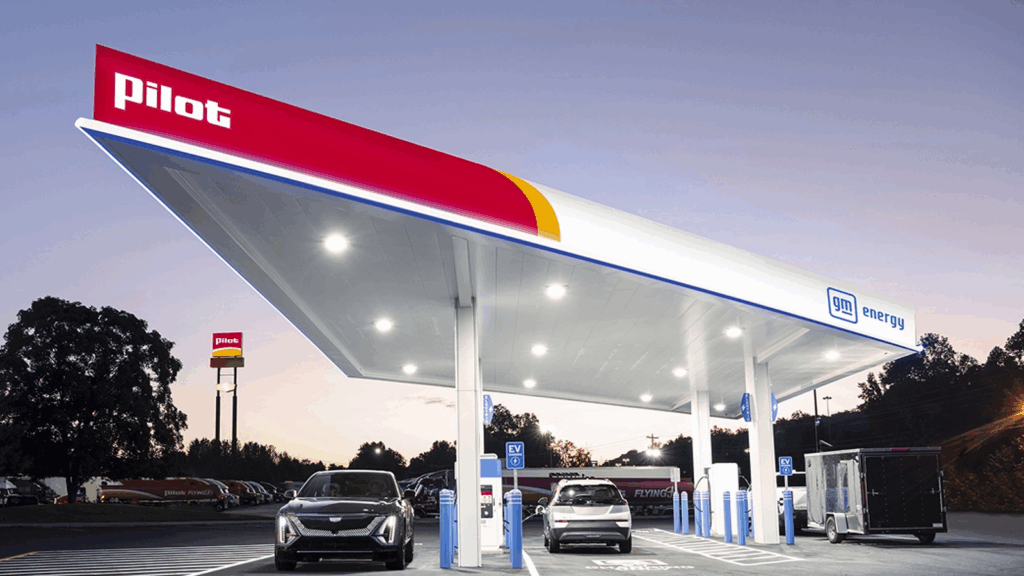
Pilot Company moved from limited visibility under manual processes to 90–95% task completion across more than 900 locations by linking store visits directly to structured follow-up and accountability across 30,000 employees./
This post breaks down the five most common structural failures in retail store visit programs, analyzes each at the root-cause level, and pairs each with what leading retailers are doing differently.
What are retail store visit problems?
Retail store visit problems are structural failures in how visits are planned, executed, and followed up — failures that prevent area managers from translating observations into consistent improvements. The most common problems include inconsistent visit frameworks, excessive administrative burden, insufficient coaching time, poor follow-up discipline, and a lack of standardized measurement. Individually, each problem reduces visit productivity. Collectively, they create the retail execution gap: the disconnect between headquarters strategy and store-floor reality.
Why do retail store visits fail to drive improvement?
Most store visit programs fail for a simple reason. They are designed to produce documentation, not operational improvement. Area managers are not underperforming. They are operating within systems that prioritize reporting over results.
When visits are structured around compliance checks and administrative outputs, they produce visibility. But they do not build capability. And without capability at store level, execution does not improve.

Problem 1: Inconsistent visit frameworks make it impossible to benchmark performance
Root cause and impact
Most visit procedures were not designed. They evolved. Ownership of the store visit program is rarely a formal, accountable role — standards shift as people change and are rarely enforced consistently. Without digital infrastructure, standardization has no enforcement mechanism. Every manager runs the visit they have always run.
When visit data reflects the manager as much as the store, headquarters cannot distinguish a genuine performance problem from an inconsistent evaluation.
“Consistency starts at the store level. We needed consistency across the entire organisation and across our 455 shops.”
Louise O'Keeffe, Head of Retail Support at Halfords
How to fix it
- Designate a store visit program owner with authority to define and enforce standards
- Build a standardized visit template with modular sections for store type and visit objective
- Introduce digital scoring — the only mechanism that removes subjectivity and ensures visit data reflects store performance rather than individual manager judgment

Problem 2: Administrative burden consumes the time that should be spent on coaching
Root cause and impact
Administrative burden is not a side effect of store visits. It is built into how most programs operate. Report compilation happens after the visit — operationally invisible but cumulatively significant. An area manager responsible for 20 stores spends roughly 30 hours per month on reporting and follow-up alone. Nearly four working days. The stores get inspected. They do not get better.
223,000+ hours saved
annually across 1,350 stores after Michaels digitized store operations — 2.5 hrs per store per week. Task completion improved 30%. $1.8M in incremental revenue was generated.
YOOBIC case study, Michaels
Peugeot reduced audit and reporting time from 90 minutes to 20 minutes per visit after digitizing, according to YOOBIC’s case study on Peugeot. Zone managers redirected that reclaimed time to store performance and team development.
How to fix it
- Digitize data capture with mobile-first tools — eliminating post-visit report compilation entirely
- Automate report generation from captured data, not manual assembly
- Reclaim the time for coaching — not as a by-product of efficiency, but as the explicit goal

Problem 3: Visits are structured as inspections rather than coaching opportunities
Root cause and impact
Most visit frameworks define success as everything completed and recorded — not whether the store team leaves the visit better equipped to perform. Coaching is rarely designed into the process. Many programs assume it will happen naturally, but without explicit space and guidance, it does not happen at all.
Store teams that experience visits as policing become defensive. Defensive teams share less, surface fewer real issues, and focus on passing the visit rather than improving performance. Over time, the quality of information gathered during visits declines, making each subsequent visit less effective than the last.
20%+
higher profitability in organizations with highly engaged employees — making the coaching component of store visits commercially significant, not just operationally useful
Gallup research, cited in YOOBIC’s retail execution work
The 20% profitability differential Gallup identifies is the gap between a store team that is coached, engaged, and improving, and one that is audited, defensive, and static. At network scale, that gap compounds into measurable revenue.
How to fix it
- Build coaching time into the visit structure as a mandatory, non-compressible element
- Structure feedback around one or two specific, measurable commitments agreed with the store manager before leaving
- Use the visit to share cross-network intelligence — which approaches are working in comparable locations, which training gaps are appearing regionally. Deploying that knowledge is what separates an area manager from an auditor
Problem 4: Area managers apply a uniform procedure to every store regardless of performance
Root cause and impact
Most visit programs assume consistency in execution requires consistency in approach. Without access to previous visit reports and performance data before arrival, area managers have no mechanism to differentiate their focus. Every visit starts from zero, regardless of what happened in the last one. The easiest option is to default to a standard checklist and apply it everywhere.
Pilot Company moved from limited visibility under a paper-based system to 90–95% task completion rates across more than 900 locations by replacing periodic manual processes with connected, mobile-first workflows, according to YOOBIC’s case study on Pilot Company. Without that visibility, visit time is distributed evenly across the network regardless of need. The stores that most need focused intervention are the ones least likely to get it. That is how effort scales without impact.
How to fix it
- Make pre-visit preparation structural — review previous visit scores, open actions, and relevant KPIs before arriving on-site
- Build risk-based visit planning: underperforming stores should receive more intensive, more frequent visits than consistently high performers
- Give area managers mobile access to historical data — preparation should be possible en route, not dependent on a desktop

Problem 5: Issues identified during visits are not tracked through to resolution
Root cause and impact
Most store visit processes end at reporting. Visit reports are produced and distributed, but they are not connected to a structured action management system. The output is a document, not a workflow. Store teams receive feedback through email, messaging apps, or verbal instructions — channels that create visibility, but not accountability.
A missed promotional display identified during a visit but never corrected becomes a recurring cost. At network scale, unresolved issues from visit one consume time in visit two. The visit cycle generates activity without resolution, and the execution gap widens with every cycle.
How to fix it
- Convert every visit finding into an assigned action with a named owner, a deadline, and a required confirmation of completion
- Replace email-based follow-up with a system that allows store teams to confirm completion with photo evidence, and area managers to verify before the next visit
- Track issue resolution rates alongside compliance scores — a visit that identifies 10 issues and resolves 3 is less effective than one that identifies 6 and resolves 6
What most retailers get wrong about store visits
Most retailers still treat store visits as a compliance mechanism rather than a performance management tool. That distinction is not semantic. It determines what data gets collected, how feedback is delivered, and whether the visit produces measurable improvement or just documentation.
A compliance-driven visit asks, “Was this done correctly?” A performance-driven visit asks, “What needs to change for this store to perform better next week?” Those are fundamentally different questions, and they produce fundamentally different outcomes.
The structural response to poor execution is often to increase visit frequency. More stores are added to an area manager’s territory while expectations remain unchanged. In practice, visits become shorter, more procedural, and less capable of driving change. The visit becomes an event to complete, not a mechanism to improve.
Retailers optimize for consistency of process rather than consistency of outcome. They measure whether visits happened, not whether stores improved as a result. They track completion, not resolution. And in doing so, they reinforce the very systems that create the execution gap they are trying to close.

How to build a store visit program that drives measurable improvement
1. Standardize the visit framework
Create a core visit template that applies consistently across all stores, with optional modules for visit type, store format, and performance tier. Consistency is what makes benchmarking possible and ensures that visit data reflects store performance, not individual manager judgment.
2. Build pre-visit preparation into the process
Require area managers to review previous visit scores, open actions, and relevant KPIs before arriving on-site. When managers arrive knowing which issues are open and what the last visit identified, they spend less time discovering problems and more time resolving them.
3. Balance compliance checking with coaching time
Allocate a defined, protected block of time within every visit for one-on-one coaching. This should be non-negotiable and built into the visit structure. Coaching is the mechanism through which visits improve store performance.
4. Convert every observation into an assigned action
No issue should leave the visit without a named owner, a clear resolution step, and a deadline. Documentation without accountability is the primary driver of the resolution gap and the reason issues persist across multiple visits.
5. Track resolution rates alongside compliance scores
Measure visit effectiveness not just by what was identified, but by what was resolved. A visit that identifies more problems than it resolves is not a high-performing visit, regardless of how comprehensive the checklist appears.
Conclusion: the cost of getting store visits wrong
Retail store visits are the most direct mechanism retailers have for closing the gap between headquarters strategy and store-floor execution. When that mechanism breaks down, the execution gap widens — and the cost is measurable across missed promotions, inconsistent standards, and underperforming stores.
Each of the five problems in this article is structural. They are not the result of individual manager performance or intent. They are the result of how store visit programs are designed. That also means they are fixable. Standardizing frameworks, reducing administrative burden, building in coaching time, enabling data-driven preparation, and enforcing resolution tracking are process changes, not cultural overhauls.
The retailers closing the execution gap are not conducting more visits. They are conducting better ones. Their visits follow standardized frameworks, use performance data to focus attention where it is needed most, and enforce resolution rather than just recording findings. The result is data that reflects store performance rather than manager judgment, actions that are completed rather than acknowledged, and improvements that compound visit after visit.
Book a demo and find out how
Avoid wasted hours, blind spots
and lost revenue with YOOBIC