


Retail audit software replaces paper store audit forms with a digital system that captures store visit data in real time, assigns corrective actions automatically, and gives area managers and headquarters a live view of execution across every location.
Most retail organizations are not there yet. Area managers still walk stores with clipboards, then spend hours typing reports in their cars, only for findings to sit in spreadsheets no one acts on. In 2025–2026, that gap between headquarters strategy and what actually happens on the shop floor is no longer just an operational inconvenience. Delayed data, manual reporting, and hours spent re-entering information mean issues are identified too late to act on — after promotions have ended, after stockouts have already cost sales, and after compliance gaps have become repeat problems.
What is retail audit software?
Retail audit software is a digital tool that enables retailers to evaluate, document, and improve store execution across multiple locations. It replaces paper store audit forms with structured, mobile checklists that area managers, district managers, operations leaders, and compliance teams use during store visits to assess merchandising, operations, and standards compliance. By standardizing how visits are conducted and centralizing findings in one platform, it gives headquarters immediate visibility into what is happening across the store network and where action is needed.
A modern digital store visit app functions as an execution engine, connecting audit findings directly to corrective action. When an issue is identified, the software automatically assigns a task, sets a deadline, and tracks resolution in real time — replacing static reporting with a system built for action. Unlike spreadsheet-based processes where findings can take weeks to reach the right person, digital store visit tools enable teams to respond before the problem costs sales.

Why paper store audit forms are costing you more than you think
Paper-based store audits produce data that arrives too late to be useful. By the time a handwritten checklist is submitted, re-entered into a spreadsheet, and reviewed at headquarters, the findings are often weeks old. In fast-moving retail environments, that delay turns audits into historical records of failure rather than tools for improvement. Promotions have ended, shelves have been empty, and revenue has already been lost. For high-volume retailers, even a 1% execution gap can translate into millions of dollars in lost annual sales — and digital tools that address it reduce out-of-stock rates by 15–25%.
They also fail on consistency. Without mandatory photo evidence, GPS verification, or standardized scoring, audit results depend entirely on individual judgment. One area manager scores a store generously, another is strict about the same issues. When scores vary by person rather than by performance, cross-store benchmarking becomes unreliable and the decisions made from that data become harder to trust. Store managers who notice this quickly learn that the audit reflects who visited, not how the store is actually performing.
Then there is the hidden operational cost. Manual audits create a transcription burden that consumes up to 75% of field team time — hours that should be spent coaching store teams and improving execution on the shop floor, not re-entering data across systems.
Finally, paper audits break the link between insight and action. Issues are identified, written down, and reported, but without automated workflows they are rarely tracked through to resolution. Area managers are left chasing follow-ups manually, often across multiple stores, with no clear ownership or visibility. As a result, the same gaps appear visit after visit.
75%
of field team time consumed by manual data re-entry in paper-based audit processes
Source: Buyer’s guide industry research
This is what modern retail audit software is designed to fix.

What to look for in a retail audit software platform
Choosing the right retail audit software is not about digitizing your current process. It is about selecting a platform that drives consistent execution across every store and turns visits into measurable performance improvement. The key distinction is this: checklist tools capture information, while execution platforms turn that information into action. The capabilities below are what separate the two.
Mobile-first design with offline capability
Field teams do not work behind desks. They operate in stockrooms, basements, and large-format stores where connectivity is unreliable or unavailable. A mobile-first platform with full offline capability ensures audits can be completed without interruption, with data syncing automatically once a connection is restored. When this works well, adoption follows — retailers implementing mobile-first store visit tools see adoption rates reach as high as 95% among area managers within the first few months, ensuring the data captured actually reflects what is happening in stores.
Customizable, logic-branching forms
Audit forms should adapt to the reality of the store, not force area managers through irrelevant questions. Logic-branching forms use if-then flows to adjust dynamically based on previous answers, reducing audit fatigue and speeding up visits. More importantly, they standardize how audits are conducted across every location. When every manager follows the same structured logic, the data becomes comparable at scale — and comparable data is what makes regional benchmarking and performance management meaningful rather than misleading.
Automated corrective actions
This is what separates execution platforms from checklist tools. Every failed audit item should trigger an immediate, trackable action with a clear owner and deadline. Instead of findings sitting in reports, they are converted into tasks that can be monitored through to completion. This removes the need for manual follow-up and ensures issues are resolved, not just recorded. In practice, automating corrective actions reduces post-visit follow-up time by an average of 45 minutes per visit.
Photo and evidence capture
A credible audit needs proof, not opinion. Mandatory photo capture creates a system of record that makes audit findings defensible — particularly for visual merchandising compliance, promotional execution, and safety checks. Without it, store managers can and do challenge scores, inconsistencies emerge between regions, and trust in the audit process erodes. With photo evidence, both headquarters and store teams are working from the same objective view of what is actually happening in store. This is also the foundation of effective loss prevention: when product placement and store conditions are documented with images, patterns become visible that written reports miss entirely.
Real-time dashboards and cross-store visibility
Audit data should be available the moment it is captured. Real-time dashboards allow headquarters to track performance across stores, regions, and countries as visits happen, not weeks later. This enables teams to identify patterns early and act before issues escalate. When audit data is connected with sales or training data, it becomes possible to see exactly which execution gaps are impacting revenue — allowing teams to prioritize the fixes that matter most commercially rather than treating all compliance issues as equal.
Integration with your existing tech stack
The value of audit data increases significantly when it is connected to the rest of the business. Integration with POS, ERP, HR, and BI systems allows retailers to link execution data with sales performance, labor planning, and training outcomes. Consider what this makes possible: a regional manager sees that stores with lower audit scores also have lower conversion rates, and can immediately reprioritize visits and resources. A recurring compliance issue is traced back to a training gap and resolved at the root. API access and flexible data exports are table-stakes, but the real value lies in what connected data allows you to understand and act on.
Task management, communications, and training in one platform
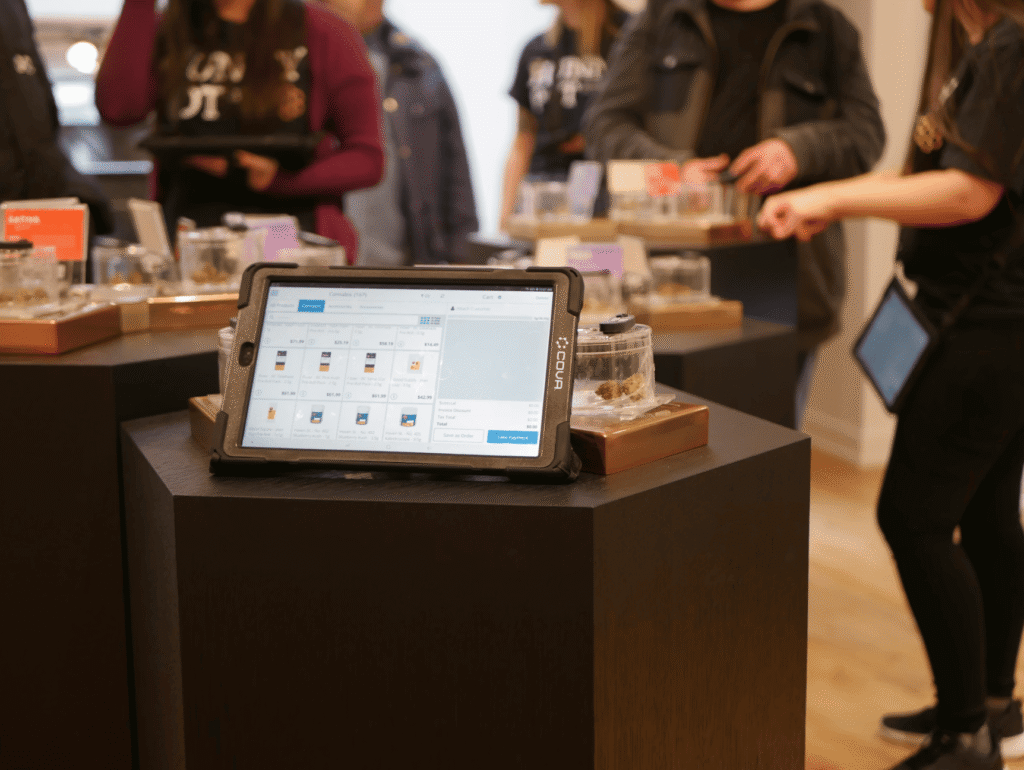
The most advanced platforms go beyond audits entirely by connecting store visits to daily operations. When an area manager identifies an issue during a visit, a task is automatically assigned to the store team, a communication is sent to clarify expectations, and a relevant training module can be triggered to prevent the issue from recurring. The next visit then verifies whether the action was completed and the standard has improved. This is how retailers move from isolated audits to continuous execution improvement. Brands such as UNTUCKit have adopted this approach to align store teams, improve consistency, and ensure that every visit produces a measurable outcome rather than a filed report.
A comparison framework: how to evaluate retail audit software
At this stage, most buyers are not short of options — they are short of clarity. Multiple vendors claim similar capabilities, and without a structured framework, evaluation becomes subjective and slow. The five dimensions below give you a consistent way to compare platforms based on how they perform in real retail environments, not how they are positioned in sales materials.
| Dimension | Key question to ask | Why it matters |
| Ease of use & adoption | Does it fit naturally into a store visit workflow? | ~95% adoption within first few months when mobile-first |
| Reporting depth | Can you correlate audit scores with sales, training, and visit frequency? | Identifies which execution gaps are costing revenue vs. admin noise |
| Integration capabilities | Does it connect to POS, ERP, and BI systems? | Regional managers can link compliance scores to conversion rates |
| Scalability | Does it handle 200+ locations, multiple languages, and regional structures? | Template management and permissions must scale without complexity |
| Pricing transparency | Is total cost clear as you add stores, users, and functionality? | Opaque pricing signals opaque partnership |
Ease of use and adoption is the first and most critical factor. If area managers do not use the tool consistently, the data cannot be trusted. The key question is how quickly the platform becomes part of the store visit routine. Adoption shows up in outcomes: one YOOBIC customer reduced store visit time by up to 90 minutes per visit after digitizing audits, freeing managers to spend that time coaching teams instead. If adoption stalls in even one region, network-wide performance data becomes distorted.
Reporting depth determines whether audit data can actually inform decisions. Basic tools generate static reports, but leading platforms allow you to analyze trends across stores, regions, and time periods. More importantly, they enable correlation — connecting audit scores to sales performance, training completion, and visit frequency. This is what allows operations leaders to identify which execution gaps are actually impacting revenue, and which are simply administrative noise.
Integration capabilities define whether audit data becomes useful beyond the audit itself. A disconnected tool limits insight to a single workflow. A connected platform allows a regional manager to see that stores with lower audit scores also have lower conversion rates, and to prioritize visits and resources accordingly.
Scalability becomes critical as soon as you move beyond a small store network. Many tools work well at 20 locations but struggle at 200 or more. What breaks first is typically template management, multi-language support, and regional permission structures. Lagardère Travel Retail operates across dozens of countries and store formats — maintaining consistency while adapting to local requirements at that scale requires infrastructure that most audit-only tools simply do not have.
Pricing transparency is not just about cost — it is a signal of how the vendor operates. If it is difficult to get a clear view of how costs increase as you add stores, users, or capabilities, that lack of transparency often carries through into the long-term partnership. Look for vendors who can clearly model total cost as the business grows.
Within this framework, YOOBIC is designed for retailers who need audit, execution, and frontline development to work as one system. Brands including Vans, Boots, and Lagardère Travel Retail use YOOBIC to manage store visits, daily execution, and frontline learning across large, complex store networks. The result is not just better audit data — it is more consistent execution across every location, measurable in compliance rates, coaching time, and commercial performance.

The ROI of replacing paper store audit forms
For a retailer with $1B in revenue, deploying a digital execution platform can deliver a payback period of just 7.8 months and an ROI of 265%, according to analysis by ToolsGroup. That return is driven by three factors: labor productivity recovered from eliminating manual processes, sales uplift from more consistent execution, and direct cost reduction across field operations.
7.8 months
average payback period for a $1B-revenue retailer deploying a digital execution platform — with ROI of 265%
Source: ToolsGroup industry analysis
Labor productivity is the fastest and most visible gain. Field teams save between 1.5–2.5 hours per day by eliminating manual data entry and report writing. That time is reinvested into higher-value activities on the shop floor. Claudie Pierlot reduced store visit time by up to 90 minutes per visit after digitizing audits. Lancôme saved 80 hours per week on store monitoring and eliminated more than 500 emails between field and headquarters every week. When that time is redirected into coaching and in-store execution, the impact extends beyond operational efficiency to improved store performance.
Lancôme — YOOBIC customer results
✓ 80 hours saved per week on store monitoring activities
✓ 500+ emails eliminated per week between field and HQ teams
✓ 9,000 field team reports completed annually
Claudie Pierlot — YOOBIC customer results
✓ Store visit time reduced by up to 90 minutes per visit
✓ Area managers reinvest time into coaching and best-practice sharing
✓ Recognized as a model for network-wide digitization
Sales execution improves because issues are identified and resolved before they impact revenue. Even a 1% execution gap can translate into millions of dollars in lost sales for large retailers. Digital audit tools reduce out-of-stock rates by 15–25%, ensuring products are available when customers are ready to buy. When audits are completed consistently and findings are acted on quickly, the downstream effect is fewer stockouts, stronger promotional compliance, and more reliable shelf standards. Boots increased daily check completion to over 80% after digitizing store processes, while Vitalia doubled promotional campaign completion by improving execution across stores.
15–25%
reduction in out-of-stock rates with digital audit tools
80%+
daily check completion at Boots after digitizing store processes
Cost reduction comes from eliminating inefficiencies across field operations. According to Coresight Research, 75% of retail decision-makers who adopted digital workplace technology reported moderate or substantial cost savings from introducing digital checklists, audits, and standard operating procedures. These savings extend beyond administration. Enabling remote audits and reducing unnecessary field travel generates significant reductions: based on YOOBIC customer data, 25 regional managers conducting remote audits saved $270,000 annually in travel costs alone.
$270,000
saved annually in field travel costs by 25 regional managers using remote digital audits
The question is not whether retail audit software delivers ROI. It is which platform will deliver it fastest and at scale.

Signs it is time to replace your paper store audit forms
Most retailers already know their store audit process is not working as well as it should. The question is whether the gap between knowing and acting is already costing more than the effort to change it.
If your area managers are still spending more time on admin than coaching — typing up reports after visits instead of working with store teams — and if audit findings are sitting in spreadsheets with no automated follow-up, the core issue is not visibility but action. The process identifies problems, but it does not resolve them.
When scoring standards vary by region and there is no photo evidence to validate what was actually found, the data cannot be trusted at scale. One store may appear compliant while another is penalized for the same issue, and without a system of proof, decisions are based on interpretation rather than reality.
If post-visit reports still take hours to compile and there is no real-time visibility into which stores have completed tasks, execution becomes reactive. By the time issues are reviewed, the opportunity to fix them has already passed.
And if there is no way to connect audit data with sales or training performance, the process produces information but not insight. You can see what is happening, but not what is driving it or how to improve it.
If more than one of these reflects your current process, the gap is already measurable in lost time, missed sales, and inconsistent execution. The shift to retail audit software is not about replacing paper — it is about ensuring every store visit results in action, not just another document no one acts on.
How to implement retail audit software: a 90-day rollout plan
Most retailers can move from paper store audit forms to measurable execution improvement within 90 days. The fastest implementations follow a simple structure: configure for outcomes, test in real store conditions, then scale using data from the field rather than assumptions.
Phase 1: Configure
Design for outcomes, not paper. Define KPIs, build logic-driven templates, weight high-impact areas like merchandising and safety.
Phase 2: Pilot
Test in real conditions: run in 5–10 stores. Test offline use, photo upload speed, and corrective action resolution. Refine based on area manager feedback.
Phase 3: Scale
Roll out using data, not guesswork: train power users as champions. Use pilot data to identify regional gaps and outperforming stores. Cascade to the full network..
In the first 15 days, the focus is configuration. This is where many retailers go wrong by replicating their existing paper forms instead of redesigning audits around outcomes. The goal is not to digitize what you already do, but to define what actually drives performance — aligning on audit objectives, selecting the KPIs that matter commercially, and building templates that prioritize high-impact areas such as merchandising, availability, and compliance.
Between days 16 and 45, the priority shifts to pilot and iteration. Testing in 5 to 10 locations validates how the platform performs in real conditions. This stage should focus on three things: whether audits can be completed offline without friction, how quickly photos upload and sync, and how easily store teams can resolve assigned corrective actions. Feedback from area managers and store teams at this stage prevents problems at scale.
From day 46 to 90, the focus is scaling and adoption. Early data from the pilot highlights which regions require additional training, which templates need adjustment, and which stores are consistently outperforming. Training power users as internal champions accelerates rollout across the network. Retailers such as Vans have used this phased approach to deploy execution platforms ahead of peak trading periods, ensuring store teams are aligned and operational before demand is at its highest.
Retailers that follow this structure consistently begin to see measurable improvements within the first 90 days — not just in audit completion rates, but in execution consistency across stores. YOOBIC’s onboarding team supports each phase to ensure the platform is configured for real operational priorities, with measurable impact from the first rollout.
Ready to replace paper store audit forms?
The shift from paper store audit forms to digital execution is already happening, and the gap between retailers who have made the move and those who have not is widening. Every week spent on manual reporting, delayed data, and unresolved audit findings is a week where execution falls further behind. The question is not whether to replace paper store audit forms — it is how quickly your operation can start closing that gap. Book a demo to see how leading retailers are closing this gap.
Book a demo and find out how
Avoid wasted hours, blind spots
and lost revenue with YOOBIC

Frequently asked questions about retail audit software
What is retail audit software?
Retail audit software is a digital system used to standardize and manage store audits across multiple locations. It replaces paper store audit forms with mobile workflows that capture data in real time, assign follow-up actions, and provide headquarters with visibility into store performance — helping retailers ensure consistent execution across their network.