

Retail loses staff faster than almost any other industry. Annual retail employee turnover runs around 60%, according to the U.S. Bureau of Labor Statistics (BLS) Job Openings and Labor Turnover Survey (JOLTS). Across a 500-store network, that becomes millions of dollars walking out the door each year.Michaels cut voluntary turnover 24%, worth more than $8M a year, after a connected frontline rollout against 60% seasonal turnover.
Most of it is preventable. This guide explains what retail employee retention means, why associates leave, the strategies that actually move the number, how technology holds it together across hundreds of stores, and how to measure progress. Where a topic runs deep, we link to a focused guide so you can go further.
Key takeaways
Here’s what matters most if you want to keep your best associates:
- Most retail turnover is preventable, not inevitable
- The first 90 days carry the highest risk of losing new hires
- The store manager is the single biggest factor in whether associates stay
- Communication, learning, and recognition keep frontline teams engaged
- One platform makes retention repeatable and measurable across every store
What is retail employee retention?
Retail employee retention is how well a company keeps its frontline store staff over time. It’s measured as the percentage of employees who stay across a given period, and it matters because retail turnover is among the highest of any sector. When associates stay longer, stores run more smoothly, service stays consistent, and the business avoids the constant cost of recruiting and training replacements.
Retention sits at the center of store performance. Experienced associates execute faster, need less supervision, and give customers a better experience. That makes retention a direct input to sales, not just a people metric. For retailers specifically, the stakes are shaped by high footfall, seasonal peaks, and thin margins, which is why our work on the retail frontline treats retention as an operational priority. If you run multiple stores, that makes it one of the clearest levers you have.
What’s the difference between retention, turnover, and engagement?
These three terms get used interchangeably, but they measure different things.
Retention rate is the share of employees who stay over a period. Turnover rate is the share who leave. They’re opposites that describe the same workforce, so a 75% retention rate and a 25% turnover rate are the same picture from two angles. Retention keeps your attention on what’s working rather than only on what’s broken.
Engagement is the cause, not the count. It measures how connected and committed associates feel, and it’s the strongest leading indicator of who’s about to leave. High engagement tends to produce high retention, which is why most retention work starts with employee engagement. Track all three together. Engagement warns you early, retention shows the trend, and turnover confirms the cost.
What is a good retail employee retention rate?
There’s no single benchmark, because it varies by format, role, and region. Convenience and quick-service run hotter than specialty or luxury. A more useful approach is to measure your own baseline, then track movement against it by store and by tenure band.
Where retention is won or lost
A store manager notices it before any report does. A name that was on last week’s schedule isn’t on this one. A locker gets cleared out without a word. The new hire who seemed fine in week two quietly stops showing up before the end of their first quarter, and nobody flagged it. The first 90 days are when retail loses the most people. A store can post a healthy annual retention rate while still churning through new hires every quarter, so split first-year retention out from the overall number and watch it on its own.
How much does retail employee turnover cost?
Replacing a frontline employee costs around 40% of their salary, according to Gallup. At high turnover across your network, that adds up fast. The cost lands in several places at once:
- Recruiting and hiring: job postings, interview time, background checks, and paperwork
- Training and ramp-up: weeks or months before a new hire performs at full capacity, plus the manager time it consumes
- Lost productivity: coverage gaps, mistakes from inexperienced staff, and slower task completion
- Customer experience: inconsistent service, weaker product knowledge, and lower conversion on the floor
- Team morale: remaining staff absorb the extra load, which often triggers the next round of departures
By the time turnover surfaces in sales data, the chance to prevent it has already passed. That’s why operations leaders treat retention as a performance lever rather than a back-office metric. For the full breakdown, see how to reduce employee turnover in retail.
Why do retail employees leave?
Associates rarely quit over one thing. They leave when several gaps in the experience stack up, and if you only fix one, the number barely moves. The most common causes are consistent across store formats:
- Pay that lags the cost of living, made worse by unpredictable scheduling
- Onboarding that leaves new hires unprepared, with many departures happening inside the first 90 days
- Disconnected communication, so frontline teams feel isolated from headquarters
- No visible career path and little recognition, which makes people feel replaceable
- Burned-out managers who have no time left to coach or support their teams
The first 90 days carry the highest risk. New hires who never build confidence quietly disappear before they hit full productivity. We cover that window in detail in why retail employees quit in their first year.
How do you improve retail employee retention?
Each strategy below maps to a root cause above. Fixing one or two won’t shift the number. The retailers seeing real gains run several at once.
Fix onboarding in the first 90 days
Structured onboarding with clear milestones, a buddy system, and regular check-ins cuts early turnover. When onboarding lives on mobile and sits inside daily work, new hires reach productivity faster and feel part of the team from day one. See how we approach retail onboarding, and for the playbook, read improving onboarding for retail teams.
Make scheduling predictable and flexible
Last-minute, manager-controlled changes create stress. Giving associates visibility into their hours and some control over swaps builds trust and protects work-life balance, which is one of the clearest retention levers available.
Build learning into the daily routine
Microlearning delivered on mobile builds skills without pulling staff off the floor. Short lessons in the flow of work keep associates progressing and engaged. See our approach to frontline learning, or start with the guide to microlearning.
Recognize associates in the moment
Peer shout-outs, manager recognition, and visible rewards make people feel valued when it counts. Annual reviews arrive too late. Building recognition into everyday work, through a shared culture and community space, reinforces the behaviors you want repeated.
Create clear career paths
A visible ladder from sales floor to team lead to store manager gives associates a reason to stay and grow. Skill-based advancement and internal mobility counter the idea that retail work is a dead end.
Run stay interviews, not just exit interviews
Exit interviews tell you why someone left. Stay interviews tell you what would make a current employee stay. The second conversation is the one that prevents the loss.
Equip managers to coach, not just manage
Train managers in people leadership, not only task management. When they have time to coach, recognize, and develop their teams, turnover drops.
How do store managers affect retention?
The store manager is the single biggest factor in whether associates stay. Gallup attributes around 70% of team engagement variance to the manager, and engagement is a leading indicator of who leaves next.
Picture a store manager’s first hour. Before the doors open, they’re toggling between four apps to reconcile yesterday’s numbers, then rekeying them into a report nobody reads until Friday. By the time they look up, the morning huddle they meant to run has become a rushed hello. The associate who needed five minutes of their attention didn’t get it.
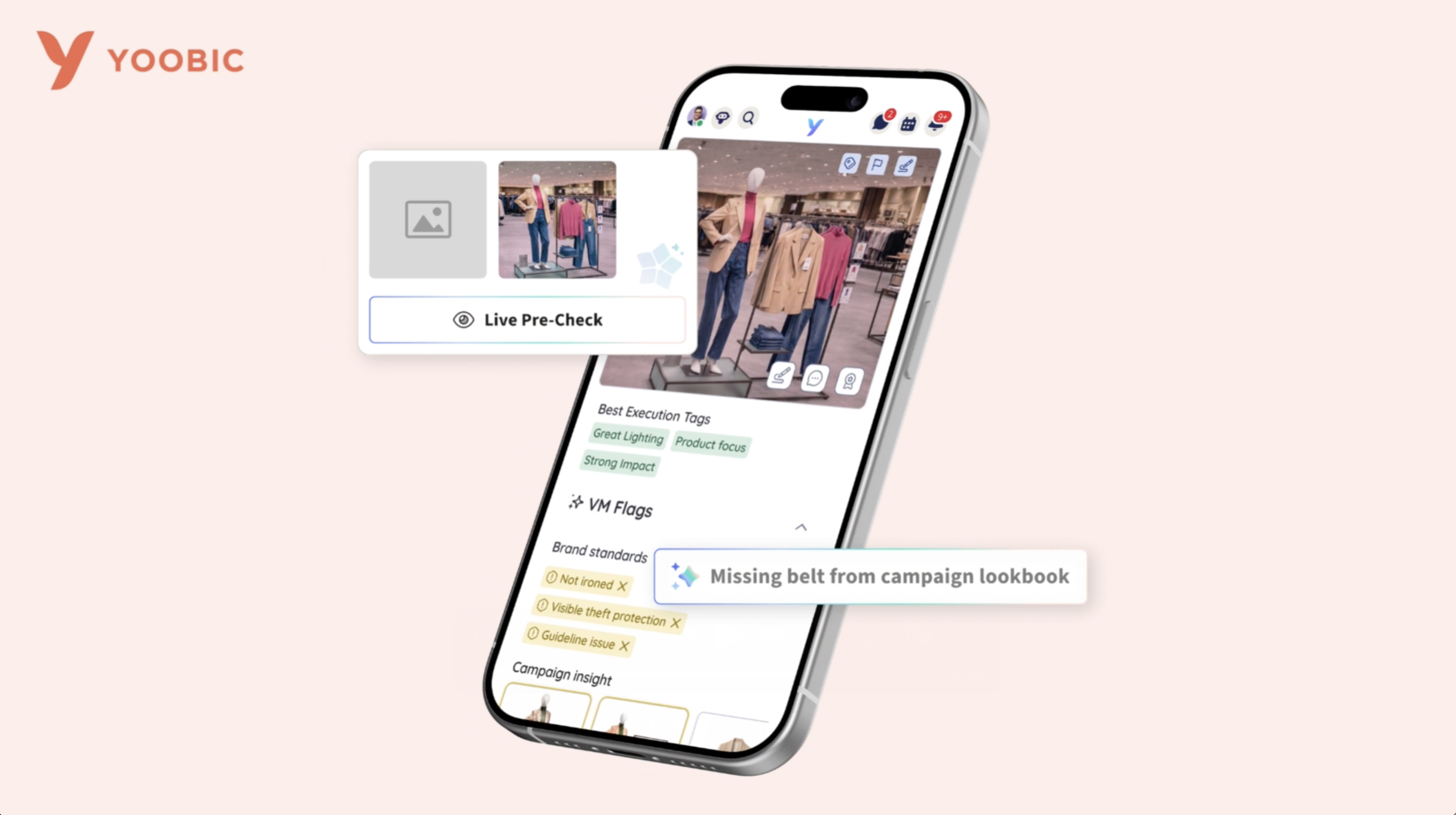
The problem is rarely the manager. It’s the admin. Reduce that load with mobile task management and Store Manager Copilot, which surfaces the day’s priorities instead of raw dashboards, and you hand that first hour back for recognition and follow-through. Turning store visits and audits into coaching conversations rather than paperwork has the same effect.
How does communication support retention?
Connected, informed associates are more engaged, and engaged associates are far more likely to stay.
“They are using YOOBIC to engage the staff, which is really important for us, because engaging is retention afterwards.”
Pauline Fradin, VP Store Solutions and Quality, Lagardère Travel Retail
Recognition and engagement aren’t soft extras. They’re the levers that decide whether someone stays through their first tough season. When your teams feel heard and part of something, they don’t drift toward the exit. YOOBIC Communications turns that into daily practice:
- A company newsfeed that keeps every store aligned on the same priorities
- Critical update broadcasts with read receipts, so you know the message landed
- Polls and surveys that give frontline teams a real voice
- Peer communities and recognition that build belonging across regions
- Engagement analytics that show which stores are thriving and which need attention
The payoff is operational: faster responses from HQ, less time lost to email, and lower turnover.
The results follow adoption. At Francesca’s, 71% of associates use the company newsfeed actively, and eNPS (employee Net Promoter Score) rose by 4 points. See how frontline communications work in practice, and for the full playbook read how to engage your deskless workers with internal communications.
How do onboarding and training reduce turnover?
Training isn’t a cost center. It’s a retention lever. Associates who are properly onboarded and developed feel invested in, and they stay longer.
The programs that work share a few traits. Onboarding follows a clear learning path for every role. Delivery is mobile-first, so training fits around the floor rather than a back-office computer. Content adapts to role, location, and skill gaps, and recognition is built in to keep completion high, which is what lets you run the same program consistently across every store.
Michaels saw learning program participation rise 150% after putting training in associates’ hands through their frontline app. Higher participation means faster time to productivity and lower turnover in the critical first months. Our complete guide to retail training goes deeper.
How does technology support retention at scale?
No retailer can run retention programs by hand across hundreds of stores. Technology makes consistency possible by carrying best practice into every location, and by connecting the systems that already hold your people data through integrations.
| Capability | What it does | Retention impact |
|---|---|---|
| Mobile task management | Digitizes tasks, checklists, and audits | Cuts admin load for managers and associates |
| Mobile learning | Personalizes training paths in the flow of work | Builds skills and keeps associates engaged |
| Frontline communication | Centralizes updates, recognition, and feedback | Builds connection and reduces isolation |
| Store Manager Copilot | Surfaces prioritized recommendations from store data | Frees manager time for coaching |
YOOBIC brings tasks, communications, and learning together in one platform, so a brief written at headquarters becomes a completed, verified task on the store floor, and managers get clear daily priorities instead of raw data. You can see the results across the network in our customer stories.
How do you measure retail employee retention?
You can’t improve what you don’t track. A handful of metrics show whether your efforts are working and which stores need attention.
| Metric | What it measures | Why it matters |
|---|---|---|
| Turnover rate | Share of employees who leave over a period | Baseline measure of the problem |
| Retention rate | Share of employees who stay over a period | Tracks improvement over time |
| First-year retention | Share of new hires who reach twelve months | Isolates the highest-risk window |
| Time to productivity | How long until new hires perform fully | Measures onboarding effectiveness |
| Engagement and eNPS | Satisfaction and likelihood to recommend | Leading indicator of future turnover |
| Internal mobility rate | Share of roles filled by internal candidates | Measures career development success |
Track these by location. Some stores hold their people while others churn, and the difference usually comes down to manager capability and how well retention programs run on the ground. For the wider metric set, see frontline employee engagement metrics.
Where is retail retention heading?
Retention used to be something HR reviewed once a quarter, long after the people were gone. That’s changing fast, and here’s what the shift means for you.
AI is moving off the dashboard and into the manager’s day. Instead of another report to read, guidance arrives as a prompt in the moment: this store’s engagement is slipping, these two new hires haven’t finished onboarding, start here. Store Manager Copilot already works this way, turning store data into the day’s priorities rather than raw numbers.
Take a district manager who opens a morning prompt flagging one store where three first-week associates have gone quiet. Instead of waiting for the monthly report, they call the store lead before the floor opens and set up a check-in for that afternoon. The save happens the same day, not the next quarter.
Learning and recognition are following the same path, embedded in the flow of work rather than bolted on. A lesson surfaces when an associate needs it. A thank-you lands the moment a shift ends, not weeks later in a review.
The bigger change is how leaders treat retention itself. It’s becoming an operational KPI owned at store level, tracked alongside sales and traffic, not an afterthought left to HR. When you can see which stores are holding their people, you can act the same week. Retention stops being a lagging report and becomes something you manage in real time.

The bottom line on retail retention
Retail turnover looks inevitable until you take it apart. Then it becomes a set of decisions you can influence: how you onboard in the first 90 days, how you schedule, how you build learning and recognition into the day, and how much time you free up for managers to lead. None of these levers works alone. Pull them together and the number moves.
The hard part isn’t knowing what to do. It’s doing it the same way across every store, every week. That’s where one platform for tasks, communications, and learning earns its place, making good retention repeatable instead of accidental. Start with the store where turnover hurts most, measure what changes, and expand from there.
Book a demo and find out how
Avoid wasted hours, blind spots, and lost revenue with YOOBIC
Book a demo and find out how
Avoid wasted hours, blind spots
and lost revenue with YOOBIC

Frequently asked questions about retail employee retention
What is a good retail employee retention rate?
There’s no universal “good” number. Retention is the inverse of turnover, so in a sector where turnover runs high, even a solid retention rate can look low next to other industries. Skip the benchmark chase and set your own baseline, then beat it with structured onboarding, continuous training, and strong communication.