

When you think of retail sales training, what’s the first thing that comes to mind?
If we’re being honest with ourselves, it’s one of the following:
- Overwhelming
- Boring
- Information overload
- Can’t remember anyone’s name
- I ate all the free donuts
Training that doesn’t help people learn and retain information is costly and detrimental to employee performance.
And the effects of insufficient training become exponentially more problematic for retail sales associates because they’re in direct contact with customers every day.
Now more than ever, getting sales training right is critical. This article covers the six most common sales training challenges and how to fix each one. For a full, step-by-step program, see our guide on how to train retail sales associates.
What happens when sales training goes wrong?
Opportunities are missed, customer experience gets worse and sales are lost.
It’s clear that most retail sales training doesn’t provide store associates and customers with what they need.
One study revealed that 83% of customers think they’re more knowledgeable than sales associates. Not exactly a glowing review.
Ordering online is easier than ever, so for customers to want to come into the physical store, customer service needs to go above and beyond.
Here are six common problems retailers and brands face when training sales associates, and how to fix them.
1. Training is too long, but not long enough
Yes, you read that right.
Most retail sales training is too long because employees spend hours, or even days, completing it.
Most retail training isn’t long enough because it’s only focused on the employee’s first few days or weeks. After that, they’re on their own.
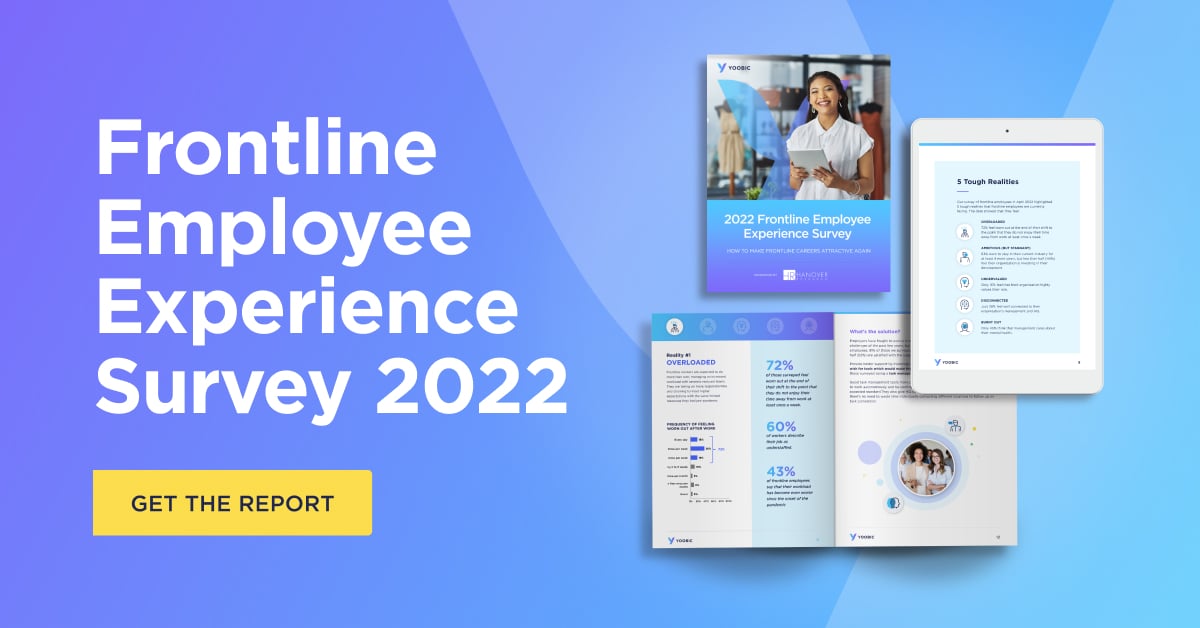
Related: 31% of frontline employees don’t receive regular training to develop their skills, according to our 2022 Employee Experience Survey. Download the survey to get the full story!
The problem here is that providing a long-winded, one-off block of training doesn’t help employees retain the information and skills they’ll need. In fact, the Forgetting Curve model – originally created by German psychologist Hermann Ebinghaus in 1885 – estimates that even if 100% of information is retained at the time of training, it drops to 50% by the next day.
That means frequent training is a necessity.
How to fix it:
Create quick, bite-sized training sessions – also known as microlearning. Deliver these sessions continuously with the goal of not just training, but also refreshing knowledge.
Related: How to Make Your Microlearning Courses Short & Sweet
2. Training isn’t relevant to the associate’s role
Yes, employee training and development needs to be standardized across the entire organization. But the problem with most retail training is that employees get too much information (so they don’t remember the important things) or not enough (so they never learn the important things).
Time is short for store teams, so training should take the employee’s role into account and be tailored specifically to them. A part-time employee who never works from open till close doesn’t need to know the same store procedures as a full-time employee, for example. And some stores have larger product ranges than others – employees at these stores need more product knowledge training.
How to fix it:
Identify the skills and product knowledge every employee needs and standardize training accordingly. Gain an understanding of the differences between stores and sales associate roles to create additional learning tracks that deliver what’s most useful.
3. Training doesn’t fit a deskless workforce
If most corporate workers think the typical conference room inductions and e-learning sessions are a little dull, imagine how a deskless employee feels. Dull training doesn’t help anyone retain information better – especially employees who are never sat at a desk all day.
Retail employees tend to be younger, working part-time or seasonally, and on the run between work and school or job #1 and job #2.
They also now have extra responsibilities and even less time in which to manage them, as they take on bigger workloads on a reduced staff rota.
With all of this to contend with, training retail sales associates in a way that shifts the burden of learning onto the employee’s own time is not the most effective method and might mean that it doesn’t even get done.
Related: Why Frontline Employees Need to Learn in the Flow of Work
How to fix it
Make your bite-sized chunks of learning goodness accessible to employees wherever they are (a.k.a on their phones). Gamify your training, but understand what it is about games that motivate us to succeed beyond the fun: autonomy, mastery and a feeling of belonging.
4. Training is isolating
Any customer service role is a social one. Working in a retail store is all about teamwork. But most retail sales training is passive and one-sided – employees listen to their manager, a trainer from head office, or someone blathering on for 2 hours on an e-learning video that was recorded in 2007.
Employee training and development should be social and collaborative for the same reasons that people love using social media. It’s addictive to see what your peers are up to. People love to share what they’ve done. And maybe they also like a little bit of friendly competition.
The power of social media to keep people connected has become so important, that it just makes sense to extend that to employee training and development.
Creating a positive and engaging learning environment will keep your employees motivated, even if they can’t all be together at once.
How to fix it:
Make your training about showing and doing as well as listening.
Create visibility in your training programs so employees can see how they rank against their peers (leaderboards are great for this!).
Take note of who your employees are learning from, too. Trainers don’t necessarily have to come from head office and have the word “trainer” in their title. What about an experienced store manager, or someone who’s been promoted to a head office role from within?
Related: The Complete Guide to Retail Training
5. Training is stagnant
Most retail sales associate training doesn’t evolve with store associates, nor does it give them a sense of agency in choosing what they want to learn.
Employers who excel at retaining employees are the ones who provide clear paths for evolving and growing within the company. Employee training and development is a huge part of this. And whatever preconceived and incorrect notions people have about store associates, the truth is they want to learn.
How to fix it:
Create learning tracks for advancement, cross-training, and much more. Make employees aware that this training exists as part of their career progression, and actively encourage them to invest in their learning and development.
6. Training sales associates you don’t employ
Many brands sell through stores they don’t run: department store concessions, shop-in-shops, franchise and wholesale partners, and third-party merchandising teams. The people selling the brand there work for someone else, so the brand can’t schedule their training, can’t require it, and often doesn’t know who they are.
The result is uneven selling. Associates in the brand’s own stores know the latest launch, while partner staff are still telling last season’s story. Partner associates also sell several brands at once, so long training for any single brand rarely gets done.
How to fix it:
- Keep it short and easy to reach: a few minutes on a phone, with no corporate login or laptop needed.
- Agree the training with the partner up front, as part of the wholesale or concession agreement, including who completes it and by when.
- Focus on what helps them sell your brand: the key products, what makes them different, and answers to the questions customers ask most.
- Push product knowledge before every launch, so partner staff hear about it at the same time as your own stores.
- Give them a reason to take part, such as recognition, leaderboards or incentives tied to completion.
- Check what happens on the floor with store visits or photo checks of displays, not just course completions.
For more on working with partner stores, see 3 ways brands can improve retail execution and in-store compliance.
—
Want more training tips for your frontline teams? Download this free Ebook – 5 Steps to Effective Learning for Frontline Teams