

Retail store manager burnout isn’t a soft HR concern, it’s an operational crisis. Globally, manager engagement fell from 31% to 22% in a single year, the steepest drop on record. In an industry where store managers govern 70% of the variance in team engagement, that 9-point fall isn’t a manager problem. It’s a store performance problem, an execution problem, and a retention problem at the same time.
This piece names what’s driving the crisis, explains why it hits retail harder than any other sector, and gives retail operations leaders a three-part framework for fixing it. By the end, you’ll have a model you can apply to your own store network this quarter.

What is the retail store manager burnout crisis?
The retail store manager burnout crisis is the 2025 finding, identified in Gallup’s global workforce data, that the engagement of people-managers dropped from 31% to 22% in a single year. It marks the first time on record that manager engagement has fallen below the engagement of the teams they lead. Because managers account for around 70% of team engagement variance, the effect multiplies across store performance, customer experience, and voluntary turnover, and it lands hardest in retail.
What just happened: the data behind the collapse
Three numbers tell the story.
Gallup’s 2025 indicator put manager engagement at 22% globally, down from 31% the year before. That’s a 9-point drop in twelve months. For context, the previous decade of manager engagement data had moved within a 4-point band, so this year’s fall broke the pattern by more than double.
Gallup’s meta-analysis attributes 70% of the variance in team engagement to the direct manager. In plain terms, the manager is responsible for nearly three quarters of how engaged a team feels day to day. If you want to change a team’s engagement, you change the manager’s capacity to coach, recognize, and listen.
And the cost of losing one is steep. Replacing a store manager costs up to 200% of their annual base pay, and roughly 75% of manager-level departures are preventable, according to the Work Institute. For a retailer with hundreds of store managers, the exposure runs well into seven figures before the knock-on effect on team engagement is even counted.
Why it matters more in retail than anywhere else
The manager engagement collapse hit every industry, but it hit retail hardest.
The store manager is the only operational layer that touches customers, store associates, district leadership, and headquarters in the same week. They’re the translation point between what HQ wants and what actually happens on the floor. They’re the recognition source for their team, the feedback channel for their region, and the execution governor for their store. No other retail role carries this combination of responsibilities.
Three structural realities make the position uniquely fragile in 2026:
- They’ve absorbed administrative load that didn’t exist five years ago. Most store managers now spend 10 or more hours a week chasing information across disconnected tools, compiling reports, and following up on tasks that should never have been duplicated.
- They’re being asked to lead AI adoption on top of their existing role. Around 60% of leaders lack a clear AI vision, so the manager often becomes the de facto interpreter of new tools for their team without having had time to understand them.
- They have less coaching time than at any point in the last decade. Margin pressure, tighter labor budgets, and expanded role definitions have squeezed the part of the week where managers can actually develop their teams. The thing they were hired for is the thing they have least time for.
When all three pressures stack, the engagement collapse becomes hard to avoid. The 22% figure isn’t surprising in hindsight. The surprise is that it didn’t happen sooner.
“Every minute a store manager spends buried in spreadsheets is a minute lost from improving the customer experience. With AI, we turn those insights into immediate action.”
Fabrice Haiat, Founder and CEO, YOOBIC
The engagement governor model: a framework for restoring the store manager
If 70% of team engagement variance sits with the manager, then restoring the manager is the highest-leverage operational move retail leaders can make this year. The engagement governor model, drawn from the research and from YOOBIC customers running this work in practice, has three components. Each one addresses a structural pressure named above. Together they restore the manager as the engagement governor instead of leaving them as the engagement bottleneck.
Capacity: strip out the administrative load that makes coaching impossible
Coaching time is the first thing to disappear when managers are overloaded, and the last thing they get back. The fix starts with an audit, not an aspiration. Map every recurring task a store manager performs in a typical week, and for each one ask whether it needs a manager at all, or whether it can be automated, delegated, or eliminated. Most retailers find that 30 to 50% of the manager’s week goes to tasks that fit one of those last three categories. Reclaiming half of that creates 5 to 10 hours of coaching time per manager per week. Across a 500-store network, that’s the equivalent of 250 to 500 full-time coaches without hiring anyone, simply by clearing the administrative load.
Clarity: replace the dashboard sprawl with a single daily action layer
A typical store manager is asked to interpret somewhere between 5 and 12 dashboards across sales, inventory, traffic, audits, training, and engagement. Most update on different cadences, some contradict each other, and none of them on their own tell the manager what to do next. Clarity means collapsing that noise into a single prioritized view. Not another dashboard, but a daily action layer that says: here are the three things that matter most for your store today, based on yesterday’s data. The store doesn’t need more reporting, it needs the report to become a decision.
Coaching authority: equip managers with the rituals and decision rights to act in the moment
Capacity creates time and clarity creates focus, but neither matters if the manager lacks the authority or the structured rituals to act on what they see. Coaching authority means giving managers recognition tools, feedback channels, and decision rights so they can respond to their team without escalating every action to HQ. In practice, that looks like a small monthly recognition budget per store, a structured stay interview cadence, the ability to flex schedules within agreed limits, and a connected platform where the manager’s actions are visible across the network. The point is to make the manager the engagement engine, not just the engagement reporter.
Why the three Cs work together
Capacity without clarity creates time the manager can’t use. Clarity without authority creates a sharper picture of what the manager can’t change. Authority without capacity asks someone to fix everything in time they don’t have. The three components only work as a system. Solve for one and you get marginal improvement. Solve for all three and you get the engagement governor back.
What restoring the manager looks like in practice
Two examples from YOOBIC customers running this work at scale.

Michaels: manager time recovered and turnover down
On capacity, Michaels recovered around 4,000 hours of district manager time and saved more than 223,000 hours a year across its 1,350 stores, redirecting management time from checklist administration to the sales floor and generating $1.8 million in incremental revenue. On clarity, store managers stopped jumping between systems and worked from a single mobile platform that pulled tasks, communications, and learning into one feed. On coaching authority, managers gained structured recognition and instant shoutout tools. Alongside investment in frontline learning, Michaels reduced voluntary turnover by 24%, saving over $8 million a year, and lifted engagement from around 30% to between 80 and 90% within weeks of launch.
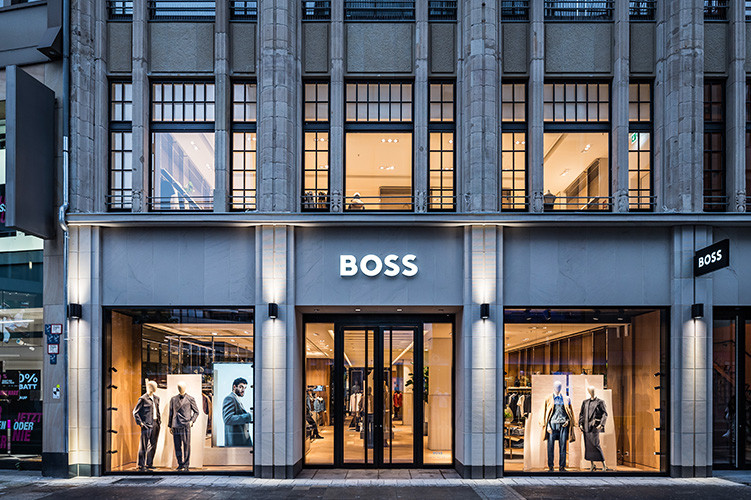
Hugo Boss: a 3.2% sales uplift from restoring the manager’s clarity layer
In a proof of concept, store teams using YOOBIC Store Manager Copilot delivered a 3.2% sales uplift, driven by AI-recommended actions adopted at store level. The Copilot interprets store data, prioritizes the actions that matter most that day, and delivers recommendations in plain language rather than dashboards. The mechanism is concrete: an average of 2.4 commercial opportunities per store each week that most networks leave undetected. This is the clarity component made tangible. The manager moves from interpreting ten dashboards to acting on three prioritized recommendations, and the time that frees up becomes coaching time, recognition time, and customer time.
The AI question: part of the answer, not part of the problem
There’s a version of the AI-in-retail conversation that frames the technology as a threat to store managers. The data tells a different story.
In 2025 and 2026 workforce surveys, 49% of employees were optimistic about AI and 45% reported using it daily or weekly, saving more than 30 minutes a day. The 23% who worried about AI replacing their job were concentrated in roles where AI had been deployed to monitor performance, not to reduce administrative load.
For store managers specifically, the right AI deployment isn’t about replacement, it’s about returning capacity. When AI handles report compilation, data interpretation, and routine task prioritization, the manager gets back the coaching time the role was supposed to involve in the first place. That’s the version of AI that fixes the engagement collapse rather than accelerating it.
The retailers that will thrive through this period are the ones that deploy AI to strip load off the manager, not to add another layer of oversight on top of their role. That’s the AI question retail leaders should be asking, and it’s the one Store Manager Copilot was built to answer.
Five moves to start restoring your store managers this quarter
- Run a one-week time audit on three store managers. Categorize every task as must-do-by-manager, automatable, delegable, or eliminable. The result is your capacity baseline.
- Cut the manager’s dashboard count in half. If a manager opens more than five reporting tools in a typical day, the clarity component is broken.
- Give every store manager a small monthly recognition budget, even $50. Coaching authority needs operational backing, not just permission.
- Add a structured stay interview cadence at the manager level. The 200% replacement cost makes this the single highest-ROI listening move you can run.
- Pick one piece of frontline AI to deploy in service of the manager, not the executive. The test is whether the manager gets time back, not whether HQ gets more reporting.
Restore your store managers as your engagement governors
YOOBIC helps retailers like Michaels, Mattress Firm, and Hugo Boss strip administrative load off store managers, narrow the dashboards they have to interpret, and give them the coaching tools to act on what they see. Book a 20-minute walkthrough to see Store Manager Copilot in action.
Want more on supporting frontline managers? Explore the YOOBIC AI-powered performance platform, listen to Frontline Fridays, or browse our customer stories.
Book a demo and find out how
Avoid wasted hours, blind spots
and lost revenue with YOOBIC

Frequently asked questions
What is the retail store manager burnout crisis?
It refers to the 2025 finding in Gallup’s global workforce data that the engagement of people-managers dropped from 31% to 22% in a single year, the steepest fall on record. In retail specifically, because store managers govern around 70% of team engagement variance, the crisis has a compounded effect on store performance, customer experience, and turnover. It’s the most consequential workforce trend in retail operations heading into 2026.