
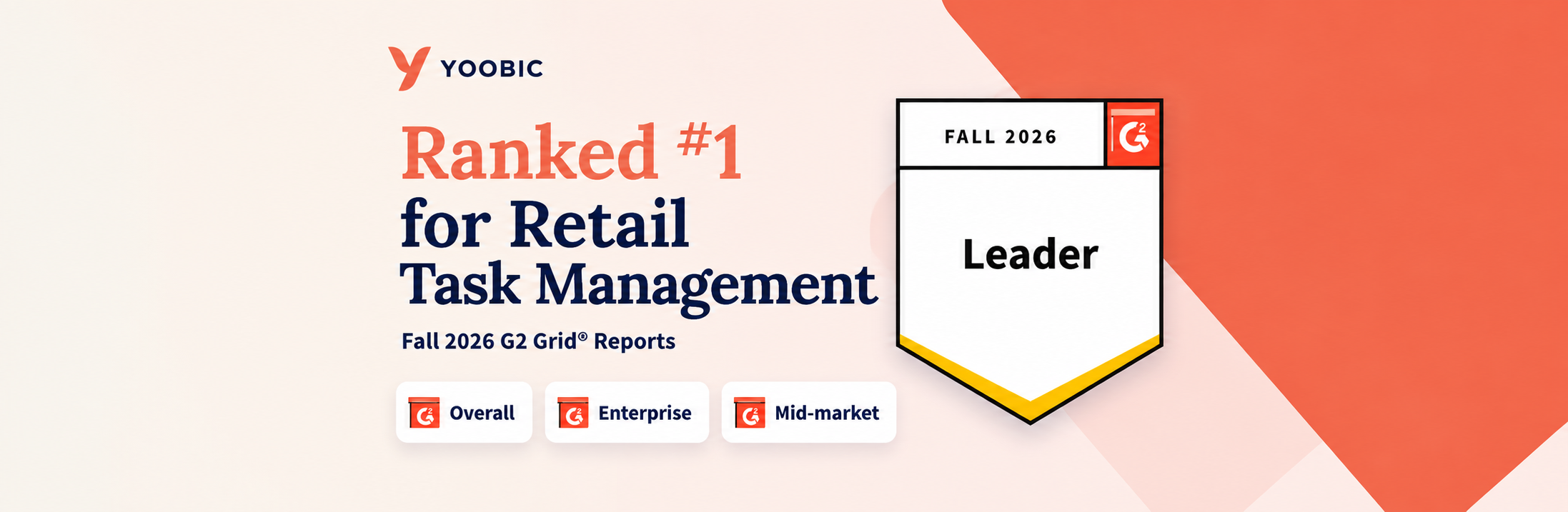
In G2’s Fall 2026 Reports, published September 2026, YOOBIC ranked #1 in all three Grid® Reports for Retail Task Management: the overall Grid, the Enterprise Grid and the Mid-Market Grid. None of it came from an analyst report. It came from the store managers, associates and field leads who use YOOBIC on shift, and who told G2 exactly what they think of it.
YOOBIC also holds the highest customer Satisfaction score of any product in the category, 98 out of 100. YOOBIC is the frontline intelligence and execution platform built for retail. It connects the operational data retailers already have, turns it into role-specific intelligence, and delivers it through task management, communications and learning.
The results at a glance
- YOOBIC ranked #1 in all three Fall 2026 G2 Grid® Reports for Retail Task Management (overall, Enterprise, Mid-Market).
- YOOBIC holds the highest Satisfaction score of any product in Retail Task Management: 98 out of 100.
- YOOBIC earned 91 badges in the Fall 2026 release.
- YOOBIC is a Leader in seven of the eight categories where it appears.
- YOOBIC has 300+ five-star reviews on G2.
- The rankings follow two consecutive record quarters for the company.
What are the G2 Grid® Reports, and why does this ranking matter?
G2 Grid® Reports rank software products using verified customer reviews and market presence data. No vendor can buy placement. Products are scored on Satisfaction, drawn from what customers say, and on Market Presence, drawn from company scale and momentum.
G2 splits Retail Task Management by company size, so there are three separate Grids: Overall, Enterprise and Mid-Market. A product can rank first with mid-market retailers and fall behind at enterprise scale, or the reverse. Ranking first on all three at once means the same platform is winning with a 200-store specialty chain and a 3,600-store grocer.
“Ranking first in one Grid is a good quarter. Ranking first in all three, Enterprise and Mid-Market included, says something different. It says the platform holds up whether a retailer runs 200 stores or 3,600. That is the hardest thing to get right in this category, and it is why our customers score us the way they do.”
Fabrice Haiat, CEO and co-founder of YOOBIC
Which categories is YOOBIC a Leader in?
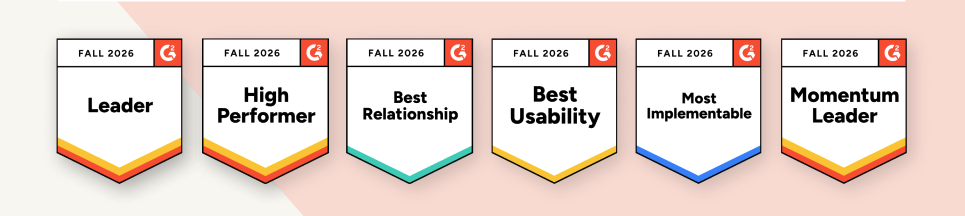
YOOBIC earned Leader recognition in the Fall 2026 G2 Reports across Retail Task Management, Retail Execution, Frontline Worker Communication Platforms, Microlearning Platforms and Consumer Goods Software.
Several of these are crowded categories. Microlearning Platforms includes 42 products. Frontline Worker Communication Platforms includes 39. Leader placement across fields that size reflects breadth that most point solutions in retail cannot match.
YOOBIC also holds Fall 2026 badges for Fastest Implementation, Most Implementable, Best Results, Best Relationship and Best Usability, the badges that tell you whether software actually gets rolled out and used. That’s the real test.
Which retailers chose YOOBIC in 2026?
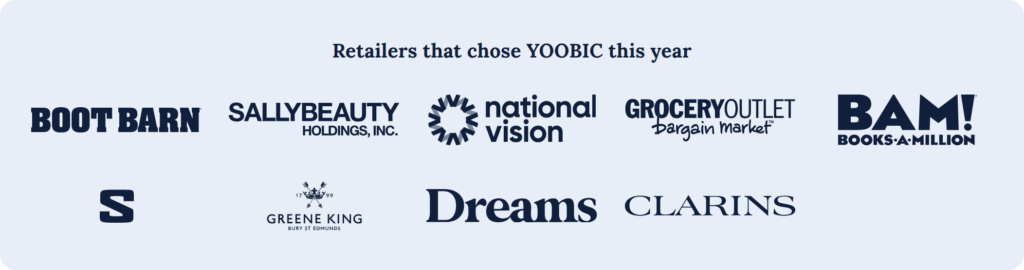
Boot Barn, Sally Beauty, National Vision, Grocery Outlet, Books-A-Million, Salomon, Greene King, Dreams and Clarins are among the retailers that selected YOOBIC during its two most recent record quarters.
They span beauty, grocery, books, outdoor gear, hospitality, optical, bedding and western wear. The businesses look nothing alike. The frontline problem is identical in all of them: priorities change faster than stores can absorb them, teams are stretched thin, and the work still has to happen accurately in every location on the same day.
A frontline platform touches every store, every role and nearly every shift, which makes it one of the higher-stakes software decisions a retailer makes. Winning that many of them in two quarters is the clearest signal available that the category has a front-runner.
Thank you to each of them for choosing YOOBIC this year, and to the 350+ retailers who’ve trusted the platform for years before that.
What is the frontline intelligence and execution platform built for retail?
YOOBIC is the only platform that integrates a retailer’s data, delivers role-specific intelligence, and gives every person from HQ to store associate a purpose-built layer to act on it, through task management, communications and learning.
YOOBIC was built from the ground up for how retail actually works, with intelligence at the center and execution purpose-built for every person at the edges. Closing the gap between knowing and doing isn’t about more data. It’s about getting the right intelligence to the right person, with the right tools to act on it, every time.
What is YOOBIC’s AI built on?
YOOBIC’s intelligence layer runs on retail-specific operational data rather than general-purpose inputs. YOOBIC captures more than 80 million merchandising moments a year across its customer base, draws on twelve years of retail-exclusive deployment and works with a council of more than 30 senior retail advisors. That operational data gets combined with each retailer’s own business data, sales, traffic and more, to build intelligence specific to their stores.
How does YOOBIC deliver intelligence to each role?
YOOBIC delivers intelligence by role, not by dashboard.
An HQ leader sees what’s happening across every market, district and store, and knows where to focus next. A district manager knows which stores are at risk, which teams need support, and what to prioritize before walking in the door. For a store manager, that’s strategy translated into the day: the right tasks reaching the right people at the right moment. And on the floor, an associate just knows what to do, why it matters, and how to do it well, in the moment.
YOOBIC AI helps retail teams spot the opportunities that matter, turns them into clear, prioritized actions and improves store performance. The goal is simple: turn every store signal into the next best action.
Why are retailers switching to YOOBIC?
Retailers switch to YOOBIC for four reasons: execution and task visibility, frontline communication that reaches the floor, microlearning that fits inside a shift, and implementation that actually sticks. These are also the four areas where G2 ranked YOOBIC highest.
Retail execution and task management
Before YOOBIC, most retailers pushed priorities to stores through email chains, spreadsheets and phone calls, and nobody at head office could see what actually got done. Regional and divisional managers say the first change they notice is visibility. They can see which stores completed which work, and compliance stops being something they discover on a store visit three weeks later.
Good execution is not a matter of sending more tasks. It depends on each store understanding what matters, why it matters and what good looks like, and on leaders being able to see what happened. That is why YOOBIC keeps task management, store visits and audits in the same platform. It is also the foundation that makes frontline AI useful, because a recommendation can move from insight to assigned work without leaving the app.
Frontline communication that reaches the floor
Retailers moving off paper and email describe the same relief. Messages stop disappearing. Teams on shift see what head office sent, in a form they can act on, and they can answer back.
A message sitting unread in an inbox does nothing for the person opening the store, resetting a display or serving a customer. Communication works when it reaches people on shift with enough context to act.
Microlearning that fits inside a shift
The feedback YOOBIC hears most often on learning is about who can actually use it. Training teams need to build and publish courses without a specialist. Store associates need to finish them between customers. Retailers running both learning and visual merchandising through YOOBIC point to the value of having them in one place instead of two systems.
The same principle drives YOOBIC’s approach to AI. Answers have to appear in the flow of work, at the moment someone needs them, not inside another system they have to remember to check.
Implementation that sticks
Getting every store, region and user into a platform is the part that usually stalls a rollout. Project teams point to pace and handling: moving quickly without losing the detail is what determines the first few months.
A fast launch matters, but adoption is the real test. A frontline platform only creates value when it becomes a natural part of the working day, and that matters more with AI, not less. The technology has to fit how stores already operate and earn trust through the quality of its recommendations.
What is YOOBIC building next in retail AI?
Retailers do not need another dashboard explaining what went wrong yesterday. Most already have more reports and scorecards than their teams can act on. What store and field leaders need is help deciding what deserves attention today, and a fast way to turn that into action.
“Retail has spent a decade buying intelligence: dashboards, analytics platforms, data warehouses, AI tools. None of it has ever opened a store, restocked a shelf or closed a sale. We’ve spent twelve years building for the gap between knowing and doing, and nothing else. Run on intelligence, win on execution.”
Fabrice Haiat, CEO and co-founder of YOOBIC
YOOBIC’s AI product line has expanded in every quarter since the launch of Store Manager Copilot in late 2025, and now covers every level of the store organization:
- Store Manager Copilot helps managers read sales performance, spot opportunities and turn an insight into assigned work in one click.
- Merchandising Copilot analyzes store photos in real time, flags merchandising issues instantly, and coaches store teams to fix them, so every campaign lands consistently across the estate.
- AI Assistant gives frontline teams trusted answers in seconds, in their own language, without searching documents or interrupting a manager.
- Coming next, District Manager Copilot replaces instinct with insight: it shows field leaders what’s happening across every store, tells them where to go first for the biggest impact, and points their coaching at the gaps that actually move the numbers.
More is already in development. YOOBIC ships AI capabilities on a continuous release cycle and holds each one to the same test: it has to change what happens in the store, not just what appears on a report.
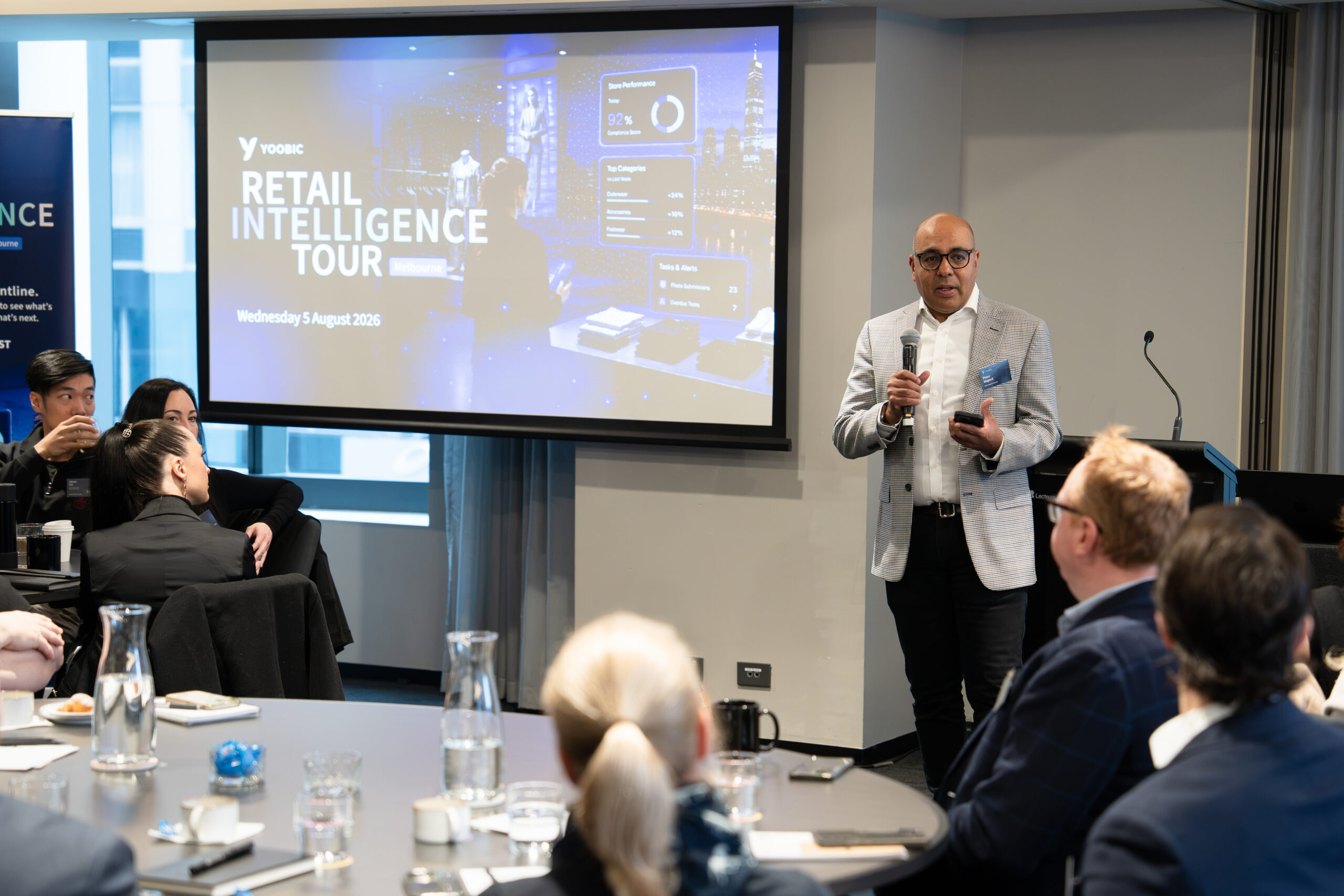
YOOBIC has convened retail leaders in Paris, London, Melbourne and Cape Town this year through its Retail Intelligence Tour, with London on 1 October and a four-city US leg running through Costa Mesa, Dallas, New York and Atlanta in October and November.
In every room, the conversation has moved past whether AI belongs in stores. Retailers are asking which use cases actually improve performance, what it takes to roll them out across thousands of locations, and how to build trust with store teams. Those questions shape the roadmap, as does what retailers share on Frontline Fridays.
“Twelve years in, and I’ve never been more fired up about what we’re building.”
Fabrice Haiat, CEO and co-founder of YOOBIC
About YOOBIC
YOOBIC is an AI-powered retail operations platform: the frontline intelligence and execution platform built for retail. YOOBIC connects the operational data retailers already have, turns it into role-specific intelligence, and delivers it through task management, communications and learning so every person from HQ to the sales floor can act on it. Built exclusively for retail for twelve years, YOOBIC is used by more than 350 companies worldwide. Learn more at www.yoobic.com.
Start retailing smarter
Frequently asked questions
What is retail task management software?
Retail task management software is how head office sends work to stores and sees whether it got done. It distributes tasks, checklists, audits and campaign instructions to the right stores on the right day, gives store teams a mobile way to complete them during a shift, and gives field and HQ leaders visibility into completion and compliance across the network. It replaces the email chains, spreadsheets and phone calls most retailers use to push priorities to stores. G2 ranks the category using verified customer reviews and splits it into three Grid Reports by company size. YOOBIC ranked #1 in all three Fall 2026 Retail Task Management Grid Reports: overall, Enterprise and Mid-Market.