

Most retail recognition advice falls apart at scale. This piece focuses on ideas that hold up across multi-location retail: small awards for many rather than large awards for few, visible across the network rather than buried in a back office, and frequent, specific, and simple enough that a busy store manager can actually do them on a Tuesday afternoon.
If you take one thing from what follows, take this: the retailers winning on retention aren’t running bigger recognition programs. They’re running more frequent ones.

Why retail recognition breaks down in most stores
Most retail recognition runs hot at the top and cold on the shop floor. Heineken’s traditional program reached less than 2% of its 2,400 employees each year. The pattern is common, and the cost is measurable. Employees who feel unseen or undervalued are 60% more likely to disengage or leave.
The upside is just as clear. Frequent, specific recognition has a 0.455 correlation with employee engagement, and well-recognized employees are 45% less likely to have turned over two years later.
Recognition isn’t a perk. It’s the daily signal that tells your store teams whether their work matters.
12 retail recognition ideas built for scale
1. Make recognition daily, not annual
Annual awards reach a handful of associates. Daily recognition reaches everyone. Build a regular cadence into how store managers run the day: a 90-second shoutout in the morning huddle, a short message at the end of a shift, one specific moment named every day. It costs nothing, needs no extra platform, and lifts engagement faster than almost any other change you can make.
2. Recognize non-sales achievements during peak season
During peak, sales numbers get all the attention. But the associate who covered a colleague’s shift, calmed a frustrated customer, or kept the stockroom clean while five new hires onboarded is doing work that holds the store together. Name the behaviors you want repeated, not just the outcomes you want hit. That’s how culture spreads at scale.
3. Build peer-to-peer recognition into your daily comms tool
Manager-led recognition can’t reach every associate. Peer-led recognition can. Give store teams a simple way to recognize each other inside the daily communications tool they already use. Mattress Firm uses in-app shoutouts this way to keep peak-season teams motivated.
4. Borrow the BREWards model: small, frequent, brand-aligned
Heineken rebranded its recognition program as BREWards, with names like IPAs (Inspiring People Awards) and Cheers! instant awards worth $65 each. By shifting from large awards for few to small awards for many, the company lifted peer-to-peer recognition by 50%. The lesson isn’t to copy the names. It’s to make recognition feel like part of your brand.
5. Recognize the behaviors you want repeated, not just the outcomes
“Great month on sales” tells an associate nothing about what to keep doing. “You spent ten minutes with a customer who was clearly overwhelmed, and you closed a $400 sale by listening first” tells them exactly what to repeat. Specific recognition works as on-the-job coaching. Generic recognition works as background noise.
6. Make recognition visible across the wider store network
A great moment locked inside one store stays inside one store. The same moment shared across your network becomes a cultural signal. Other stores see what good looks like, and new hires absorb the standard without needing a training session. This is why a connected platform for culture and community matters more than a standalone recognition program.
7. Tie recognition to your store values, not just sales targets
If every recognition moment names a sales number, you’re telling store teams the till is the only thing that matters. That works for a quarter, but it doesn’t build a culture. Tie recognition to the values your brand stands for: customer service, teamwork, product knowledge, inclusion. The associate who lives those values is the one who keeps your standards intact when no one from HQ is watching.
8. Equip area managers with recognition rituals, not just review forms
Area managers are the connective tissue between HQ and the store floor. Most carry review templates and KPI dashboards. Very few carry a recognition ritual. Give them a structured one: a single named recognition per store visit, captured in the app and shared across the region. It takes five minutes per visit, and it compounds across a quarter.
9. Recognize new hires in their first week, not after 90 days
Most new hires who quit decide to leave in the first two weeks, often before anyone has formally recognized them for anything. Build a recognition moment into the first week, tied to their first completed task or their first good customer interaction. Recognized early in onboarding, new hires are far more likely to reach the 90-day mark.
10. Give store managers a recognition budget, not just permission
Permission to recognize is theoretical. A budget makes it operational. Even a small monthly amount per store, set aside for recognition, changes how a manager behaves. A $50 monthly budget per store, used to fund five $10 moments, lifts morale further than a single $500 quarterly award.
11. Use cross-store leaderboards to drive friendly competition
Frontline retail roles are social by nature. Healthy competition between stores lifts engagement and execution at the same time, as long as it’s framed around shared goals rather than individual exposure. Build leaderboards that recognize the top three stores on a specific behavior each week: mystery shopper scores, promo execution, or customer compliments captured.
12. Close the loop: tell employees when their recognition reached HQ
Recognition that stops at the store level is good. Recognition that visibly reaches HQ is better. Give store managers a structured way to escalate standout moments upward, and give HQ a way to acknowledge them back. A monthly executive shoutout video, a regional roundup, or a direct message from a VP all work. Recognition that travels in both directions tells the store team they’re part of something larger.

The compound effect of consistent recognition
These ideas aren’t meant to be run once. High-quality recognition has a 0.455 correlation with employee engagement, established in joint Gallup and Workhuman research, and that’s one of the strongest workforce correlations on record. Well-recognized employees are 45% less likely to have turned over two years later. Run twelve of these habits consistently and the effect isn’t additive. It builds on itself over time.
If you want to track that link, start by measuring engagement on a regular cadence, so you can see recognition show up in the numbers.
What this looks like in practice

BurgerFi: recognition built into network scaling
As BurgerFi scaled its network quickly, recognition became part of how new locations got up to speed, not a separate program bolted on afterward. See how BurgerFi improved its frontline employee experience with YOOBIC.
Or read the full BurgerFi case study
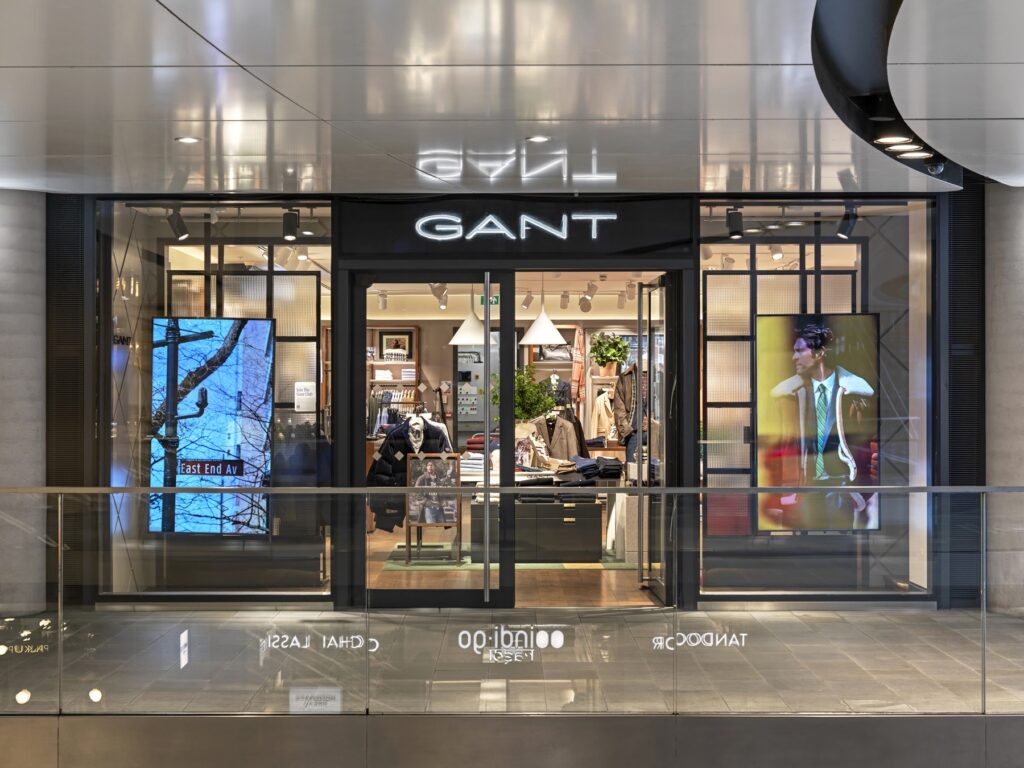
GANT: recognition that travels across a global community
When GANT built a global community of store associates, recognition stopped being a single-store practice and became a network signal. Store teams across continents see what good looks like in real time. Peer recognition, manager recognition, and HQ recognition travel between each other in one connected feed, which is what makes recognition work across hundreds of locations.

Five recognition habits to start this week
- One named recognition per store per day, captured in your daily comms tool.
- A small monthly recognition budget for every store manager, even $50.
- A recognition ritual on every area manager store visit: one named moment, shared across the region.
- A recognition moment built into every new hire’s first week, not their 90-day review.
- At least one piece of recognition per store made visible across the entire network, every week.
See how leading retailers run recognition at scale
YOOBIC helps brands like BurgerFi, GANT, PureGym, and UNTUCKit make recognition visible across thousands of store associates, daily, peer-to-peer, and connected to the work that drives store performance. Book a 20-minute walkthrough to see how it would work in your store network.
Want more on building a connected frontline experience? Explore the YOOBIC Communications platform, browse our customer stories, or see how UNTUCKit links training directly to conversion and units per transaction.
Book a demo and find out how
Avoid wasted hours, blind spots
and lost revenue with YOOBIC
Frequently asked questions
What is retail employee recognition?
Retail employee recognition is the practice of acknowledging the performance, behaviors, and contributions of frontline store associates and store leaders. Effective recognition is frequent, specific, timely, and visible. Done well, it has a 0.455 correlation with employee engagement and reduces two-year turnover by 45%. Done poorly, it reaches less than 2% of employees and has no measurable effect.