

Retail loses people faster than almost any other industry. US Bureau of Labor Statistics data shows retail workers quit at one of the highest rates of any industry, far above the national average. Every walkout resets the clock on hiring, training, and coverage.
If you’re hunting for retail employee retention strategies that actually hold, the honest starting point is that pay alone won’t do it. The strategies that improve retail employee retention work on onboarding, growth, scheduling, recognition, and the daily tools your teams touch.
Retail employee retention is a store’s ability to keep associates productive, engaged, and on the team for the long term. It means not cycling through a revolving door of new hires. Get it right and the math changes fast.
The price of getting it wrong is steep. According to SHRM’s 2025 Benchmarking Report, the average cost to fill a non-executive role is $5,475. Gallup estimates that replacing someone can cost 50% to 200% of their annual salary, and that voluntary turnover costs US businesses about $1 trillion a year.

The damage isn’t only financial. Short-staffed stores frustrate customers, who leave for competitors with helpful, experienced associates. The people who stay inherit heavier workloads and a rotating cast of colleagues, which wears down the whole team.
Retailers that improve retention pull ahead. Research from McKinsey shows that leading retailers have twice as motivated employees as competitors and resign half as often. That’s a durable edge, not a one-quarter bump.
Not every strategy here solves the same problem. Some fix onboarding. Others tackle training, scheduling, recognition, engagement, or the daily-work technology your associates rely on.
Match the lever to the reason your people are actually leaving. We ranked these strategies by retention impact, how easily you can roll them out across a multi-store network, and whether the results are measurable.
Key takeaways
Short on time? Here’s the verdict.
- Top lever: great onboarding sets up an associate’s first weeks so every later strategy works better
- Best for growth and morale: continuous training and clear career paths keep Millennial and Gen Z associates from leaving
- Best for work-life fit: flexible, predictable scheduling stops part-time associates from quitting over last-minute shifts
- Best for daily motivation: frequent, visible recognition and connected communication make a dispersed frontline feel like one team
- Best for scale: the right technology makes daily work clear, fast, and easy to measure across every store
Why retail employees quit
Picture a new associate two weeks into the job. Their manager handed them a folder of conflicting instructions on day one.
Nobody told them which tasks mattered most, and back-office admin keeps their manager too buried to help. By week 10, they’ve stopped asking questions and started looking for a new job.
That story repeats across the industry, and the root causes are consistent. They include weak onboarding, disconnected tools and unclear priorities, managers stretched too thin to coach, and no visible path to grow.
The onboarding gap is the one people feel first. In our survey of frontline employees, 49% said their onboarding didn’t prepare them well for the job.
Here’s the part most teams miss. Store managers lose 10 or more hours a week chasing information and fixing avoidable mistakes. That overload pushes good people out the door before you ever see it in a report.

Pay and benefits matter, but they aren’t enough on their own to prevent turnover. You need long-term strategies that change the daily experience of working in your stores. Here are seven, ranked by impact.
1. Provide great onboarding: best overall retention lever
Onboarding is your one chance to make a first impression that sticks. Workers whose onboarding is poorly handled are twice as likely to look for a new job. Done well, strong onboarding can increase retention by 82%, according to Brandon Hall Group research.
Start on a foundation of inclusion. Learn how each new hire prefers to work, since some learn best by watching and others by doing, then build that into their training.
Team spirit helps too. Small cohorts create camaraderie and lasting bonds, and experienced mentors give new associates direction while they settle into the role.
Then fix the flow of information. Handing someone a folder of overlapping, conflicting instructions sets them up to fail. Share what they need when they need it, starting with the basics.
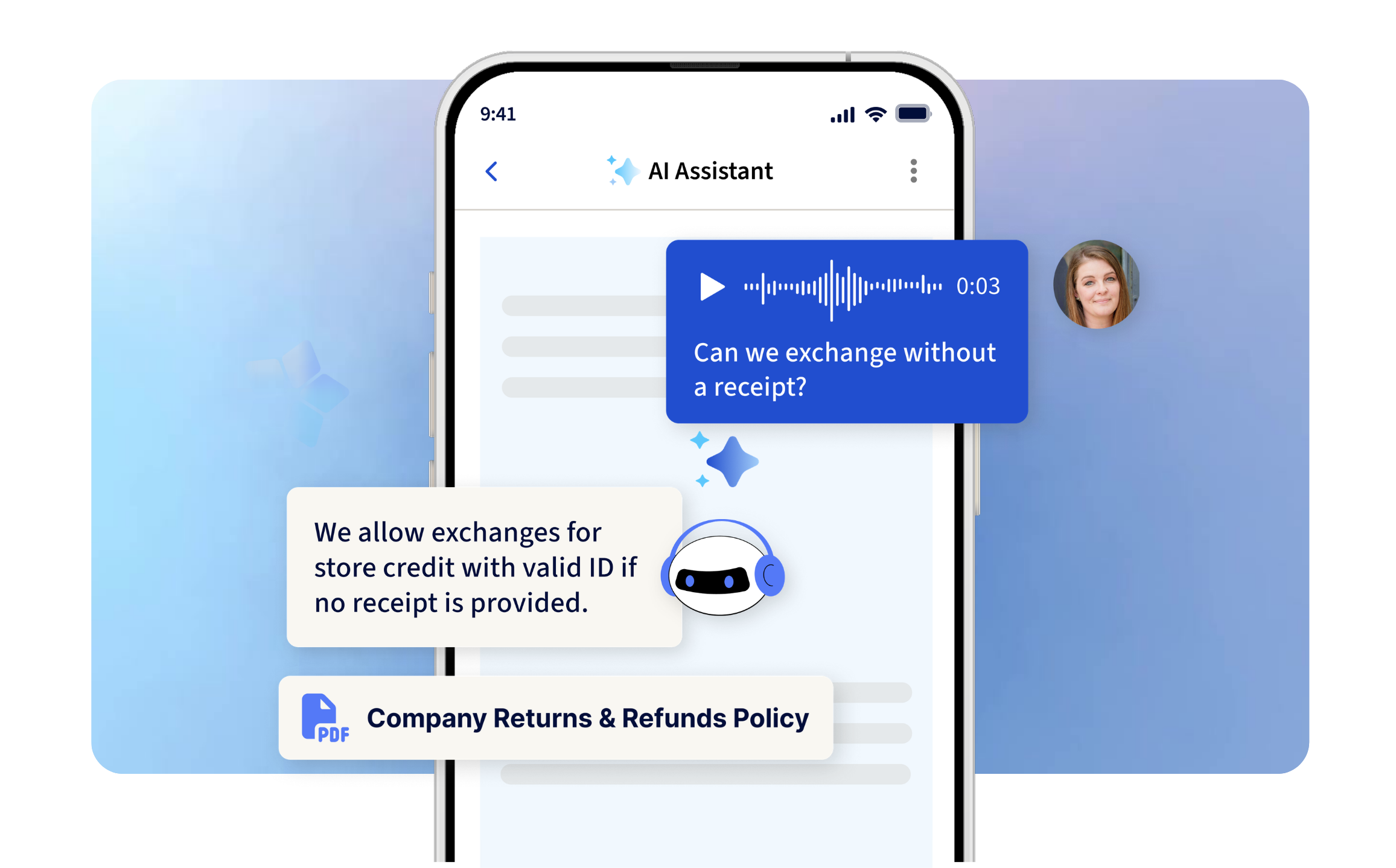
This is where YOOBIC Learning earns its place. It delivers mobile-first onboarding in the flow of daily work, so every store gives new hires the same clear start.

65% decrease
in time spent on standard operating procedure training, after moving onboarding onto that model
Stat source: Boots
Onboarding sits at number one because it sets the trajectory for every later strategy.
2. Offer continuous training and development
Learning can’t stop after week one. Millennial and Gen Z associates want roles where they can grow, and in our survey, 64% said they want opportunities for career growth within their current organization.
Give them a way to keep building. With YOOBIC Learning, that’s bite-size, mobile training embedded in the daily workflow and gamified with badges, so progress feels earned rather than assigned.
150% increase
in learning-program participation after rolling out YOOBIC Learning
Stat source: Michaels
Related: Download our five-step guide to effective training for frontline employees
3. Offer flexible, predictable scheduling
One of your best part-time associates is also a student, or a parent, or both. When their schedule drops with two days’ notice, week after week, they can’t plan their life around the job, so they find one that lets them. That’s a resignation you can prevent.
Predictable scheduling is a retention strategy in its own right. Post schedules well ahead, let associates swap shifts easily, and keep hours as steady as the business allows.
YOOBIC doesn’t run your rostering, and we won’t pretend otherwise. What we do help with is clarity.
When the day’s priorities are set in YOOBIC Task Management, a predictable shift is also a productive one. Your team knows exactly what matters before they clock in.
4. Recognize and reward good work
Two associates nail a tough merchandising reset on the same Saturday. One hears nothing and quietly wonders why they bothered.
The other gets a shout-out their whole region can see, and shows up Monday ready to do it again. Recognition is the difference.
Make recognition frequent, specific, and visible, not an annual line in a review. Call out the exact behavior you want more of, and do it where peers can see it.
You can build that into the tools your teams already use. YOOBIC Learning awards gamified badges as associates complete skills. YOOBIC Communications gives managers and peers a company newsfeed to post shout-outs in the flow of work.
5. Collect, listen to, and act on feedback
You can’t fix what you can’t hear. Some associates will speak up, but most won’t, so make it easy for everyone to weigh in. Run surveys at the moments that matter, like a new hire’s first month or the week after peak season.
Then close the loop. Ask follow-up questions when something’s unclear, and act on what you learn, because associates who see their feedback change something keep giving it.
Go two steps further than most retailers do. Track turnover and first-90-day retention over time, so you can spot trends before they become resignations. Run stay and exit interviews, not just satisfaction surveys, so you learn why people choose to stay or go.
YOOBIC Communications closes the loop between stores and headquarters (HQ) with polls, surveys, and engagement analytics dashboards. One district manager spotted a turnover spike in a single store on that dashboard. They walked in that week and fixed a scheduling problem before it spread across the region.
6. Invest in engagement and connected communication
A store associate in a small franchise location can feel a hundred miles from the rest of the company. When a regional win lands in their feed, a colleague two cities over answers their question in minutes, and HQ actually replies, that distance shrinks. That’s engagement doing its job.
Connected communication turns a scattered frontline into one team. YOOBIC Communications gives you a company newsfeed, critical-update broadcasts, and peer communities. Associates feel informed, heard, and part of something bigger than their own four walls.
Related: How GANT connect their global community of store associates.
7. Make daily work easier with the right technology
A store manager used to start the morning in three different systems: one for tasks, one for messages from HQ, one for training. Half the job was just finding out what the day required. Now they open one app and the day is already sorted.
Whenever you can, strip out the tasks that make a job feel like a grind. Automate the repetitive admin so associates spend their time with customers and on the parts of the role that matter.
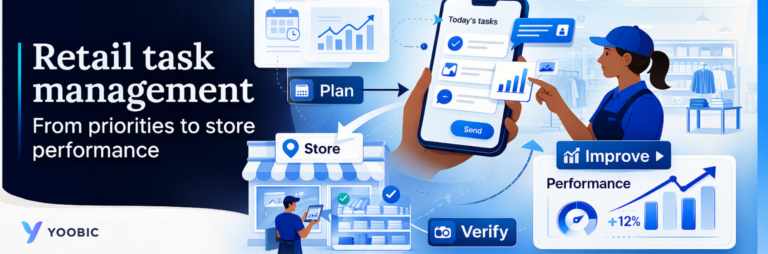
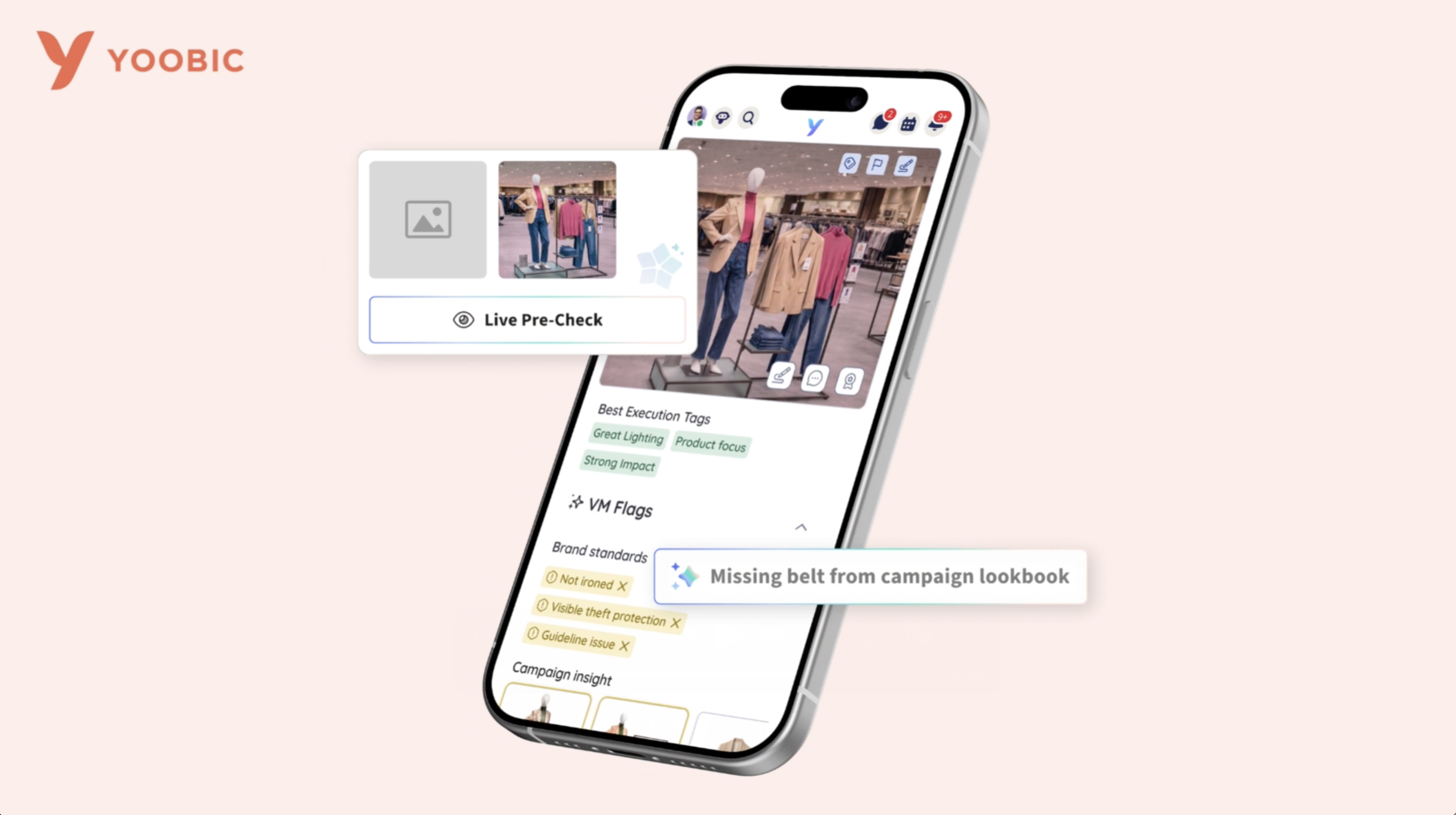
YOOBIC Task Management gives associates prioritized task lists and modular checklists, so they’re serving customers instead of chasing instructions. Here’s the throughline that ties every strategy together: we unite tasks, communications, and learning in one platform. A priority set at HQ becomes a completed, photo-verified task on the floor, with the training and context attached.
The time savings are real.
78% decrease
in time spent on daily checks
Stat source: Boots
154,000 hours saved
per year on checks and processes
Stat source: Pret a Manger
| What you’re managing | Disconnected tools | One platform with YOOBIC |
|---|---|---|
| Onboarding | New hires learn from whoever’s on shift | Consistent, mobile onboarding every store delivers the same way |
| Daily priorities | Tasks scattered across email and paper | Prioritized task lists with photo-verified completion |
| Communication | Updates lost in inboxes and group chats | One newsfeed with targeted, trackable messages |
| Measurement | No clear view of what’s working | Dashboards on completion, engagement, and retention trends |
How to choose the right retail employee retention strategy for your stores
The hard part isn’t finding a good idea. It’s picking the levers you can actually run across every store, week after week, without adding to your managers’ load. Use these five questions to sort retail employee retention strategies that will stick from ones that just look good on a slide.
One operations director we know almost signed off on a splashy perk program before catching themselves. The stores didn’t need another perk. They needed onboarding that didn’t fall apart in week two, so that’s where the budget went.
Can you roll it out consistently across every store?
A strategy that works in your flagship but falls apart in store 40 isn’t a strategy, it’s a pilot. Before you commit, ask whether every location can run it the same way with the staff and time they have.
Can you measure whether it’s working?
If you can’t measure it, you can’t defend it. Pick levers where you can track turnover, first-90-day retention, or participation, so you know within a quarter whether the change is working.
Does it reach the frontline, not just HQ?
Plenty of programs look great at HQ and never reach the sales floor. The associate on a Saturday shift is the person you’re trying to keep, so the strategy has to land in their hands, not just in a leadership deck.
Does it fit into the daily workflow, or add another tool?
Every new tool is a tax on your managers’ time. Favor strategies that live inside the daily workflow, the way YOOBIC brings tasks, communications, and learning into one platform, instead of adding another login to remember.
Does it address a real reason your people leave?
Don’t solve a problem your people don’t have. If exit interviews point to scheduling, a recognition program won’t change the outcome, so match the fix to the reason people give when they leave.
Why YOOBIC is the best choice for retail employee retention
Retention rarely breaks in one place, so we didn’t build for one place. We bring task management, communications, and learning together in one platform. That way onboarding, daily priorities, recognition, and feedback all run through the same system your teams already open every day.
24% decrease
in voluntary turnover, worth more than $8M a year
Stat source: Michaels
137% increase
in training completion
Stat source: Sportscene
When the daily experience improves, people stay.
If you want to see how that works in your stores, the fastest way is to walk through it with us. Book a demo and we’ll map it to your key performance indicators (KPIs) and how your stores operate.
YOOBIC is the frontline execution platform uniting tasks, communications, and learning for enterprise retail.
Book a demo and find out how
Avoid wasted hours, blind spots
and lost revenue with YOOBIC

Frequently asked questions
Why is turnover so high in retail?
Retail leans on part-time, seasonal, and student workers, so churn is baked in more than in other industries. Add unpredictable schedules, onboarding that’s often rushed, and few visible paths to grow, and many associates treat the job as temporary from day one. Fix those conditions in your stores and you’ll keep people far longer.