

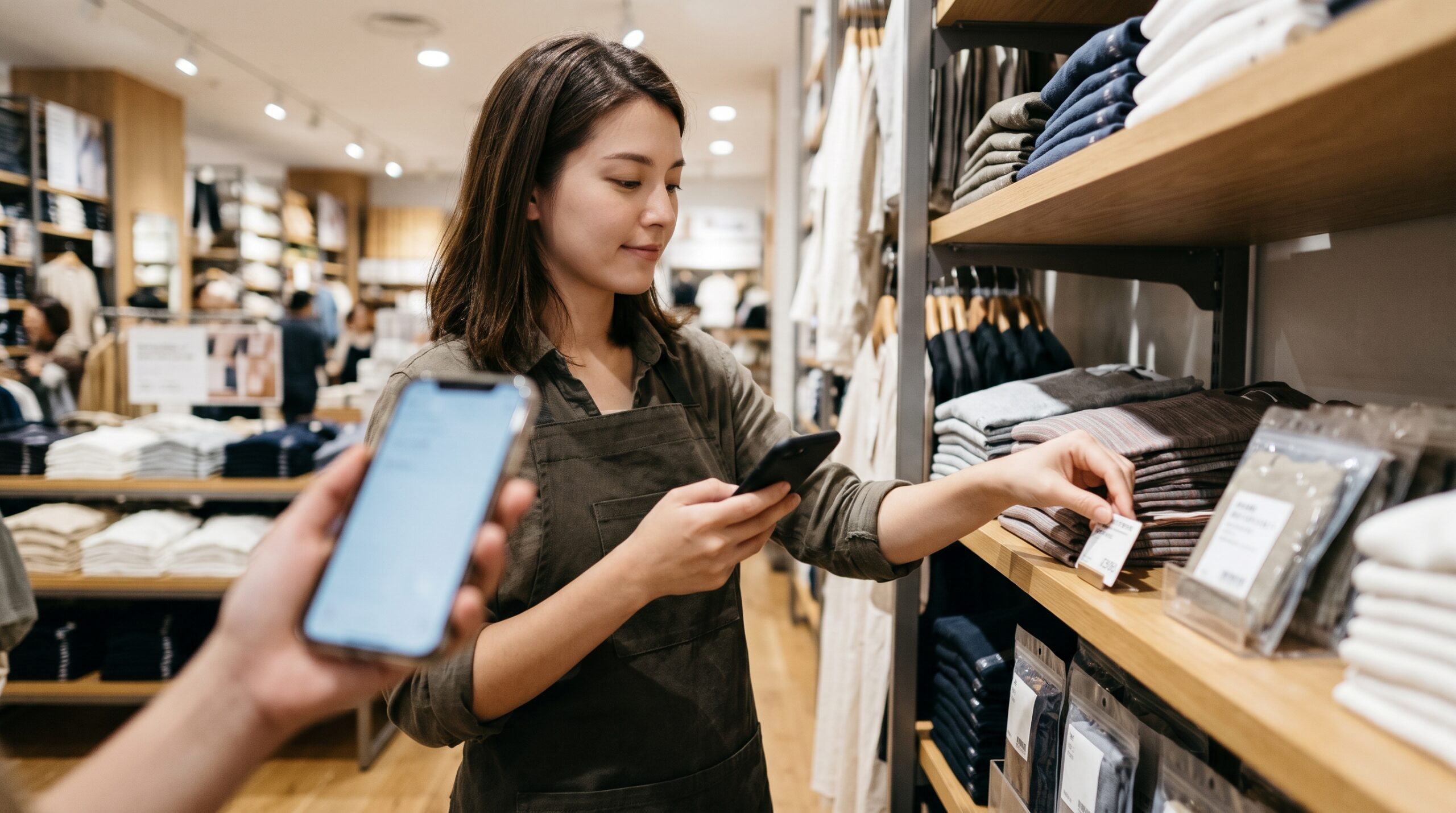
AI-powered retail execution uses machine learning to turn store data, including sales, stock, traffic, and task history, into a short, ranked list of actions that frontline teams complete and headquarters (HQ) can track. YOOBIC is a platform that runs the full loop: it takes store data in, produces prioritized recommendations, turns those into assigned tasks, and tracks completion.
Large US retailers in IHL Group’s Shelf Intelligence Report self-report accuracy averaging 58% for on-shelf availability, with planogram and promotional compliance at 57% and 60%. NVIDIA’s 2026 retail AI survey of store chains and consumer packaged goods (CPG) brands found 91% of respondents’ companies actively using or assessing the technology. IHL Group’s 2026 retail research puts inventory distortion, the combined cost of out-of-stocks and overstocks, at $1.7 trillion globally in 2026, equal to 6.2% of the sector’s sales.
You’ll learn how it’s defined, the main types, how it works step by step, why it matters, and where to start.
AI-powered retail execution
The use of machine learning, benchmarking, computer vision, and generative AI to spot sales and compliance gaps at each location, rank actions by likely key performance indicator (KPI) impact, and route them to an owner, with completion and results tracked.
How AI-powered retail execution is defined
It’s 7:00 am on a Monday, and a store manager has five reports open before the doors unlock. Each one shows something slipped, but none says what to fix first. AI-powered retail execution is the system that turns those signals into a short, ranked list of actions, each with an owner and a tracked result.
Retail execution is how HQ plans become the same experience in every store. Our retail execution strategy guide covers the fundamentals. The AI layer adds a decision step on top: it flags which part of the plan matters most at each location today.
You’ll see two competing definitions in vendor material. CPG brands use the term for image recognition on shelves, when their field reps audit other companies’ stores. Retailers use it for store teams carrying out their own plans, such as promotions, displays, and replenishment.
Operators apply a simpler working test. If the output stops at a chart, you’re looking at analytics. Execution ends in an assigned, tracked action.
The types of AI used in retail execution
Four kinds of AI show up in this work, and each does a different job.
Predictive AI benchmarks each location against comparable stores and forecasts demand. It ranks which sites and categories need attention first.
Computer vision reads photos taken on the shop floor. It checks displays and shelves against brand standards.
Generative AI drafts the daily briefing in plain language and answers questions from associates. The language model writes the summary, but it doesn’t make the call.
Agentic AI triggers the next step, such as a corrective task or a follow-up visit. A person still owns every action it starts.

If you remember one type, make it predictive benchmarking, because it finds where the opportunity is. The other three help that finding reach the floor.
The market also splits in two. CPG shelf-audit tools are built for brands checking someone else’s shelves, while retailer platforms support teams running their own locations. You can see how the categories differ in retail execution software compared.
How AI-powered retail execution works
AI-powered retail execution runs as a four-step loop. You’ll find that step two, ranking, carries most of the weight.
Store data comes in daily, covering point of sale (POS) transactions, traffic, inventory, and product records
Recommendations come out ranked, with AI benchmarking each site against comparable locations, rating expected KPI impact, and checking stock first
Recommendations become tasks when a manager accepts one in a tap, creating an editable mission, post, or course through mobile task management
Completion gets tracked because the task stays linked to its recommendation, so you see whether it got done and moved the number
We connect to that data through 200+ integrations, usually by application programming interface (API) or secure file transfer protocol (SFTP), at least once a day. The execution record sits alongside it. Tasks, photos, audits, and read receipts explain why a gap exists, while sales figures only show that it does.
Comparable means similar format and similar operating conditions. A chain average flattens those differences and hides the gaps a manager can influence.
INSIGHT: Prioritization means subtraction. Three ranked actions a day beat a hundred alerts sorted by urgency, because you’re asking a manager to consider less.
Store Manager Copilot: the shift briefing
An assistant manager arrives at 8:30 am, half an hour before opening. Instead of pulling yesterday’s numbers, they read a short briefing on their phone. It lists what changed overnight, three priorities for the day, and the biggest sales opportunity with an action plan ready to assign.
They move the second priority to the top, because they know a delivery is running late. Then they assign it and walk the floor.
That briefing comes from Store Manager Copilot, which ranks opportunities by expected KPI impact and routes the chosen one into a task. Each recommendation carries its benchmark, the stock position, and the rationale, so you can see why it’s there. The copilot suggests, and the manager decides.
Visual Merchandising Copilot: photo review against brand standards
A campaign goes live across the network on a Thursday. By Friday afternoon, hundreds of display photos are waiting, and the visual merchandising (VM) team can open only a fraction. They check the flagship locations first and hope the rest got it right.
Photos pile up fast. When manual review is the only check, up to 70% go unreviewed.
AI photo review uses computer vision to check each image against campaign and brand standards in seconds. VM Copilot then coaches the store team on what to fix while the campaign is still live. It doesn’t replace your merchandising specialists. It frees them to focus on exceptions.
If your team still reviews photos by hand, that’s common. IHL Group’s AI Reality Check found only 9% of retailers run an active computer vision deployment, though 40% already have cameras mounted in stores.
Why AI-powered retail execution matters
Managers don’t lack data. They lack time to interpret it. In Legion’s UK retail manager survey, reported by Retail Times, over half (52%) of managers said they lack time for coaching and team development.
Every hour a manager spends compiling reports comes out of time with the team. Here’s how business intelligence (BI) dashboards compare with AI-powered retail execution for your managers.
| Question | Dashboards and BI | AI-powered retail execution |
|---|---|---|
| What a store is compared against | The chain average or its own forecast | Comparable locations with similar format and operating conditions |
| What you get | A report of what happened | A ranked recommendation with an assigned action behind it |
| Who receives it, and where | Whoever opens the dashboard, often on a laptop at head office | The person responsible, in the task list the team opens each shift |
| Stock check before recommending | None, because it reports figures without recommending | Checks inventory first, so it won’t suggest selling what isn’t there |
| How impact is shown | Someone compares the numbers later, by hand | The action stays linked to the recommendation and shows whether it moved the number |
Why AI in retail is really an execution problem
Here’s the surprising finding: most AI adoption hasn’t reached profit yet. In McKinsey’s state of AI 2025, 39% of cross-industry respondents self-reported any level of earnings before interest and taxes (EBIT) impact from the technology. Most of that group said less than 5% of their organization’s EBIT is attributable to AI use.
Buying more analytics looks like the fix. More visibility should mean better decisions, and that logic is easy to accept.
A district manager watched one category slip in four stores for weeks. They saw it in each Monday report and raised it on calls. Nobody owned the fix, so nothing changed.
You’ve probably seen the same pattern in your own network. Most retail AI is good at spotting problems. Far less of it gets them fixed.
How YOOBIC puts AI-powered retail execution to work
Store teams get a short list of priorities and ready-made action plans in the YOOBIC platform on their phones. On a busy morning, an associate pulls the bestselling size from the stockroom and fills the gap flagged at opening. The fix takes minutes, and it’s logged against the recommendation that prompted it.
At head office, you see which recommendations were accepted, skipped, or actioned, and which locations turned them into sales. Because we bring tasks, communications, and learning into one platform, each action can be a checklist, a message, or a short course.
The payoff is measurable. YOOBIC customer data shows a Store Manager Copilot rollout delivered 3.2% incremental revenue.
Turn store data into action every day
That Monday manager with five reports now opens the day with three ranked priorities, each linked to a task. With AI-powered retail execution, store gaps become something you can measure, assign, and close one shift at a time.
YOOBIC brings tasks, communications, and learning together in one AI-powered platform, so a signal in your data becomes a completed action on the floor. For a deeper look, read how AI copilots turn store data into action.
Book a demo and find out how
Avoid wasted hours, blind spots
and lost revenue with YOOBIC
Frequently asked questions
How is AI used in retail stores?
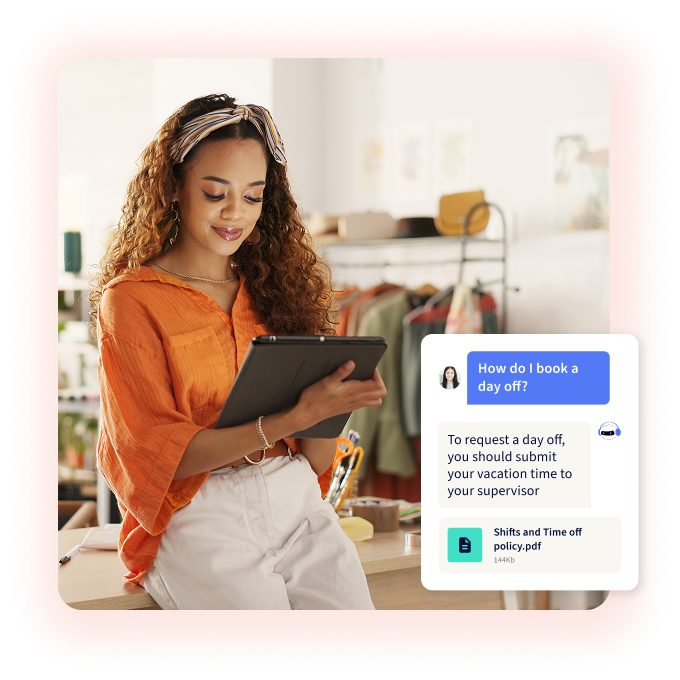
Store managers use AI to get daily priorities ranked by likely sales impact. Visual merchandising teams use computer vision to check display photos against brand standards. Associates ask an assistant for instant answers on products and procedures. In each case, a person reviews the suggestion and decides what to do.