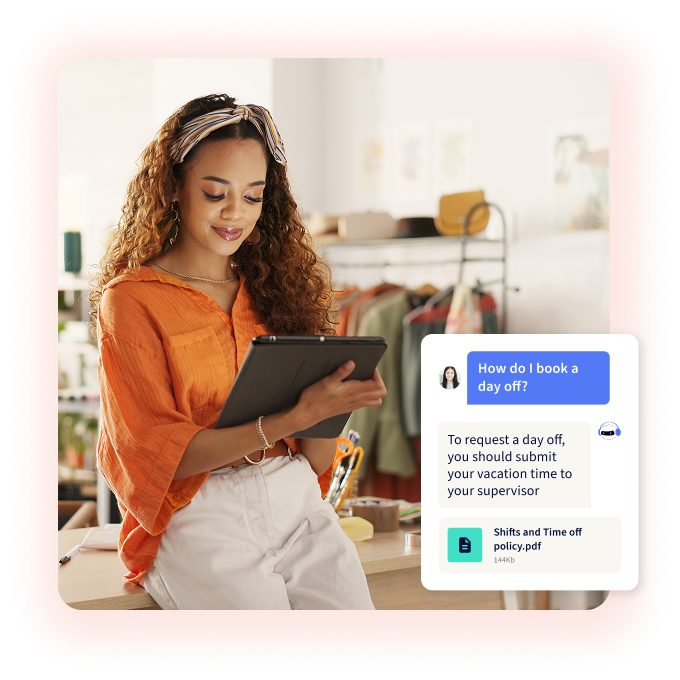

In-store visibility means knowing what is actually happening in every store: whether displays went up as planned, whether tasks were done on time, and whether products are on the shelf where customers expect them.
What do a short-sighted person without their glasses and a retailer without visibility into in-store execution have in common? It takes them both ages to find where they’re going, and they both get lost.
Like putting on a pair of glasses, visibility into everything that goes on in stores changes what a retailer is capable of. This guide explains what in-store visibility is, the data that delivers it, and five reasons it matters.
DEFINITION:
In-store visibility
In-store visibility is how clearly a retailer can see execution in every store: whether head office instructions, visual merchandising, promotions and tasks were completed correctly and on time, and whether products are displayed where shoppers can find them.
What is in-store visibility?
In-store visibility has two meanings in retail, and they depend on each other. Product visibility is how easily shoppers can see a product: its shelf placement, number of facings, end caps and promotional displays. Execution visibility is how clearly head office and regional teams can see whether stores carried out the plan that puts those products in front of shoppers.
Product visibility only happens if stores execute. A planogram, a new display or a promotion exists on paper until a store team builds it, and head office only knows it was built correctly if the store sends proof. That’s why retailers treat execution visibility as the foundation for everything shoppers see.
Visibility isn’t about scrutinizing stores so head office can micromanage. It’s about clear communication and collaboration between stores, regional teams and head office. Stores make the sales, so head office should be supporting them, not the other way around. For the wider strategy, see our guide to retail execution.
What in-store visibility data should retailers track?
The in-store visibility data that matters most shows whether stores did what was planned, how well, and what it changed. Retailers that track these six data points can see every store without visiting it:
- Task completion rate: the share of tasks each store finished on time, by store, region and task type
- Photo proof: pictures of displays, shelves and promotions, checked against the brand standard
- Compliance and audit scores: how each store scores on visual merchandising, food safety, health and safety and brand standards
- Read confirmations: who has seen each instruction or update from head office
- Store feedback: comments from store teams on instructions that were unclear, late or impossible to execute
- Store KPIs: sales, conversion and on-shelf availability, compared with execution data for the same stores
The value comes from putting execution data and performance data side by side. When a store’s sales dip, head office can check whether the promotion was set up, whether the team saw the instruction and what the photo shows, before anyone books a visit.
Why in-store visibility matters
Every retailer wants their stores to sell more. But without deciding on the processes store teams will go through every day to do that, “selling more” is just a meaningless and unrealistic goal. That’s where visibility comes into the picture.
To help stores sell more, retailers need to know:
- If and when stores have implemented instructions from head office
- If instructions haven’t been implemented correctly, or haven’t been implemented at all, and why
- Feedback from store teams about how good head office is at giving instructions
Here’s what retailers can do with full visibility into in-store execution.
1. They can make smarter decisions
Step one for trying something new, and seeing if it works, is consistently doing the new thing. It sounds simplistic, but it applies to retail too.
Imagine a retailer rebrands. A visual merchandising refresh across the entire store network is part of this, so the retailer sends out new display material and instructions.
After a month the retailer hasn’t seen the results they expected, so the rebrand is declared a failure.
Now imagine the retailer had visibility into the compliance rate of stores with the new visual merchandising guidelines, and discovered that only 20% of stores had correctly implemented the instructions.
This isn’t enough data to decide if the rebrand was a success or failure. But the retailer can now make the smarter decision to make sure all stores are compliant with VM instructions before analyzing the success or failure of the rebrand.
Visibility into store compliance provides certainty. And with certainty, retailers can strategically invest time and cost in what drives more sales and avoid what doesn’t.
To use visibility into store compliance rates to make smarter decisions, retailers need:
- A way to send instructions to stores and confirm their receipt in real time
- A way to get honest feedback from stores about the speed and ease of executing the instructions, also in real time
2. They can spot trends in compliance rates and use them to find the root causes of poor performance
Poor store performance doesn’t happen for no reason. It might have absolutely nothing to do with how hard the store team works, and everything to do with a lack of support and resources from head office.
By comparing store data like compliance and conversion rates, retailers can find and fix the underlying causes of poor performance before they start impacting sales.
For example, if one region’s stores are performing more poorly, visibility could reveal that the region’s stores haven’t been visited by an area manager for months. Knowing this, the retailer could establish a minimum required number of store visits across all regions.
Retailers who spot trends can create unique strategies for each store to help them improve. This isn’t possible without data. But there’s a catch: retailers have to be open to spotting trends that show their processes are hindering stores, and open to scrapping those processes entirely.
See it in practice: how compliance by store, region and task shows up in one view.
3. They can work smarter by spending time on what drives results
The three main reasons for a drop in store compliance rates are:
- Confusing instructions from head office
- Ineffective store visits from area managers
- Lack of feedback from store teams, so head office isn’t aware that problems exist
If the retailer knows that stores find instructions confusing and time-consuming to implement, they can change the format they’re given in. If it’s clear that store visit procedures don’t help stores improve, the retailer can design new ones that do. If stores have no easy way to give feedback, the retailer can put a system in place that makes it easy and encourages communication and collaboration.
4. They can see real progress by measuring the right metrics and setting realistic goals
No two stores are the same. While qualitative goals may be similar, quantitative goals should be achievable for each store team, or they’re demotivating. Without transparency into store performance it’s impossible to set achievable goals.
Store teams need this transparency too. To see meaningful improvement, store managers must be kept up to date on their progress. A store manager with daily progress updates can refocus and support their team. A store manager who has no progress updates is effectively blind. Our guide to store performance management covers which KPIs to track.
5. They can do everything faster and better
Visibility is about head office, regional and store teams being able to collaborate, communicate and use procedures that minimize time spent on things that don’t drive results.
Visibility leads to agility, because when head office knows why stores struggle, they can give stores the tools they need to succeed. Store teams deploy VM, promotional and operational instructions faster because the instructions are clear and concise. And since head office can see what has and hasn’t been done in each store, they have the data to analyze what works and what doesn’t.
Progress is faster, because progress can now be defined. An agile retailer reacts to what consumers want, moves more quickly and stays one step ahead of competitors.
How Pilot Company went from almost no visibility to 90 to 95% task completion
Pilot Company runs more than 900 travel centers. Before YOOBIC, head office had almost no visibility into whether stores completed the work they were sent. Today, store teams run their tasks in YOOBIC, and Pilot reaches 90 to 95% task completion across 900+ locations. Read how Pilot Company modernized frontline work.
Product tour
See a promotion go from head office to proof
Take a self-guided tour of how YOOBIC sends instructions to stores and shows head office what was done, store by store.
Task from HQ
Build seasonal end cap display
Due Friday · Photo proof
✓ Completed with photo
What software gives retailers visibility into store tasks?
Retailers get visibility into store tasks from retail task management software that sends work to stores and collects proof back. YOOBIC gives head office, regional and store teams one view of every task: who received it, whether it was completed on time, the photo that proves it, and how each store compares with the rest of the network.
Because tasks, communications and training sit in the same app, head office can also see whether a store team read the instruction and completed the training behind it. Visual Merchandising Copilot reviews display photos against brand standards, so compliance is checked at scale rather than by a regional manager scrolling through pictures.
What we see in the YOOBIC app
Store teams have submitted about 68 million tasks in the YOOBIC app across our customers. A few patterns stand out.
- Merchandising and promotions is the most widely used task type. More retailers run merchandising tasks than any other type.
- Store standards and routines drive the most volume, with 20.5 million tasks submitted.
- Health, safety and security tasks have the highest completion rate of any category.
For a beauty-specific view, see why visibility into store operations matters for beauty retailers.
See every store without visiting it
Take a self-guided tour of how YOOBIC shows task completion, photo proof and compliance across your store network.
Visibility starts with execution
Product visibility, compliance and store performance all depend on the same thing: knowing what stores actually did. YOOBIC helps retailers help their stores sell more through visibility, communication and collaboration at every level of the organization.
Book a demo to see how it works across your store network.
Frequently asked questions about in-store visibility
What does visibility mean in business?
In business, visibility means how clearly leaders can see what is happening across the organization: performance data, workflows and whether plans are carried out. In retail, it means seeing execution in every store, such as whether tasks were completed, displays were built correctly and instructions reached the right teams.
What does product visibility mean?
What does facing mean in retail?
What are the displays in stores called?
What are the types of visibility?
Book a demo and find out how
Avoid wasted hours, blind spots and lost revenue with YOOBIC