How to Increase Retail Sales: A Guide to In-Store Conversion Rate

Ebook

How to Increase Retail Sales: A Guide to In-Store Conversion Rate

Convert more of the shoppers who walk in by improving three areas of the store experience.

Key findings

  • 96% of shoppers surveyed globally leave a store empty-handed.
  • 71% of shoppers want to leave stores with a purchase in hand.
  • YOOBIC’s In-Store Conversion Optimization platform has increased retailers’ conversion rates by up to 22%.

Summary

Store traffic is declining every year, and physical stores are failing to convert the shoppers who do visit. While conversion-boosting technology is abundant online, brick-and-mortar retailers have had few equivalent tools to protect revenue as foot traffic falls.

This YOOBIC ebook shows how retailers can offset declining traffic by raising in-store conversion across three areas: store look and feel, promotions, and sales associate performance. It draws on external studies from Salesforce and Publicis.Sapient, iVend, Oracle, and Incisiv BRP-Windstream, plus academic research.

What you’ll learn

  • Which three areas of the store experience influence buying behaviour, according to studies.
  • Why each of these areas turns shoppers into buyers.
  • How retailers can improve each area across their store network to increase conversion rates and grow sales.

An Executive Guide to Improving In-Store Customer Experience

Ebook

An Executive Guide to Improving In-Store Customer Experience

The three fixable gaps between HQ’s vision and store-level execution that quietly ruin in-store customer experience.

Key findings

  • Helpful, engaged and educated sales associates who can immediately meet customers’ needs bring in 69% more revenue than those who can’t.
  • 78% of shoppers say sales associate knowledge with a deep understanding of the product range is extremely important to them.
  • 65% of HQ retail staff said the difficulty store managers have following head office instructions negatively impacts accurate store execution on campaigns.

Summary

Poor in-store experiences and the perception of a retail apocalypse have pushed iconic retailers into administration. Stores fail to deliver on aesthetic appeal, ease of finding things, and making customers feel valued. The real problem is not intent but an execution gap between what HQ envisions and what actually happens in stores.

This guide identifies three fixable gaps behind bad in-store experiences: broken communication between stores and HQ, store visit procedures that don’t help stores, and sales associate training not built for associates. It cites figures from RIS News, CNBC, PwC, and Skipton Building Society, and includes a checklist to diagnose these problems in your own stores.

What you’ll learn

  • Identify the three main obstacles that prevent stores from delivering a strong customer experience and why they happen.
  • Use a checklist of symptoms to determine whether your stores have these problems.
  • Fix and prevent these three issues to empower stores to perform their best.

The 10 (Funniest) Sins of Frontline Retail Team Management

Ebook

The 10 Sins of Frontline Retail Team Management

A cartoon-driven look at the frontline management mistakes quietly draining retail engagement, retention, and customer experience.

Summary

Frontline teams make up the bulk of the retail and hospitality workforce but have historically received minimal technology investment. Post-pandemic, after workers were called heroes and the Big Quit reshaped hiring, retail leaders face pressure to move beyond lip service and make frontline careers genuinely attractive again.

This ebook uses a cartoon series by Tom Fishburne (Marketoonist) to illustrate 10 common frontline management sins, spanning labor shortage, burnout, communication, onboarding, tool overload, omnichannel, health and safety training, knowledge management, career development, and retention. It makes the case for a purpose-built Frontline Employee Experience Platform, framed by a letter from YOOBIC CEO Fabrice Haiat.

What you’ll learn

  • The 10 recurring mistakes retail leaders make when managing frontline teams, from labor shortage to retention.
  • How employee experience across communication, onboarding, and career development connects directly to customer experience and results.
  • Why a purpose-built Frontline Employee Experience Platform addresses the 80% of workers receiving 1% of IT investment.

2022 Frontline Employee Experience Survey

Survey

2022 Frontline Employee Experience Survey

Frontline workers want to stay but feel overloaded and undervalued, and pay raises alone will not keep them.

Key findings

  • 63% of frontline retail and hospitality workers want to stay in their current industry for at least four more years.
  • 72% of frontline workers feel worn out at the end of their shift at least once a week, to the point they cannot enjoy their time off.
  • Only 16% of frontline workers feel their organization highly values their role.

Summary

Pandemic-era recognition for frontline retail and hospitality workers has faded, leaving them with heavier workloads and fewer colleagues. During the Great Resignation, retail and hospitality saw record quit rates. Workers who want to stay now have more options than ever, so employers must work harder to attract and retain them.

Based on a survey of over 1,400 frontline workers across Canada, France, the UK, and the US, conducted by Hanover Research in March 2022, with a foreword by Ron Thurston. The report explains why relying on pay increases alone fails and where digital workplace tools make a measurable difference, including 82% of retailers seeing improved sales.

What you’ll learn

  • Why frontline employees leave and what would actually make them stay.
  • Where recognition, community, and mental health support fall short, and how the gaps play out differently in retail and hospitality.
  • How digital workplace tools for tasks, training, and communication improve retention and sales.

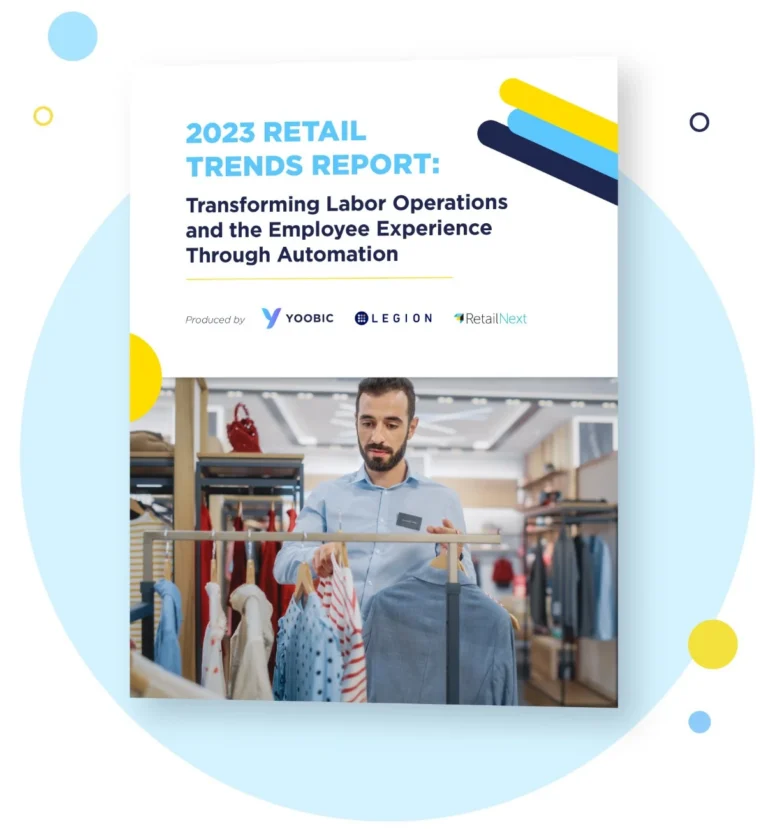
2023 Retail Trends Report

Report

2023 Retail Trends Report

See how AI-driven automation cuts scheduling time in half while easing frontline burnout and manager attrition.

Key findings

  • Omnichannel shoppers make purchases 70% more often and spend about 34% more than people who shop exclusively in stores.
  • 63% of store managers surveyed by McKinsey & Company are considering quitting their jobs, and managers are 1.75 times likelier than nonmanagers to leave.
  • Automated scheduling has enabled retailers like SMCP to reduce time spent on schedule creation and maintenance by 50%.

Summary

Economic uncertainty, inflation, supply chain volatility, and inventory surplus are reshaping retail while in-store traffic stays low. Frontline teams are understaffed and burnt out, managers are buried in manual work, and retailers struggle to attract and retain hourly associates as employee and consumer expectations keep evolving.

This report shows how AI-driven workforce management and frontline experience technologies optimize labor efficiency while improving the employee and manager experience. Co-produced by YOOBIC and Legion Technologies with data from RetailNext and commentary from Cathy Hotka & Associates, it draws on a survey of 500+ managers, YOOBIC’s 2022 Frontline Employee Experience Survey, and sources including McKinsey, PWC, and Gartner.

What you’ll learn

  • How to optimize labor operations in the face of economic uncertainty and inventory surplus.
  • How to enhance the frontline employee experience to attract and retain associates.
  • How to empower store managers and reduce stress levels through automation.

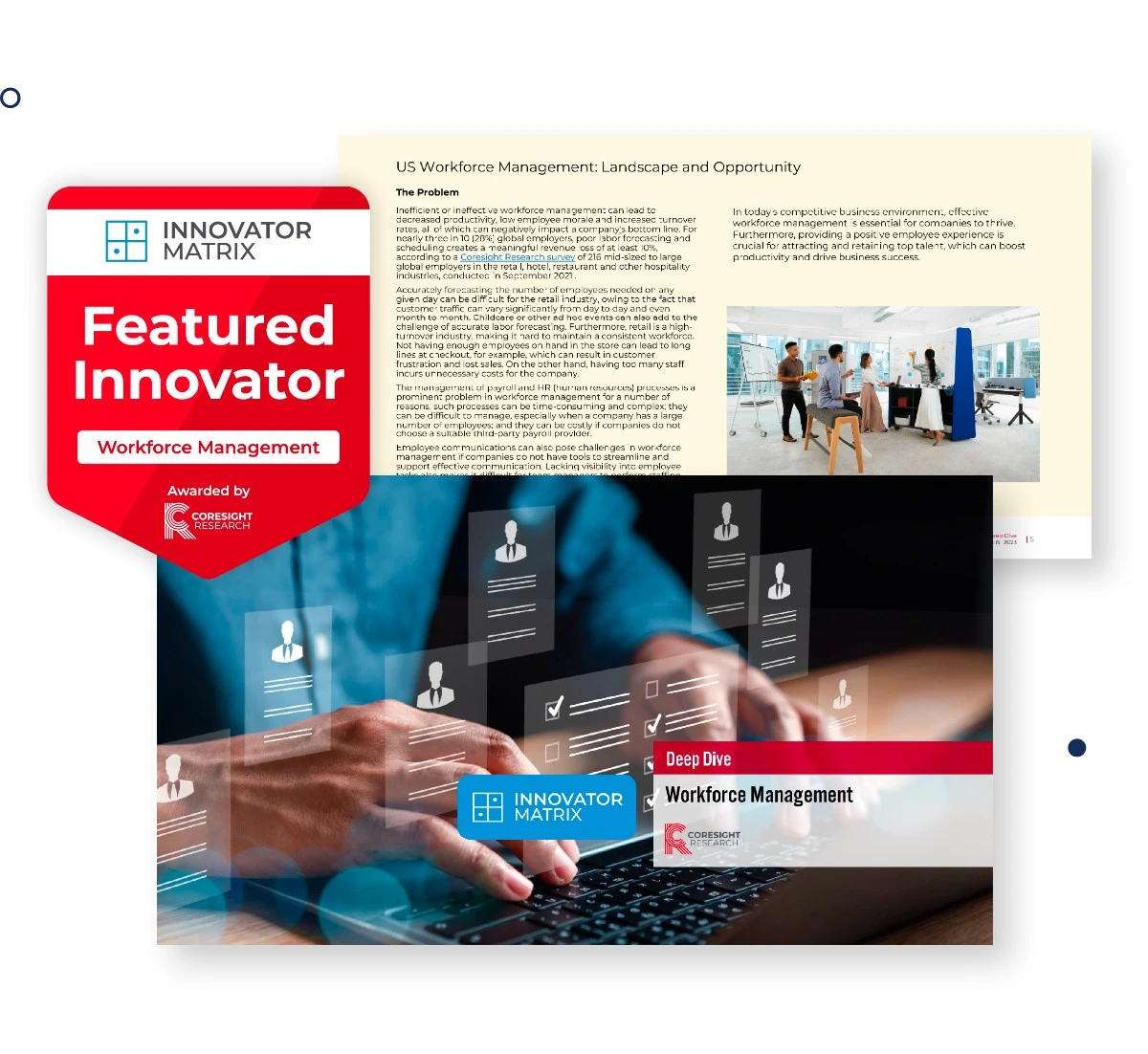
Coresight Research: 2023 Innovator Matrix for Retail Workforce Management

Analyst Report

Coresight Research: 2023 Innovator Matrix for Retail Workforce Management

The top 10 private US workforce management providers, scored on innovation and market potential from a field of 150-plus companies.

Key findings

  • The global workforce management market totaled an estimated $47.1 billion in 2022 and is projected to reach $77.2 billion by 2027.
  • For nearly three in 10 (28%) global employers, poor labor forecasting and scheduling creates a meaningful revenue loss of at least 10%.
  • 82% of organizations that adopted digital workplace applications reported improved sales conversion, and 79% reduced operational costs.

Summary

Retail faces a tight labor market with high turnover, staff shortages, and competition for hourly workers, alongside growing demand for flexible schedules. Understaffing, excess overtime, and inaccurate labor forecasting harm customer experience, raise costs, and pressure profitability, pushing retailers to adopt AI and ML-powered workforce management technology.

This report from Coresight Research identifies and scores the top 10 private US workforce management providers on level of innovation and market potential. Analysts screened 150-plus pre-IPO companies using a nine-criteria proprietary methodology, drawing on company reports, Crunchbase, and Coresight Research surveys of mid-sized to large global employers conducted in September 2021.

What you’ll learn

  • The key trends reshaping retail workforce management and the opportunities of adopting a dedicated solution.
  • How the top 10 US workforce management players compare across communication, payroll and task management, and scheduling.
  • The nine-criteria methodology Coresight Research used to score vendors on innovation and market potential.

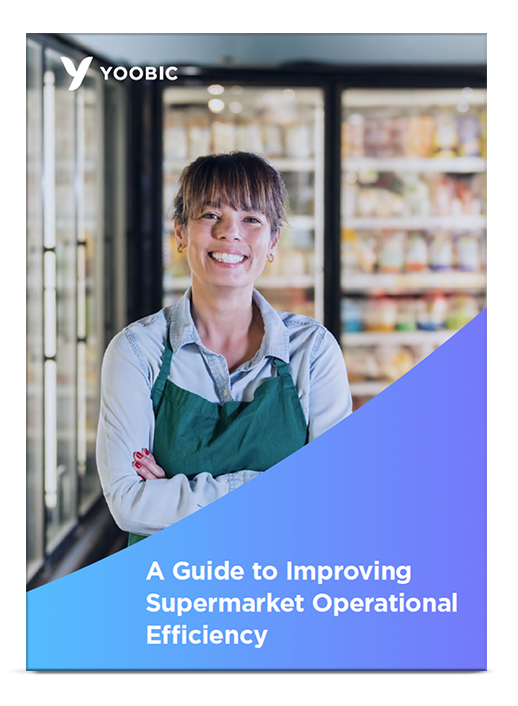
A Guide to Supermarket Operational Efficiency

Ebook

A Guide to Improving Supermarket Operational Efficiency

Four operational moves to relieve pressure on your stores, engage frontline teams, and meet rising shopper expectations.

Key findings

  • 69% of consumers value convenience most when shopping in-store, and 54% are stressed by shopping in-store and want to get in and out fast.
  • 70% of customer-facing employees say the COVID-19 pandemic has been the most stressful time of their careers, and 1 in 3 face abusive customer behavior every shift.
  • Engaged employees make 60% fewer errors and are 21% more profitable than their unengaged peers.

Summary

The pandemic created a perfect storm for supermarkets: rising demand and higher expectations around safety, convenience, and availability, colliding with inefficient behind-the-scenes processes and overwhelmed frontline teams. Stores were pushed to maximum operating capacity while pre-existing inefficiencies were exposed and intensified.

This YOOBIC ebook lays out four measures to improve supermarket operational efficiency: digitizing task management, streamlining field team processes, automating expiration date tracking, and unifying store tasks with internal communications. More than 200 retailers, including Redner’s Market, Lidl, Carrefour, Monoprix, and Vitalia, use YOOBIC’s digital workplace.

What you’ll learn

  • Why boosting operational efficiency is the most effective way to help supermarkets succeed under intense pressure.
  • Four ways to make your supermarkets operationally efficient, from digitizing tasks to automating expiration date tracking.
  • How to implement these measures to reduce errors and engage frontline teams.

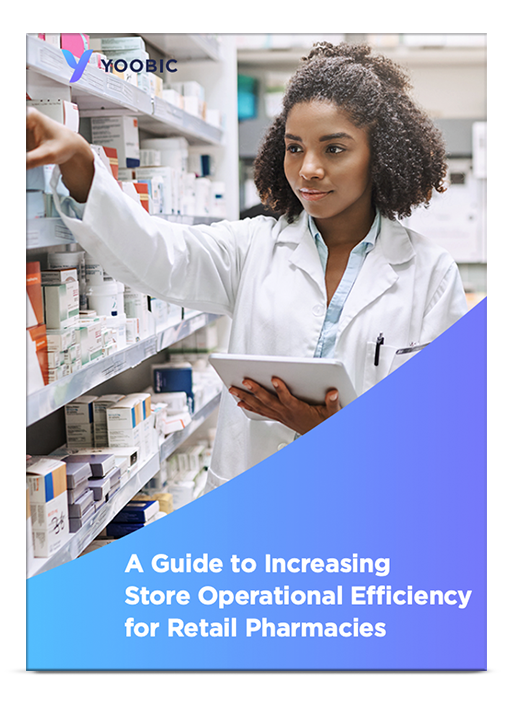
A Guide to Increasing Store Operational Efficiency for Retail Pharmacies

Guide

A Guide to Increasing Store Operational Efficiency for Retail Pharmacies

Four measures pharmacy teams use to cut costs, reduce errors, and grow sales under pandemic pressure.

Key findings

  • Engaged employees make 60% fewer errors than their unengaged peers, according to Gallup.
  • Automation from AI cuts labor costs by 20%, according to McKinsey.
  • 54% of business executives reported higher productivity after implementing AI in the workplace.

Summary

The COVID-19 pandemic created a perfect storm for retail pharmacies: high consumer demand, inefficient processes, and overwhelmed staff, all while stores must stay open through any future lockdowns. Teams must keep customers safe, ease strain on the healthcare system, cut operating costs, and grow sales with scarce time and resources.

This guide sets out four measures to boost store operational efficiency: digitizing task management, managing operations remotely, streamlining frontline communications, and using AI to automate analysis and in-store improvements. It draws on engagement and productivity figures from Gallup and McKinsey, and reflects YOOBIC’s work with 200+ retailers and brands including Boots, McKesson and LloydsPharmacy.

What you’ll learn

  • Why boosting operational efficiency is the strongest way to help pharmacy stores succeed under intense pressure.
  • The four ways to make retail pharmacy stores operationally efficient.
  • How to implement each measure across HQ, field and store teams.

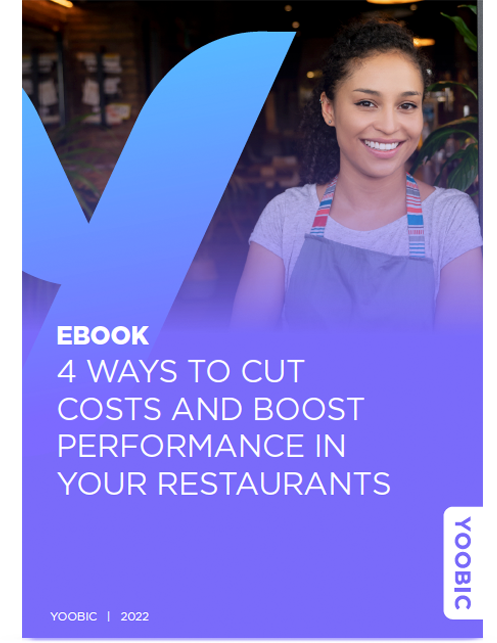
Restaurant Recovery: 4 Ways to Cut Costs and Boost Performance

Ebook

Restaurant Recovery: 4 Ways to Cut Costs and Boost Performance

Four technology shifts that let restaurants cut operating costs while protecting guest experience and team performance.

Key findings

  • Remote restaurant audits save field teams enough time to visit 50% more locations.
  • For 25 regional managers, remote audits saved $900 per manager each month, totaling $270,000 per year.
  • The same managers saved 18,000 hours per year by eliminating 15 hours of weekly travel per manager.

Summary

COVID-19 reshaped restaurant economics: 8+ million frontline employees were laid off or furloughed, 4 in 10 restaurants will stay closed post-reopening, and nearly 25% of consumers won’t dine out until a vaccine exists. Operating a site is costlier than ever while capacity and confidence remain constrained.

This ebook shows how restaurants can do more with less across four areas: remote audits, digitized task management, mobile-first training and communications, and tool consolidation. It combines YOOBIC customer data with external figures from Restaurant Business, McKinsey & Company, and QSR Magazine to quantify the savings each shift delivers.

What you’ll learn

  • Why restaurants need to rethink how they operate sites in the COVID-19 era.
  • Four practices that help each location do more with less.
  • How each practice cuts costs, raises productivity, and improves safety.

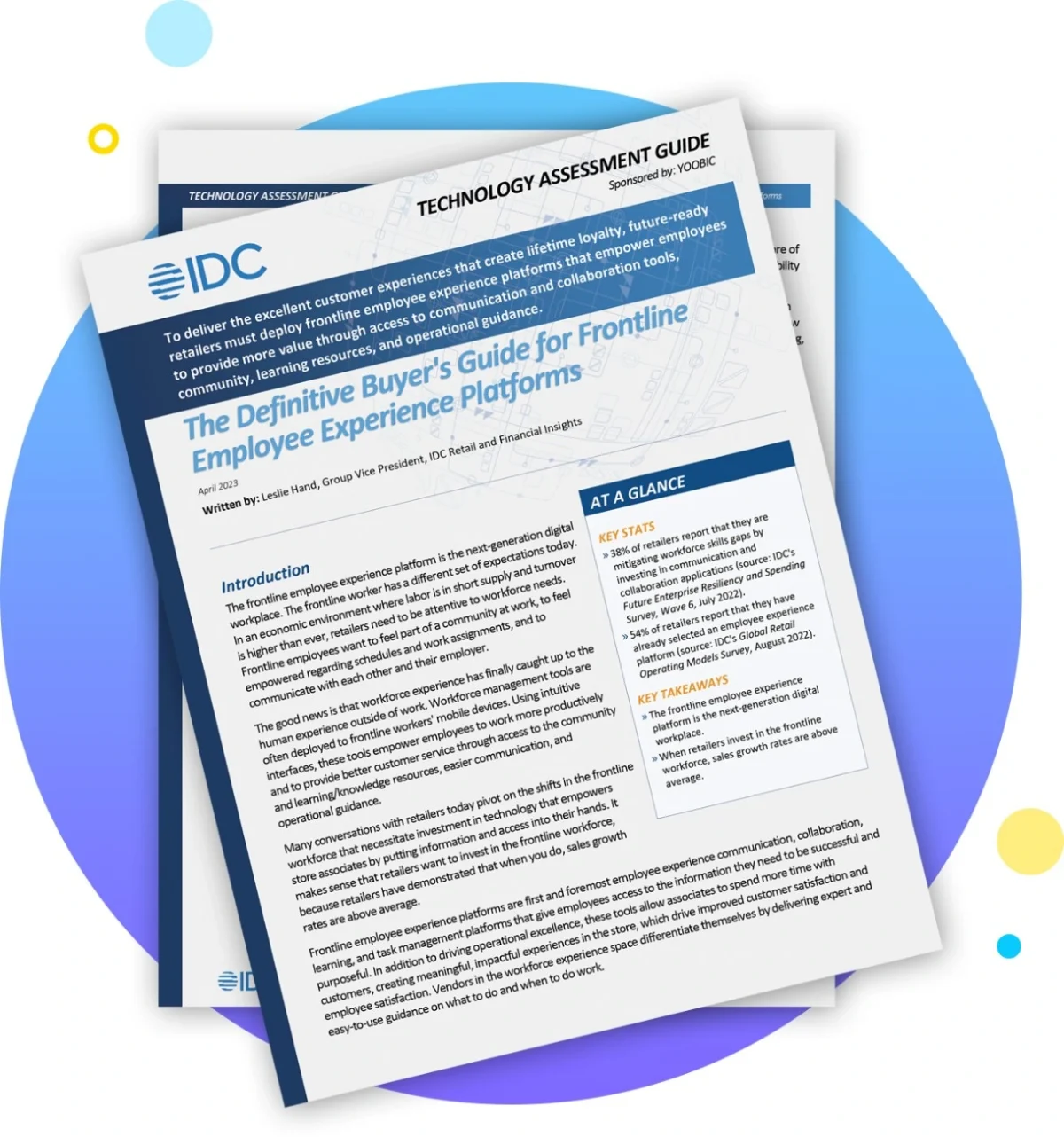
IDC Analyst Brief: Retail Rebound and the Future of the Store

Analyst Report

Retail Rebound and the Future of the Store

How a digital workplace helps retailers meet rising customer expectations with a smaller, less experienced store workforce.

Key findings

  • Shoppers estimated close to 75% of their retail spending occurred online over the course of the year, up from less than 40% pre-pandemic.
  • Roughly 60% of U.S. shoppers said they would choose not to buy from a retailer that lacked a BOPIS option.
  • About 50% of shoppers would shop somewhere else if the store lacked return anywhere, curbside pickup, or online inventory visibility.

Summary

The pandemic permanently reshaped retail, entrenching omni-channel shopping and adding operational complexity. At the same time, pandemic-era layoffs and furloughs left stores with a less experienced, lower-skilled, and more expensive workforce, even as customer expectations for in-store and omni-channel service continued to rise.

This analyst brief, written by Jon Duke, Research Vice President at IDC Retail Insights, examines how digital workplace solutions for frontline associates improve task compliance, streamline communication, and accelerate learning. Consumer statistics are drawn from IDC’s Retail Consumer Insights Survey of September 2020.

What you’ll learn

  • How customer shopping behavior has shifted and what it means for store operations.
  • How to support a shrinking, less experienced, and more expensive store workforce.
  • How a digital workplace helps retailers overcome today's most pressing operational and financial challenges.