Rethinking Grocery Store Operations

Whitepaper

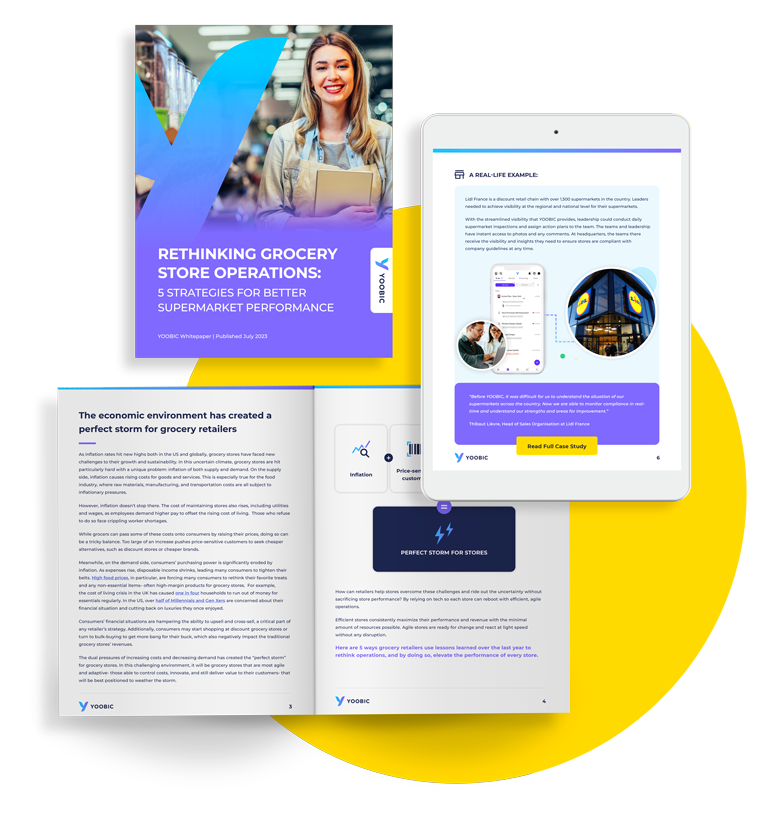
Rethinking Grocery Store Operations

Five ways grocery retailers can protect store performance and revenue with fewer resources during inflation and labor shortages.

Key findings

  • 81% of workers want updated processes to improve their efficiency so they aren’t overburdened.
  • 53% of employees don’t receive regular training, and 74% of retail employees think mobile app-based training would be easier.
  • 69% of employees stay when they have a superior onboarding experience.

Summary

Grocery retailers face a perfect storm: inflation drives up the cost of goods, wages, and utilities while eroding consumer purchasing power and demand for high-margin items. Post-pandemic worker shortages and heavier workloads add pressure to control costs, stay agile, and maintain store performance and customer experience.

This whitepaper sets out five ways to rethink grocery operations with technology: digitizing store operations, improving communications, simplifying repetitive processes, digitizing regional team processes, and upskilling teams in the flow of work. It draws on YOOBIC deployments across Lidl France, Alnatura, Vitalia, and Naturalia, part of the 350+ companies that trust YOOBIC.

What you’ll learn

  • The top operational challenges grocery retailers face during inflation and labor shortages.
  • Five strategies to improve store performance with minimal resources.
  • Real-life examples from grocery retailers that implemented these strategies.

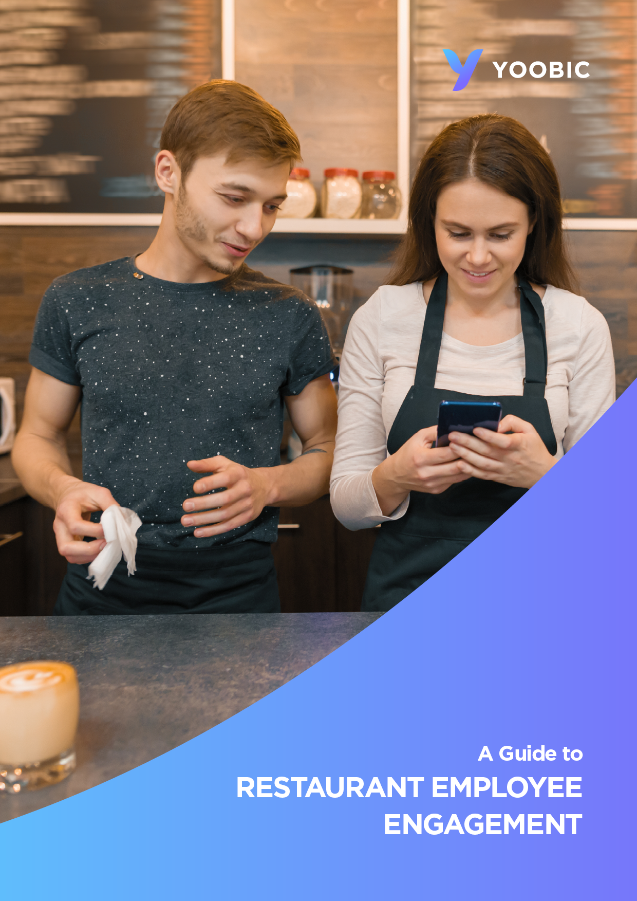
A Guide to Retail Employee Engagement

Ebook

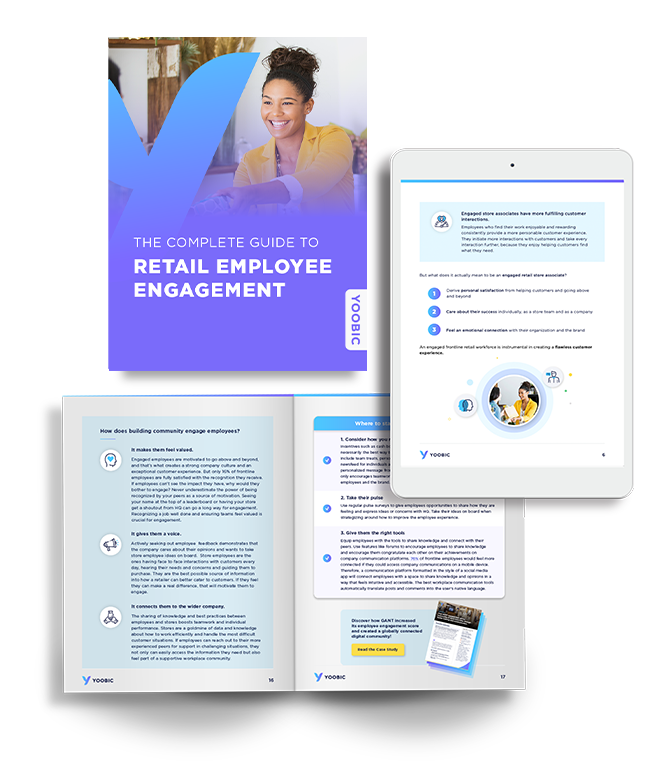
A Guide to Retail Employee Engagement

The tools, training, and community tactics that turn disengaged store associates into a measurable business advantage.

Key findings

  • Only 34% of U.S. employees were engaged with their work in 2021, and just 24% of executives believe their employees are highly engaged.
  • Businesses with top-quartile engagement saw 81% less absenteeism, 43% lower turnover, a 10% increase in customer loyalty, and 23% higher profitability.
  • Annual turnover at a single grocery store costs a retailer $190,000 per year, while disengaged employees make 60% more errors than engaged peers.

Summary

After being praised as frontline heroes during the pandemic, retail associates now face high stress, demanding customers, and heavier workloads with fading recognition. That combination is driving disengagement and record turnover, even as 94% of retailers reported difficulty filling vacant positions in 2021.

This guide draws on third-party research from Gallup, Harvard Business Review, Korn Ferry, and the University of Phoenix, plus YOOBIC’s own 2022 survey of 1,400 frontline employees. It lays out why associates disengage and how their engagement directly affects sales, customer loyalty, and retention.

What you’ll learn

  • Why retail employees disengage and how it impacts sales, turnover, and productivity.
  • How engaged store associates function as a measurable business differentiator.
  • Three steps to build highly engaged teams: the right tools and tech, continuous learning, and a sense of workplace community.

Whitepaper: Rethinking Retail Operations

Ebook

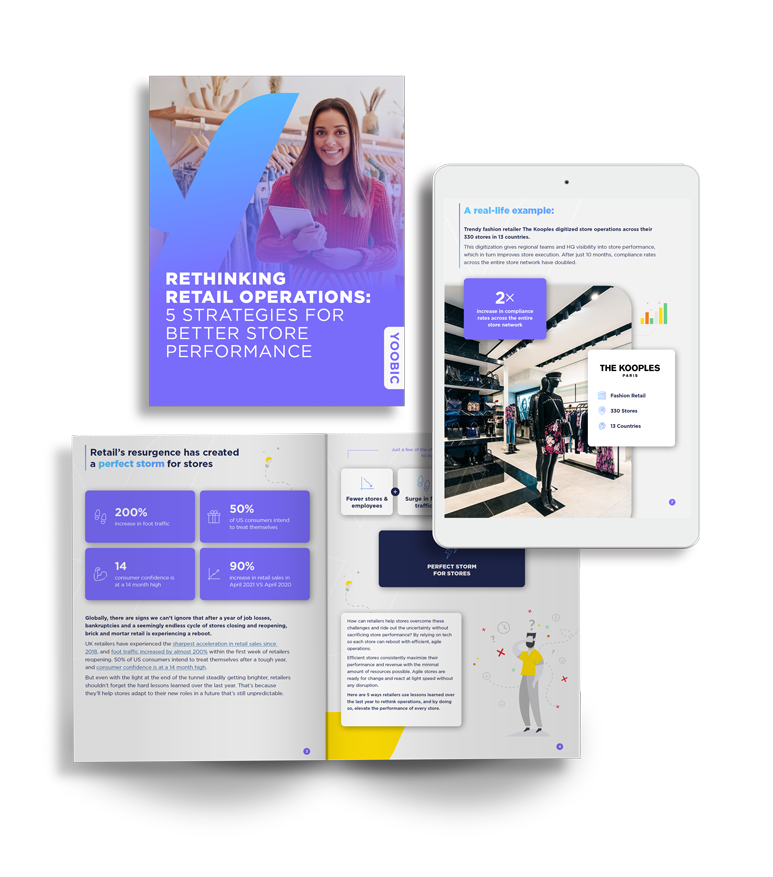
Rethinking Retail Operations: 5 Strategies for Better Store Performance

Five technology-driven strategies to keep stores efficient and agile through retail’s post-pandemic surge in foot traffic and sales.

Key findings

  • Foot traffic increased by almost 200% within the first week of retailers reopening, and UK retail saw its sharpest sales acceleration since 2018.
  • 67% of retail employees are still using paper forms for store processes, and 37% are trained only once per year or less.
  • 35% of retail employees feel disconnected from their organization and peers, while 74% think mobile app-based training would be easier.

Summary

Brick-and-mortar retail’s post-pandemic resurgence created a perfect storm: surging foot traffic and sales met fewer stores, fewer employees, heavier workloads, and intense hiring competition. Retailers cannot simply revert to pre-pandemic practices. They need store operations built for an unpredictable environment, supported by technology rather than paper and one-off training.

This YOOBIC ebook lays out five strategies for rethinking store operations: digitizing operations, improving communications, simplifying repetitive processes, digitizing regional team work, and upskilling teams in the flow of work. It includes examples from retailers such as The Kooples, Boots, The Foschini Group, and Jules showing measurable operational gains.

What you’ll learn

  • The top operational challenges facing stores during retail's resurgence.
  • Five strategies to improve store productivity, engagement, and customer experience.
  • How retailers like Boots and The Foschini Group applied these strategies and the results they saw.

The Complete Guide to Effective Retail Store Communications

Ebook

The Complete Guide to Effective Retail Store Communications

The best practices, common pitfalls, and real retailer examples for connecting HQ with frontline store teams.

Key findings

  • 34% of frontline employees feel disconnected from HQ, according to YOOBIC’s 2021 Frontline Employee Workplace Survey.
  • The average employee spends over 25% of their working day searching for the information they need to do their job.
  • 76% of frontline teams say they would feel more connected if they could use a mobile app for workplace communications.

Summary

COVID accelerated business digitization, but many retailers still lag on frontline communication, leaving store teams disconnected from HQ. Weak, non-user-friendly communication tools undermine productivity, engagement, retention, and the customer experience, and the cost of getting it wrong shows up across the entire store network.

This ebook explains why mobile-first store communications matter and how to consolidate them into one engaging platform. It draws on YOOBIC’s 2021 Frontline Employee Workplace Survey, a Deloitte data source, and customer examples from Adore Me, GANT, Roots, and Johnston & Murphy.

What you’ll learn

  • How effective store communications contribute to retail success and where retailers most often get it wrong.
  • The measurable impact of poor communication on engagement, error rates, and retention.
  • Six best practices to improve retail communications, with examples from real retailers and a starting point for implementation.

Retail Gazette Report: Welcome to The New Retail Workplace

Report

Welcome to The New Retail Workplace

The working trends that turn a disengaged frontline workforce into a productive one, with real examples from Levi’s, Primark and M&S.

Key findings

  • A Workl survey of 300,000 people found retail scored just 66% on employee engagement, with only the chemicals, mining and metal manufacturing sector scoring lower.
  • A 2019 study by the University of Oxford’s Saïd Business School and Erasmus University Rotterdam found workers are 13% more productive when happy.
  • In a four-day-week pilot running June to December 2022, 92% of the 61 participating companies decided to continue, and 30% of those made it permanent.

Summary

UK retail is navigating a declining, high-turnover workforce, a widespread wellbeing crisis, and the biggest cost-of-living crisis in a generation. Retailers face the dual challenge of recruitment and retention while balancing productivity and adapting to post-Covid working trends such as hybrid and four-day-week models.

This report explains how flexibility, wellbeing support, engagement and competitive pay lift frontline productivity, using examples from Levi’s, Primark, Pandora, Majestic Wine and M&S. Produced by Retail Gazette in collaboration with YOOBIC and Inploi, it draws on data from Workl, The Retail Trust, the ONS, Deloitte and academic research.

What you’ll learn

  • How changing retail workforce dynamics are reshaping employer strategy on recruitment and retention.
  • What a productive, engaged and growth-focused retail organisation looks like in practice.
  • Effective approaches to flexible working, employee wellbeing support and pay that improve frontline productivity.

The Ultimate Guide to Improving Retail Store Visits

Ebook

The Ultimate Guide to Improving Retail Store Visits

Fix the five most common store visit failures and turn routine audits into a driver of in-store sales.

Key findings

  • Retail teams using YOOBIC spend 40% less time executing store tasks.
  • Retailers using YOOBIC boost in-store conversions by 22%.
  • 95% of people surveyed by the Society of Human Resources Management feel irritation and dread when a performance review invite appears on their calendar.

Summary

Retail has moved into an era of experiential shopping, where the physical store has to work harder to stand out. Yet the store visit remains decades behind the rest of retail: an exercise in low-value admin and policing rather than a way to improve the in-store experience and lift performance.

This guide sets out the five most common problems with outdated, paper-based store visit procedures and how to fix each one. It draws on YOOBIC’s eight years working with retailers and an interview with Louise O’Keeffe, Head of Retail Support at Halfords, which operates 455 shops.

What you’ll learn

  • The five most common store visit pitfalls and how to fix them.
  • How a stores-first approach surfaces useful insights and drives performance.
  • How Halfords redefined its store visits, cutting 200 field-team questions down to a focused 35 that follow the customer journey.

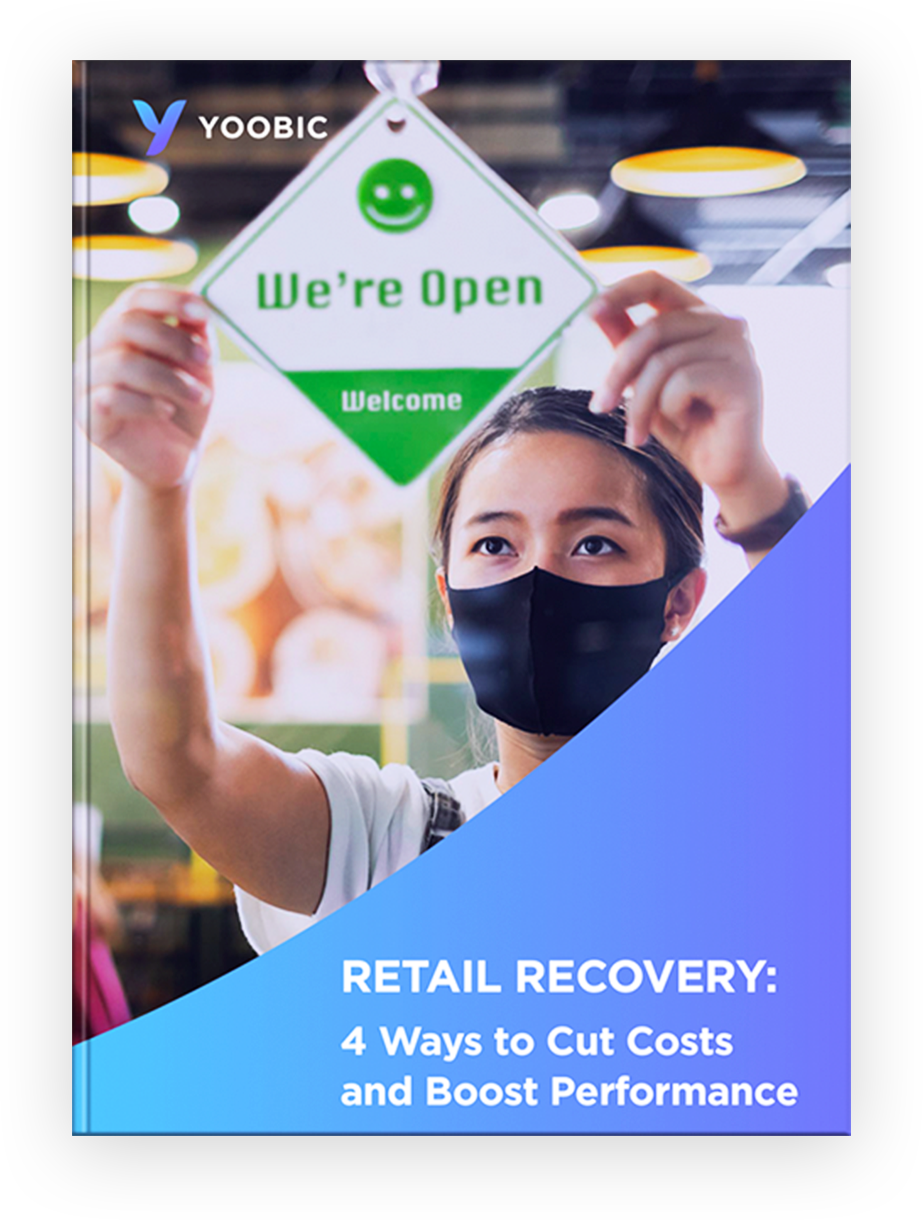
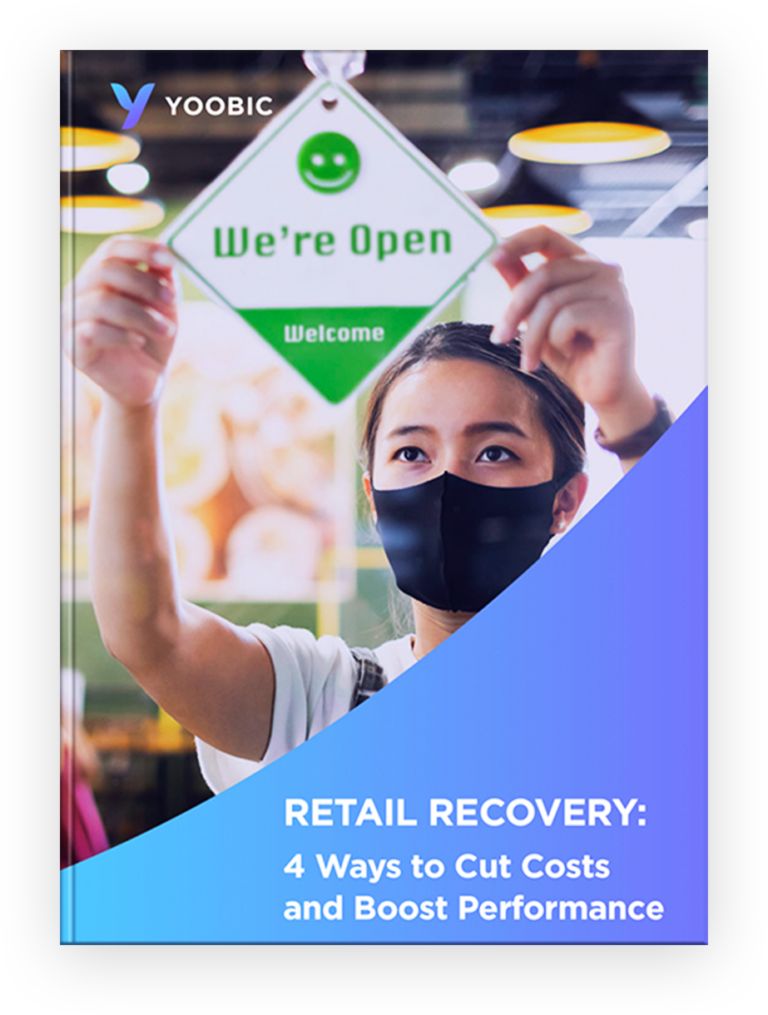
Retail Recovery: 4 Ways to Cut Costs and Boost Performance

Ebook

Retail Recovery: 4 Ways to Cut Costs and Boost Performance

How retailers cut store operating costs by up to $270,000 a year without sacrificing customer experience.

Key findings

  • Remote store visits save field teams enough time to visit 50% more stores.
  • Switching to remote store visits saved 25 field managers $270,000 per year and 18,000 hours annually, according to YOOBIC customer data.
  • Foot traffic fell 43% year over year, forcing fewer store employees to become up to 30% more productive.

Summary

Post-COVID-19, stores face reduced foot traffic, weaker brand loyalty, a shift to online shopping, and fewer employees and locations. Consumer digital adoption that would have taken 10 years happened in 90 days. Cost-cutting became retailers’ priority, but they cannot afford to sacrifice in-store experience or team performance to get there.

This ebook lays out four tech-powered approaches to help each store do more with less: digitized remote store visits, AI-driven data analysis, mobile-first training and communication, and tool consolidation. Cost and time savings are based on YOOBIC customer data. YOOBIC’s digital workplace is used by 200+ retailers and brands, including Lacoste, Boots and Puma.

What you’ll learn

  • Why retailers need to rethink how they operate stores in the COVID-19 era.
  • Four ways to help each store do more with less.
  • How each practice cuts costs and makes employees more productive.

How a Digital Workplace Reduces Operational Costs for QSRs

Ebook

How a Digital Workplace Reduces Operational Costs for Restaurants

See how digital workplace technology cuts labor, waste, admin, and maintenance costs across restaurant and QSR operations.

Key findings

  • Nearly 100% of restaurants and QSRs surveyed by Goldman Sachs reported an increase in operating costs this year.
  • 79% of organizations that invested in digital workplace technology reported reduced operational costs, according to Coresight Research.
  • 73% of restaurants still rely on outdated formats such as paper forms for opening and closing checklists, cleaning schedules, and stock reports.

Summary

Restaurants and QSRs are absorbing rising operational costs from labor shortages, high quit rates, and supply chain turbulence. One chef reported that since 2020 fryer oil prices more than doubled, takeout box costs nearly quadrupled, and a case of chicken wings spiked 388%. Food wastage alone accounts for $2 billion in lost profits.

This ebook shows how a digital workplace platform lowers labor, waste, administrative, and maintenance costs while using location data to improve efficiency. It draws on data from Goldman Sachs and a Coresight Research survey, alongside frontline workforce findings, to make the case for digitizing restaurant operations.

What you’ll learn

  • What a digital workplace is and why it matters for restaurant and QSR chains today.
  • Four ways a digital workplace reduces operational costs across labor, waste, admin, and maintenance.
  • How location-level data helps each site operate at maximum efficiency.

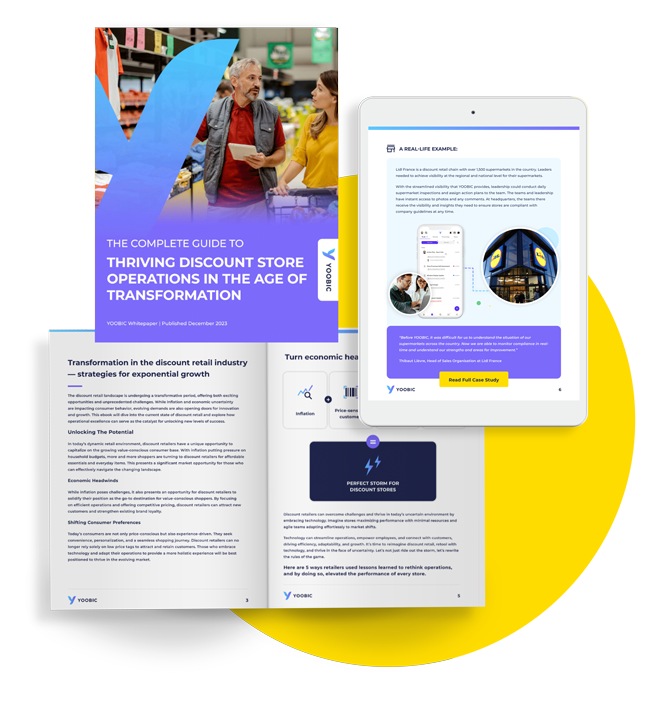
Thriving Discount Store Operations in the Age of Transformation

Ebook

Thriving Discount Store Operations in the Age of Transformation

Five technology-powered strategies discount retailers use to protect store performance through economic headwinds and drive growth in 2024.

Key findings

  • Retail sales growth hit a low of -3.3% in 2022, according to the Centre for Retail Research, before an expected recovery.
  • Global retail sales are projected to grow 6.7% in 2024, with brick-and-mortar accounting for over 85% of total sales.
  • 81% of workers want updated processes to improve their efficiency, yet 53% of employees don’t receive regular training.

Summary

Discount retailers have weathered a cost-of-living crisis, inflation, rising interest rates, and organized retail crime, all of which cut consumer spending. Entering 2024, the market shows signs of recovery and growth, but capturing it demands more efficient, agile store operations that protect performance against continued volatility.

This ebook sets out how discount retailers use technology to reach operational excellence across five areas, from digitizing store operations to upskilling teams in the flow of work. It cites the Centre for Retail Research and the White House Council of Economic Advisers, and draws on implementations at Lidl France, francesca’s, Adore Me, and Naturalia.

What you’ll learn

  • The top advantages discount retailers hold in the current age of transformation.
  • Five winning strategies to improve store performance, from digitizing operations to upskilling teams.
  • Real-world examples from retailers including Lidl France, francesca's, Adore Me, and Naturalia.

IDC Tech Assessment Guide for FEXPs

Analyst Report

IDC’s Technology Assessment Guide for Frontline Employee Experience Platforms

A vendor evaluation worksheet and buyer criteria for selecting the right frontline platform for your RFP.

Key findings

  • 54% of retailers report that they have already selected an employee experience platform.
  • 38% of retailers report that they are mitigating workforce skills gaps by investing in communication and collaboration applications.
  • 35.1% of retailers surveyed by IDC expect a 2023 recession to have no impact on IT budgets, and 11.6% expect it to drive an increase.

Summary

Retailers face labor shortages, high turnover, and shifting frontline workforce expectations, compounded by inflation, recession, and supply chain pressure. Too many siloed, non-intuitive legacy systems leave deskless workers underserved. To build lifetime customer loyalty, retailers need consolidated, human-centric platforms that attract and retain a next-generation workforce while improving customer experience.

This analyst buyer’s guide was authored by IDC Retail and Financial Insights, with analyst Leslie Hand, Group Vice President, and produced by IDC Custom Solutions. It draws on named IDC surveys and NRF data. Sponsored by YOOBIC, it includes worksheets for vetting vendor fit, required capabilities, and long-term compatibility.

What you’ll learn

  • Key considerations in selecting a Frontline Employee Experience Platform.
  • How to define your organization's essential criteria for vendor fit and your RFP.
  • What to look for when assessing long-term vendor compatibility.