A good omnichannel strategy in retail is a lot like baking chocolate chip cookies.
Think of each channel, your website, social media, and physical stores, as the ingredients.
Some are nice on their own. Combined at the right time, though, the result is far better, because each one plays a different role.
Here’s the short answer to where stores fit in omnichannel retail: physical stores stay central.
The pull toward connected shopping is well documented. According to McKinsey, 60 to 70 percent of consumers research and shop both in stores and online.

McKinsey also finds that omnichannel customers shop 1.7 times more than single-channel shoppers, and they spend more.
Stores still carry the volume. U.S. Census Bureau data shows e-commerce was 16.4% of total U.S. retail sales in 2025.
That means roughly 84% of retail sales still happen in physical stores.
So stores are kind of a big deal, in the same way chocolate chips matter when you bake cookies.
So where does the store fit now? Here are three roles every store plays in a strong omnichannel experience, and how to get your teams there.

What is omnichannel retail?
Omnichannel retail is one connected experience across every channel, your website, app, social, and store, where inventory, pricing, and service stay consistent.
Here’s the part most sources miss. Channels only behave as one experience when store teams can execute consistently across them.
A promotion online means nothing if the display never goes up correctly in the store.
That gap between the plan and the floor is where omnichannel retail either works or quietly breaks.
The role of the store is to immerse
Stores immerse customers in the physical embodiment of your brand in a way other channels can’t.
That doesn’t make stores better or more valuable. It makes them different.
From store layout to visual merchandising, from the music to the scent to the free samples, stores reach all five of your customers’ senses.
When everything is executed well, customers aren’t just watching your brand. They’re living your brand story for as long as they’re on the floor.
A consistent experience depends on one thing. Store teams executing the same visual merchandising and brand standards in every location.
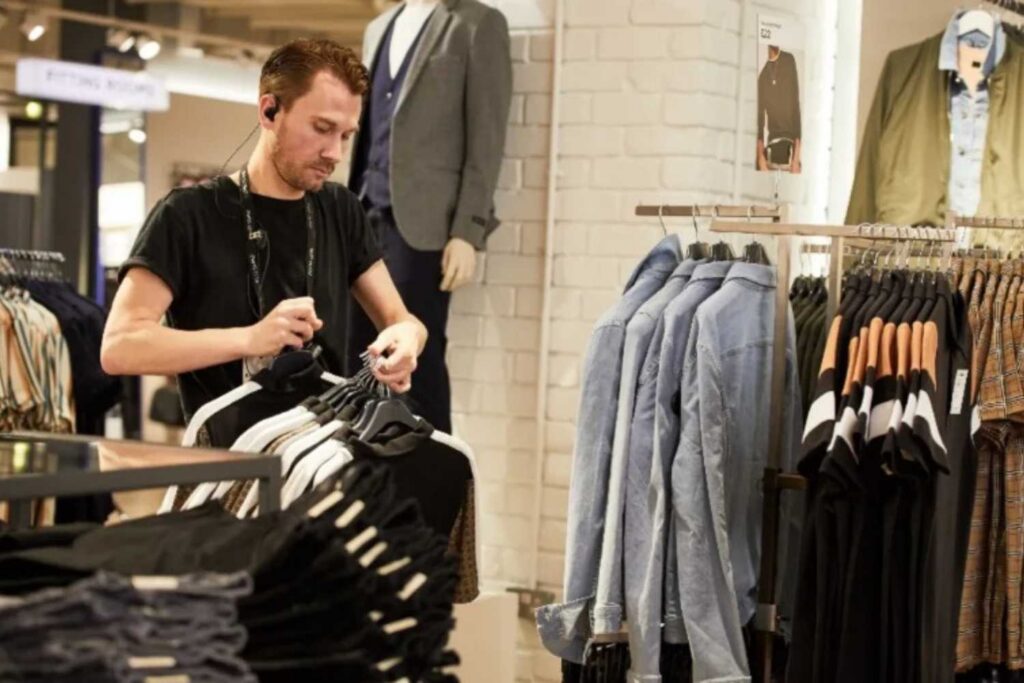
Picture an associate on a Monday open, holding a new campaign brief on a phone. They check the planogram, move the table display two feet, and snap a picture to confirm the match.
That’s the difference between a display that looks like the plan and one that doesn’t.
That kind of consistency needs a system behind it. YOOBIC Task Management turns a visual merchandising guideline into an assigned task with photo-based verification across every store.
It also helps to improve the operational efficiency of your stores, so a consistent, channel-agnostic look and feel gets easier to achieve.
60% increase
in store execution on visual merchandising and promotions
Sportscene
The role of the store is to connect
Stores give people a place to connect, for advice from associates and even a quick word with another shopper.
People still want a knowledgeable person on the floor. That’s the part a screen can’t replace, and it’s why the associate interaction matters so much.
The way your team talks to customers continues the brand voice people already found online.
Their product knowledge should match what a customer can find on your website.
A customer asks whether a jacket runs small. Instead of guessing, the associate searches the knowledge library on their phone and reads back the fit notes in seconds.
How to turn store teams into confident brand ambassadors:
- Equip teams with mobile devices to check stock, place click-and-collect orders, and answer questions in the flow of work
- Give them YOOBIC Learning so training reaches them on the floor, not in a back-office binder
- Connect teams to your mission and each other with YOOBIC Communications, and recognize good work when it happens
Related: a guide to effectively training frontline employees
Related: the complete guide to retail employee engagement
150% increase
growth in learning program participation
Michaels
The role of the store is to inspire
For some shoppers, the decision to buy starts the moment they see an inspiring display, even if they check out on another channel.
For others, it starts online, and then seeing the product in person seals the deal.
Plenty of in-store purchases start with online research, and plenty of online purchases get decided by seeing the product in person. The two channels feed each other.
Seeing the right product at the right moment still sparks impulse buys. Those unplanned grabs happen on the floor, when the store puts you in the mood to look.
Click-and-collect is a discovery moment too. A shopper coming in to pick up an order often leaves with one or two things they didn’t plan to buy.
The retailers who win here pay close attention to how shoppers respond in-store, then adjust the experience fast.
Your stores generate data all day, and it only helps when you can see it live.
Compliance rate and store visit scores tell you where to act, and YOOBIC Task Management keeps that view in one place.
A dip in compliance becomes an action, not a surprise at quarter end.
The challenges of executing omnichannel across stores
A store manager gets in an hour before open and starts chasing updates. One promotion changed overnight, a planogram arrived late, and two emails contradict each other.
That scramble is the real challenge of omnichannel. The strategy is only as good as the floor’s ability to execute it.
Three things tend to break when you run omnichannel across hundreds of stores:
| What breaks | What it costs on the floor |
|---|---|
| Disconnected tools | Managers lose hours stitching updates together instead of coaching |
| Inconsistent execution | The same campaign looks different store to store |
| Delayed rollouts | Promotions go live online before the display is up |
The cost adds up fast. In our work with retail networks, we see store managers spend 10 or more hours a week chasing information and fixing avoidable mistakes.
We also see retailers execute 37% of promotional displays incorrectly or late, with the true cost reaching millions before it shows up in sales data.
Closing that gap comes down to a repeatable routine:
- Surface the day’s top priority for each store
- Turn it into an assigned task with a clear owner and deadline, tracked in YOOBIC Task Management
- Verify it with a photo before the shift ends
Put a routine like that in place, and the hours your teams lose to the scramble start coming back.
154,000 hours saved
per year on checks and processes
Pret a Manger
Why the store is central to omnichannel retail
Not long ago, plenty of people worried that stores would fade as online shopping took off.
Looking back, that worry reads a little funny. Stores always have been, and always will be, central to a great customer experience.
The store only delivers when the floor can execute. We unite tasks, communications, and learning in one platform, so a campaign brief at HQ becomes a completed, verified task on the floor.
Want to see it on your own stores? Book a demo and we’ll show you how to make execution consistent across every location.
Book a demo and find out how
Avoid wasted hours, blind spots
and lost revenue with YOOBIC
Frequently asked questions
What is omnichannel retailing?
Omnichannel retailing connects every way a customer shops, online, on an app, on social, and in your stores, into one experience. Inventory, pricing, and service stay consistent across all of them. The goal is a shopper who moves between channels without friction.