

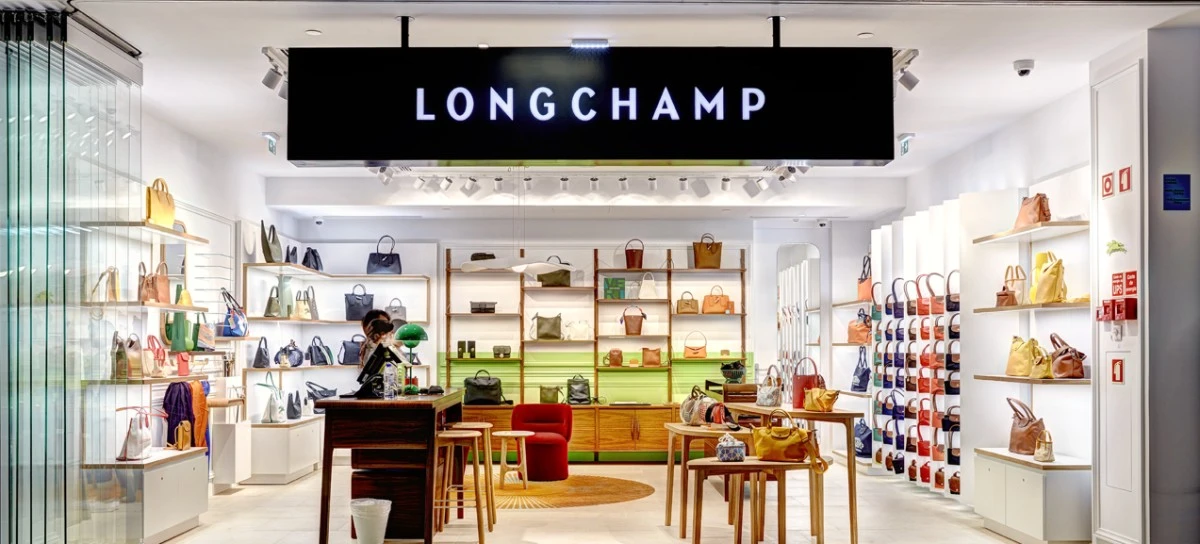
Luxury retail depends on precision. Product knowledge, visual standards, and confident store teams all shape the customer experience.
For global brands, the challenge isn’t defining those standards. It’s delivering them consistently across markets, at speed.
Longchamp faced exactly that as its global footprint grew. With a lean central education team supporting stores worldwide, traditional training models no longer scaled. If you run a growing store network, you already know how quickly that gap widens.
By partnering with YOOBIC, Longchamp made AI in luxury retail training and execution part of everyday frontline learning and work. Managers reclaimed up to 10 hours a week, new campaigns rolled out in six days, and teams worked from the same standards in every store.
What challenge was Longchamp trying to solve?
Longchamp needed to deliver consistent brand and product knowledge across a fast-growing global network, without hiring more people to do it.
Julien Lannette, Longchamp’s Global Education Director, leads a team of three. They train employees across headquarters, manufacturing, and retail locations worldwide.
As the brand added more stores and markets, that small team had to keep every market working from the same standards. If you’ve ever tried to align a dozen markets from one central desk, you know how fast the details start to drift.
The team needed to deliver:
- Consistent brand and product knowledge across markets
- Faster training creation without increasing headcount
- Learning that translates directly into confident execution on the shop floor
Static content, manual updates, and disconnected tools slowed everything down. Training needed to move faster and live closer to daily work.
Longchamp is also moving ahead of its peers on AI in luxury retail training. A joint study by Comité Colbert and MAD found that 87% of luxury maisons have yet to integrate AI into talent management.
How did Longchamp speed up retail training creation with AI?
Longchamp built its digital learning strategy on YOOBIC, with NeoCreator, our generative AI capability, at the core.
NeoCreator turns unstructured content, such as PDFs, text documents, and internal notes, into ready-to-launch training modules in minutes. This removes the manual work that typically slows down content creation. If content creation is where your week disappears, this is the part to watch.
The AI course creator does the heavy lifting. It turns raw source material, like a product brief or a set of internal notes, into modules a store team can start the same day. That’s what cuts production time from days to minutes.
“YOOBIC's AI tools are a game-changer for my team. With NeoCreator, we're saving 10 hours every single week on content creation. That time now goes into coaching, mentorship, and supporting teams more closely.”
Julien Lannette, Global Education Director, Longchamp
Instead of formatting slides or duplicating content, Longchamp’s education team focuses on higher-value work that improves performance on the floor.
How does AI help store teams retain what they learn?
YOOBIC reinforces what store teams learn with SmartQuizzes: short, targeted assessments that lock in product and brand knowledge during busy shifts.
Between customers, an associate on the floor opens YOOBIC for two minutes and runs a quick SmartQuiz on a new leather-care detail. Nothing formal, just a fast check that the knowledge stuck before the next customer walks in. It’s the kind of reinforcement you can’t get from a once-a-year course.
This supports one of luxury retail’s biggest priorities: deep expertise. Teams aren’t just completing training. They’re applying it confidently with customers.
The impact shows up in the numbers.
4.7 out of 5
Stat description: average course rating
Stat source: Longchamp
47,000+
courses completed globally
Stat source: Longchamp
How does Longchamp connect training to store execution?
What sets Longchamp apart isn’t AI-driven learning on its own. It’s how that learning connects straight to execution.
YOOBIC brings tasks, communications, and learning into one workflow, creating a clear path from strategy to action. When Longchamp launches a new campaign:
- The central team communicates priorities to stores
- Teams access AI-powered learning tied to those updates
- YOOBIC assigns tasks automatically for execution
- Store teams upload photos for validation
- Central teams monitor progress in real time
This ‘comms-to-learn-to-execute’ flow eliminates system switching and keeps teams focused on customers, not admin. You can probably picture the alternative: a polished campaign deck that lands differently in every market. No one at headquarters can actually see the floor.
The photo-validation and real-time monitoring steps are what make execution consistent. A campaign brief written at headquarters becomes a verified action in every store, so leaders see what actually happened in each market. Using this approach, Longchamp now rolls out new visual merchandising guidelines globally in a fraction of the time it used to take.

How does Longchamp keep teams engaged after a rollout?
Execution doesn’t end at launch. Longchamp uses YOOBIC communities to keep teams aligned long after a rollout.
Its Visual Merchandising Community has a 100% active user rate, according to Longchamp, with teams sharing best practices, creative ideas, and local insights. This strengthens global standards while encouraging ownership at the store level. If you’ve watched engagement fade a week after a big rollout, this is the piece that keeps it alive.
The approach has also driven strong adoption in markets like Japan, where teams embraced recognition and reward features as part of daily work. Store teams there don’t treat the community as another inbox to clear. They use it to show what good looks like in their own windows.
How did Longchamp make onboarding faster?
YOOBIC reshaped onboarding: a two-day in-person program became a one-day selling ceremony, followed by a structured digital learning path completed within the first month.
A new hire spends day one on the floor in the selling ceremony. They work through the digital path over the following weeks instead of sitting through a second day of slides. New hires become productive faster, while managers spend less time repeating the same information.
All training is now fully digital. Content updates happen instantly, digital delivery removes paper waste, and teams always work from the latest standards.
When you’re staffing up fast, structured learning paths and automated, role-based enrollment get seasonal and part-time hires up to speed. A holiday hire follows the same clear path as a permanent one. Longchamp rates onboarding 4.8 out of 5, which shows that speed and quality can coexist.
Does AI replace store teams or support them?
For Longchamp, AI augments frontline teams. It does not replace them.
Technology had to reflect brand values. ‘For a luxury brand like Longchamp, execution is everything. We worked with YOOBIC to co-construct a solution that gives our teams the clarity and confidence to execute flawlessly,’ said Lannette.
YOOBIC’s AI roadmap focuses on augmenting frontline teams, not replacing them. By automating low-value work, managers gain time for customers, coaching, and performance, and that human expertise is exactly what your customers came in for.
“AI's true power isn't just automation. It's augmentation. We're giving managers back their time and empowering frontline teams with the knowledge to perform at their best.”
Fabrice Haiat, CEO and co-founder of YOOBIC
Book a demo and find out how
Avoid wasted hours, blind spots, and lost revenue with YOOBIC.
What can other luxury retailers learn from Longchamp?
Longchamp’s results come from one decision any retailer can copy. Treat tasks, communications, and learning as a single system, not three separate systems sitting side by side. When all three live in one place, learning turns into consistent execution on every floor.
The second lesson is about people. AI earns its place when it hands managers time back for coaching and selling, rather than replacing the experts customers came to see. If you’re weighing AI in luxury retail training for your own stores, a demo is the fastest way to see it work in practice.
Book a demo and find out how
Avoid wasted hours, blind spots
and lost revenue with YOOBIC

Frequently asked questions about AI in luxury retail training
Which luxury brands are using AI in retail training?
If you’re comparing approaches, Longchamp is a clear example of AI in luxury retail training. It uses AI to build training modules, reinforce product knowledge, and connect learning to store execution. It isn’t alone.


