
Produce is the only department where the two things you are measured on pull in opposite directions.
Empty space costs sales. Full space costs margin. Unlike ambient grocery, you cannot settle the tension by holding more stock, because produce decays whether it sells or not.
Research on perishables across 27 stores from three large European retailers shows that availability and waste should be optimized together, not maximized independently. The study’s Efficient Frontier estimates the minimum waste required at any given on-shelf availability (OSA). In the ECR model, a 98% OSA target for perishables would imply about 4.5% waste even under ideal execution, so retailers typically set lower OSA targets for perishable items.
INSIGHT
There is no universal 95% ceiling for fresh availability. The evidence supports choosing an OSA ‘sweet spot’ by category and item economics rather than applying a flat 98% or 99% target across the department.
So the job is not to maximize availability. It is to make good decisions inside a fixed trade-off, several times a day. Here are the seven that matter.
1. When to walk the department
Most produce shrink is influenced by how often somebody looks at the display. ECR Retail Loss’s global study found that nearly all participating retailers inspect fresh-product expiration dates every day; one retailer reported checking three times daily.
The morning cull is the logical anchor: inspect quality, rotate older stock forward, remove decay and check dated lines before peak trading. The exact duration depends on assortment, store size and whether checks are manual or system-directed.
Additional checks should be triggered by trading peaks and product risk rather than a fixed industry-standard timetable. The ECR study found more than half of retailers use fixed schedules by category, while many use in-house apps to direct colleagues to items most likely to expire.
Fresh products are checked daily at nearly all surveyed retailers
Nearly all participating retailers inspect expiration dates on fresh products every day. More than half use fixed schedules by category, while many others use apps or analytics to focus labor on items with the highest expiry risk.
ECR Retail Loss’s 2024 global study
When payroll tightens, this is the first thing cut. The consequence is not only waste. Decayed product left on display still registers as available stock. The dashboard reports in stock while the shopper sees nothing worth buying.
2. Restock, mark down, or remove
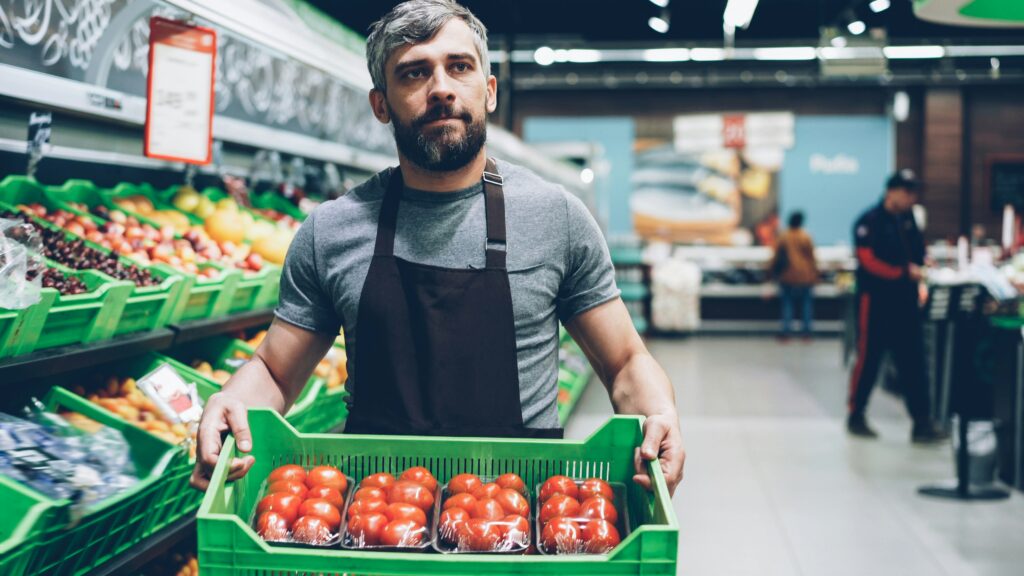
Every item you pick up gets one of three answers, and the order you ask the questions in matters.
The first test is pathological. Active rot, visible mold, tissue breakdown or punctured skin means immediate removal. Fungal spores and soft rot travel across an open display through the air and on hands.
The second test is cosmetic and commercial. Sound product that meets specification goes back to the fixture. Product that is still safe and saleable but has limited remaining life or minor cosmetic deterioration may be a markdown candidate, subject to the retailer’s quality and food-safety policy.
Markdown practice varies widely by retailer, category and store. ECR Retail Loss found many retailers discount on the day of expiry or the day before; most use a single markdown step, while some use two steps such as 30% followed by 60% to 70%. Aldi UK publicly states that it offers up to 75% reductions on fresh produce, bakery and chilled products near the end of shelf life.
Either way the call is expert judgement. The system’s job is narrower. Put the decision in front of the right person at the right time, attach the sell-through data, and record the outcome.
3. How much to build the display
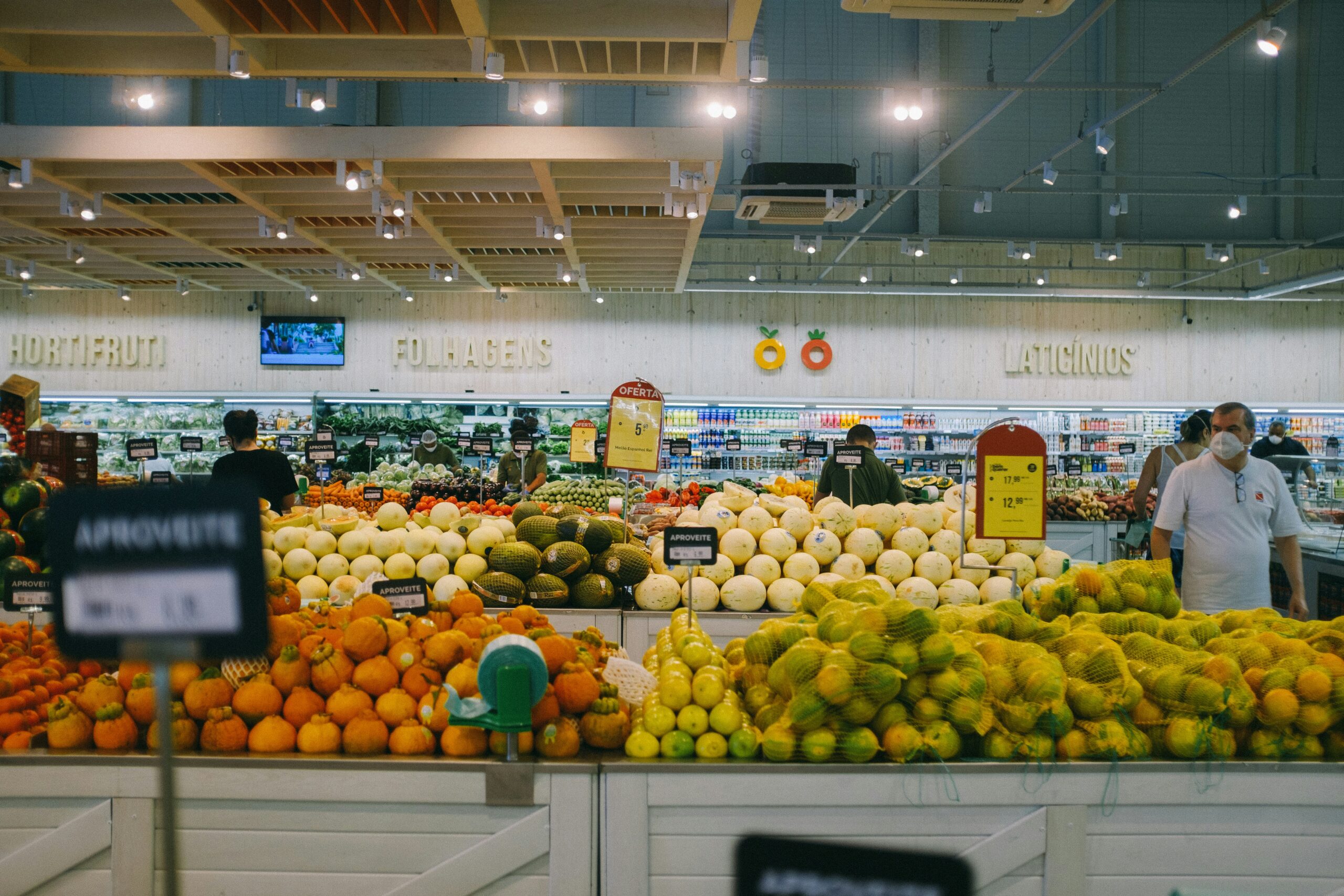
Abundance sells produce. Abundance is also how produce becomes waste, and the arithmetic is unforgiving.
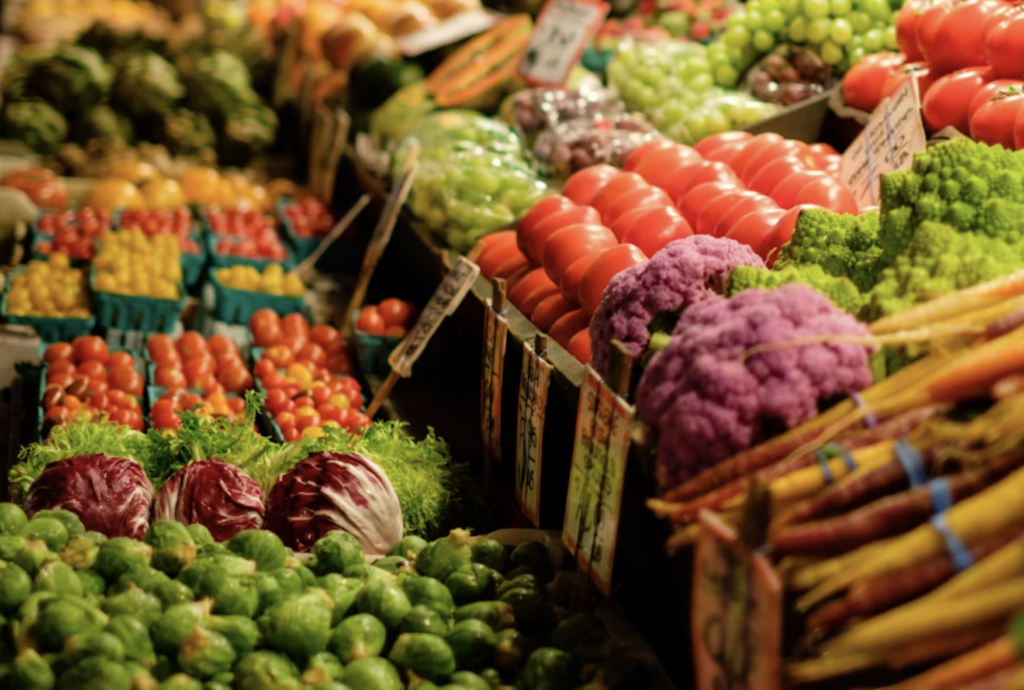
A bulk display can hold several days of demand if its capacity is set by visual abundance rather than sell-through. That leaves more product exposed to ambient conditions and customer handling for longer than necessary.
Stacked several layers deep, the bottom fruit takes compressive load, bruises internally and rots. The associate is caught between passing a merchandising audit and controlling shrink.
There is a way out that keeps the look. Stepped risers, tiered inserts and false-bottom bases can create visual abundance with less product physically on the fixture. They avoid unnecessarily deep layers, reducing the amount of fruit exposed to handling and compression at any one time.
4. Front the oldest stock, not the newest
Rotation looks like a stocking task. It is really an availability decision, because bad rotation strands sellable product until it stops being sellable.
Done properly on a bulk table, rotation takes four steps. Lift the older stock off, clean the deck, place the new stock underneath, then return the older stock to the front. The operating principle is first-expiry, first-out (FEFO): stock with the shortest remaining life should be easiest for the shopper to take first.
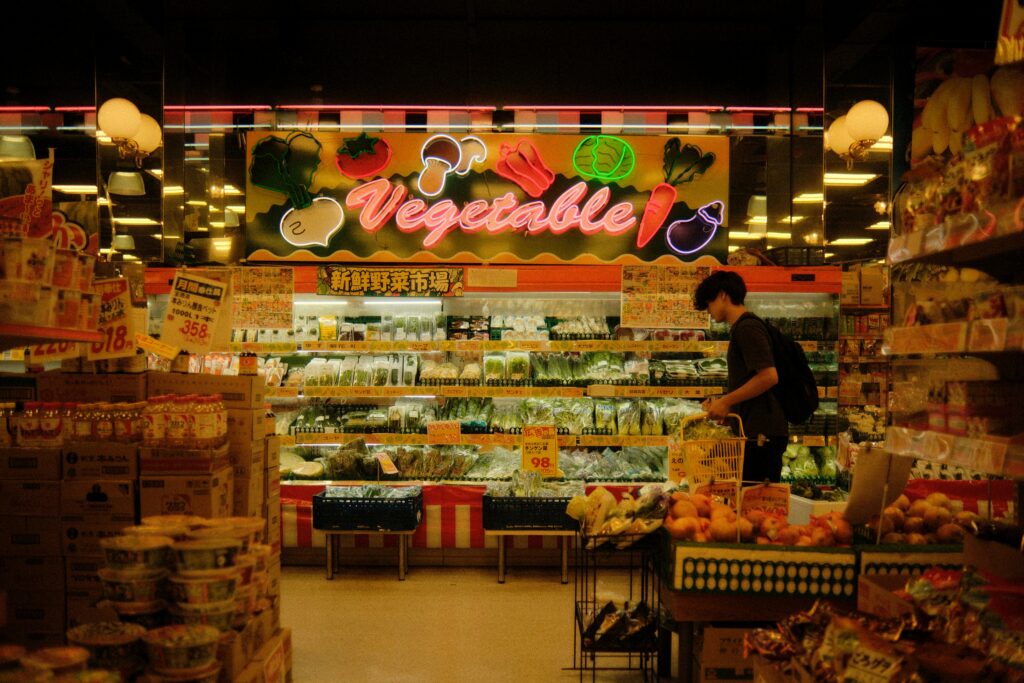
When new stock is placed on top without rotation, older product becomes trapped under poorer airflow and more physical load. For ethylene-producing commodities, accumulated ethylene can also accelerate ripening. The result is older stock deteriorating out of sight while newer stock sells first.
DEFINITION:
First-expiry, first-out (FEFO)
A rotation method that positions the stock with the shortest remaining shelf life to sell first. In produce, it means moving older saleable product forward or upward before adding newer stock behind or underneath it.
Shopper behavior makes rotation matter too. A 2024 Marketing Science field study on fresh meat found that moving the oldest vintage to the most visible shelf position increased its choice share by 24 percentage points. The category differs from produce, but the operational lesson is clear: physical placement strongly influences which dated stock sells first.
5. What to record when something is thrown away
Unrecorded waste is worse than waste, because it corrupts the system that decides your next order.
The loop runs like this. Five punnets of berries spoil and go in the bin without being scanned. The inventory record still shows them as available. The replenishment algorithm reads that stock on hand and suppresses the next order, which is why expiration date tracking keeps surfacing in grocery operations conversations. The line then sits out of stock until somebody runs a manual count.
A global ECR Retail Loss study covering 19 retailers found write-off systems used between 2 and 14 reason codes, with a median of six. The study also found that codes can mix two different things: why an item was written off and where it physically went.
That matters because a single field can force colleagues to choose between a cause such as damage or expiration and a destination such as donation, garbage or recycling. Two-dimensional capture – reason plus destination – gives buyers a diagnosis they can act on rather than only a waste total.
6. Whether a gap needs a task or a phone call
Not every empty space is a supply problem, and most of them are not.
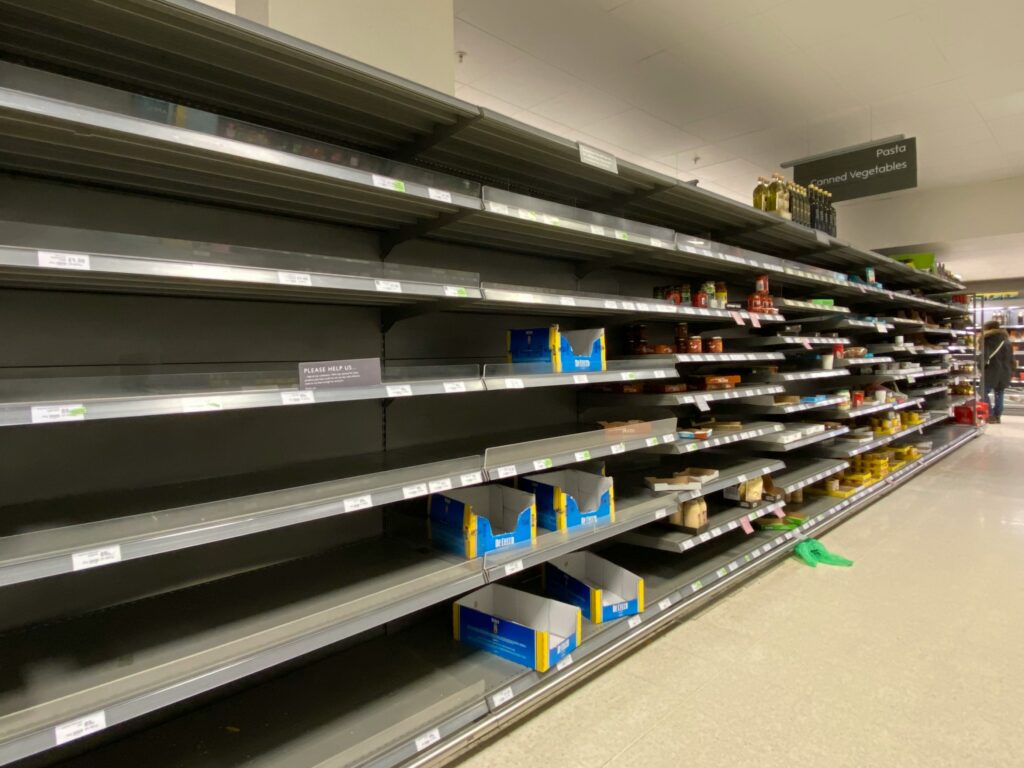
A classic GMA out-of-stock study found that around 72% of shelf stockouts were caused within retail operations: 25% by shelf-replenishment issues and 47% by store ordering, versus 28% upstream. That does not mean every gap has stock in the building, but it shows why store execution should be checked before escalating a supply problem.
That distinction decides the response. Stock in the building is a task. Stock that never arrived is a supply chain conversation, and pushing it into a store task list wastes the walk.
Morrisons removed the detection step at shelf level. The chain runs between 400 and 600 AI cameras per store. When one detects an empty shelf, the system generates a replenishment task and routes it straight to the colleague responsible for that department.
“No one is watching the feed. No one has to decide whether to act. The condition is met, the task fires, and the store team gets a clear action to complete. The human role is the response, not the monitoring.”
Gordon Macpherson, Group Productivity Director, Morrisons
7. Whether the store next door made the same call
The last decision is not made in the store, and it improves the other six.
Research across 27 European stores compared actual waste with an Efficient Frontier benchmark that controls for factors such as demand, case pack size, shelf life and target OSA. The five stores with the highest improvement potential had approximately 72% more waste than their benchmark; the five with the lowest improvement potential had about 17% more.
The researchers concluded that, after structural factors are controlled for, a meaningful share of the remaining variation is likely to come from store replenishment and execution: procedures, compliance, rotation and replenishment decisions. That is the part head office cannot diagnose well without evidence from the floor.
Photo capture at the point of work closes that gap. A before and after image, timestamped and attributed, turns a district conversation from opinion into something both people can see, and gives store visits and audits something concrete to work from.
What sits underneath all seven
One structural factor explains a large share of variation in perishable waste, and store teams cannot fix it on their own.
Researchers at Eindhoven University of Technology define Fresh Case Cover (FCC) as case pack size divided by average demand during the store shelf life: FCC = case pack size / (average daily demand x store shelf life). A value above 1 means the case quantity exceeds expected demand over the store shelf life, making waste structurally likely even with good execution.
Across 17,093 item-store combinations in three fresh categories, FCC explained 42% of the variation in waste. In the peer-reviewed model, increasing store shelf life by one day reduced modeled waste by 43.1%, while unpacking in the distribution center so stores could receive smaller quantities reduced modeled waste by 34.8%.
So if your best store still runs high waste on a line, check the case size before you review the team. The seven decisions above govern the rest.
Where to start
Protect the checks first. ECR’s global study found nearly all participating retailers inspect fresh-product expiration dates daily, with frequency and labor directed by category risk, store conditions and system signals.
Then give the three-way decision somewhere to live, so restock, mark down and remove get recorded rather than remembered. Separate cause from destination in the waste log so buyers can act on it. Finally, compare stores and ask why two teams made different calls on the same morning.
The same decisions apply to bakery, deli and prepared foods. Produce just makes the trade-off between availability and waste more visible than anywhere else in the store. For the wider picture, see our guide to grocery store operations.
Start retailing smarter

Frequently asked questions
What does “on shelf availability” mean?
On-shelf availability is the percentage of products physically present and sellable on the shelf at the moment a customer looks for them, and it is the inverse of the out-of-stock rate. It differs from inventory availability, because a product sitting in the backroom counts as in stock in the system while being out of stock for the shopper in the aisle. A classic GMA study found 72% of shelf out-of-stock causes were within retail operations – 25% shelf replenishment and 47% store ordering – rather than upstream. In fresh departments the measure is stricter still, since produce that is present but past acceptable quality is not genuinely available even though it sits on display.