

A retail operations leader once asked her stores why they kept turning away click and collect orders. The answer came back fast, and she shared it on Frontline Fridays.
“It takes us away from the customer, and we don't want to give away our best product. We want customers who walk in to get it.”
Rachel Williamson, Frontline Fridays
That’s the whole problem in one exchange. Not a technology gap, and not a training gap. Her teams understood the order perfectly well. They just knew what filling it would cost them, and nobody upstream had accounted for that.
Her stores were not being difficult. They were being rational.
Gen Z shopping trends get written up constantly. The behavior is well documented by now. What almost nobody writes about is the second half. That’s where a shopping habit becomes a job somebody has to finish before close.
So here are six trends. More usefully, here’s what each one puts on your floor, generally around four o’clock on a Thursday.

What are the typical shopping habits of Generation Z?
Gen Z shoppers move between digital and physical channels inside a single purchase. They discover products on social platforms and research through AI tools and marketplaces. They check prices in your aisles, then buy across both channels. Nearly all of them still shop in physical stores, which makes store execution central.
1. Discovery has left the search bar
Between 38% and 40% of Gen Z consumers start product searches on YouTube or TikTok rather than a search engine. That comes from Jungle Scout’s Q1 2024 panel of 1,000 US adults.
So discovery now happens in a feed you don’t own, on a schedule you don’t set. The creator driving it is someone you have never heard of.
That has an obvious marketing consequence. It also has an operational one, and that gets discussed far less.
On the floor: a customer asks for a product by a name your team has never heard. It came from a video your team has never seen. They will happily show you the video. Nobody briefed your associates, because there was nothing to brief. The demand did not exist on Monday. It very much exists now.
2. The phone is a second opinion in the aisle
Your shelf edge is no longer the last word on price. Around 62% of younger consumers compare prices across at least three retailers before buying. That’s PYMNTS Intelligence, census-balanced, 2,485 US consumers.
All of this happens while they stand in your store, holding your product.
On the floor: your associate is in a conversation with someone better informed than they are. The customer can see a competitor’s price and the review average. They can see whether a cheaper version ships tomorrow. That phone updated four seconds ago. Your associate’s handheld updated overnight. This isn’t a service problem. It’s an equipment problem.
3. They buy with the resale value already priced in
Resale has stopped being a niche. GlobalData’s 14th Annual Resale Report for ThredUp landed in April 2026. It projects the US secondhand apparel market at $78.8 billion by 2030, and puts 71% of that growth on Gen Z and millennials.
The behavioral shift matters more than the market size. A growing share of shoppers weigh what they’ll get back for an item later. The purchase and the eventual resale are one decision.
On the floor: condition becomes commercial. Tags, packaging and handling now shape a purchase that once hinged on fit and price alone. Somebody is checking whether the box has been opened, because a pristine box is worth more later. That scuffed one on the end of the shelf is a markdown you haven’t taken yet.
4. They arrive with a spec, not a question
AI has moved from novelty to research layer. Colliers’ 2026 retail research puts AI agent use at 19% of consumers today, rising to 46% by the end of this year.
Shoppers now arrive having asked an assistant to compare four products and summarize the reviews. They have already ruled out the ones with known defects. They are not browsing. They have a shortlist.
On the floor: the customer knows the model number, the alternatives, and roughly what it should cost. They are not asking whether you stock it. They are asking which aisle. Your associate knows what was on the task list. That asymmetry is not new, but the gap has widened fast, and it shows up as hesitation at the exact moment the sale gets decided.
5. They actually like your store
This is the part most Gen Z coverage gets backwards.
McKinsey and ICSC surveyed 3,004 US consumers for their April 2026 report. Gen Z and millennial respondents were significantly more likely than older cohorts to shop both online and in store. Shopping mostly online was not the leading method for any generation, in any category.
Earlier ICSC research found 97% of Gen Z shop at brick-and-mortar stores. Another 76% say physical stores are more enjoyable than shopping online. And 67% expect to make most of their purchases in stores five years from now. More than 40% say experiential retail makes them likelier to shop with a retailer.
So the store is not being abandoned. It gets visited on purpose, by people who did their homework first, and some of them will travel a long way for it. When a store becomes the thing people have decided is worth the trip, the queue outside is a marketing win and an operations problem arriving at the same moment.
On the floor: they came in for a reason, and the reason is usually specific. To see the color properly. To try the fit. To take it home today. Nobody makes a special trip for a maybe. Each of those reasons depends on the product being present, correct and findable, which puts a surprising amount of weight on an ordinary Tuesday.
6. The return was planned before the order shipped
Bracketing is standard practice now. NRF and Happy Returns found that 51% of Gen Z shoppers order multiple sizes or colors intending to send most back. Among Boomers it’s 24%. Gen Z shoppers aged 18 to 30 averaged 7.7 online returns in twelve months, more than any other generation.
Around 19.3% of online sales came back in 2025. In apparel it runs higher still.
Those returns land somewhere physical. Asked to rank favorite return locations, 42% name the retailer’s own store. The UPS Store leads at 59%, and USPS follows at 49%. So the store is not winning returns. It still absorbs an enormous number of them.
On the floor: returns arrive in carrier bags at the service desk during the after-work rush, which is also when walk-in traffic peaks. Three dresses go back, one stays. Each item needs checking, processing, and getting back into sellable condition. None of it was on the plan for the day, and all of it happens at the busiest counter in the building.

The same journey, mapped by an economist
Those six trends were assembled from survey data. It’s worth seeing them described from the outside, by someone who wasn’t looking at a shop floor at all. Richard Lim, CEO of Retail Economics, opened our Retail Excellence Forum in London by comparing two customer journeys, stage by stage. His mother’s, and her granddaughter’s.
Full transcript
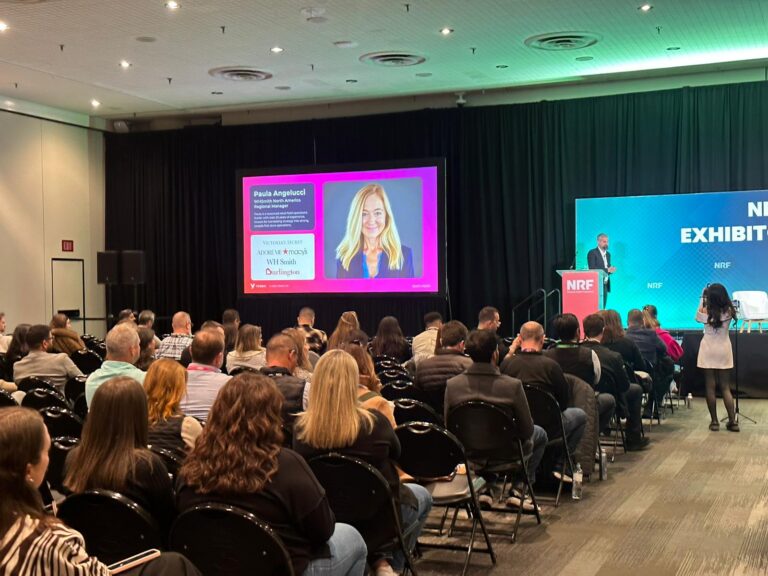
Richard Lim, Retail Economics, at the YOOBIC Retail Excellence Forum, London, 1 October 2025. Lightly edited for clarity.
What makes it so difficult for consumers, and for retailers as well, is that the customer journey has changed so much over the last 30 years. My teenage years of walking around Burton’s in my local town center look very different from Gen Z’s today. But at the same time, for some consumers, the customer journey hasn’t changed hardly at all.
It’s made me think about my mum. She was 80 this year. If I think about the way my mum’s customer journey has changed in the last 30 years, or 50 years, it hasn’t changed at all.
She’ll be in front of the TV, watching something, and she’ll get served an advert. It might inspire her to go into M&S. Touch and feel. She wants to have that experience, to touch and feel, try things on. She’ll then probably go into John Lewis to compare some prices, and again she wants that physical experience in store. And then it gets neatly folded up into a paper bag. She hops on the bus and she goes home.
That customer journey looks very different from the customer journey of her granddaughter.
For her granddaughter, for the three hours a day she spends on TikTok, she’ll be scrolling through and she might see something that she likes, and she might go straight through to TikTok Shop to buy it within three clicks. But she’s a Gen Z. She still wants that physical environment. That physical experience for her is in a flagship destination. She wants to go to Leeds Trinity, Birmingham Bullring. She wants to go to one of the Westfields. She wants to immerse herself in that experience, before she then inevitably gets her phone out while she’s in store.
She searches for different options. She goes to Google, and we might give her an AI Overview. That AI Overview encourages her to go to a marketplace to look at different sites, before she goes onto her ChatGPT, where she’s created a stylist app, and she’s looking for different styles and whether they suit her particular style, before she goes onto Instagram for further social approval.
And then when she gets home, watching Love Island on demand, she gets served a personalized ad that sends her through to M&S. She’s a Gen Z, so she buys three dresses with the intention of keeping one of them. She then picks them up at the click and collect destination near where she works, before taking pictures of herself on TikTok, and then returning the others to a locker on the way home, before she sells the dress that she bought in about six weeks on Vinted, because you can get the money back and buy something new.
That variability of the customer journey, we’ve never had before. We’ve never had before.
Now count what that journey puts on a store. A flagship visit that needs the product present and somebody who can talk about it. Three dresses ordered with two already destined to come back. A click and collect pickup near her office. A return dropped at a locker. One sale, four separate pieces of physical work, spread across at least two locations and six weeks.
What is phygital retail?
Phygital retail describes shopping that moves between physical and digital channels inside a single purchase. A customer researches online, buys on an app, collects in store, and returns through a locker. For store teams, it means online activity keeps converting into physical work that someone on the floor completes.
Most definitions stop at the customer experience. They describe how connected the journey feels. That framing helps marketing teams and does very little for anyone running stores.
The part that matters operationally is the handover. Every phygital retail journey contains a moment where digital demand becomes a physical task with somebody’s name on it. Someone picks the order. Someone staffs the flagship. Someone processes the return.
What is in-store fulfillment?
In-store fulfillment is the practice of using store stock and store staff to complete online orders. It covers picking and packing from the sales floor, handing over click and collect orders, and shipping from store. Returns processed at the counter belong to it too. The store becomes a fulfillment point, not only a place to shop.
1 in 4
Online orders now fulfilled by a physical store.
Colliers National Retail Research, 2026.
The volume is no longer marginal. Colliers’ 2026 research reports that one in four online orders is now fulfilled by a physical store. It also finds 85.1% of US retail sales still flowing through stores, and 71% of retailers planning to expand their footprint.
Two numbers explain why that work goes wrong so often.
The first is inventory accuracy. Auburn University’s RFID Lab measures exact-match SKU accuracy in barcode-managed stores at 55% to 65%, averaging near 63%. The ECR Retail Loss Group finds more than 60% of SKU records in a discrepancy state at any moment. Your app tells the customer the item is available. Your record of that item is right about six times in ten.
63%
Average exact-match SKU inventory accuracy in barcode-managed stores.
Auburn University RFID Lab.
The second is what happens next. Research in Manufacturing and Service Operations Management found initial ship-from-store pick success running between 35% and 60%. Pick failure rates reached 20% across multi-stage fulfillment. Forrester found that 22% of US online adults say retailers frequently cancel their pickup orders.
Every failed pick sends an associate on a search loop through the backroom, the returns desk, and the misplaced stock on the floor. That time comes out of the same day as everything else.
The real gap is timing, not effort
Here’s the structural problem underneath all six trends. It also explains why store teams look slow when they are not.
Store labor gets locked well in advance. The Shift Project, run out of Harvard Kennedy School and UC Berkeley, surveyed 30,000 employees at 120 of the largest US retail and food service firms. Two-thirds receive schedules with less than two weeks’ notice. About a third get less than one week.
In Fair Workweek jurisdictions, large employers must post schedules 14 days ahead. Those include New York City, Seattle, Chicago, Philadelphia and Oregon. Changing a posted schedule inside that window triggers predictability pay.
So your roster is fixed a fortnight out.
Meanwhile a flash promotion, an app-exclusive discount, or a creator posting about your product runs on a cycle measured in hours. Operators consistently describe notice windows of one to three days. That side of the mismatch is reported rather than formally surveyed, so treat the number loosely and the pattern seriously.
Two clocks, in the same building, running at completely different speeds.
The sharpest version of this is a product going viral overnight. It happens at eight in the evening, after the team has gone home. By opening time the customers are already planning their visit, and the store is working from yesterday’s forecast and the usual staffing plan. Stock, prep, queue management and the questions associates field all day have all changed, and nobody on shift has been told.
INSIGHT
Store labor is planned two weeks out. Digital demand moves in hours. The gap between those two clocks lands on whoever is working that shift.
Fixed labor on one side. Variable, unpredictable demand on the other. This is the same discipline that sits behind consistent retail execution across a store estate.
You can’t forecast the spike. You can forecast whether you could absorb one.
Nobody predicts which video takes off. That isn’t a solvable problem and it’s a waste of time treating it like one.
What is solvable is whether a store has any room when it happens. Capacity is forecastable in a way that virality never will be, and it’s the part almost nobody works on.
Three things create that room.
Shrink the ordinary week
A store working through an unfinishable list has no absorption at all. Every surprise displaces something, and the manager makes that trade under pressure with no information. Morrisons cut weekly task volumes from between 80 and 100 items to around 10 targeted actions per manager. That’s the difference between a list nobody can finish and a day with slack in it, and slack is exactly what an unpredictable Thursday eats into.
Worth being honest about the catch. Software can show you which work is low value. Somebody upstream still has to agree to stop sending it.
Make readiness visible before you need it
“Is this store ready” should be answerable in advance, not discovered at the till. Task completion, audit history and training records already tell you which sites are carrying the most unfinished work and which ones are thin on a product category.
Training completion is the underrated one. A store sitting at 40% on a category is a store that will fumble the questions when something in that category goes viral. You can see that today rather than on the day it costs you.
The in-the-moment version matters more. When product information is searchable on the device in an associate’s hand, they can answer a question nobody briefed them on. That’s a standing capability rather than a standing instruction, and it’s the only kind that survives contact with something genuinely unexpected.
Give the floor a route back
The first store to hit the surge works out what actually helps. Somebody moves the display, changes the queue, or finds the stock in the back. Store twelve should not have to rediscover that at four o’clock. When a campaign goes live, stores should see it that morning. When collection volumes spike, the manager should know before the queue forms. When the floor finds a gap, head office should hear the same day rather than a week later in a sales report. That’s what task management is for at store level.
None of this makes a store faster at reacting. It makes the ordinary week light enough, and the store’s condition visible enough, that reacting is possible at all.
Getting people through the door is a marketing achievement. Being ready for them when they arrive is an operations one, and it lands on whoever is working that shift.
So give your teams the context the customer already has. Then the store stops being the last stop in a journey it cannot see, and becomes the place where the whole thing either works or doesn’t.
And when someone walks in on a Thursday asking for something from a video nobody has seen, your team already knows about it.
Start retailing smarter
Frequently asked questions
What do Gen Z shoppers really want?
Gen Z shoppers want a store that already knows what they saw online. They research across social platforms, AI tools and marketplaces before they arrive, then visit a physical store for a specific reason: to check the color, confirm the fit, or take the item home the same day. That makes accurate stock, informed associates and fast fulfillment the things that decide whether the visit converts, rather than the things that happen after the sale.