

Around the world, 2.7 billion frontline employees make up as much as 80% of the global workforce, yet most still work without the digital tools their desk-based colleagues take for granted. So who are frontline employees, and what counts as a frontline worker? In short, they run the stores, warehouses, roads, and sites where your business meets its customers.
A frontline employee hands you your morning latte.
A frontline employee comes to do your gas safety inspection every year.
And it’s a frontline employee who boxes up your packages for delivery when all the stores are closed.
Frontline employees do just about everything, so the term covers a lot of ground. This guide explains who they are, how their needs differ from desk-based peers, and why they need a digital workplace to do their best work.

Key takeaways
Here’s what you’ll take away before you scroll:
- Frontline employees deliver a company’s products or services directly, usually face to face with customers and away from a desk
- They differ from remote workers, who are still desk-based, and from essential workers, a label about operating in a crisis rather than where the work happens
- They face three connected challenges: feeling disconnected, training that doesn’t fit their day, and manual processes that slow them down
- A digital workplace closes that gap by giving the frontline the same kind of tools their office peers already rely on
- The biggest payoff comes from uniting task management, communications, and learning as one system built around how store teams actually work
Who are frontline employees?
A frontline employee is someone who delivers a company’s products or services directly, usually face to face with customers and away from a desk. Frontline employees work on shop floors, in warehouses, on the road or on site, and they’re often the first point of contact a customer has with a brand. Store associates, cashiers, nurses, delivery drivers and warehouse pickers are all frontline employees.
Picture a stock associate mid-aisle on a Saturday afternoon, restocking shelves and answering questions between deliveries. She has never logged into a company laptop, and she probably doesn’t have a work email. That’s the frontline.
You’ll also hear frontline employees called by other names:
- Deskless workers
- Mobile workers
- Field teams
- Offsite teams
- Peripatetic workers
Most don’t have access to a company computer like their office-based peers, and most don’t even have a company email address.
Frontline or front line: which is correct?
Both are correct, but they’re used differently. “Frontline” is usually an adjective, as in frontline employees or frontline teams. “Front line” is a noun, as in “the people on the front line of your business.” When you’re describing roles or teams, “frontline” is the standard choice.
What’s the difference between remote, frontline, and essential workers?
Remote workers spend some or all of their time away from the office, but most are still desk-based. They usually have a company computer, an email address, and a dedicated workspace, whether that’s at home or somewhere else. They use the same tools as office-based employees.
Frontline employees spend most of their day on their feet or traveling between sites. They rarely carry a company computer, and they don’t have a dedicated workspace with the same tools office teams use.
Essential is a different kind of label. It describes whether a role has to keep operating during a crisis. Frontline describes where the work happens, away from a desk. A worker can be one, both, or neither.
If you manage store teams, you’ve probably seen all three labels applied to the same person in a single week. Here’s how they compare:
| Dimension | Remote worker | Frontline employee | Essential worker |
|---|---|---|---|
| Workspace | Dedicated space, at home or elsewhere | No fixed space; on the floor or on the road | Varies by role |
| Computer access | Company laptop | Rarely; shared or personal mobile | Depends on the job |
| Company email | Yes | Usually not | Depends on the job |
| Defining trait | Works away from the office, still desk-based | Works away from a desk | Must keep operating in a crisis |
Where do frontline employees work?
Frontline employees work anywhere the job can’t be done from a desk. Here are some of the most common places you’ll find them:
- Stores
- Restaurants
- Bars
- Factories
- Warehouses
- Construction sites
- Hospitals
- Pharmacies
- Driving trucks
- Traveling between physical sites
- On top of wind turbines doing inspections
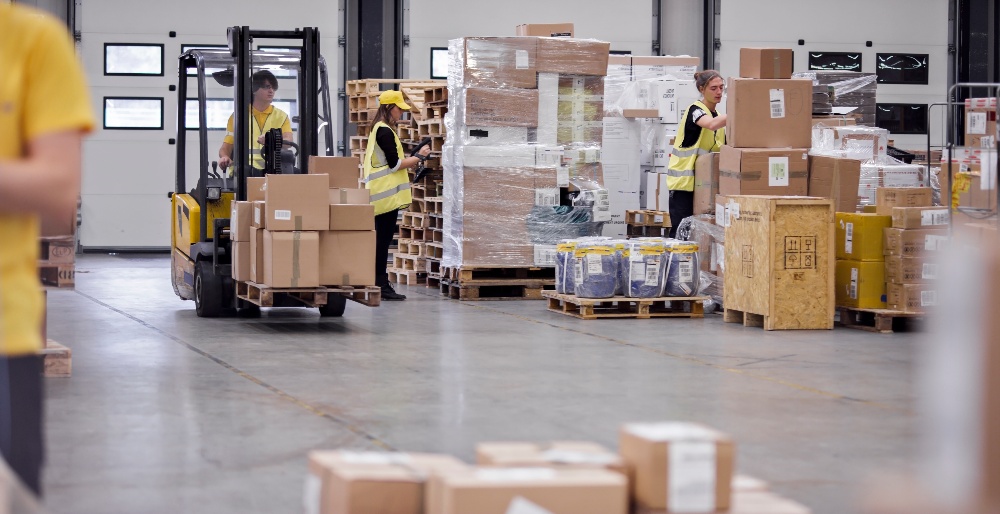
In the industries we work with most closely, retail, grocery, convenience, pharmacy, fashion, restaurants, and gym and fitness, the frontline has a familiar cast: store associates, store managers, area and district managers, and visual merchandising teams.
Take a district manager between store visits. She spends her week in the car and on shop floors, checking displays, coaching managers, and chasing updates by phone, rarely at a desk long enough to open a laptop. Her job is frontline, even though she leads other frontline teams.
How many frontline employees are there, and what industries do they work in?
There are about 2.7 billion frontline workers worldwide, roughly 80% of the global workforce. In retail alone, we support more than 3 million associates across 350+ global retail brands, including Michaels, Boots, Vans, Halfords, Mattress Firm, Pret a Manger, Hugo Boss and Watches of Switzerland.
Examples of frontline roles by industry
Frontline employees work in almost every industry. These are the most common roles in the largest ones:
- Retail and grocery: store associates, cashiers, stock associates, visual merchandisers, store managers and district managers
- Restaurants and hospitality: servers, baristas, kitchen teams, hotel front desk and housekeeping staff
- Healthcare and pharmacy: nurses, care assistants, pharmacists and pharmacy technicians
- Manufacturing: production line operators, machine operators and quality inspectors
- Transportation and logistics: delivery drivers, warehouse pickers and packers, and dispatch teams
- Construction and utilities: site workers, engineers and field technicians
- Education and public services: teachers, teaching assistants and public sector field staff
- Agriculture: farm workers and seasonal pickers
Why do frontline employees matter?
Frontline employees make, move, and sell nearly everything your customers touch, so their experience shapes revenue and growth directly.
They manufacture and deliver the products we use every day. They build and maintain the infrastructure of cities and roads. They keep stores and restaurants stocked and running. Those are a few examples out of hundreds.
Think about the associate who notices a popular size selling out, flags it, and gets it restocked before the after-work rush. That small catch protects a sale HQ would never have seen slipping away. Whatever the industry, frontline teams are essential to the organizations that employ them.
Yet many frontline industries carry some of the highest turnover and lowest engagement anywhere. When you focus on the frontline experience, you start to genuinely value everyone who isn’t at a desk from nine to five. And given the work they do, that focus feeds straight into profitability and growth.
What challenges do frontline employees face?
Frontline employees face three connected challenges. They feel disconnected from the rest of the company, their training doesn’t fit how they actually work, and manual processes slow them down. Every one of these traces back to the same root: no digital workplace.
Desk-based employees have a physical space to connect and collaborate with peers. They also have a stack of digital tools that boost engagement, sharpen training, and make daily work more efficient.
Frontline employees have neither. They lack that shared physical space, and they’ve long been underserved by the tech industry, so most were never given the same digital tools as their office-based peers. Most of the challenges below stem from that gap. Here are three of them.
Lack of connection and engagement
Office workers who see each other daily have far more communication and engagement tools than most frontline teams. The result: frontline employees feel out of the loop, cut off from company news and decisions. That gap shows up in their work, because engaged employees consistently do better.
Gallup found that highly engaged teams outperform disengaged ones by 23% in profitability and 18% in productivity.
Consider a weekend associate who hears about a new promotion from a customer before anyone at work mentions it. That’s the disconnect you’re up against.
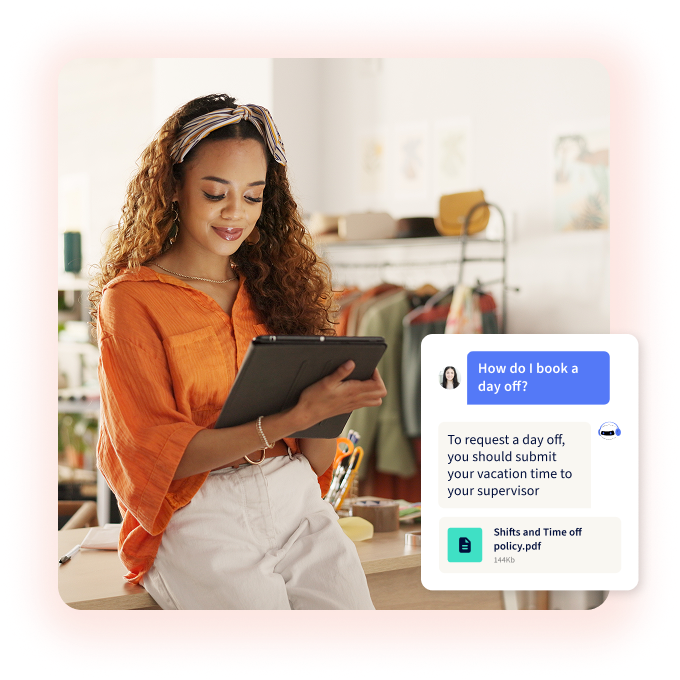
This is where YOOBIC Communications comes in, our retail-first frontline communications hub. It gives every team a company newsfeed, critical update broadcasts with read receipts, and two-way feedback. Here’s what that lets you do:
- Reach every associate with the same company news your office teams get
- Confirm the message landed with read receipts, not guesswork
- Give the frontline a voice, so HQ sees what’s happening in stores

Training that doesn’t meet their needs
Organizations spend heavily on training every year, yet much of it still assumes a classroom and a desk. That format doesn’t fit frontline employees.
Picture a new hire on day two, learning the returns process from her phone between customers, not in a back-office classroom she’ll never sit in. Some associates are your customers’ first point of contact with your brand. Others hold specialized, technical knowledge that keeps factories, warehouses, and construction sites running safely. Standard onboarding built for a classroom can’t stretch across that range of responsibilities.
Frontline employees are rarely sitting at a desk, and their training has to keep up. That’s why we built YOOBIC Learning, a mobile-first platform embedded in daily store workflows, with adaptive learning and gamification that fit training around the job. Here’s what strong frontline training looks like:
- Deliver learning on mobile, because mobile workers need training as mobile as they are
- Reshape content into short, focused lessons; microlearning works best for this
- Measure completion and engagement, so you can improve what isn’t landing
The payoff is real:
150% increase
in learning program participation after moving frontline training onto YOOBIC Learning.
Michaels

Outdated processes that undermine productivity and efficiency
For frontline teams in manufacturing, transportation, retail, and hospitality, speed and accuracy are the whole game. Products have to be made and delivered fast and right. Customers expect better, quicker service every day.
Picture a store manager starting the shift with a paper checklist on a clipboard, then keying results into a spreadsheet after close, hours after the problems mattered. While desk-based workers got tools to manage time, run projects, and digitize paperwork, those tools mostly never reached the frontline. Giving teams the right mobile tech changes that.
Manual, paper-based work slows people down, invites errors, and quietly tells frontline workers the company undervalues their contribution. That’s a problem for keeping and attracting a committed team. Here’s how you fix it:
- Digitize checklists, inspection and audit forms, and progress reports with YOOBIC Task Management
- Make sure every completed process triggers a clear action, instead of a form that gets filed and forgotten
- Use the data from digitized work to see exactly what’s happening in stores, warehouses, and sites, then fix errors fast
Schedules, physical demands and burnout
The digital gap isn’t the only pressure frontline employees face. Their roles also come with day-to-day demands that desk-based roles rarely share:
- Unpredictable schedules: shifts that change at short notice make it hard to plan childcare, study or a second job.
- Physical demands: long hours on their feet, lifting stock and moving between sites.
- Emotional strain: handling peak trading and difficult customers, often without a manager nearby.
- Burnout: when staffing is tight, the same people cover the gaps week after week.
These pressures are a big part of why frontline turnover runs high. Better tools won’t remove them, but they can take away the extra load. Clear priorities, fewer manual tasks and faster answers from head office give store teams more control over their day.

How can you engage and empower frontline employees?
You engage frontline employees by giving them a voice, acting on what they say, and bringing training and updates into the flow of their work. Empowerment follows when they see their input change something.
Here’s why it matters: people leave frontline jobs for reasons you can influence, including recognition, flexibility, a real voice, and room to develop, according to the World Economic Forum. Four practical moves make the difference:
- Give the frontline a two-way channel, not just top-down announcements
- Recognize good work publicly and act on the input you collect
- Deliver training and updates in the flow of work, where associates already are
- Measure engagement, then follow through on what the numbers tell you
YOOBIC Communications is built for this side of the work: two-way feedback loops, polls and surveys, and engagement analytics dashboards that show whether messages land and how teams feel.
Here’s what that looks like on the floor. An associate reports a chest freezer running warm through the feedback channel one morning. Her manager sees it, logs a fix, and gives her a shout-out on the newsfeed that afternoon. She flagged a problem and watched it get solved, so next time she’ll speak up faster.
What is a digital workplace, and why do frontline employees need one?
Let’s go back to the digital workplace we keep mentioning, because not having one is the root of the roadblocks frontline workers hit every day.
What exactly is a digital workplace?
A digital workplace is the set of connected tools that lets people do their jobs well without a fixed desk. It’s the digital equivalent of the physical office, built to support collaboration, productivity, and steady improvement.
For the frontline, a digital workplace isn’t a bundle of separate apps you stitch together. It unites task management, communications, and learning as one system, so what a team needs to do, know, and hear all live in the same place. That’s the difference between tools that fight each other and a workplace that works for you.
Why invest in a digital workplace for frontline employees?
Invest in your frontline’s digital workplace and you give store teams a place to connect, collaborate, and close the disconnect so many feel. It also tackles the three challenges head-on: low engagement, training that misses, and outdated processes.
Do it well and you accomplish three things that matter:
- Build a collaborative culture across every location
- Help everyone perform at their best, not just the office
- Attract and keep talent, because turnover costs you both expertise and revenue in any industry
Picture a store team that used to wait days for answers from HQ and now gets them the same morning on a shared newsfeed. That shift changes how the whole store runs.
A better frontline experience isn’t about buying a few new platforms and moving on. It takes a real change in mindset and a willingness to listen to every employee, wherever they work. There’s no better time to start.
We bring task management, communications, and learning together in one platform for frontline teams, so processes run smoothly, communication stays clear, and learning never stops. Ready to see it in your stores? Book a demo.
What’s the ROI of a digital workplace for the frontline?
Once a digital workplace is in front of your frontline teams, you can measure the return on investment (ROI). Track the key performance indicators (KPIs) that connect daily execution to business outcomes: task completion and on-time execution, training completion and participation, communication reach and read rates, engagement, and turnover.
Here’s how those metrics map to outcomes:
| KPI to track | What it tells you |
|---|---|
| Task completion and on-time execution | Consistent standards and fewer costly misses across stores |
| Training completion and participation | Faster onboarding and associates ready to sell and serve |
| Communication reach and read rates | Confidence that critical updates actually reach the floor |
| Engagement scores | Early warning on morale before it hits performance |
| Turnover rate | Retained expertise and lower rehiring and retraining costs |
Turnover is where the cost of doing nothing shows up fastest. Gallup reports that replacing a frontline employee runs about 40% of their annual salary, and that 42% of turnover is preventable.
Picture a store manager who opens Monday not with a guess but with last week’s completion data. She can see which tasks slipped, which associates need a hand, and where to spend her coaching time, so the week runs on facts instead of hunches.
The numbers back the approach:
137% increase
in training completion after moving frontline learning into daily store workflows.
Sportscene
Where is the frontline workplace heading?
The frontline workplace is changing fast, and a few shifts are already underway. Here’s where it’s heading.
From dashboards to daily direction
Artificial intelligence (AI) is moving past reporting what happened toward telling teams what to do next. Instead of reading a dashboard, a store manager gets the day’s top three priorities surfaced automatically, ranked by impact, before the doors open. That’s exactly what YOOBIC AI does: it turns store data into prioritized actions.
From scattered apps to one system
The pile of point tools is consolidating. Task management, communications, and learning are converging into a single system, because switching between disconnected apps is exactly what slows the frontline down.
From cost center to revenue driver
Leaders are starting to treat the frontline as a driver of revenue, not a line of cost. When you give store teams the tools to execute well, their impact shows up in sales, not just in savings. None of this is far off. The pieces are here now, and the retailers who connect them first will set the pace.
The payoff of getting the frontline digital workplace right
That latte handed across the counter, the annual gas inspection, the packages boxed up overnight: every one of them runs on a frontline employee. They’re most of the workforce, and for years they’ve worked without the tools their desk-based colleagues rely on.
Closing that gap comes down to one thing: a digital workplace that unites task management, communications, and learning, built around how the frontline actually works. Get that right and you don’t just fix disconnected tools. You change how valued your people feel and how well your stores run.
If your frontline still runs on paper and guesswork, that’s worth a conversation. Book a demo and we’ll show you what it looks like in your stores.
Book a demo and find out how
Avoid wasted hours, blind spots
and lost revenue with YOOBIC
Frequently asked questions about frontline employees
What counts as a frontline worker?
A frontline worker is anyone whose job happens away from a desk and out in the field, on a shop floor, behind a counter, in a warehouse, or on the road. They rarely use a company computer or email to do their core work. If the job can’t be done from an office chair, it’s a frontline job.