In the age of social media and constant communication, keeping people in the loop in the workplace shouldn’t be difficult.

 YOOBIC
In the age of social media and constant communication, keeping people in the loop in the workplace shouldn’t be difficult.

Mobile learning platforms have long been a valued tool in teaching, but they are now also becoming ubiquitous in the retail and hospitality sectors. If you don’t already know about the value of social learning in the workplace – well, you’ve come to the right place.

We’ve all been there: we’ve put off studying for that important exam for far too long and now, the night before, it’s time to cram. Hours and hours later, we finally feel like we’ve covered lost ground, only to find the next day that we can barely remember anything.
Your store associates face the same problem every week. That’s why microlearning for retail is becoming more common. It’s worth understanding what microlearning is and how it works in retail before your next training rollout.
The BBC has reported on why cramming fails: spacing learning out over time is what makes it stick. When training runs on the same system as your daily tasks and communications, learning stops being a side event and starts lifting store performance.
Here’s what this guide covers before you scroll:
Microlearning is bite-sized, snack-sized training delivered in short, mobile segments that take a few minutes to finish.
In retail, it works in the flow of work. Associates learn on their phones on the sales floor, with lessons built into their daily tasks and communications. No one gets pulled into a back-room classroom.
Say a new associate needs to master stocking procedures before the morning rush. Instead of one long session, you break it into short lessons:
Each lesson takes a few minutes, so you can slot it into a quiet moment without closing a register.
The difference from a classroom session is timing. Your associate learns the step right before they need it, then does it for real while it’s fresh. That’s the core of how microlearning works on a sales floor: small, timely, and tied to the task in front of them.
Traditional retail training pulls associates off the floor for long, one-off sessions they forget within days. It’s the store version of cramming for an exam.
Maybe you’ve sat through one of those hour-long training videos in a dimly-lit room at the back of the store. If so, you know exactly what we mean.
The problem isn’t effort, it’s format. A two-hour onboarding session competes with a delivery arriving, a customer at the fitting room, and a queue at the till.
By the time your new hire is back on the floor, most of the content is gone. The parts they do remember rarely match what the day actually demands.
The benefits of microlearning for retail teams come down to four things. Associates engage with it, it fits their role, the knowledge sticks, and it shows up in better service. Here’s how each one plays out on the floor.
Short lessons respect a busy shift. Your associates can complete training in a few minutes, between customers rather than after hours. That makes them far more likely to start and finish.
A two-minute module before opening feels doable in a way a two-hour session never will. That difference in effort is what lifts your completion rates.
A first-week cashier and a veteran visual merchandiser don’t need the same lessons. With microlearning, you assign the right short modules to each role. A new associate drills product basics while a keyholder reviews closing procedures.
Spacing lessons out over time is what makes them stick. Research in Policy Insights from the Behavioral and Brain Sciences shows that spaced repetition produces stronger long-term learning than cramming.
A strong learning platform can reinforce that with adaptive, spaced practice and quizzes. Your teams retain what they learn and apply it on the spot.
If you’re trying to keep good associates, this is where microlearning starts to pay off. Associates who know the product serve customers better, and that confidence makes the job less stressful.
A study in the Journal of Management found that training can reduce voluntary turnover under certain conditions. The participation gains behind that show up clearly in the numbers.
in learning program participation
Stat source: Michaels
in training completion
Stat source: Sportscene
Building a microlearning program for retail staff comes down to five practical steps. You don’t need to digitize your whole training library on day one. Start with the skills that move your numbers, then expand.
If you’re rolling this out across stores, these five steps keep the plan practical.
Start with the jobs, not the content. Write down what a cashier, a stylist, and a keyholder each have to know.
Then rank those skills by how directly they affect sales and compliance. That list becomes your first set of lessons.
Give each lesson one job and a few minutes. Tie it to a real store moment, like setting up a promotion or greeting a customer, so the learning maps to what happens next. One task per module keeps it easy to finish and easy to revisit.
This is where YOOBIC Learning adds value, delivering lessons on the same system that runs your task management and communications. Picture a new associate finishing a two-minute product module on the floor before the doors open. They use it on the first customer of the day.
One pass isn’t enough. Repeat key lessons over days and weeks, and let quizzes adapt to what each associate still gets wrong. Spacing the practice out is what turns a quick lesson into knowledge your team keeps.
Watch who’s finishing and where they’re stalling. When a skill-gap report shows a store lagging on a compliance module, you can reassign it and follow up before it costs a visit. Then update the content and repeat.
You measure the ROI of retail microlearning by tracking whether training reaches the floor, speeds up new hires, and moves store numbers. Keep people metrics and operational metrics in separate columns so you can see what’s really driving what.
| Metric family | What it tells you | Example measures |
|---|---|---|
| Learning engagement | Whether associates take and finish training | Participation, completion rate |
| Operational execution | Whether training turns into action on the floor | Task completion rate, time to compliance |
| People and workforce | How fast new hires get productive and stay | Time-to-productivity, first-90-day retention |
| Sales and revenue | Whether training moves the numbers | Conversion rate, units per transaction (UPT) |
Completion on its own doesn’t prove value. The number that matters is what happens next: does a store that finishes the promotion module set it up correctly, and does conversion follow?
Read the training metrics next to your store performance indicators (KPIs), not in isolation. That’s how you see which lessons actually change behavior on the floor.
A store manager who used to guess at readiness now opens a completion dashboard before a shift. They see exactly who’s cleared for the new promotion. For a closer look at frontline training ROI, the payoff often shows up fastest in time saved.
in time spent on standard operating procedure (SOP) training
Stat source: Boots
Retail microlearning is heading toward three shifts: artificial intelligence (AI)-assisted content creation, adaptive paths, and training tied to real-time store data. You’ll spend less time building courses and more time acting on what the data shows.
AI is already cutting the work of authoring and translating lessons, so a course you write once can reach every store in its own language. Adaptive paths take it further, adjusting what each associate sees based on what they’ve mastered and what the store still needs. For the wider picture, see our guide to AI in retail.
Picture opening a store in a new country. A manager gets the onboarding course auto-translated overnight.
Associates train in their own language on day one, instead of waiting weeks for a localized version. That’s the direction the category is moving: faster, more personal, and closer to the numbers on the floor.
The tighter link to store data is the shift worth watching. As training connects to live sales, traffic, and compliance signals, the next lesson can respond to what a store needs that week.

It’s no longer fixed by a plan set months ago. You get training that keeps pace with the floor.
Microlearning for retail works because it fits the way your store actually runs. Associates learn in the flow of work, the knowledge sticks, and it shows up in store service and sales.
That payoff grows when learning isn’t a standalone app. YOOBIC Learning runs on the same platform as your task management and communications, so tasks, communications, and learning work as one system.
A lesson connects to the task on the floor and the number on the dashboard. Built for frontline store teams rather than a generic learning management system (LMS), it ties training straight to store performance.
See how it fits your stores. Book a demo.
Avoid wasted hours, blind spots
and lost revenue with YOOBIC
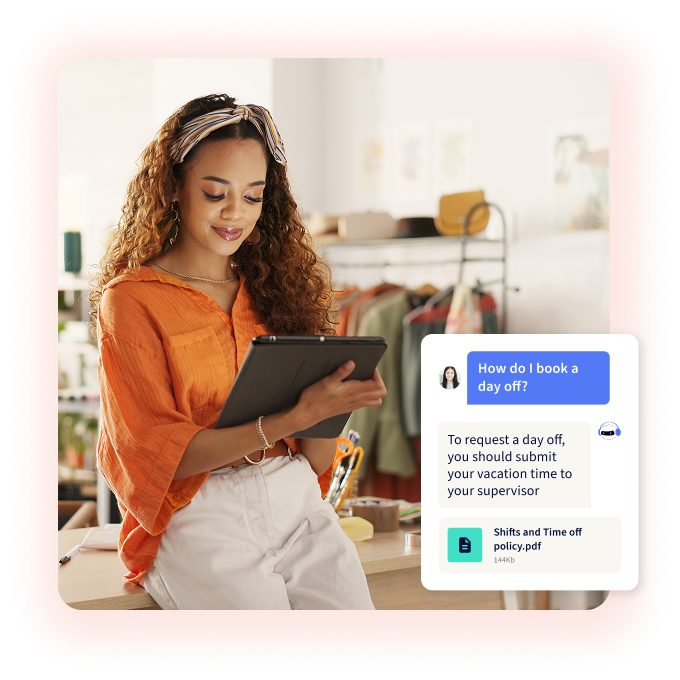
You’ll get better results from a few minutes a day than from one long session each quarter. Short, frequent lessons, slotted into the start of a shift or a quiet moment, keep skills fresh without pulling associates off the floor. Consistency matters more than length.

As the crisp air of winter rolls in, it’s time to switch up your wardrobe. Your beauty routine also changes with the weather, welcoming warm eye shadow palettes and nourishing moisturizers and conditioners. You’re in luck, because the beauty industry unveiled some of the most fabulous and groundbreaking beauty trends we have ever seen in 2019. Whether you’re wanting to try a new look, or prepping for the holidays, here are 4 of the top beauty trends of 2019 that are changing the face of beauty.
In modern retail, data is king. Vast swathes of customer and product information can now be harnessed to improve the in-store experience and make operations more efficient.

Jack-o’-lanterns at the ready, folks: the spookiest day of the year is on its way.

Restaurant staff training is crucial for preparing employees for the stressful and often dangerous working environment of a restaurant.

Things have changed a lot here at YOOBIC over the past year or so.

Digital learning platforms. Everyone’s talking about them – ourselves included – and if you don’t already have one in place’ what have you been doing?

Brace yourselves: Black Friday is on its way once more.