The pandemic forced retailers to cut down, strip back and spend less, but the one thing they have in abundance is access to huge realms of data.

 YOOBIC
The pandemic forced retailers to cut down, strip back and spend less, but the one thing they have in abundance is access to huge realms of data.

It’s a tough time for restaurant owners when it comes to hiring. In November 2021 alone, 4.5 million Americans quit their jobs. 1 million of them were restaurant and hotel employees. It’s now 2022 and the restaurant industry’s labor shortage shows no signs of slowing down, with chains as iconic as Starbucks and McDonald’s cutting store opening hours due to a limited workforce.

During a webinar on “Boosting operational efficiency in stores” organized in partnership with the Hub Institut on June 3, 2021, Sébastien Jan, C&A‘s Sales Director, shared with us how the brand has taken up this challenge in its network.

In our latest webinar, we sat down with our Head of Solution Engineering, Hadrien Beacco and Jacobo Rey, Senior Retail Expert at our partner RetailNext to talk about why retail automation is critical for store performance.

Imagine a ’13 going on 30′ or ‘Freaky Friday’ scenario where you wake up and find yourself in the body of a deskless worker. You head to work at a store, restaurant or warehouse instead of the office.
Think you’d be able to handle it? Could you pick up the required skills easily?
Probably not, at least not the way you learned at a desk. That gap is why learning in the flow of work matters for frontline teams: it’s how they build skills without being pulled off the floor.
Chances are, you’d be out of your depth. Frontline roles are a completely different ball game to working at a desk.
You’d be physically exhausted from being on your feet all day, in a mental frenzy from constantly interacting with customers or colleagues. And you’d be frantically attempting to squeeze admin tasks into the gaps between your other responsibilities. Frontline roles are fast-paced, demanding and intense.
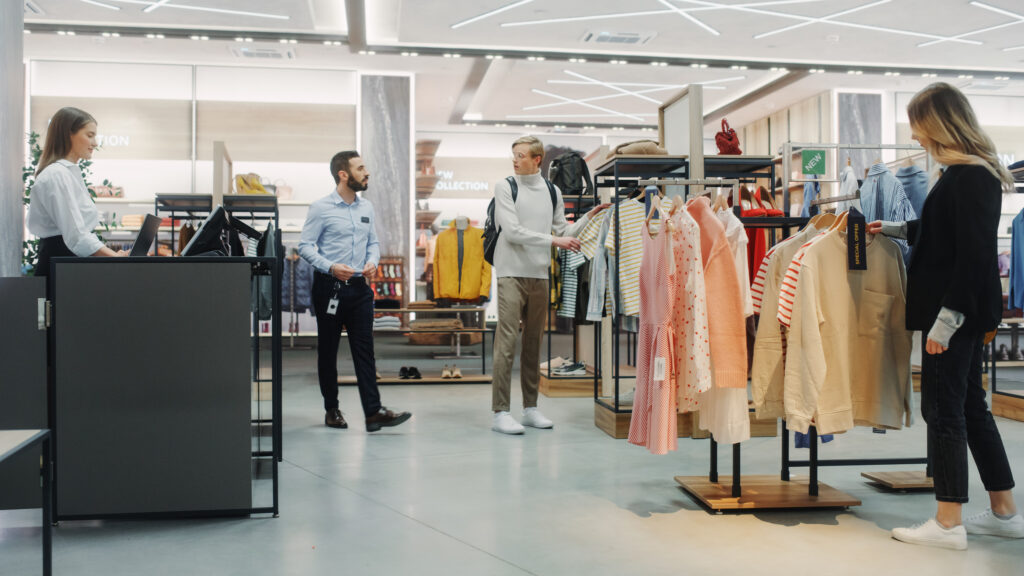
This means that for deskless employees, learning in the ‘flow of work’ means something quite different than what it means for office workers. They can’t go somewhere quiet, sit down with a coffee and put headphones in to ‘get in the zone’. They are always on the go, rushed off their feet and often interacting with customers or colleagues.
But this doesn’t mean they can’t achieve a flow state. In fact, for frontline workers to learn and progress in their roles, it is imperative that learning is integrated into the flow of work.
This post covers what flow means for frontline workers, how to help them reach it, and why learning belongs in the flow of work.
Frontline employees are the people whose job directly serves customers or runs core operations away from a desk. That means store associates, restaurant and warehouse staff, and the managers who lead them.
Picture a store associate moving between the stockroom, the till, and a customer waiting with a question, all in a few minutes. These are the teams we build for every day.
Store associates get their daily priorities and guided tasks on a phone, and store managers get performance alerts and coaching prompts. If your training plan doesn’t fit that pace, it won’t reach them.
‘Flow’ is a state of mind where you are completely immersed in the present and focused on what you are doing. It’s a fusion of being focused and emotionally content, a combination of purpose and happiness. On the floor, flow is what lets an associate give one task their full attention, and it makes the work more fulfilling.
Flow state is not necessarily something you slip into by chance. Psychologist Mihaly Csikszentmihalyi, who introduced the concept of flow, described it as full absorption in what you’re doing. The good news for your teams: people can learn to enter that state at work frequently and deliberately.
Getting into flow takes focus, and a busy floor keeps interrupting it. Say an associate is mid-task when a customer walks up with a question: the task stops, and picking it back up isn’t instant. You’ve felt this yourself if you’ve ever lost your place after a single interruption.
Gloria Mark, who studies interrupted work at the University of California, Irvine, found it takes approximately 25 minutes to return to the original task. The challenge for frontline teams is building a workflow where focus can survive a floor full of distractions.
Classroom-style training, the kind that pulls people off the floor into a back room, fails frontline teams. The work gives them no desk, no quiet block, and no spare hour to sit through a module.
When a new associate wants to learn the return policy in their first week, they usually ask whoever’s standing nearby. That works until the person nearby is busy, or wrong. Knowledge that lives in people’s heads instead of a system doesn’t scale across a store, let alone a network.
The constraints are practical, not a lack of effort. No desk time, scattered tools, and tribal knowledge all get in the way. We see the cost land on managers: our store managers lose 10 or more hours a week chasing information and fixing avoidable mistakes.
The stakes keep rising. The Future of Jobs Report 2025 from the World Economic Forum projects that 59 of every 100 workers will need reskilling or upskilling by 2030. The teams that can’t train in the flow of work fall behind fastest.
If any of this sounds like your stores, the fix isn’t more classroom time. It’s matching the training to how the floor actually works.

| What makes it hard | What works instead |
|---|---|
| No desk time or quiet block | Short lessons finished between tasks, on a phone |
| Tools and information scattered across systems | One place to find the answer at the point of need |
| Knowledge stuck in people’s heads | Steps built into the workflow, not a binder in the back office |
| Pulling staff off the floor to train | Learning embedded in the daily tasks they already do |
Flow depends on focus plus a positive frame of mind, and fulfillment feeds that. People concentrate better when they can see the social impact of their work. So surface it: share the good customer reviews, give team shout-outs, and recognize individual effort.
When your associates know their contribution counts, they show up more engaged. Try naming one win per shift that an associate drove.
To enter flow state, employees need to be fully focused on the task at hand. They can’t stay immersed if they have to overthink each step of what they’re doing. Confusion about priorities, or worry about making the right call, pulls them straight out.
Highlight priorities clearly each day: clear objectives and instructions leave no room for doubt.
If you play music on the floor, in a store, restaurant, or warehouse, be mindful of the playlist. Instrumental tracks like techno, classical, or trance help associates focus during a long mid-afternoon lull or a steady prep shift, especially on repeat.
Research suggests that novel sounds and unfamiliar tunes compete for our attention. So limit how often you add new songs. For flow, familiarity wins.
Hydration matters for focus. When people don’t drink enough, they get tired and slower to concentrate, which pulls them out of flow.
If you want your team switched on through a shift, make it easy to stay hydrated on the floor. Give them a spot on a work surface or in their uniform for a water bottle, so they can drink without leaving their station.
Build feedback loops into workplace processes. Only 28% of millennial frontline employees find it easy to understand whether their work meets company expectations.
Regular feedback gives employees a clear idea of whether they are on the right track. That lets them work with clear purpose, confident they are completing processes correctly. This makes flow state achievable.
Instant feedback on tasks helps employees hold the flow state. They don’t have to return to a task later in the shift and lose focus through task switching.
Helping employees get into a flow state is only half the challenge. You also need to integrate learning into the workflow, so your teams truly benefit from being in the flow of work.
Learning in the flow of work is training that reaches employees at their point of need, inside the task, without leaving the floor.
Josh Bersin coined the term in 2018, defining it as learning accessible during work, in the workplace environment.
Sometimes an associate hits a task for the first time, or needs a quick refresher. That shouldn’t break their flow.
This is where YOOBIC Learning comes in: a mobile-first retail training platform built for the floor, not a generic LMS. It embeds training directly into daily store tasks and communications. An associate gets the step they need on their phone, right at the point of need, then keeps moving.
Related: How to Create a Culture of Learning for Retail Teams

Training in the flow of work pays off in three ways:
Workflow learning lets your associates reach knowledge at their point of need. They don’t waste time running to the back office to search for information, leaving a frustrated customer waiting. Having everything at their fingertips means they use their time more productively, which boosts profits.
Employees who can learn without breaking their flow state provide better customer service. Jumping in and out of the flow to search for information disrupts focus on the customer. That’s how sales opportunities slip away.
Associates who can access learning on the job have the expertise to drive sales and conversions. Not having to hunt for manuals or product information lets them stay fully present with the shopper, for a more personal experience.
A platform built for this, like YOOBIC Learning, signals to associates that the company is investing in them. People stay longer when they feel valued: 93% of employees would stay at a company longer if it invested in their careers, according to Forbes. That loyalty cuts hiring costs and keeps your best people on the floor.
People learn best by doing, and frontline teams aren’t doing when training pulls them away from the floor. Their roles are hands-on, so their training should be too.
In fact, 70% of frontline employees say app-based training would be easier. YOOBIC Learning is built that way: mobile-first, delivered on the personal or company devices your associates already carry. Meet them where they work, and training stops competing with the job.
Related: How to Find the Best Digital Learning Platform for Frontline Employees
Workflow learning often takes the form of microlearning: delivering bitesize capsules of information in digestible chunks which can instantly be applied to practical work. This format lets learning blend easily into a frontline employee’s flow of work. Their day is typically comprised of jumping between lots of different small tasks.
Take a two-minute lesson your associate finishes between customers, then applies on the very next interaction, like a new promotion’s upsell. That’s microlearning in practice: short enough to fit a gap in the shift, specific enough to use right away.
YOOBIC Learning delivers these bite-sized lessons embedded in the daily workflow, so training never means stepping away. The payoff shows up in the numbers.
cut from standard operating procedure training
Boots
Related: How to Make Your Microlearning Courses Short & Sweet
Interactive, gamified lessons, with points, badges, and quick challenges, hold attention better than a slide deck. When a lesson feels like a 30-second challenge between tasks, your associates actually finish it, and their focus stays on the floor instead of drifting. That keeps the flow state intact.
Related: How Gamification of Training Boosts Employee Retention
Often socializing is part of frontline employee workflow, as interacting with customers and colleagues is a huge factor of the job. Making learning a social activity is therefore a great method for incorporating it into the workflow. This can be done using incentives, competitions, leaderboards and rewards for teams who complete the most learning.
Set up a team leaderboard and you’ll see learning become something your associates do together, not alone.
Related: Social Learning: What It Is, And Why It’s Crucial For Frontline Employees
Avoid wasted hours, blind spots
and lost revenue with YOOBIC
A frontline employee is anyone whose job directly serves customers or runs core operations away from a desk. That includes store associates, restaurant and warehouse staff, and the managers who lead them. If your role keeps you on your feet and in front of customers, you’re frontline.

We all know how easy it is to order a product online. Yet customers are still coming into stores – according to Forbes, in-store foot traffic is on the rise, increasing 44% since the start of 2021. This is because physical retail is not just transactional, it’s an experience. For all its convenience, e-commerce can never deliver the same personalized and immersive experiences that some of the best retailers are able to create.

The post-pandemic customer wants many of the same things from a store as the pre-pandemic customer. They want clean, well organized stores with a welcoming atmosphere, helpful assistants, and a chance to spend some time browsing and exploring a selection of products.

Today, 96% of Fortune 500 Companies have non-discrimination policies that include sexual orientation and 94% have non-discrimination policies that include gender identity. From this statistic, it would be easy to assume that in 2022 most workplaces are accepting and understanding environments for people of all genders and sexualities.

KEY TAKEAWAYS:
The best way to improve retail staff onboarding is to start before day one. Then follow a set first-week plan and check in regularly for 90 days. Retail employee onboarding works when every store runs the same plan and store managers stay involved.
Most retailers already know onboarding matters. The problem is consistency. One store gives new hires a buddy, a checklist and daily check-ins. Another hands them a login and puts them on the till. The difference shows up weeks later, in who is still on the schedule.
This guide covers retail onboarding from the offer to the 90-day review. It’s for operations, HR and learning leaders who need every new hire to get the same start.
DEFINITION:
Retail onboarding is the process of preparing a new store employee to work independently and stay with the business. It covers pre-boarding, the first day, role training, team connection and regular check-ins through the first 90 days.
Early turnover is one of retail’s most expensive problems. New hires who leave early take their recruiting and training costs with them. The store then has to start again. Peak periods make it worse, because there’s no time to replace them well.
Those early weeks are also when new hires decide whether the job is what they expected. If their first days are disorganized, they’re more likely to keep looking. If they’re clear and well supported, they’re more likely to stay.
of US employees say their company does a good job of onboarding new hires.
Source: Gallup, 2021.
That leaves a lot of room to improve. Our article on why retail employees quit in their first year covers the main reasons in more detail. The rest of this guide focuses on what to do about them.
The 5 C’s of onboarding are compliance, clarification, culture, connection and confidence. The first four come from Talya Bauer’s research for the SHRM Foundation, and confidence was added later. In a store, each one has a practical meaning.
Many retailers cover compliance well and stop there. The other four are what make a new hire feel ready and want to stay. A good onboarding plan covers all five, in that order.
Pre-boarding is the time between accepting the offer and the first shift. It’s also when some new hires change their mind. Using that window well protects the first shift for real training.
When admin is done in advance, day one can focus on people and the store. That’s a better first impression, and it saves the manager time.
A retail onboarding checklist should cover safety, the store layout, core systems and main tasks. It should end with a first-week check-in. It gives every store the same starting point, whoever is on shift.
Digital checklists make this easier to manage across many stores. With retail task management, each step becomes a task. Store managers see what’s done, and area managers see which stores need support.
A 30-60-90 day plan takes onboarding beyond the first week. It sets clear goals for each stage, so new hires and managers both know what progress looks like.
The new hire learns core tasks with support from their buddy. By day 30, they should handle routine work on their own and know who to ask when they’re unsure.
They take on full shifts with less supervision, including returns and simple customer issues. Weekly check-ins focus on speed, accuracy and any gaps.
They work independently and start cross-training in other areas. A 90-day review confirms they’re signed off and sets the next development goal.
Short mobile learning modules support each stage without taking people off the floor. For broader training design, see our retail frontline training guide.
The store manager has more influence on a new hire’s start than any program. When managers are involved, onboarding feels organized and personal. When they’re not, new hires work it out alone.
INSIGHT
When managers take an active role in onboarding, employees are 3.4 times as likely to call it successful, according to Gallup.
Managers don’t need long meetings to make a difference. A short, regular routine is enough:
The hard part is time. Store managers are often stretched across tasks, reports and staffing gaps. Taking admin off their plate is what gives them space to coach new hires.
You measure retail onboarding by whether new hires stay and how quickly they work independently. Course completion matters, but it doesn’t tell you whether onboarding worked.
Compare these by store and region. Large differences usually point to stores where managers need support. Our guide to reducing retail turnover covers the wider retention picture.
Moschino uses YOOBIC to deliver learning to its boutique teams. It reached 98% training participation, with an average course rating of 4.7 out of 5. Read the Moschino case study.
Other brands have seen results from structure, too. Grand Fitness replaced ad hoc inductions with a structured learning path. Turnover fell 10% within six months. SoulCycle halved the time it takes to onboard new staff.
Tiffany Reese, Director of Workload and Communications, Michaels
For temporary staff, the same principles apply on a shorter timeline. See our guide to seasonal employee training for a two-week plan built for peak.
Retail onboarding isn’t a one-day event. It’s the first 90 days of someone’s time with your business, and it sets the tone for everything after.
Start with one store format. Set the pre-boarding steps, the first-week checklist and the 30-60-90 day plan, then give managers a simple check-in routine. Once it works, roll it out to every store. See how YOOBIC supports onboarding across every location.
Send onboarding paths, checklists and check-ins to every store from one app.
The 5 C’s of employee onboarding are compliance, clarification, culture, connection and confidence. Together they cover the rules, the role, how the business works, who to turn to and the belief they can do the job.

Any credible business strategist understands the importance of company culture in 2021. As young people stream into the workforce they have made it clear that it’s not just about salary any more, they want to work somewhere where they feel they would fit in and be able to progress. In fact, 47% of active job seekers cite company culture as their main motivation for looking for new employment.