Categories
Careers Case Study Training

The real reason your best store managers are leaving

TL;DR

Retail employee turnover is expensive, disruptive, and widely misunderstood. Most organisations treat it as a compensation problem. Boot Barn‘s Chief Retail Officer Mike Love treats it as a development problem — and the numbers back him up.

In a conversation with Frontline Fridays host Ron Thurston, Mike explains how Boot Barn has built one of the deepest internal leadership pipelines in specialty retail: nearly half of all district managers promoted from store manager roles, every regional vice president over the past eight years an internal hire, and a structured retail training programme that creates visible pathways to growth at every level.

Three things retail operators can act on today:

  • Retail employee retention is a development problem first and a pay problem second. People leave when they cannot see where they are going.
  • A visible pathway to growth is one of the most powerful and underused tools for reducing retail staff turnover. It also doubles as a recruiting advantage.
  • You do not need a large team to build an effective retail employee development programme. Boot Barn’s Level Up was built by a team of two.
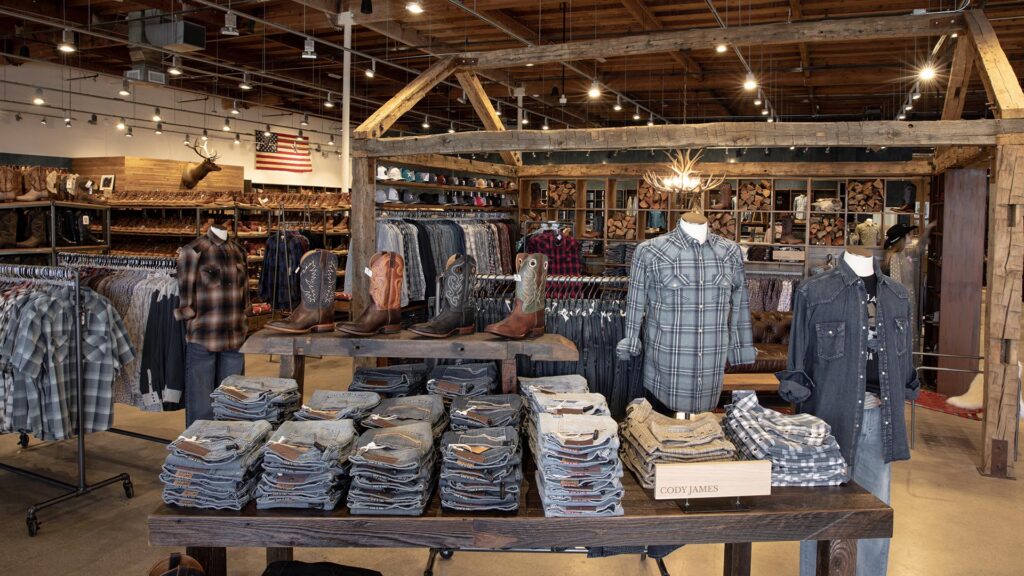
the inside of a boot barn store

The retention problem most retailers are solving wrong

Retail staff turnover is one of the most discussed and least solved problems in the industry. The average annual turnover rate in retail sits well above 60 percent. For frontline roles, it goes higher. And most of the money spent trying to fix it goes to the wrong places.

Sign-on bonuses. Pay uplifts. Flexible scheduling. These things matter at the margins. But they do not address the root cause that Mike Love, Chief Retail Officer at Boot Barn, has spent nearly a decade building against.

People do not leave retail because the pay is slightly better somewhere else. They leave because they cannot see a future where they are.

“One of the primary reasons people leave a company or even our industry overall is because they don't see a pathway to growth.”

Ron Thurston, Frontline Fridays

That insight sounds simple. Acting on it at scale is not. Boot Barn has grown by more than 300 stores in eight years. Keeping pace with that growth while maintaining a deep, development-ready internal pipeline requires a different kind of operational discipline — one that starts long before a promotion is offered.

Here is how they do it, and what retail operators of any size can take from it.

retail store manager walking through a store

Why retail employee turnover is a development problem, not a pay problem

The most ambitious people in your stores are doing a calculation you may not be aware of. They are looking at the leaders above them, the timeline to get there, and the support available to help them close the gap. If the answer to any of those is unclear, they start looking elsewhere.

This is not a theory. It is what Mike Love has watched play out across nearly four decades in retail — first in buying and planning, and then across nine years scaling Boot Barn’s store estate.

His framework for understanding it is Love’s Law: the skills that make someone excellent in their current role are rarely the skills the next role requires. A great store manager is not automatically a great district manager. A great district manager is not automatically a great regional vice president. The job changes. The skill set changes. And if no one is helping people bridge that gap, the most ambitious ones will find somewhere that will.

“What makes you good at your job today is what gets you promoted… but the skill that made me successful at my last role wasn't the skill that was going to make me successful at my next role.”

Mike Love, Chief Retail Officer, Boot Barn

The operational implication is direct: if you want to reduce retail employee turnover among your highest-potential people, you have to invest in their development before the opportunity arrives — not after they have already started to disengage.

So what: Retail operators who treat employee development as an HR function rather than an operational one will keep losing their best people to organisations that take it seriously. Development is a retention tool. Treat it like one.

retail store manager guiding a store associate

How a visible career path reduces retail staff turnover — and improves recruiting

Boot Barn’s internal promotion numbers are not accidental. They are the output of a deliberate decision to make career progression visible, structured, and achievable for anyone willing to invest in it.

Nearly half of all Boot Barn district managers came from store manager roles. Every regional vice president over the past eight years was promoted from within. These are not vanity statistics. They are recruiting tools.

When a store manager candidate is weighing Boot Barn against a competitor, Mike’s team can point to real numbers. This many district managers started where you are standing. This many regional leaders came up through the stores. The path is not theoretical. It is documented and repeatable.

“If my next regional vice president's not there, that's on me. That I didn't develop it. It's not that I didn't have the great clay to work with.”

Mike Love, Chief Retail Officer, Boot Barn

That accountability matters for more than optics. It shifts how leaders think about the people on their teams. When a regional vice president knows that the quality of the DM bench reflects on their own leadership, they become active participants in retail employee development rather than passive observers.

The balance Boot Barn strikes is also worth noting. Around half of district manager hires are internal; the other half come from outside the organisation. The internal promotes bring credibility and context. The external hires bring fresh thinking and guard against the groupthink that can set in when every leader has grown up in the same system.

So what: A visible internal pathway is one of the most cost-effective tools available for both retail employee retention and recruiting. It costs nothing to show a candidate what the path looks like. It costs significantly more to replace them when they leave because they could not see one.

Frontline worker using retail technology

What a retail training programme built by a team of two can teach every operator

Boot Barn’s Level Up programme is one of the clearest examples in retail of what structured frontline career development actually looks like at scale. It was built by a learning and development team of two people.

The structure is straightforward. Level one is required: the baseline knowledge every person in that role needs to function. Product knowledge, operational fundamentals, the non-negotiables. Everyone completes it.

Level two is self-guided. The content is available; nobody forces it. But it begins to expose people to what the next role looks like — the responsibilities of a keyholder, the priorities a store manager carries, the decisions that happen above the sales floor. The people who complete level two are showing you something about their ambition. Curiosity is the filter.

Level three is a stretch assignment. You put into practice what you studied. A keyholder builds the schedule. A store manager takes an interim district assignment in another region. The skills become real.

“If you've got twenty ASMs in a region who can finish level three and they're made to be store managers, when you're opening eighty stores a year, twenty ready-made store managers is a gift.”

Mike Love, Chief Retail Officer, Boot Barn

The point Mike makes here is easy to miss. Level Up is not just a retail employee upskilling programme. It is a supply chain for leadership. When you are opening 80 stores in a year, having 20 people who are ready — genuinely ready, with real experience — is not a nice-to-have. It is what makes the growth possible.

And it works because the pathway is visible. People know what level one requires. They know what level two unlocks. They know what level three proves. Ambition has somewhere to go.

So what: The most common reason retail training programmes fail is not budget. It is structure. People need to know what they are working toward and why it matters. Level Up works because it connects individual development to organisational growth in terms anyone can understand.

retail store managers

How to identify future leaders before they ask to be promoted

One of the most practical things Mike shares is what he is actually looking for when he walks into a store. Not performance data. Not tenure. Two behaviours.

Engage. And be curious.

Engagement is the faster signal. Does this person connect with the people around them? Do they step toward the conversation or away from it? Mike is direct about what its absence suggests: if someone is not willing to engage with a visiting leader, they may not be willing to fully engage with their customers. That matters.

Curiosity takes longer to read but is equally reliable. The person who asks about something outside their current scope — why a product is positioned a certain way, what happens in a district manager’s week, how the store visit process works — is showing you how they think about their own growth. That signal is available to any leader who is paying attention.

Both behaviours are observable without any formal retail employee development infrastructure. You do not need a programme to notice who leans in. You need leaders who are present enough to see it — and credible enough that the people worth developing are willing to show it.

So what: The organisations that build deep pipelines for retail employee development are not always the ones with the most sophisticated tools. They are the ones where leaders are watching, engaging, and investing in the people who show them something worth developing. That starts with presence — and knowing what to look for.

customers shopping at a busy retail store

What this means for retail operators thinking about frontline performance

The connection between retail employee retention and retail operational excellence is direct and underappreciated. When you lose experienced store managers, you lose execution consistency. You lose the institutional knowledge that keeps a store running well when nothing goes to plan. You lose the credibility that makes a team want to show up.

Replacing a store manager costs an estimated six to nine months of that person’s salary when you factor in recruiting, onboarding, and the performance dip while someone new finds their footing. Multiply that across a large estate and the cost of poor retail employee retention becomes one of the most significant and least visible drains on retail operational efficiency.

Boot Barn’s approach does not eliminate turnover. No organisation does. But it materially reduces the turnover that matters most — the loss of high-potential people who leave not because they are unhappy, but because they cannot see where they are going.

The solution is not complicated. Make the path visible. Build the structure. Hold leaders accountable for the development of their people. Give frontline team members a reason to invest in the organisation because the organisation is visibly investing in them.

That is what Love’s Law, Level Up, and Boot Barn’s pipeline are all pointing at. Not a retention programme. A leadership culture where development is not an event. It is the work.

Retail workers behind a counter

The standard is simple. The work is not.

Retail staff turnover will not be solved by a single initiative. But it can be substantially reduced by organisations that take development seriously — not as an HR programme but as a core operational discipline.

Mike Love’s nine years at Boot Barn are proof that it is possible to grow fast, promote from within, and build a culture where ambition has somewhere to go. The tools exist. The structure can be built by a team of two. What it requires is the leadership decision to treat development as infrastructure rather than overhead.

For any retail operator serious about reducing retail employee turnover, improving frontline performance, and building the kind of pipeline that makes growth sustainable, the question Boot Barn answers is the right one to start with: are you building leaders, or just filling roles?

Key Takeaways

  • Retail employee retention is primarily a development problem. People leave when they cannot see a pathway forward. Solving for pay without solving for development treats the symptom, not the cause.
  • A visible internal career path is both a retention tool and a recruiting advantage. Boot Barn’s pipeline statistics are not internal metrics — they are sales assets that candidates respond to in the interview room.
  • Love’s Law applies at every level of the organisation. The skills that earn a promotion rarely prepare someone for the new role. Closing that gap deliberately, before the promotion happens, is what separates development-led organisations from the rest.
  • Level Up proves you do not need scale to build effective retail employee development infrastructure. A three-tier structure built by two people has helped fuel the growth of a 550-location retail chain. Structure matters more than headcount.
  • The two signals worth looking for in every future leader are engagement and curiosity. Both are observable without any formal programme. They just require leaders who are present enough to see them.

This blog is based on Season 2, Episode 18 of Frontline Fridays with Ron Thurston. Listen on Spotify, Apple Podcasts, and YouTube at linktr.ee/frontlinefridays

YOOBIC is the AI-powered platform that helps retail and hospitality leaders connect, train, and empower their frontline teams. Book a demo here.

Book a demo and find out how

Avoid wasted hours, blind spots
and lost revenue with YOOBIC

Frontline worker hero image
Categories
Retail Training

Retail employee engagement: the five-system framework that drives store performance

Most retail engagement strategies treat motivation, recognition, feedback, engagement, and connectivity as five separate HR initiatives. That’s why most of them fail. They aren’t independent. They’re a single system, and a weakness in one pillar quietly drains the other four.

This piece names the system, shows how the five pillars interact, and gives retail operations leaders a practical way to spot where their own setup is breaking. By the end, you’ll have a diagnostic you can run against your own store network this quarter.

three women shopping and having fun

The paradox of presence and productivity

Retail organizations are technically more connected than ever. The tools are better. The data is richer. The frameworks are clearer. And yet store teams feel more disconnected from headquarters, more drained by the job, and more likely to leave than at any point in the last decade.

Globally, Gallup estimates that low employee engagement is costing the world economy around $10 trillion a year, roughly 9% of global GDP. That figure is global, not retail-specific. But retail carries disproportionate exposure to it: voluntary turnover in retail and wholesale sits between 26.7% and 32.9%, the highest of any major industry, and roughly three times the rate in insurance.

So why do most engagement programs barely move the dial? Because they treat the symptom, not the system.

fully stocked shelf

The five pillars of frontline experience, defined

Five interconnected pillars shape how a frontline retail employee experiences work. Together they form what we call the fractal frontline, a system where every pillar reinforces or weakens the others.

1. Motivation

Why someone shows up and gives discretionary effort. A mix of extrinsic drivers like pay and shift flexibility, and intrinsic drivers like purpose, mastery, and autonomy. Intrinsic motivation alone can lift discretionary effort by up to 76%.

2. Recognition

How performance and value are acknowledged. Frequent, specific recognition has a 0.455 correlation with engagement. Well-recognized employees are 45% less likely to have turned over two years later.

3. Feedback

The two-way flow of intelligence between frontline and HQ. Today only 36% of frontline workers feel they can give feedback, and only 9% believe their leaders are aligned with business goals.

4. Engagement

The outcome. The measure of enthusiasm and involvement. Global engagement now sits at 20%, a one-point drop from last year. The most engaged third of stores outperform sales targets while the least engaged third fall short.

5. Connectivity

The infrastructure underneath all of it. The flow of information, the accessibility of leadership, the strength of social bonds across a distributed network. Companies with highly connected employees report up to 25% higher productivity.

Why these are one system, not five

Picture one full cycle.

Connectivity is the prerequisite. Without a reliable way to reach store teams, you can’t gather feedback, deliver recognition, or share the context that makes the work feel purposeful. Frontline workers without consistent access to a single, reliable communication channel are effectively voiceless.

Feedback is what connectivity enables. When the channel works, store teams can flag what’s broken, suggest what could improve, and share what’s working. But feedback that goes nowhere is worse than no feedback at all. It signals that no one is listening.

Recognition is how you close the loop. When a manager visibly acts on feedback, or names a behavior that aligned with what the business needed, the employee learns that the work matters. That’s the moment recognition stops being a perk and starts functioning as an operational signal.

Motivation is the result. Not because of any single recognition moment, but because of the pattern. When the cycle runs reliably, store associates know their effort is seen, their voice carries, and their work connects to something larger than the till.

Engagement is the system’s output. It isn’t a thing you can install. It emerges when the other four pillars are working in concert.

retail manager using a tablet

Where the system breaks first: the manager

Five pillars, one system. So which pillar gives way first?

Almost always, it’s the manager.

Store managers govern roughly 70% of the variance in team engagement. They’re the only operational layer that touches customers, store associates, district leadership, and HQ in the same week. When the manager is strong, the system holds. When the manager is overloaded or disengaged, every pillar downstream collapses with them.

Globally, manager engagement just dropped from 31% to 22% in a single year. That’s the steepest fall on record. In retail, where the manager is the engagement governor for everyone below them, that drop translates directly into store execution failure: incomplete tasks, missed recognition moments, broken feedback loops, and store teams left to fill the gap themselves.

The fix isn’t another engagement campaign. It’s giving the manager the time, clarity, and tools to do the coaching work the role demands. That means stripping out the administrative load that buries them, narrowing the dashboards they’re expected to interpret, and giving them recognition and feedback rituals they can run inside the flow of work.

Michaels store associate leading a crafting activity at an in-store table with customers

What the system looks like when it works

Michaels: connectivity that powers everything else

When Michaels launched Mik Check, their custom mobile platform powered by YOOBIC, employee engagement jumped from 30% to between 80 and 90% within weeks. Voluntary turnover dropped by 24%. Learning program participation rose by 150%. Internal communities generated 13,700 posts with 1.5 million views.

None of those numbers belong to a single pillar. They show what happens when connectivity finally arrives at the frontline. Once store teams had a reliable way to receive context, give feedback, recognize each other, and learn in the flow of work, every other pillar moved at once.

“We barely got time to do things once, never mind twice or three times.“The hard part isn't getting the feedback. It's getting it back out to the field. We're committed to closing the loop, because we don't want anyone to think we listened and didn't do anything with it.”

Billy Kissel, on the Frontline Fridays podcast

Kissel’s point is the practical version of the fractal principle. Feedback that doesn’t loop back becomes the single point of failure for every other pillar. Recognition stalls. Trust thins. Motivation drains. The system breaks at the weakest connection.

Warehouse workers discussing with clipboard while working in warehouse

A diagnostic for retail operations leaders

If you want to know where your fractal frontline is breaking, ask five questions. One per pillar. Each one ties to an observable store-level signal you can check this week.

  • Motivation: Do your store teams know how today’s work connects to the wider business? If associates can’t articulate what their store is contributing to this quarter, motivation is leaking through a clarity gap.
  • Recognition: In the last 30 days, how many specific, named recognition moments has each store manager delivered? If the answer is fewer than one per associate per week, you have a recognition gap.
  • Feedback: When was the last time HQ made a visible change in response to frontline input, and was the change explicitly attributed to that input? If you can’t point to a clear example in the last quarter, the loop is open.
  • Engagement: How wide is the engagement spread between your top-quartile and bottom-quartile stores? A wide spread isn’t a sentiment problem. It’s a system problem isolated to a region or a manager cohort.
  • Connectivity: What percentage of your store associates received and acknowledged the most recent priority update from HQ within 24 hours? If you can’t measure it, that’s your starting point.

Each of these is something a retail operations leader can observe directly. The answers, in aggregate, tell you which pillar is buckling first.

Engagement is downstream of operational clarity

The retailers that win on engagement aren’t running bigger HR programs. They’re running tighter operational systems. They’ve understood that engagement is a result, not an intervention. You can’t add it. You build the conditions that produce it.

That’s why the most resilient retailers in 2026 are the ones investing in connected execution at the frontline. When store managers can act on the data in front of them, store teams can give honest feedback through a channel that reaches HQ, recognition lands the same day the behavior happened, and every associate understands how their store contributes to the wider business, engagement follows. Predictably and measurably.

This is why brands like Hugo Boss are seeing 3.2% sales uplifts from early deployments of AI-powered store manager tools. Not because the AI replaces the human work of engagement, but because it gives the manager the time and clarity to do that work properly.

The fractal frontline isn’t a model that lives on a slide. It’s the operational reality of every retailer who’s figured out that motivation, recognition, feedback, engagement, and connectivity aren’t five things to manage. They’re one thing to build.

Frequently asked questions

What is retail employee engagement?

Retail employee engagement is the measure of an employee’s enthusiasm, involvement, and emotional commitment to their work and their employer. In retail specifically, it predicts store-level sales performance, customer satisfaction, and voluntary turnover. The most engaged third of retail stores consistently outperform sales targets, while the least engaged third fall below them.

How are motivation and engagement different?

Why does manager engagement matter most in retail?

What does frontline disengagement cost retailers?

How is connectivity different from internal communications?

Looking for more on how retail leaders are rethinking frontline performance? Explore the YOOBIC platform, listen to Frontline Fridays, or read how Mattress Firm turned automation into an execution engine across stores.

Book a demo and find out how

Avoid wasted hours, blind spots
and lost revenue with YOOBIC

Frontline worker hero image
Categories
Careers Training

The accidental retail career: 9 leaders on how they fell into the industry and never left

Nine guests. Nine paths nobody planned. One reason they all stayed.

An accidental retail career is one that begins as a stopgap, side job, or unplanned pivot and becomes a long-term professional path. Across two seasons of the Frontline Fridays podcast, nine retail leaders, including senior executives at Pandora, Peloton, Akris, Pollo Tropical, and the Retail Industry Leaders Association, have described their own version of that story.

Key takeaways

→  Almost none of the nine retail leaders profiled set out to work in retail. They planned medicine, law, law enforcement, literature, or corporate buying.

→  Most credit a specific mentor, manager, or moment for the pivot from a stopgap job into a career.

→  When asked why they stayed, none of them named the product. They all named the people.

→  The pattern holds across hospitality, luxury, mass, big box, and convenience retail.

→  The book Retail Pride by Ron Thurston, host of Frontline Fridays, is the source material for the broader thesis.

Ron Thurston wrote a book called Retail Pride: The Guide to Celebrating Your Accidental Career. The subtitle is the part that lands hardest.

Almost nobody we have interviewed on Frontline Fridays planned a career in retail. They walked in for a part-time job, a stepping stone, a way to pay the bills, and stayed for reasons they could not have predicted at the time. Some had their plans interrupted. Some had their plans quietly replaced. A few woke up ten years in and realized the thing they were doing on the side had become the thing they were doing.

Across two seasons of the show, we have heard nine versions of that story that we keep coming back to. They sit alongside each other in a way that feels less like a coincidence and more like a pattern. So we pulled them together. Here is what each one tells us about why retail keeps catching people who never planned to stay.

•   •   •

01

Sam Rubino traded a healthcare calling for a hospitality career

Sam had an innate calling toward healthcare. Service ran in the family. Her parents had a restaurant. Her grandmother had a restaurant. But the plan was medicine, and she was studying for it while bartending and serving at Outback to get herself through school.

She kept getting drawn back to hospitality. She built experience at the Ritz-Carlton. She played a pivotal role in the inception and growth of Bolay. Somewhere along the way she realized that the part she loved most was empowering other people to find their own potential. Healthcare had pulled her toward helping people. Hospitality, it turned out, was a different way of doing exactly that.

Today she runs training and communications at Pollo Tropical. If she had forced the medicine plan, she might still be wondering why the energy was not there. The career that pulls at you is usually the one worth investing in. The trick is letting yourself notice.

“In a world where genuine mentors are rare, she stands out.”

Sam Rubino, Director of Training and Communications, Pollo Tropical

Listen to the full episode: Spotify  ·  Apple Podcasts  ·  YouTube

•   •   •

02

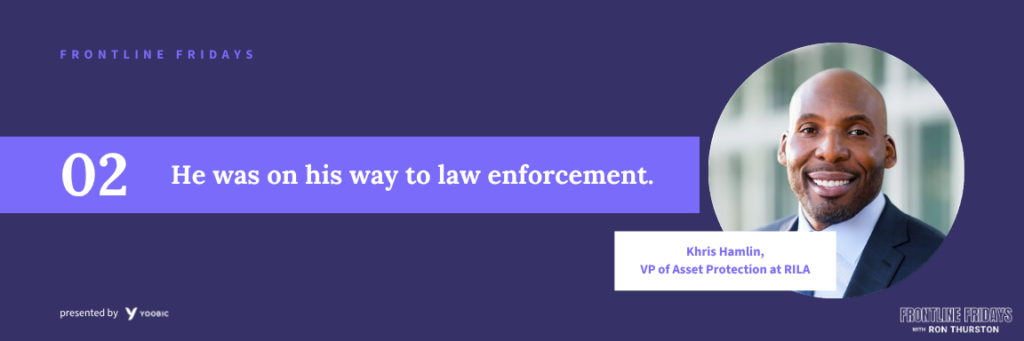
Khris Hamlin chose asset protection over law enforcement

Khris was studying criminal justice at George Mason. The plan was law enforcement. Retail was the job that paid the bills while he worked through his next step.

He started in asset protection at Hecht’s, the department store chain that would later become part of Macy’s. What he thought was a stopgap turned into 25 years across asset protection, operations, and store management. He moved on to senior AP roles at Belk, Nordstrom, and Saks OFF 5TH. Today he is Vice President of Asset Protection at the Retail Industry Leaders Association and runs The Khris Hamlin Company on the side, coaching the next generation of AP leaders.

The thing he picked up to pay the bills became the thing he built a 30-year career on. Sometimes a stopgap is just a stopgap. Sometimes it is the door you walked through without noticing.

“Retail is a place where curiosity becomes a career.”

Khris Hamlin, VP of Asset Protection, Retail Industry Leaders Association

Listen to the full episode: Spotify  ·  Apple Podcasts  ·  YouTube

•   •   •

03

Payton McFaden built Peloton’s sales operations function from the inside

Payton spent her early career running stores. At Peloton, she became one of the top store managers in the company. In 2019 the brand recognized her with the “Think and Act Like an Owner” award, which sounds like a marketing line until you understand what it actually meant: she had been treating one store like it was her own business for years.

She wanted to move into corporate. She applied seven times before she got in. She talks about that number openly, because she thinks the store teams reporting to her right now should know it. When she finally crossed over, she built Peloton’s sales operations function from the inside, drawing on everything she had learned standing on the sales floor. Today she leads global sales operations.

Seven rejections is not a story most leaders tell. It is also exactly why hers is worth listening to. The path through retail is rarely linear, and the people who make it tend to be the ones who let the messiness happen without taking it personally.

“You have to be your own advocate. Nobody else is going to know you want it.”

Payton McFaden, Director of Global Sales Operations, Peloton

Listen to the full episode: Spotify  ·  Apple Podcasts  ·  YouTube

•   •   •

04

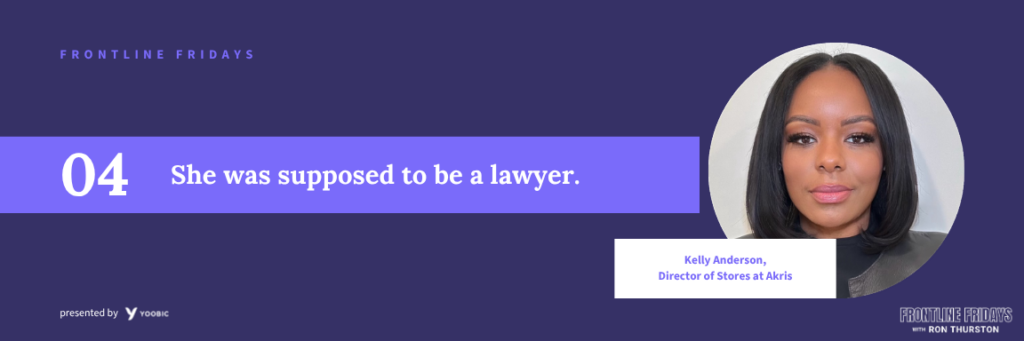
Kelly Anderson left a pre-law track for 20 years in luxury retail

Kelly was studying at York College in Queens, on track to become a corporate attorney. She had landed two prominent internships in her freshman year, ahead of graduating seniors. Then her mother got sick. Kelly became the family’s provider, working two jobs through college while she tried to keep the law school plan alive.

She shopped at an Aldo on 17th and 5th Avenue. The manager got friendly. A conversation led to an interview. She got the job. She was still conflicted about leaving law behind until a mentor teaching at Columbia gave her advice she still uses: people spend so much of their lives focusing on what they think they want. Focus on what makes you happy now, and let it grow from there.

Twenty years later she has led retail teams at Aldo, Kenneth Cole, Louis Vuitton, and Moncler. Today she is Director of Stores, Retail & Concessions at Akris, the Swiss luxury fashion house. The blueprint she had at 18 looked nothing like the career she ended up building. That is true for almost everyone. The energy is more reliable than the plan.

“Focus on what makes you happy now and let it grow from there.”

Kelly Anderson, Director of Stores, Retail & Concessions, Akris

Listen to the full episode: Spotify  ·  Apple Podcasts  ·  YouTube

•   •   •

05

Sherrica Hill built every next role from the one she was already in

Sherrica spent two decades in retail. She started as a seasonal sales associate at Gap and advanced into corporate leadership. Years later, after taking time off with her kids, she came back through fill recruiting, hiring forty sales associates at a time for stores that needed them.

She kept pausing the process. She did not want to send people into stores that were not set up to receive them. So she added training. Then she made the case to lead Gap Inc.’s This Way ONward program, which she eventually ran, tackling systemic barriers to employment for over 15,000 underrepresented early-career talent. That work led her to Jobs for the Future, where she now designs first-job programs for the kind of young workers she used to recruit. Across all of it, she earned her degree while working full-time.

Sherrica did not wait for permission. She used the job she had to test the work she wanted to do next, then built the case for the role. That instinct, more than any single decision, is what shaped her career.

“I didn’t wait on anyone to give me opportunities. I created them myself.”

Sherrica Hill, Director of Solutions Design and Delivery, Jobs for the Future

Listen to the full episode: Spotify  ·  Apple Podcasts  ·  YouTube

•   •   •

06

Brandon Lee turned an English Lit degree into a 20-year visual merchandising career

Brandon did not study design. He studied English Lit and Communications. His first internship was at Barneys, where he was the young one on the team, sometimes literally gluing mannequin hands to the ceiling. His boss walked by once, watched him work, and let him keep going.

From there he built a 20-year career across Ralph Lauren, Bonobos, Gap, Moose Knuckles, and Brooks Brothers. Each move was a yes to the next thing that interested him. Then he left full-time employment to launch Brandon Lee Designs, his own LLC. His current clients sit across industries you would not necessarily associate with traditional VM, including cannabis and furniture.

None of that was on a plan. The literature degree taught him to read stories. Visual merchandising, as he describes it, is just another way of telling them. The point is not that English majors should do retail. The point is that careers like this one get built one yes at a time. You do not need the five-year plan. You need the next thing worth trying.

“Retail creativity is moving to a more holistic view. The window matters less. The connection matters more.”

Brandon Lee, Creative Director and Owner, Brandon Lee Designs

Listen to the full episode: Spotify  ·  Apple Podcasts  ·  YouTube

•   •   •

07

Brian Librach found the industry that fit his ADHD wiring

Brian grew up with undiagnosed ADHD in an era that had no language for it. He learned his coping mechanisms by trial and error, using the driven nature ADHD often brings to chase what energized him. School did not always work. Retail did.

He started in the stockroom. He became a district manager at 21. He climbed from the stockroom to the corner office at Urban Outfitters, PacSun, and internationally with Old Navy in Canada. He still talks about retail as the place that let him use the parts of himself other industries treated as a problem. The improvisation. The energy. The ability to read a room and adjust in real time.

Today he writes about that journey. The Retail Leader’s Roadmap is the book. The Wellwisher Company, which he co-owns with his wife, is the platform. Brian’s story is a useful reminder that retail rewards a particular kind of wiring, and that the people who get told they are wired wrong sometimes find themselves in exactly the right place.

“Retail let me use the parts of myself other industries treated as a problem.”

Brian Librach, Author and Co-Owner, The Wellwisher Company

Listen to the full episode: Spotify  ·  Apple Podcasts  ·  YouTube

•   •   •

08

Adimika Owens stepped back to step forward

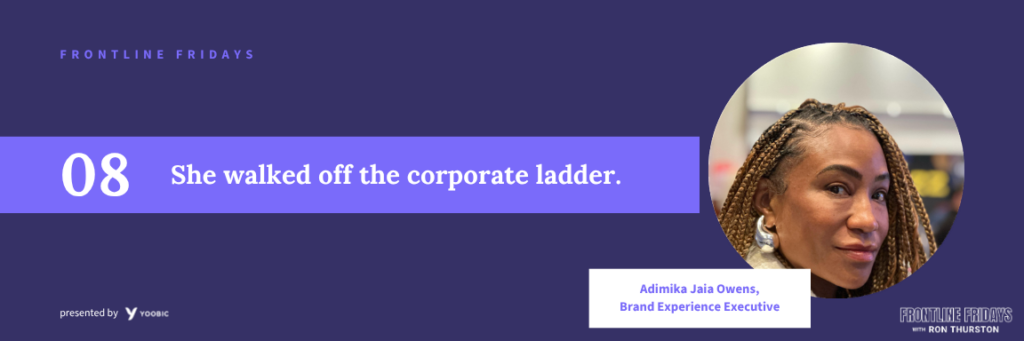
Adimika started in retail as a buyer at Bloomingdale’s after studying at Clark Atlanta University. Then she relocated to Los Angeles. She walked into a Zara and applied as a sales associate. She calls it the best career decision she ever made.

Working alongside the team that had come over from Spain showed her that retail was not just a corporate function. It was a career, and the stores were where it actually happened. Twenty-five years later she has led visual merchandising at Bloomingdale’s, Forever 21, Victoria’s Secret, and Floor & Decor. At Forever 21 she pushed for mannequins in different shapes, sizes, and skin tones before DEI was a phrase anyone was using. She calls it a small thing that signals a big thing to a customer walking in: you are welcome here.

Going from corporate buyer to sales associate looks like a step back on paper. It taught her more than the next promotion would have. The view from the sales floor is the view every retail decision should account for, and the leaders who have stood on it tend to make better calls when they leave it.

“It allowed me that real understanding. We are all here as sales associates. We all have aspirations and dreams.”

Adimika Jaia Owens, Brand Experience Executive

Listen to the full episode: Spotify  ·  Apple Podcasts  ·  YouTube

•   •   •

09

Detria Courtalis said yes to every next question at Pandora

Detria joined Pandora in 2011 as a training manager because she wanted to get into the brand. Then she raised her hand to run franchise and real estate, which at the time meant the mall stores. Then corporate stores started opening. Then she ran wholesale. Today she is Vice President of Sales for the US and Caribbean, sitting on Pandora’s North American Executive Leadership Team.

None of that was a planned career path. It was a series of yeses to the next question. She tells leaders to be Gumby. She tells store managers to raise their hands, even when they are not sure. Worst case, you get knocked down. You get up. You learn.

Earlier in her career she left Gap for a DM role at Structure when she did not get promoted at Gap. Six months in, she realized she was not ready. She calls it a dose of humble pie and one of the most useful mistakes she has made. Stretch assignments do not need to be linear, and they do not need to work the first time. They just need to teach you something.

“Raise your hand. Worst case, slap it down and try it again.”

Detria Courtalis, VP of Sales US and Caribbean, Pandora Jewelry

Listen to the full episode: Spotify  ·  Apple Podcasts  ·  YouTube

•   •   •

Why retail keeps catching people who never planned to stay

Any empty shopping mall in the day

Read the stories back to back and the pattern is hard to miss. Almost none of them planned a retail career. They planned medicine, law, law enforcement, literature, buying offices, or something else entirely. Retail was the part-time job, the lateral move, the thing they did while they figured out the real thing.

Then the real thing turned out to be this.

When asked why they stayed, none of them talk about the product. They do not talk about the discounts, the pace, or the brand on the building. They talk about the people. The teams who pushed them to apply for the corporate role. The mentors who saw a skill set they had not spotted in themselves. The store managers who asked what they wanted to do next, and then helped them get there.

Ron calls it the accidental career. That is accurate. It is also the reason retail keeps producing leaders that other industries cannot quite replicate. People stay because someone invested in them. They grow into the kind of leaders who invest in others. The cycle is the product.

If you are in this industry, you are part of it. If you lead a team, you are responsible for the next nine stories that get told.

•   •   •

The nine guests featured in this article

Each guest below was interviewed on the Frontline Fridays podcast, hosted by Ron Thurston and presented by YOOBIC.

Sam Rubino is Director of Training and Communications at Pollo Tropical. Featured on Fostering Proud Frontline Career Paths in Retail & Hospitality.

Khris Hamlin is Vice President of Asset Protection at Retail Industry Leaders Association (RILA). Featured on Asset Protection’s Key Role in Modern Retail Leadership.

Payton McFaden is Director of Global Sales Operations at Peloton. Featured on Embracing Vulnerability in Modern Management.

Kelly Anderson is Director of Stores, Retail & Concessions at Akris. Featured on Inspiring the Next Wave of Retail Talent.

Sherrica Hill is Director of Solutions Design and Delivery at Jobs for the Future (JFF). Featured on Hiring For Potential, Not Credential.

Brandon Lee is Creative Director and Owner at Brandon Lee Designs. Featured on Balancing Creativity & Operations in Retail Design.

Brian Librach is Author and Co-Owner at The Wellwisher Company. Featured on Finding Career Growth When You Feel Stuck.

Adimika Jaia Owens is Brand Experience Executive at (formerly Floor & Decor, Forever 21, Victoria’s Secret, Bloomingdale’s). Featured on Visual Merchandisers as the New Keepers of Company Culture.

Detria Courtalis is Vice President of Sales US and Caribbean at Pandora Jewelry. Featured on How to Stay Flexible When Everything is Changing.

•   •   •

Worth a read

Retail Pride: The Guide to Celebrating Your Accidental Career by Ron Thurston is the source material for a lot of how we think about frontline talent. If these stories landed, the book is worth picking up.

Every Frontline Fridays episode is on Spotify, Apple Podcasts, and YouTube.

Build careers, not just shifts

YOOBIC helps retailers turn store associates into store managers, store managers into district leaders, and district leaders into the people who run the industry next. Book a demo to see how.

Book a demo and find out how

Avoid wasted hours, blind spots
and lost revenue with YOOBIC

Frontline worker hero image
Categories
Operations Retail Training

Why retail employees quit in their first year and how to stop it

Retail loses more employees in their first year than almost any other industry. The pattern repeats across store formats: new hires arrive, get a rushed orientation, struggle through their first few weeks, and quietly disappear before they ever hit their stride.

The cost goes beyond another job posting. Every early departure drains recruiting budgets, wastes training hours, and leaves remaining staff stretched thin. This article breaks down the specific reasons retail employees quit in their first year, how to spot the warning signs in your own stores, and the practical steps that keep more new hires past the twelve-month mark.

The scale of first year turnover in retail

Retail employees frequently leave within the first year due to a combination of low wages, poor management, and misalignment between job expectations and reality. High-stress environments, inadequate training, and lack of career growth opportunities compound the problem. Many departures happen within the first 90 days.

First year turnover, sometimes called new hire attrition, measures the percentage of employees who leave before completing twelve months on the job. Employee turnover in retail runs higher than most industries on this metric, reaching 26.7% voluntary turnover according to Mercer’s 2025 survey, and the pattern holds across store formats. Whether you operate specialty retail, big-box locations, or quick-service restaurants, the first year is when you lose the most people.

The true cost of losing new hires in their first year

Every early departure carries costs that go far beyond posting another job listing. Replacing a single frontline worker costs approximately 40% of their annual salary, and the real impact shows up across recruiting, training, productivity, and customer experience, often as hidden costs that are hard to see until you add them up.

  • Recruiting and hiring costs: Job postings, interviews, background checks, and HR time accumulate quickly when you repeat the process for the same role.

  • Training investment lost: The hours spent onboarding a new associate walk out the door with them.

  • Productivity gap: Replacement hires take weeks to reach baseline performance, leaving teams short-handed.

  • Team morale impact: Remaining staff carry extra workload, which increases their own risk of burnout and departure.

  • Customer experience: Inexperienced teams deliver inconsistent service, which affects sales and brand perception.

A single location losing three associates in their first year might absorb the hit. Multiply that across hundreds of stores, and the financial and operational drag becomes significant.

Why retail employees quit in their first year

Most new hires leave not because of pay alone, but because of how the job feels in those first weeks and months. The reasons tend to cluster around a few recurring themes, and understanding them is the first step toward addressing them.

Poor onboarding and inconsistent training

Onboarding in retail often gets compressed into a single shift. New hires shadow whoever happens to be available, then get put on the floor before they feel ready. This sink-or-swim approach creates anxiety and mistakes.

Associates who feel unprepared are more likely to disengage early. Structured training paths delivered on mobile devices, accessible in the flow of work, help new hires build confidence without pulling them off the sales floor for hours at a time.

A gap between the job description and the store floor

Expectation mismatch happens when the interview promises one reality and the job delivers another. Enboarder’s 2025 research identified it as the leading reason new hires leave early. This erodes trust fast, and once trust is gone, so is the employee.

Common mismatches include:

  • Promised set schedules, but received last-minute changes

  • Described as customer-facing, but assigned to stockroom duties

  • Told about growth opportunities, but no one explains how to advance

When the job feels like a bait-and-switch, new hires start looking elsewhere within weeks.

Unpredictable scheduling and long hours

Erratic schedules make it impossible to plan life outside work. Frontline workers consistently cite scheduling as a top frustration. The issue is not about working hard. It is about knowing when you work.

Centralized communication tools that give associates visibility into upcoming shifts reduce the chaos and help people feel more in control of their time.

Low pay and thin benefits

Pay matters, though it rarely acts alone. Compensation becomes the final reason to leave when nothing else compensates for a chaotic, unsupportive, or exhausting work environment.

Retailers competing for talent often find that modest pay increases combined with better working conditions outperform higher wages paired with poor management.

Disconnected store managers and a lack of coaching

Store managers are often too overloaded with administrative tasks to coach new hires. Reports, compliance checks, and firefighting consume the hours that could go toward developing people.

The result is that new employees feel ignored. They make mistakes without feedback and never learn what good performance looks like. When managers have access to prioritized daily actions and performance insights, they can shift time from spreadsheets to their teams.

No clear path to growth or promotion

New hires who see no future leave to find one elsewhere. Career development in retail often feels invisible, with no clear steps from associate to supervisor.

What “no path” looks like in practice:

  • No one explains what it takes to get promoted

  • No skills tracking or recognition of progress

  • High performers treated the same as everyone else

Associates who understand the steps from their current role to the next one are more likely to stay and work toward it.

Feeling invisible to HQ

Frontline workers often feel like numbers rather than people. Feedback goes nowhere. Company news arrives late or not at all.

This disconnect is not usually about a lack of caring at headquarters. It is about a lack of connection. Internal communications platforms that create two-way channels between stores and HQ help associates feel heard and informed.

Outdated tools that make the job harder

Paper checklists, scattered apps, and manual processes slow associates down. New hires notice when they spend more time fighting systems than helping customers.

The frustration compounds when different tools do not talk to each other. A unified platform that brings tasks, communications, and learning into one place removes friction and lets people focus on the work itself.

How to diagnose where new hires drop off in your stores

Fixing turnover starts with understanding when and where it happens in your own organization. The data often reveals patterns that are not obvious from the surface.

Map attrition by store, role, and tenure

Segment your turnover data to find patterns. Are certain stores losing more people? Are specific roles, like cashier versus stockroom, more vulnerable? Does turnover spike at week two or month three?

This analysis reveals where to focus your efforts first.

Run stay interviews at thirty, sixty, and ninety days

Stay interviews are conversations with current employees to learn what is working and what is not, before they decide to leave. Unlike exit interviews, they come early enough to act on.

Sample questions to ask:

  • What surprised you about this job?

  • What almost made you quit?

  • What would make you stay longer?

Track onboarding completion and early task performance

Completion rates for training modules and first tasks reveal engagement. Low completion signals disengagement or poor program design.

Digital learning platforms track this automatically, giving you visibility without adding manual reporting to your managers’ workload.

Capture frontline feedback in real time

Pulse surveys and quick polls embedded into daily workflows surface issues while you can still address them. Waiting for annual surveys misses the window.

Internal communications tools with built-in feedback features help HQ hear from the floor without creating extra steps for store teams.

How to stop first year turnover in retail

Employee retention is not one big fix. It is a series of small decisions that add up over the first weeks and months.

1. Rebuild onboarding as a structured ninety day program

Effective onboarding extends well beyond day one. A structured program gives new hires time to learn, practice, and build confidence before they are expected to perform at full speed.

  • Week one: Orientation, culture, core systems

  • Weeks two through four: Role-specific training, shadowing, first tasks with feedback

  • Months two and three: Check-ins, skill-building, ongoing learning

Mobile-first learning platforms make this scalable across hundreds of stores without requiring in-person sessions.

2. Set honest expectations during hiring

Overselling the role creates the mismatch problem. Hiring managers who describe the real pace, challenges, and opportunities attract candidates who are more likely to stay.

Cover scheduling realities, physical demands, career path, and team culture during the interview process. Honesty upfront saves turnover later.

3. Deliver training in the flow of work

Pulling associates off the floor for long training sessions is impractical in most retail environments. Training works better when it is embedded into daily tasks, accessible on mobile, and delivered in short bursts.

Think of it as learning on the sales floor, not in a classroom.

4. Give store managers time and tools to coach

Coaching requires margin. If managers spend hours on admin and reporting, they cannot develop their teams.

When managers receive prioritized daily actions and performance insights through tools like AI-powered copilots, they can shift time from spreadsheets to people. The difference shows up in how new hires feel supported.

5. Recognize wins early and often

Recognition in the first months reinforces belonging. This does not require formal programs, just visible acknowledgment of progress.

  • Shoutouts in team communications

  • Badges or milestones for completing training

  • Manager check-ins that highlight what is going well

6. Fix scheduling and communication gaps

Giving associates more visibility into their schedules and a single place to receive updates reduces chaos. Centralized communication platforms cut email overload and ensure messages reach the right people at the right time.

7. Open a clear career path from day one

Document the steps from associate to supervisor to manager. Make skills and milestones visible. Learning platforms with progress tracking and skill gap analysis help associates see their own development and understand what comes next.

How store managers shape new hire retention

The store manager is the single biggest influence on whether a new hire stays or goes. People leave managers, not companies, and this is especially true in retail where the manager sets the tone for daily work.

What effective managers do differently:

  • They check in regularly: Not just when something is wrong

  • They clarify expectations: New hires know what success looks like

  • They advocate for their team: They surface issues to HQ and push for resources

  • They coach, not just correct: Feedback is developmental, not punitive

Managers need support too. Investing in manager development, practical tools, and realistic workloads makes the difference between a manager who develops people and one who barely keeps up.

How to measure and track first year retention

Tracking the right metrics over time reveals whether your retention efforts are working. Here are the key numbers to watch:

Metric

What it measures

Review frequency

First year turnover rate

Percentage of new hires who leave within twelve months

Monthly

Turnover by tenure band

When departures happen (first week, first month, first quarter)

Monthly

Onboarding completion rate

Percentage of new hires who finish training

Weekly

Engagement survey scores

How new hires feel about their experience

Quarterly

Store-level attrition variance

Which locations have higher or lower turnover

Monthly

Turn every store into a place new hires want to stay

First year turnover is not inevitable. It results from gaps in onboarding, communication, management, and tools that compound over the first weeks and months.

Retailers who close these gaps keep more of the people they hire and build stronger, more consistent teams. The work is not glamorous, but the payoff shows up in lower recruiting costs, better customer experience, and stores that actually have the staff they need.

For brands looking to reduce first year turnover through better onboarding, communication, and manager enablement, YOOBIC brings everything together in one platform.

Book a demo and find out how

Avoid wasted hours, blind spots
and lost revenue with YOOBIC

Frontline worker hero image

Frequently asked questions about retail first year turnover

Why do retail workers quit in their first year?

Most retail workers quit in their first year due to poor onboarding, misaligned expectations, lack of manager support, unpredictable scheduling, and no visible path to growth. Pay is a factor, but rarely the only one.

What are signs a new retail employee is about to quit?

What is the three month rule for new retail jobs?

What is a healthy first year turnover rate for retail?

How long should retail onboarding last?

Categories
AI Training

Top 10 retail training platforms for frontline employees (2026)

Retail turnover rates remain among the highest of any industry — between 60% and 80% annually, according to industry benchmarks. The cost of each departure, factoring in recruitment, onboarding, and lost productivity, runs between $5,000 and $10,000 per employee. For a retailer with hundreds of stores, the math is brutal.

Training is the most direct lever retailers have to reduce that churn, accelerate time-to-productivity for new hires, and ensure consistent execution of brand standards across every location. But the training itself has to work within the realities of frontline retail: associates who don’t sit at desks, don’t have company email addresses, and often have less than five minutes between customers to absorb new information.

That’s why the retail training platform market has evolved rapidly. Legacy desktop-based LMS platforms designed for corporate office workers are being replaced — or supplemented — by mobile-first, microlearning-native solutions built for the way frontline employees actually work.

Not every platform on this list solves the same problem. Some are purpose-built for frontline retail. Others are enterprise LMS platforms with retail applicability. Some focus on compliance and certification tracking, while others emphasize retail sales training — helping associates build product knowledge, selling techniques, and customer service skills that translate directly to revenue. The right choice depends on whether your primary challenge is frontline engagement, sales enablement, compliance tracking, content creation, or connecting training to on-the-floor execution.

We’ve evaluated the leading platforms based on frontline usability, mobile-first design, G2 ratings and verified reviews, retail customer base, and the ability to drive measurable outcomes — not just course completion.

YOOBIC logo terracotta

1. YOOBIC: Best overall retail training platform

YOOBIC is the retail training platform built to empower store associates with mobile-first learning, onboarding, and upskilling programs that drive measurable store performance improvements. Unlike standalone LMS platforms that deliver training in isolation, YOOBIC connects every learning moment to real-world store execution through integrated task management and frontline communications — so associates learn, do, and apply it, all in one app.

YOOBIC was named in the 2025 Gartner® Hype Cycle™ for Corporate Learning Technologies — validating its training platform alongside dedicated LMS vendors — as part of a broader inclusion across six Hype Cycle reports that year. On G2, YOOBIC ranks #1 across Retail Execution and Retail Task Management with 27 badges across 142 reports.

What makes YOOBIC different for training?

Onboard new employees in days, not weeks

YOOBIC’s structured onboarding programs, automated learning paths, and real-time mobile training get new associates productive in days rather than weeks. Role-based course enrollment makes sure every hire receives the right content from day one. One luxury fitness customer cut onboarding time by 50% using YOOBIC.

Recurring course enrollment keeps that efficiency going long after onboarding. It automatically re-enrolls employees into mandatory compliance, SOP, and safety training, so those programs run on schedule without manual administration. That takes a recurring task off your L&D team’s plate and keeps every store current on the training it’s required to complete.

Turn learning into measurable sales impact

YOOBIC helps retailers build retail sales mastery through adaptive learning, gamification, and rewards. Product knowledge training, selling techniques, upselling strategies, and customer service skills are delivered as interactive microlearning modules that associates complete on the floor between customers. Leaderboards, performance badges, and store-vs-store competitions create a culture of continuous learning. Native certificates are awarded automatically on course completion, giving associates clear recognition for what they’ve finished and a reason to keep going. UNTUCKit deployed YOOBIC to turn training into a direct sales driver, and South African fashion group TFG increased its in-store conversion rate by 22%.

AI-powered content creation at speed

YOOBIC’s AI course creator turns existing SOPs, product specs, and brand guidelines into interactive modules in minutes, while a no-code drag-and-drop builder lets teams without technical backgrounds build courses themselves. You can set the learning goal during course creation, and the AI adapts the structure, tone, and outcomes to match, whether associates need to build a skill, change a behavior, learn something new, or stay compliant. Teams can also point the AI at existing high-performing lessons to use as a starting reference. Longchamp saves 10 hours per week on content creation using YOOBIC’s AI. Fast, multi-language translation keeps content consistent across global store networks.

Training connected to execution

When a new seasonal collection drops, the training module on product features feeds directly into a visual merchandising task, and the associate who completed the training verifies the display is set correctly. When food safety training is completed, it’s linked to the corresponding inspection checklist. The learning and the doing happen in the same workflow, in the same app.

YOOBIC’s proven results and customers

Moschino deployed YOOBIC across 150+ global locations and achieved 98% course completion with a 4.7/5 course rating. TFG increased in-store conversion by 22% across 160 stores. Longchamp reclaimed 10 hours per week on content creation. Over 350 brands use YOOBIC for frontline training in 21+ languages across 80+ countries, including H&M, Boots, Lacoste, Michaels, GameStop, and David Jones.

Best for: Multi-location retailers that need a training platform where learning drives measurable sales impact, faster onboarding, and consistent store execution — not just course completion.

Axonify logo

2. Axonify

Axonify is a frontline enablement platform that uses microlearning, AI-powered reinforcement, and adaptive learning paths to train deskless workers. The platform delivers daily 3-to-5-minute training sessions using spaced repetition to reinforce knowledge over time. Customers include Walmart, Kroger, and Lowe’s.

Axonify reports an 83% weekly login rate across its learning module, driven by its gamification mechanics and short-session format. The platform also includes two-way frontline communications and a task management module with photo verification.

Considerations: Axonify’s most consistent complaint on G2 is admin backend complexity. Reviewers have noted feeling restricted by the admin experience compared to other platforms. The platform is designed for large enterprises and may not be as accessible for mid-market retailers. Axonify’s task management and communications capabilities are secondary features layered onto a training-first platform — organizations seeking a unified operational platform where training, tasks, and communications are equally integrated may find the balance weighted too heavily toward learning.

docebo logo with a transparent background

3. Docebo

Docebo is an AI-powered enterprise learning management system supporting employee training, compliance, and extended enterprise learning. The platform offers multi-audience portals (employees, partners, customers), a content marketplace, SCORM/XAPI compliance, and AI-powered features including the Harmony search assistant and AI agent training.

Docebo is favored by large enterprises with complex training architectures that span internal staff, franchise partners, and external audiences.

Customers include Sonos, Bulk and Kiehl’s. 

Considerations:  Docebo is a broad enterprise LMS rather than a purpose-built frontline retail training platform. Originally designed for desktop-based corporate learning environments, the platform has since adapted to mobile rather than being built mobile-first from the ground up.

Some G2 reviewers highlight a steep learning curve due to the platform’s breadth of functionality and limited support documentation. Users also note that certain reporting and configuration customisations can require additional setup complexity and cost. In addition, some functionality sits behind premium add-ons, which reviewers describe as expensive.

Unlike retail execution platforms, Docebo does not provide integrated task management, store execution workflows, visual merchandising verification, or frontline communication capabilities. For retailers primarily training store associates on mobile devices, this can create adoption and usability challenges compared to platforms designed specifically for frontline retail teams.

Sap Litmos logo with transparent background

4. SAP Litmos

SAP Litmos is a cloud-based LMS focused on scalable compliance training, certification management, and performance tracking. The platform offers tiered plans with a built-in content library ranging from approximately 140 to 2,000+ courses depending on plan level.

Litmos is widely cited as one of the fastest-deploying LMS platforms on the market, with a straightforward setup process.

Considerations: Some G2 reviewers describe Litmos reporting and analytics as unintuitive, with users noting that extracting meaningful compliance and learner performance insights can require significant manual effort. Common feedback also references limited customisation options for course layouts, slower load times for larger content modules, and data-heavy reports that can be difficult to navigate.

Litmos is a general-purpose corporate LMS rather than a retail-specific frontline platform. The system does not include integrated retail workflows such as merchandising training, on-floor skill validation, task execution, or direct integration with store operations. For retailers managing large frontline workforces, particularly those with high employee turnover, pricing can also scale quickly, with costs typically ranging between $4–$8 per user per month depending on plan structure and feature requirements.

5. Cornerstone OnDemand

Cornerstone OnDemand is an enterprise talent management suite that combines learning management with performance reviews, succession planning, career pathing, and compliance tracking. The platform offers real-time reporting dashboards for tracking compliance, learning, and skill trends.

Cornerstone is positioned for organizations where learning is part of a broader HR transformation, reporting into talent management rather than retail operations.

Considerations: The learner experience is Cornerstone’s most significant liability for retail frontline use. As one G2 reviewer noted, “Most people writing reviews about Cornerstone are not end-users (learners). Learners suffer horribly in Cornerstone.” For retail environments where the entire value of training depends on whether store associates actually engage with it, learner experience is not a secondary concern — it’s the primary one. The platform also requires multiple authentication steps to access learning materials, which creates friction for frontline workers who need immediate, low-barrier access. Cornerstone is priced and architected for enterprise HR departments, not for retail operations teams seeking rapid frontline training deployment. In addition, G2 reviews heavily focus on the poor customer support citing slow response times and unhek

6. 360Learning

360Learning is a collaborative learning platform that enables subject matter experts to create and publish training content without formal L&D backgrounds. The platform emphasizes peer-driven course creation, forums, and knowledge sharing.

The collaborative model is conceptually appealing for retail — the idea that experienced store managers and top-performing associates can build training from their own expertise.

Considerations: 360Learning is positioned primarily for small and medium-sized businesses and has limited proven scale with enterprise retail chains operating hundreds of locations. The platform does not offer task management, store execution workflows, or frontline communications integration. There is no native visual merchandising compliance or photo-based verification capability. For retailers who need centrally controlled, brand-consistent training content deployed at enterprise scale, the decentralized content creation model introduces quality control considerations.

7. Absorb LMS

Absorb LMS is an enterprise learning management system with strengths in compliance training, automated workflows, and audit-ready reporting. The platform is recognized for supporting regulated industries where compliance documentation and certification tracking are primary requirements.

Considerations: Absorb is a compliance-first enterprise LMS, not a frontline engagement platform. The platform does not offer mobile-first microlearning as a native format, retail-specific workflows, gamification comparable to frontline-native platforms, or integration with store execution and communications systems. For retailers where the primary training challenge is associate engagement and knowledge retention rather than compliance audit trails, Absorb addresses a secondary concern. Desktop-based LMS platforms typically achieve under 15% completion rates among frontline retail staff, compared to 80–95% from mobile-first, gamified platforms.

8. SC Training (formerly EdApp)

SC Training, now part of SafetyCulture, is a mobile-first microlearning platform offering a free plan with unlimited users, AI course creation, a library of 1,000+ editable courses, gamification, and offline mobile access.

The free tier makes SC Training attractive for independent retailers and franchise operators with minimal training budgets.

Considerations: SC Training is predominantly used by small businesses and is not designed for enterprise retail operations at scale. Reviewers have flagged limited flexibility in quiz types, strict video requirements, and a learning curve for advanced admin tasks. SSO and advanced reporting require paid Business+ plans, which begin to add up at scale. The platform lacks enterprise compliance audit trails and the administrative depth required by retailers managing training across dozens or hundreds of locations. SC Training does not offer integrated task management, store execution workflows, or frontline communications.

Zipline logo

9. Zipline

Zipline is a frontline operations platform primarily focused on HQ-to-store communications and task coordination. The platform includes a learning resources component that allows retailers to publish and organize reference materials, guides, and training content alongside operational communications.

Zipline’s learning capabilities are part of a broader operations platform rather than a standalone training solution.

Considerations: Zipline is not a dedicated training or LMS platform. Its learning component provides resource distribution rather than structured microlearning, adaptive learning paths, gamification, or AI-powered content creation. The platform does not offer the depth of learning analytics, spaced repetition, or knowledge reinforcement mechanics found in purpose-built training solutions. Organizations evaluating Zipline specifically for retail training — rather than as an operations and communications platform with supplementary learning features — should assess whether the training depth matches their L&D requirements.

10. Rallyware

Rallyware is a sales performance enablement platform that delivers real-time product coaching, upsell prompts, and learning tasks at the point of sale. The platform uses AI to connect training directly to sales behavior, delivering content during the decision moment with the customer present.

Considerations: Rallyware serves a narrow use case — commission-driven and assisted-selling retail environments such as luxury, electronics, and beauty. The platform’s features are best suited to sales-focused roles and may be too robust or misaligned for retailers with diverse frontline training needs spanning onboarding, compliance, safety, and operational procedures. Rallyware does not offer the breadth of an enterprise LMS or the operational integration of a unified frontline platform.

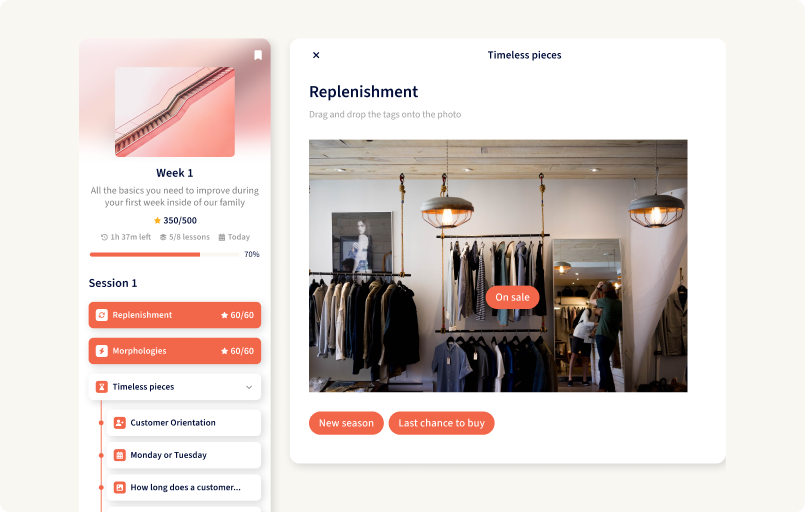
YOOBIC training platform showing an interactive drag-and-drop retail lesson on product replenishment.

How to choose the right retail training platform

Selecting a training platform for frontline retail teams is a decision that affects every store, every new hire, and every product launch rollout. The wrong choice means low adoption, wasted L&D investment, and the same knowledge gaps you set out to close. Here’s a framework for evaluating your options.

Frontline training is not corporate training

The most consequential mistake in this category is selecting a platform designed for office-based corporate learning and expecting it to work for retail store associates. Frontline workers don’t have company laptops, dedicated email addresses, or scheduled training blocks. They learn between customers, during shift transitions, and on their phones. Any platform that was built for desktop-first, email-login, hour-long course completion will see adoption collapse on the retail floor.

The data supports this: desktop-based LMS platforms typically achieve under 15% completion rates among frontline retail staff. Mobile-first, gamified platforms achieve 80–95% completion rates with the same content. The platform architecture — not the content quality — is the primary driver of that gap.

Measure engagement, not just completion

Course completion is the most common training metric, and the least useful. A 100% completion rate tells you that associates clicked through the content, not that they retained it, applied it, or changed their behavior on the floor.

The platforms that drive real training ROI measure deeper: knowledge retention over time (through spaced repetition and adaptive reinforcement), on-the-floor behavior change (through connected task execution and compliance data), and correlation between training investment and business outcomes like sales uplift, shrink reduction, and customer satisfaction.

Beware the “platform fragmentation” tax

Many retailers end up with separate systems for training (an LMS), communications (an intranet or messaging app), and task management (another app or spreadsheets). Each system has its own login, its own admin overhead, and its own data silo. The hidden cost isn’t just the subscription fees — it’s the inability to connect training effectiveness to operational outcomes. Did the visual merchandising training actually improve planogram compliance? Did the product knowledge module drive upsell rates? If training data and execution data live in different systems, these questions are unanswerable.

AI should create content and drive action, not just automate admin

AI capabilities vary enormously across this category. At the basic end, “AI” means automated course assignments or chatbot-based FAQ. At the advanced end, AI generates complete training modules from existing documents, delivers personalized learning paths based on individual performance data, and connects training gaps to execution failures with recommended interventions.

The meaningful question is whether the AI reduces the burden on your L&D team (content creation, translation, personalization at scale) and whether it connects training to business outcomes — or whether it simply adds a marketing buzzword to a conventional LMS.

Plan for retail’s reality: high turnover and constant change

Retail’s 60–80% annual turnover means your training platform is an onboarding machine first and a development tool second. The platform needs to get new hires productive within days, not weeks. It needs to support onboarding at scale without proportional increases in L&D headcount. And it needs to handle the constant content churn of seasonal promotions, new product launches, and evolving brand standards without requiring your training team to rebuild courses from scratch every cycle.

Evaluate platforms on how quickly a new course can be created, translated, and deployed across every store — and how quickly a new hire can access their first training module after day one.

Don’t separate sales training from operational training

Retail sales training — product knowledge, selling techniques, upselling strategies, customer service skills — is often treated as a separate initiative from operational training like compliance, safety, and visual merchandising. This creates a fragmented learning experience where associates toggle between platforms or, more commonly, only complete whichever program their manager prioritizes that week.

The retailers seeing the strongest sales impact from training are the ones that embed product knowledge and selling skills into the same platform and workflow as operational execution. When an associate completes a product training module and immediately receives a related merchandising task, the learning reinforces the doing. When sales performance data feeds back into the training platform to identify knowledge gaps, L&D teams can intervene with targeted content rather than blanket retraining. The platforms that connect retail sales training directly to floor execution and business outcomes deliver measurably higher ROI than those treating sales enablement as a standalone learning track.

Why YOOBIC is the best choice for retail training

“We needed a way to make our store team training more engaging and successful. When I found YOOBIC, it was a no-brainer!”

Luca Trignano, Former Global Retail Training Manager, Moschino

YOOBIC is the only retail training platform on this list that answers every question in the evaluation framework above. It’s mobile-first and built for frontline workers who train on their phones between customers. It measures engagement and knowledge retention through gamified microlearning with adaptive reinforcement — and connects that learning data directly to task execution and compliance outcomes in the same platform.

The results speak for themselves: UNTUCKit turned training into a sales driver. TFG increased in-store conversion rates by 22%. Moschino achieved 98% course completion across 150+ global stores. Longchamp’s L&D team saves 10 hours per week on content creation. These aren’t LMS metrics — they’re business outcomes that no standalone training platform on this list can match, because none of them connect learning to what actually happens on the store floor.

For retailers looking for a training platform that drives measurable sales impact and store execution outcomes — not just course completion — YOOBIC is the clear choice.

YOOBIC is the leading AI-powered retail training platform, trusted by 350+ global brands. Request a demo to see how YOOBIC can transform your frontline training.

Book a demo and find out how

Avoid wasted hours, blind spots
and lost revenue with YOOBIC

Frontline worker hero image
Categories
Retail Training

How to improve retail employee retention in a competitive market

Retail turnover rates hover between 60% and 80% annually, and replacing a single employee costs 30% to 70% of their yearly salary. For a 500-store network, that math turns into millions of dollars walking out the door every year.

Most of that turnover is preventable. This guide breaks down why retail employees quit, which strategies actually move the needle on retention, and how to measure progress across your store network.

What is retail employee retention

Retail employee retention refers to how well a company keeps its frontline store employees over time. It’s a critical metric for stability because industry turnover rates often hover between 60% and 80%, making retention a key driver of profitability and customer satisfaction. When associates stay longer, stores run more smoothly, customers get better service, and the business avoids the constant drain of recruiting and training replacements.

You’ll often hear retention rate and turnover rate used interchangeably, but they’re actually opposites. Retention rate tracks the percentage of employees who stay during a given period, while turnover rate tracks the percentage who leave. Both matter, though retention focuses your attention on what’s working rather than just what’s broken.

The state of retail turnover today

Retail turnover remains among the highest of any industry. Labor shortages, shifting worker expectations, and fierce competition for talent have made the challenge more urgent than ever. What’s particularly striking is that many employees who leave retail don’t just switch employers. They leave the industry entirely.

This isn’t just an HR problem anymore. When stores can’t keep experienced associates, execution suffers, customer experience becomes inconsistent, and managers spend more time onboarding than coaching. For operations leaders, retention has become a strategic priority rather than something to delegate to a back-office function.

The true cost of retail employee turnover

Replacing a retail employee typically costs between 30% and 70% of their annual salary. That figure adds up fast when turnover hits 60% or higher across a store network.

The costs break down into several categories:

  • Recruiting and hiring: Job postings, interviewing time, background checks, and onboarding paperwork all consume resources

  • Training and ramp-up: New hires take weeks or months to perform at full capacity, and manager time gets diverted from other priorities

  • Lost productivity: Coverage gaps, mistakes from inexperienced staff, and slower task completion hurt daily operations

  • Customer experience impact: Inconsistent service, lower conversion rates, and weaker product knowledge on the floor affect sales

  • Team morale: Remaining employees absorb extra work, which often triggers more departures

By the time turnover costs surface in sales data, the opportunity to prevent them is already gone.

Why retail employees quit

Most turnover is preventable. Employees rarely leave over a single issue. Instead, they leave when several experience gaps compound over time.

Low pay and inconsistent scheduling

Compensation that doesn’t keep pace with cost of living pushes associates to look elsewhere. Unpredictable schedules make the situation worse. When employees can’t plan their lives around last-minute shift changes, stress builds quickly.

Predictable, flexible scheduling, where associates have visibility into their hours and some control over swaps, reduces this friction significantly.

Poor onboarding and lack of training

Inadequate onboarding leaves new hires feeling unprepared and unsupported. Employees who don’t receive sufficient training are among the 22% of workers who leave within 90 days — they never build confidence, never feel competent, and never connect with the team.

Disconnected communication between HQ and stores

Fragmented communication tools and lack of visibility into company updates make associates feel isolated. When important information lives in scattered emails, bulletin boards, and group texts, frontline teams miss what matters.

Centralized mobile communication changes this dynamic. Associates who feel informed also feel included.

Limited career growth and recognition

The absence of clear career paths and meaningful recognition makes employees feel undervalued. Yet many retail workers report they don’t receive regular training or know what it takes to advance.

Burned out store managers

Overwhelmed managers who spend hours each week chasing information and juggling disconnected tools cannot coach or support their teams effectively. Manager burnout multiplies frontline turnover because associates lose their primary source of guidance and recognition.

Strategies to improve retail employee retention

Each approach below connects directly to a root cause. Addressing one or two won’t move the needle. The retailers seeing real retention gains tackle several at once.

1. Fix onboarding in the first 90 days

Structured onboarding with clear milestones, buddy systems, and regular check-ins reduces early turnover dramatically. Mobile-first onboarding embedded into daily work accelerates time-to-productivity and helps new hires feel part of the team from day one.

2. Make scheduling predictable and flexible

Research analyzing 280 million shifts across 20 retail chains shows that predictable schedules and shift-swap options improve work-life balance and retention. The contrast matters: manager-controlled last-minute changes create stress, while employee self-service scheduling tools create trust.

3. Build continuous learning into daily work

Microlearning delivered via mobile increases completion rates without pulling associates off the floor. Bite-sized training in the flow of work builds skills gradually and keeps employees engaged.

4. Recognize associates in real time

Peer-to-peer recognition, manager shout-outs, and rewards programs make employees feel valued in the moment. Annual performance reviews come too late. Instant, visible recognition reinforces the behaviors you want to see.

5. Create clear career paths for frontline talent

Visible promotion criteria, skill-based advancement, and internal mobility reduce the perception that retail jobs are dead-end. A clear retail career ladder from sales floor to team lead to store manager gives associates a reason to stay and grow.

6. Run stay interviews before exit interviews

Stay interviews are proactive conversations with current employees about what keeps them engaged. The difference matters: exit interviews tell you why someone left, while stay interviews tell you what would make them stay.

7. Equip store managers to coach not just manage

Training managers in people leadership, not just task management, improves team morale. Strong leadership is one of the most effective retention levers available. When managers have time to coach, recognize, and develop their teams, turnover drops.

How store managers drive retail employee retention

The store manager is the single biggest influence on whether associates stay or leave. Gallup research attributes 70% of team engagement variance to the manager.

Managers who have time to coach, recognize, and develop their teams see lower turnover. Managers buried in admin work don’t.

Reducing manager admin burden, like chasing information across apps or manually compiling reports, frees time for people leadership. An AI-powered copilot that surfaces priorities and recommendations helps managers focus on their teams instead of their inboxes.

How onboarding and training reduce frontline turnover

Employees who receive proper onboarding and continuous development feel invested in. Training isn’t a cost center. It’s a retention lever.

Effective training programs share a few characteristics:

  • Structured onboarding: Clear learning paths for every role reduce confusion and early attrition

  • Mobile-first delivery: Training accessible on the floor, not locked in a back-office computer, fits into daily work

  • Adaptive learning: Personalized content based on role, location, and skill gaps keeps training relevant

  • Gamification and rewards: Gamification mechanics make learning sticky and encourage completion

The payoff is faster time-to-productivity and lower turnover in the critical first 90 days.

How internal communication improves retail employee engagement

Connected, informed employees are more engaged and less likely to leave. Communication is a retention lever, not just an operational tool.

Two-way feedback loops with HQ

Enabling frontline voices to reach leadership through polls, surveys, and direct channels builds trust. When associates feel heard, they’re more likely to stay.

Mobile-first recognition and peer communities

Social features, peer communities, and visible recognition in a centralized platform build belonging. Isolated store teams feel disconnected, while connected teams feel like part of something bigger.

Targeted messaging by role and location

Relevant, targeted communication reduces noise. Associates receive information that matters to them, not broadcast-all emails that get ignored.

How technology improves retail employee retention at scale

Multi-location retailers cannot execute retention programs manually across hundreds of stores. Technology scales best practices and makes consistency possible.

Capability

What it does

Retention impact

Mobile task management

Digitizes tasks, checklists, and audits

Reduces admin burden for managers and associates

AI-powered learning

Personalizes training paths and delivers adaptive content

Increases engagement and skill development

Frontline communication platform

Centralizes updates, recognition, and feedback

Builds connection and reduces isolation

Manager copilot

Surfaces prioritized recommendations from store data

Frees manager time for coaching and recognition

Platforms like YOOBIC combine these capabilities so a campaign brief at HQ becomes a completed task with photo verification on the store floor, and managers get clear daily priorities instead of raw dashboards.

How to measure retail employee retention

You can’t improve what you don’t measure. A few key metrics help you track progress and identify which stores need intervention:

Metric

What it measures

Why it matters

Turnover rate

Percentage of employees who leave over a period

Baseline measure of problem severity

Retention rate

Percentage of employees who stay over a period

Tracks improvement over time

Time to productivity

How long until new hires perform at full capacity

Measures onboarding effectiveness

Engagement and eNPS

Employee satisfaction and likelihood to recommend

Leading indicator of future turnover

Internal mobility rate

Percentage of roles filled by internal candidates

Measures career development success

Tracking by location reveals patterns. Some stores consistently retain talent while others churn through associates. The difference often comes down to manager capability and local execution of retention programs.

Turn every store into a high-retention workplace

Retention isn’t a one-time initiative. It’s the result of addressing root causes, including communication, training, recognition, and manager support, consistently across every location.

The retailers seeing the biggest gains connect these elements in one system. When a new hire’s onboarding, daily tasks, learning, and recognition all flow through the same platform, nothing falls through the cracks. When managers get clear, prioritized recommendations instead of scattered data, they have time to lead their teams.

Book a demo and find out how

Avoid wasted hours, blind spots
and lost revenue with YOOBIC

Frontline worker hero image

Frequently asked questions about retail employee retention

What is a good employee retention rate for retail?

A “good” retention rate varies by segment, but retailers that implement structured onboarding, continuous training, and strong communication typically see retention rates well above the industry average of 35% to 45%.

What are the 5 C’s of employee retention?

What are the 3 R’s of employee retention?

Which retail positions experience the highest turnover?

How long does it take to see improvements in retail employee retention?

Categories
Retail Training

The leadership paradox: expected to know, afraid to ask

Retail leadership has never carried more weight. Stores are running leaner, customer expectations are rising, and managers are responsible for everything from culture to conversion ‘ often without the training, support, or clarity they need to succeed.

Categories
Case Study Operations Training

The overlooked steps to growing teams in retail, according to Adam Lukoskie, Executive Director of the NRF Foundation

At 16, when most teenagers were worried about passing their driver’s test or making it to Friday night football, Adam Lukoskie was juggling something very different: payroll, shoplifters, and tornado warnings at his local Walmart in Northern Wisconsin.

× YOOBIC Promo