At the time of writing, there are over 173,000 cases of COVID-19, also known as Coronavirus, across the world.

 YOOBIC
At the time of writing, there are over 173,000 cases of COVID-19, also known as Coronavirus, across the world.

Contrary to popular belief, employee engagement is not a buzzword – it’s the key to cultivating an exceptional guest experience.

Contrary to popular belief, employee engagement is not a buzzword – it’s the key to cultivating an exceptional customer experience.

Getting retail execution right is tough for everyone, but it doesn’t have to be. For brands, this throws up a unique set of challenges.

You know how they say the customer is always right? Well, never has that phrase been more relevant than it is today.
2019 was another big year for brick and mortar retail bankruptcies.

By Caroline Andre, Director, Global Revenue Marketing. Last updated November 2, 2026. 8 minute read.
Grocery store food waste is the food a store throws away before it sells, mostly through expired stock, damaged produce and over-ordering. Grocery stores reduce it with daily date checks, stock rotation, timely markdowns, accurate ordering and donation of safe food that won’t sell in time.
Every year, roughly one third of the food produced for human consumption goes to waste. That’s 1.3 billion tonnes of perfectly good food, wasted.
Those are two different problems with one name. Food loss happens upstream, from farm through distribution. Food waste happens later, at the retail and consumer level, and it’s the part your stores control.
For grocery retailers, grocery store food waste isn’t only an ethics problem. It’s shrink, wasted labor, and lost margin, and every move you make to reduce food waste starts on the floor.
The scale keeps growing. In 2022 the world wasted 1.05 billion tonnes of food, about 19% of all food available across retail, food service, and households. Retail alone accounted for 131 million tonnes, according to the United Nations Environment Programme (UNEP) Food Waste Index Report 2024.
Here’s the tension you already know. Shoppers expect full shelves and a wide selection, so stores overstock to avoid losing a sale to a competitor. That overstock is where waste, markdowns, and shrink pile up across your grocery store operations.
Put a number on it in your own stores. Every binned case is the purchase price, the labor to stock and pull it, and the margin you never earned, gone at once. Multiply that across perishable categories and hundreds of locations, and waste stops looking like a rounding error.
You can cut that waste without thinning your shelves. None of this asks for fewer products behind the counter. It asks for tighter execution on the ones you already carry.
Here are five tactics that work on the floor.
| Tactic | What it tackles |
|---|---|
| Track dates and mark down short-life stock | Perishables binned after their expiration date |
| Train store teams | Associate awareness and daily habits |
| Improve supply chain agility | Over-ordering and slow-moving stock |
| Embrace imperfect produce | Cosmetic culls before the shelf |
| Give back to the community | Unsold but edible surplus |
On the morning shift, an associate walks the chilled aisle with a scanner, checking dates carton by carton. They spot yogurt that’s three days out, so it goes on markdown before noon instead of into the bin that night. That small catch is the difference between recovered revenue and pure loss.
Unsold product thrown out after passing its expiration date is one of the biggest store-level waste drivers. Expiration date tracking that automates manual date checks saves hours and lets you discount soon-to-expire items for extra revenue.
This is where YOOBIC Task Management does the work. It gives teams modular checklists for date checks and audits, prioritized task lists, and instant issue resolution through action plans. Compliance dashboards then show HQ the checks are happening in every store.
Shopper confusion drives waste too. Confusion over “sell by,” “use by,” and “best by” dates accounts for an estimated 20% of food wasted at home. That estimate comes from the US Department of Agriculture and Food and Drug Administration (USDA and FDA). Your stores often pull stock days early for the same reason.

Two execution levers make the biggest difference. Apply dynamic markdowns on soon-to-expire stock, and prioritize so teams work the items most likely to be wasted first. Where that prioritization is the point, Store Manager Copilot turns each store’s data into a ranked list of actions for the day. For timing, depth and labeling rules, see our guide to retail markdown strategy for fresh food.
Structured, consistent checks matter because a date missed on Monday is a markdown you can’t make by Thursday. When every store follows the same routine, you stop guessing which locations quietly write off stock. Photo-based approvals give HQ proof a markdown actually went up, not just that a box was ticked.
Good date-tracking execution covers three things:
Related download: A guide to improving supermarket operational efficiency.
Technology only reduces waste when the people on the floor know what to do with it. Training is where that starts, and it’s a high priority as the climate crisis adds urgency. Food-waste-specific courses raise awareness and change daily habits, from markdown rules to donation handling.
That’s the job of YOOBIC Learning, a mobile-first retail training platform built for frontline store teams, not a generic learning management system (LMS). It delivers short courses in the flow of work, role-based paths, and completion tracking, so you can see exactly who’s trained.
Picture a new associate on day one. Before their first shift, they finish a five-minute mobile course on markdown and donation rules. Now they know what to pull, discount, or set aside, instead of guessing.
Training sticks when it’s short, role-specific, and repeated. A single annual session on waste won’t change what happens at the shelf. Tie quick refreshers to the season or a new markdown policy, and the rules stay current.
Completion tracking then tells you which stores have done the courses and which ones to chase. That visibility is the difference between hoping teams know the rules and knowing they do.
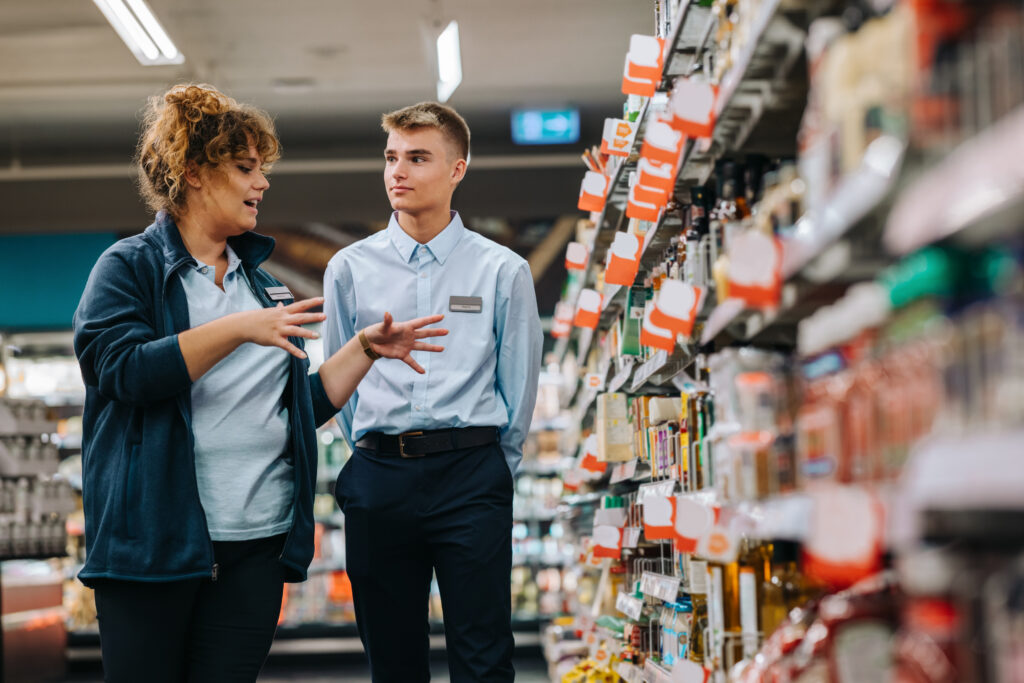
Food waste spans the whole supply chain, not just your four walls. Better collaboration between stores and suppliers gives you flexibility on deliveries and last-minute changes. You’ve seen how that flexibility keeps stock moving before it spoils.
One store might find that their candy bars are selling out too quickly, but the fresh vegetables just aren’t moving. If they have a good relationship with their supplier, they can adjust their order and make sure those veggies don’t go to waste, perhaps sending them to a different store instead.
That kind of swap only works when you can see demand shift in near real time. Short order lead times and shared sell-through data turn a slow-moving pallet into a sale somewhere else.
Build those relationships before you need them, not during the week the vegetables start to turn. A supplier who’ll take your call on a Tuesday is worth more than a slightly lower unit price.
Some produce never reaches the shelf for the most trivial reason: it’s the wrong shape. Misshapen fruit and vegetables get culled before a shopper ever sees them.
There’s real demand for it. Imperfect Foods and Misfits Market built whole businesses on produce that supermarkets rejected. Chains like Lidl and Morrisons ran “wonky veg” campaigns to similar effect.
Merchandise wonky produce well, with clear signage and honest pricing, and shoppers buy it. Your shrink drops on produce you would have culled, and you capture margin you were throwing away.
Place it in its own bin near the entrance, price it a step below grade-A stock, and name it plainly as value produce. Shoppers watching their budget reach for it first, and the box empties before the fruit turns. Not every store has room for a dedicated display, so start with the categories that spoil fastest.
Not everything you can’t sell is waste. Redistributing unsold but edible produce to food banks and hunger-relief charities puts it to use, and that matters most in times of economic hardship.
One store might coordinate a daily end-of-day pickup with a local food bank. They box up unsold bread and produce for a van that comes by at closing. It’s a small routine that keeps good food out of the bin and feeds people nearby.
Set the pickup window, agree what qualifies, and the handoff runs itself after the first week. The routine costs you almost nothing once it’s in place.
Log what you donate, too, so you can report the volume diverted from the bin. That record turns a quiet good deed into a measurable result you can share with head office.
There’s a business case, too. Consumers are willing to pay 9.7% more on average for sustainably produced or sourced goods, according to PwC’s 2024 Voice of the Consumer survey. In the same survey, 85% report first-hand effects of climate change.
Given the scale of what the world throws away each year, visible action on waste is no longer optional for a grocery brand. Your community notices where the surplus goes.
Reducing waste is an execution problem, and execution is what we do. YOOBIC unites task management, communications, and learning in one platform, so a date-check flagged at HQ becomes a completed, photo-verified task on the floor.
after moving store audits onto YOOBIC Task Management
Boots
Book a time and we’ll show you how grocery teams cut waste, tighten compliance, and win back hours every week.
Avoid wasted hours, blind spots
and lost revenue with YOOBIC
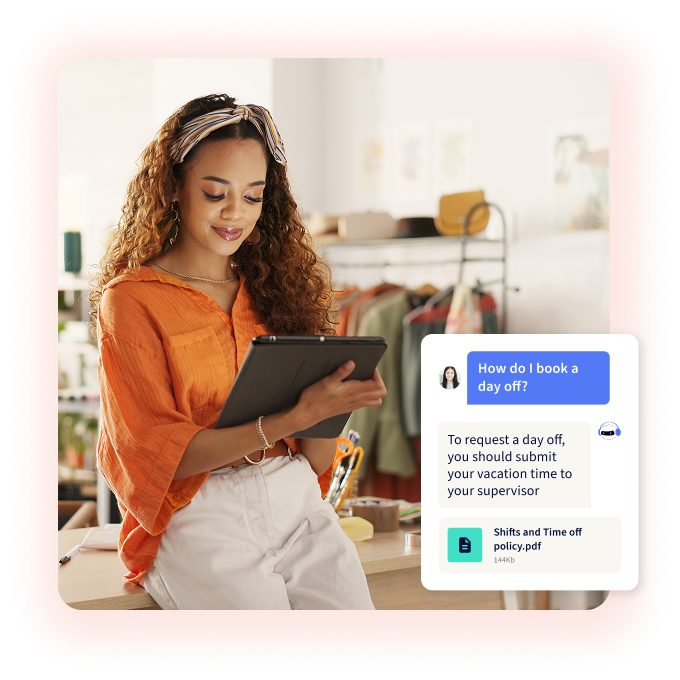
The biggest driver is unsold perishables, because stores overstock to keep shelves full and fresh items pass their dates before they sell. Date-label confusion makes it worse, since shoppers and staff often treat stock as spoiled days too early. Tighter ordering and consistent date checks address most of it.

A good omnichannel strategy in retail is a lot like baking chocolate chip cookies.
Think of each channel, your website, social media, and physical stores, as the ingredients.
Some are nice on their own. Combined at the right time, though, the result is far better, because each one plays a different role.
Here’s the short answer to where stores fit in omnichannel retail: physical stores stay central.
The pull toward connected shopping is well documented. According to McKinsey, 60 to 70 percent of consumers research and shop both in stores and online.

McKinsey also finds that omnichannel customers shop 1.7 times more than single-channel shoppers, and they spend more.
Stores still carry the volume. U.S. Census Bureau data shows e-commerce was 16.4% of total U.S. retail sales in 2025.
That means roughly 84% of retail sales still happen in physical stores.
So stores are kind of a big deal, in the same way chocolate chips matter when you bake cookies.
So where does the store fit now? Here are three roles every store plays in a strong omnichannel experience, and how to get your teams there.

Omnichannel retail is one connected experience across every channel, your website, app, social, and store, where inventory, pricing, and service stay consistent.
Here’s the part most sources miss. Channels only behave as one experience when store teams can execute consistently across them.
A promotion online means nothing if the display never goes up correctly in the store.
That gap between the plan and the floor is where omnichannel retail either works or quietly breaks.
Stores immerse customers in the physical embodiment of your brand in a way other channels can’t.
That doesn’t make stores better or more valuable. It makes them different.
From store layout to visual merchandising, from the music to the scent to the free samples, stores reach all five of your customers’ senses.
When everything is executed well, customers aren’t just watching your brand. They’re living your brand story for as long as they’re on the floor.
A consistent experience depends on one thing. Store teams executing the same visual merchandising and brand standards in every location.
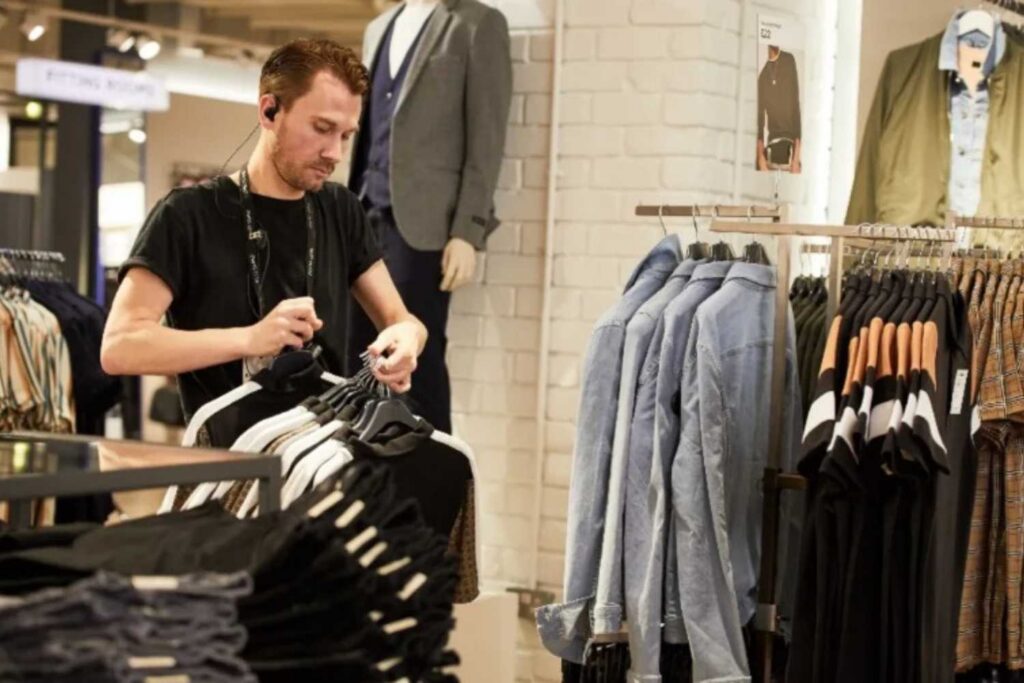
Picture an associate on a Monday open, holding a new campaign brief on a phone. They check the planogram, move the table display two feet, and snap a picture to confirm the match.
That’s the difference between a display that looks like the plan and one that doesn’t.
That kind of consistency needs a system behind it. YOOBIC Task Management turns a visual merchandising guideline into an assigned task with photo-based verification across every store.
It also helps to improve the operational efficiency of your stores, so a consistent, channel-agnostic look and feel gets easier to achieve.
in store execution on visual merchandising and promotions
Sportscene
Stores give people a place to connect, for advice from associates and even a quick word with another shopper.
People still want a knowledgeable person on the floor. That’s the part a screen can’t replace, and it’s why the associate interaction matters so much.
The way your team talks to customers continues the brand voice people already found online.
Their product knowledge should match what a customer can find on your website.
A customer asks whether a jacket runs small. Instead of guessing, the associate searches the knowledge library on their phone and reads back the fit notes in seconds.
How to turn store teams into confident brand ambassadors:
Related: a guide to effectively training frontline employees
Related: the complete guide to retail employee engagement
growth in learning program participation
Michaels
For some shoppers, the decision to buy starts the moment they see an inspiring display, even if they check out on another channel.
For others, it starts online, and then seeing the product in person seals the deal.
Plenty of in-store purchases start with online research, and plenty of online purchases get decided by seeing the product in person. The two channels feed each other.
Seeing the right product at the right moment still sparks impulse buys. Those unplanned grabs happen on the floor, when the store puts you in the mood to look.
Click-and-collect is a discovery moment too. A shopper coming in to pick up an order often leaves with one or two things they didn’t plan to buy.
The retailers who win here pay close attention to how shoppers respond in-store, then adjust the experience fast.
Your stores generate data all day, and it only helps when you can see it live.
Compliance rate and store visit scores tell you where to act, and YOOBIC Task Management keeps that view in one place.
A dip in compliance becomes an action, not a surprise at quarter end.
A store manager gets in an hour before open and starts chasing updates. One promotion changed overnight, a planogram arrived late, and two emails contradict each other.
That scramble is the real challenge of omnichannel. The strategy is only as good as the floor’s ability to execute it.
Three things tend to break when you run omnichannel across hundreds of stores:
| What breaks | What it costs on the floor |
|---|---|
| Disconnected tools | Managers lose hours stitching updates together instead of coaching |
| Inconsistent execution | The same campaign looks different store to store |
| Delayed rollouts | Promotions go live online before the display is up |
The cost adds up fast. In our work with retail networks, we see store managers spend 10 or more hours a week chasing information and fixing avoidable mistakes.
We also see retailers execute 37% of promotional displays incorrectly or late, with the true cost reaching millions before it shows up in sales data.
Closing that gap comes down to a repeatable routine:
Put a routine like that in place, and the hours your teams lose to the scramble start coming back.
per year on checks and processes
Pret a Manger
Not long ago, plenty of people worried that stores would fade as online shopping took off.
Looking back, that worry reads a little funny. Stores always have been, and always will be, central to a great customer experience.
The store only delivers when the floor can execute. We unite tasks, communications, and learning in one platform, so a campaign brief at HQ becomes a completed, verified task on the floor.
Want to see it on your own stores? Book a demo and we’ll show you how to make execution consistent across every location.
Avoid wasted hours, blind spots
and lost revenue with YOOBIC
Omnichannel retailing connects every way a customer shops, online, on an app, on social, and in your stores, into one experience. Inventory, pricing, and service stay consistent across all of them. The goal is a shopper who moves between channels without friction.

It might have come to your attention by now that here at YOOBIC, we’re a little obsessed with employee engagement.