We’re excited to announce the launch of Communities, a powerful addition to YOOBIC’s Frontline Employee Experience Platform (FEXP)’and a secret weapon to combat employee turnover.
 YOOBIC
We’re excited to announce the launch of Communities, a powerful addition to YOOBIC’s Frontline Employee Experience Platform (FEXP)’and a secret weapon to combat employee turnover.

Retail loses people faster than almost any other industry. US Bureau of Labor Statistics data shows retail workers quit at one of the highest rates of any industry, far above the national average. Every walkout resets the clock on hiring, training, and coverage.
If you’re hunting for retail employee retention strategies that actually hold, the honest starting point is that pay alone won’t do it. The strategies that improve retail employee retention work on onboarding, growth, scheduling, recognition, and the daily tools your teams touch.
Retail employee retention is a store’s ability to keep associates productive, engaged, and on the team for the long term. It means not cycling through a revolving door of new hires. Get it right and the math changes fast.
The price of getting it wrong is steep. According to SHRM’s 2025 Benchmarking Report, the average cost to fill a non-executive role is $5,475. Gallup estimates that replacing someone can cost 50% to 200% of their annual salary, and that voluntary turnover costs US businesses about $1 trillion a year.

The damage isn’t only financial. Short-staffed stores frustrate customers, who leave for competitors with helpful, experienced associates. The people who stay inherit heavier workloads and a rotating cast of colleagues, which wears down the whole team.
Retailers that improve retention pull ahead. Research from McKinsey shows that leading retailers have twice as motivated employees as competitors and resign half as often. That’s a durable edge, not a one-quarter bump.
Not every strategy here solves the same problem. Some fix onboarding. Others tackle training, scheduling, recognition, engagement, or the daily-work technology your associates rely on.
Match the lever to the reason your people are actually leaving. We ranked these strategies by retention impact, how easily you can roll them out across a multi-store network, and whether the results are measurable.
Short on time? Here’s the verdict.
Picture a new associate two weeks into the job. Their manager handed them a folder of conflicting instructions on day one.
Nobody told them which tasks mattered most, and back-office admin keeps their manager too buried to help. By week 10, they’ve stopped asking questions and started looking for a new job.
That story repeats across the industry, and the root causes are consistent. They include weak onboarding, disconnected tools and unclear priorities, managers stretched too thin to coach, and no visible path to grow.
The onboarding gap is the one people feel first. In our survey of frontline employees, 49% said their onboarding didn’t prepare them well for the job.
Here’s the part most teams miss. Store managers lose 10 or more hours a week chasing information and fixing avoidable mistakes. That overload pushes good people out the door before you ever see it in a report.

Pay and benefits matter, but they aren’t enough on their own to prevent turnover. You need long-term strategies that change the daily experience of working in your stores. Here are seven, ranked by impact.
Onboarding is your one chance to make a first impression that sticks. Workers whose onboarding is poorly handled are twice as likely to look for a new job. Done well, strong onboarding can increase retention by 82%, according to Brandon Hall Group research.
Start on a foundation of inclusion. Learn how each new hire prefers to work, since some learn best by watching and others by doing, then build that into their training.
Team spirit helps too. Small cohorts create camaraderie and lasting bonds, and experienced mentors give new associates direction while they settle into the role.
Then fix the flow of information. Handing someone a folder of overlapping, conflicting instructions sets them up to fail. Share what they need when they need it, starting with the basics.
This is where YOOBIC Learning earns its place. It delivers mobile-first onboarding in the flow of daily work, so every store gives new hires the same clear start.

in time spent on standard operating procedure training, after moving onboarding onto that model
Stat source: Boots
Onboarding sits at number one because it sets the trajectory for every later strategy.
Learning can’t stop after week one. Millennial and Gen Z associates want roles where they can grow, and in our survey, 64% said they want opportunities for career growth within their current organization.
Give them a way to keep building. With YOOBIC Learning, that’s bite-size, mobile training embedded in the daily workflow and gamified with badges, so progress feels earned rather than assigned.
in learning-program participation after rolling out YOOBIC Learning
Stat source: Michaels
Related: Download our five-step guide to effective training for frontline employees
One of your best part-time associates is also a student, or a parent, or both. When their schedule drops with two days’ notice, week after week, they can’t plan their life around the job, so they find one that lets them. That’s a resignation you can prevent.
Predictable scheduling is a retention strategy in its own right. Post schedules well ahead, let associates swap shifts easily, and keep hours as steady as the business allows.
YOOBIC doesn’t run your rostering, and we won’t pretend otherwise. What we do help with is clarity.
When the day’s priorities are set in YOOBIC Task Management, a predictable shift is also a productive one. Your team knows exactly what matters before they clock in.
Two associates nail a tough merchandising reset on the same Saturday. One hears nothing and quietly wonders why they bothered.
The other gets a shout-out their whole region can see, and shows up Monday ready to do it again. Recognition is the difference.
Make recognition frequent, specific, and visible, not an annual line in a review. Call out the exact behavior you want more of, and do it where peers can see it.
You can build that into the tools your teams already use. YOOBIC Learning awards gamified badges as associates complete skills. YOOBIC Communications gives managers and peers a company newsfeed to post shout-outs in the flow of work.
You can’t fix what you can’t hear. Some associates will speak up, but most won’t, so make it easy for everyone to weigh in. Run surveys at the moments that matter, like a new hire’s first month or the week after peak season.
Then close the loop. Ask follow-up questions when something’s unclear, and act on what you learn, because associates who see their feedback change something keep giving it.
Go two steps further than most retailers do. Track turnover and first-90-day retention over time, so you can spot trends before they become resignations. Run stay and exit interviews, not just satisfaction surveys, so you learn why people choose to stay or go.
YOOBIC Communications closes the loop between stores and headquarters (HQ) with polls, surveys, and engagement analytics dashboards. One district manager spotted a turnover spike in a single store on that dashboard. They walked in that week and fixed a scheduling problem before it spread across the region.
A store associate in a small franchise location can feel a hundred miles from the rest of the company. When a regional win lands in their feed, a colleague two cities over answers their question in minutes, and HQ actually replies, that distance shrinks. That’s engagement doing its job.
Connected communication turns a scattered frontline into one team. YOOBIC Communications gives you a company newsfeed, critical-update broadcasts, and peer communities. Associates feel informed, heard, and part of something bigger than their own four walls.
Related: How GANT connect their global community of store associates.
A store manager used to start the morning in three different systems: one for tasks, one for messages from HQ, one for training. Half the job was just finding out what the day required. Now they open one app and the day is already sorted.
Whenever you can, strip out the tasks that make a job feel like a grind. Automate the repetitive admin so associates spend their time with customers and on the parts of the role that matter.
YOOBIC Task Management gives associates prioritized task lists and modular checklists, so they’re serving customers instead of chasing instructions. Here’s the throughline that ties every strategy together: we unite tasks, communications, and learning in one platform. A priority set at HQ becomes a completed, photo-verified task on the floor, with the training and context attached.
The time savings are real.
in time spent on daily checks
Stat source: Boots
per year on checks and processes
Stat source: Pret a Manger
| What you’re managing | Disconnected tools | One platform with YOOBIC |
|---|---|---|
| Onboarding | New hires learn from whoever’s on shift | Consistent, mobile onboarding every store delivers the same way |
| Daily priorities | Tasks scattered across email and paper | Prioritized task lists with photo-verified completion |
| Communication | Updates lost in inboxes and group chats | One newsfeed with targeted, trackable messages |
| Measurement | No clear view of what’s working | Dashboards on completion, engagement, and retention trends |
The tools that help most with retail employee retention cover onboarding, scheduling, recognition, and daily communication. A mobile learning tool gives every new hire the same start, and a scheduling tool keeps shifts predictable. A frontline platform puts tasks, recognition, and feedback in one app, so store teams spend less time chasing information.
Pick tools your store teams will open every day. A tool that sits outside the daily workflow rarely changes the reasons people leave.
The hard part isn’t finding a good idea. It’s picking the levers you can actually run across every store, week after week, without adding to your managers’ load. Use these five questions to sort retail employee retention strategies that will stick from ones that just look good on a slide.
One operations director we know almost signed off on a splashy perk program before catching themselves. The stores didn’t need another perk. They needed onboarding that didn’t fall apart in week two, so that’s where the budget went.
A strategy that works in your flagship but falls apart in store 40 isn’t a strategy, it’s a pilot. Before you commit, ask whether every location can run it the same way with the staff and time they have.
If you can’t measure it, you can’t defend it. Pick levers where you can track turnover, first-90-day retention, or participation, so you know within a quarter whether the change is working.
Plenty of programs look great at HQ and never reach the sales floor. The associate on a Saturday shift is the person you’re trying to keep, so the strategy has to land in their hands, not just in a leadership deck.
Every new tool is a tax on your managers’ time. Favor strategies that live inside the daily workflow, the way YOOBIC brings tasks, communications, and learning into one platform, instead of adding another login to remember.
Don’t solve a problem your people don’t have. If exit interviews point to scheduling, a recognition program won’t change the outcome, so match the fix to the reason people give when they leave.
Retention rarely breaks in one place, so we didn’t build for one place. We bring task management, communications, and learning together in one platform. That way onboarding, daily priorities, recognition, and feedback all run through the same system your teams already open every day.
in voluntary turnover, worth more than $8M a year
Stat source: Michaels
in training completion
Stat source: Sportscene
When the daily experience improves, people stay.
If you want to see how that works in your stores, the fastest way is to walk through it with us. Book a demo and we’ll map it to your key performance indicators (KPIs) and how your stores operate.
YOOBIC is the frontline execution platform uniting tasks, communications, and learning for enterprise retail.
Avoid wasted hours, blind spots
and lost revenue with YOOBIC
Retail leans on part-time, seasonal, and student workers, so churn is baked in more than in other industries. Add unpredictable schedules, onboarding that’s often rushed, and few visible paths to grow, and many associates treat the job as temporary from day one. Fix those conditions in your stores and you’ll keep people far longer.

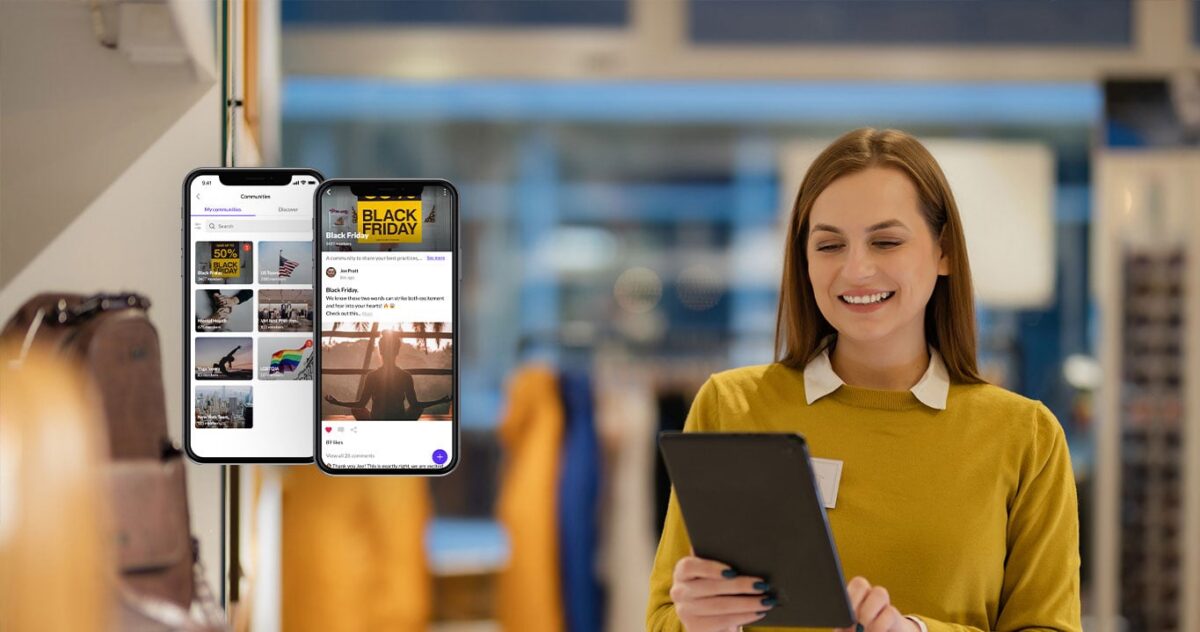
Picture a store manager hearing about a national promotion from a customer, not from headquarters (HQ). The signage never went up, the team never got briefed, and the sale is already live. That gap is what frontline team communication is meant to close, and it’s also where store performance and sales quietly slip.
The stakes are high. In a 2023 survey, 44% of frontline retail workers said they were considering leaving within three to six months, according to McKinsey. Career development was their number-one reason for planning to go.
Much of that turnover is preventable, though, according to the World Economic Forum, since the top reasons people leave sit within an employer’s control.
Disconnected teams don’t just churn faster. They execute slower, miss details, and pass that friction straight to the customer.
If you run dozens of stores, you already feel this. Messages get lost, feedback never reaches HQ, and the floor moves at a different speed than the plan.

This guide breaks down what frontline team communication is and why it drives store performance and sales. You’ll also see how to make it measurable across every location you manage.
Here’s what you need to know before you scroll.
Frontline team communication is the day-to-day exchange of information between HQ and store teams. It also covers the messaging among store teams themselves, in the flow of daily work. It’s more than a corporate broadcast.
Real frontline communication runs in three directions: top-down from HQ, bottom-up from stores, and peer-to-peer between colleagues.
In practice, it includes:
Done well, it moves more than information. It:
Yet most internal communication strategies still fail the frontline. Updates written for a corporate inbox rarely reach an associate mid-shift, and the ones that do often land too late to matter.
If that sounds familiar, you’re not alone. Walk any store network and you’ll find teams guessing at priorities HQ thought were clear.
Connected frontline teams respond to HQ faster. They make fewer execution errors and give customers a more consistent experience. That chain is how communication shows up in sales.
On a Friday morning, an associate in a mall location opened a broadcast flagging a last-minute price change on a featured range. They re-ticketed the display before the doors opened, briefed two colleagues, and the range sold through by the weekend. In a disconnected network, that same message sits unread until Monday, well after the opportunity has passed.
The cost of the gap is real. Too many promotional displays go up late or incorrectly, and the cost surfaces in sales data long after the moment to fix it has passed.
When the floor moves at the speed of the plan, margin stops leaking through missed and late execution.
Ask yourself how many of your locations would have caught that price change before opening. The stores that would are the ones with communication built into the daily routine, not bolted on as an afterthought.
Frontline communication is hard because stores don’t work like HQ. Teams are dispersed across locations, split across shifts, and rarely share a desk or an inbox. Information that’s obvious at headquarters often never reaches the floor in time.
A store manager starts the day juggling a group chat, a printed memo, and three email threads. They’re trying to work out which of yesterday’s five updates still applies before the first customer walks in. That guesswork is where standards drift.
The cost adds up quickly. Reconciling tools that don’t talk and redoing avoidable errors both eat into hours a manager could give customers and the team.
The human cost compounds the operational one. Losing a single frontline retail employee costs a retailer nearly $10,000 on average, according to McKinsey. If your managers are the human relay between HQ and the floor, you’re paying for it in hours and attrition.
A frontline communication platform must do more than send messages. It has to reach the right people, confirm they saw it, and let them respond from the floor. That’s the job YOOBIC Communications is built for.
Start with what associates and managers actually get in their hands each day.
| Capability | What it does on the floor |
|---|---|
| Company newsfeed | Keeps every store on the same page with one source of updates |
| Critical broadcasts with read receipts | Confirms who received and read a time-sensitive message |
| 1:1 and group chat | Lets associates and managers ask and answer in the moment |
| Peer communities | Connects colleagues across stores around shared roles and interests |
| Advanced audience targeting | Sends each message only to the roles or locations that need it |
| Multi-language translation | Delivers updates in each worker’s own language |
| Engagement analytics dashboards | Shows HQ what’s landing and what’s ignored |
A new associate reads a two-minute onboarding update on their phone before a first shift. They start stronger than someone handed a printout they’ll never reopen. That’s the point of meeting teams where they already are.
Here’s the structural difference. Single-purpose comms tools stop at the message, so someone still has to chase down whether the work behind it actually happened.
Tie communications to task management and learning, and the update, the action it triggers, and the training behind it stay connected. You get HQ visibility into reach and engagement without pinging store managers for a status update.
The best frontline communication is deliberate. Set a goal, target the right people, make it two-way, and measure whether it landed. The practices below build on each other.
Set goals for your internal communication before you pick a channel. Following a clear communication strategy keeps you from broadcasting into the void.
A district manager noticed their highest-turnover store also had the lowest read rates on HQ updates. They set a target, changed who received what, and watched engagement climb over the following quarter. YOOBIC Communications gives you the engagement analytics dashboards, polls, and surveys that make a strategy like that measurable rather than a hunch.
Feeling heard isn’t a nice-to-have. When an associate spots a recurring stockout or suggests a faster open and hears nothing back, they stop speaking up.
Give your teams a way to post, comment, and reply, not just receive. YOOBIC Communications supports continuous feedback loops between stores and HQ, plus peer communities, so communication flows top-down, bottom-up, and peer-to-peer in one place.
Most retail and hospitality employees are used to fast, interactive apps on their phones. Meet that expectation with a familiar format.
The YOOBIC Communications newsfeed, with reactions and comments, makes updates easy to read and respond to. Lean on recognition posts and polls that inform real decisions rather than noise for its own sake.
Sending everything to everyone trains teams to ignore you. Send targeted communications instead.
YOOBIC Communications advanced audience targeting routes each message to the right roles and locations. Read receipts on critical broadcasts show you exactly who received and opened each one.
Strong communication is also about building community. Make space for posts that celebrate birthdays, shout-outs, training leaderboards, team-building photos, and polls. For global teams, YOOBIC Communications automatically translates posts and comments into each user’s own language, so no one is left out of the conversation.
Your teams should also have a digital space to bond over non-work interests. Many retail and hospitality employees work in isolated roles, and even a small amount of connection can make work feel less isolating.
Designated social channels and peer communities in YOOBIC Communications help colleagues find each other. They connect over mutual qualities like being new parents, fasting for Ramadan or enjoying a specific sport.
You’ll know frontline communication is working when the right people see messages, act on them, and talk back. Track a small set of measures rather than everything at once.
| Measure | What it tells you |
|---|---|
| Reach and read rates | Whether messages get to the floor and get opened |
| Engagement | Whether teams react, comment, and respond to polls and surveys |
| Response time | How fast stores and HQ answer each other |
| Email volume | Whether noise is dropping as one platform replaces scattered threads |
Keep workforce outcomes in their own category. Retention and employee Net Promoter Score (eNPS) tell you whether connection is building over time, and you shouldn’t blend them with operational metrics. Mixing the two hides what’s actually moving.
YOOBIC Communications makes these measures visible through engagement analytics dashboards, so you’re reading reach and read rates rather than guessing at them.
Frontline communication is consolidating. Scattered single-purpose apps are giving way to unified, mobile-first platforms that carry communications, tasks, and learning together. That shift matters to you because it removes the tab-switching that slows managers down today.
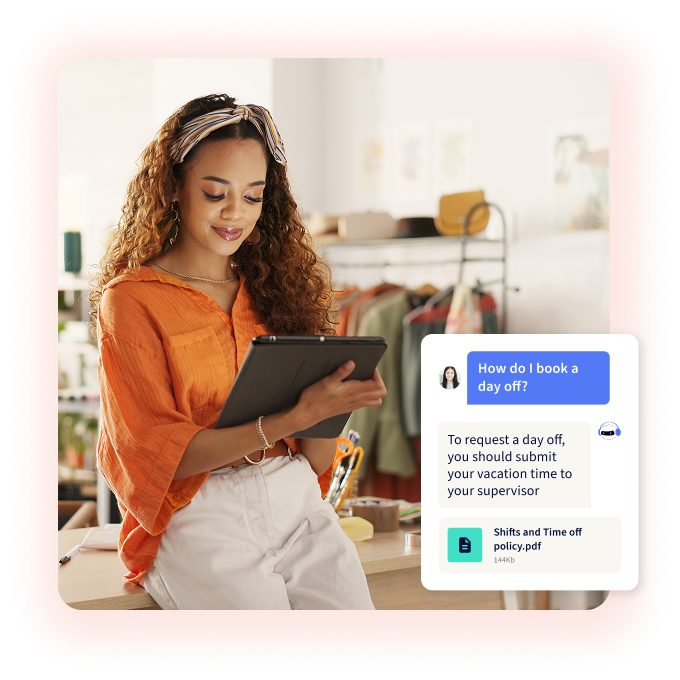
Artificial intelligence (AI) assistants are moving in too, part of a wider set of AI use cases for frontline communications that help associates and managers act on operational content faster. Picture an associate on the floor who types a return-policy question into a searchable knowledge library. They get the answer in seconds, without radioing a manager or guessing at the rule.
Answer engines are also surfacing frontline content more often, which raises the bar for clear, well-structured, sourced information. The retailers who adapt fastest already treat communication as part of daily operations, not a separate inbox.
The surprising part: frontline team communication can look like a soft benefit. In practice, it’s how HQ and the floor stay aligned, how stores execute on time, and how you keep the teams that make it happen. Set clear goals, make it two-way, target it, and measure whether it landed.
That connection is what we build for. YOOBIC powers more than three million associates across 350+ global retail brands, including Boots and Vans.
We unite tasks, communications, and learning in one platform. When a brief at HQ becomes a verified task on the floor, communication stops being overhead and starts driving performance.
See how one platform connects your HQ and store teams, then makes every message measurable. Book a demo.
Avoid wasted hours, blind spots
and lost revenue with YOOBIC
Frontline team communication is the day-to-day exchange of information between HQ and store teams, and among store teams themselves, in the flow of daily work. It runs top-down, bottom-up, and peer-to-peer. In your stores, that usually means task instructions, feedback, performance data, recognition, and everyday messaging.

Retail visual merchandising is at the core of the appeal of in-store shopping. Shoppers want to browse through carefully curated displays and interact with products in person. To uphold the quality of that experience, store teams need to consistently execute complex and creative visual merchandising and display plans. When executed well, visual merchandising ensures a consistent brand experience for every customer in every store, with products displayed in the way that most appeals to customers and drives conversions.
Technology for retail stores has boomed in the last decade, further accelerated by the pandemic.

YOOBIC just announced the acquisition of Heystan, a digital training and knowledge management platform serving the catering and hospitality industries.

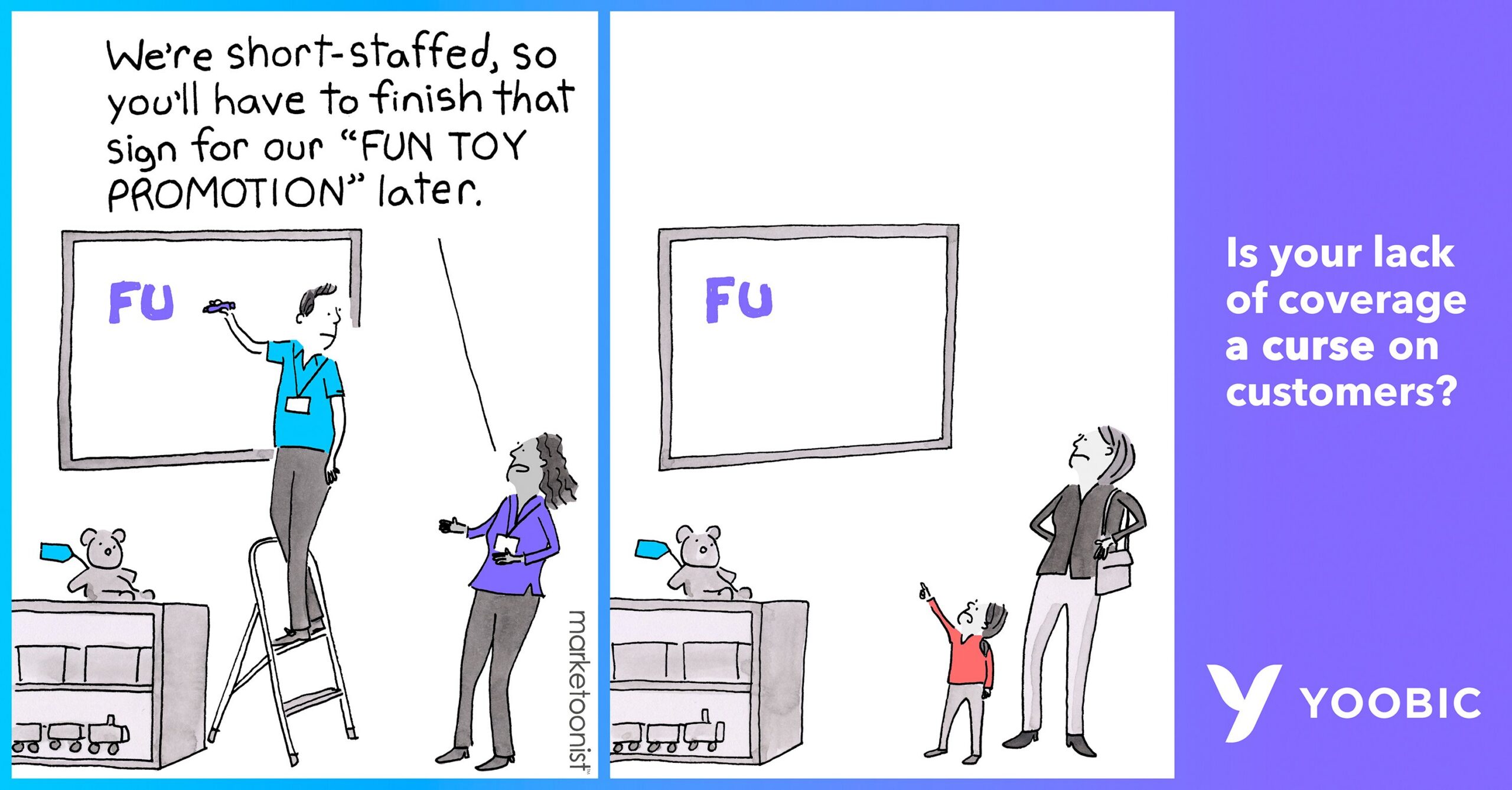
The retail worker shortage. The great resignation. The big quit. Whatever you choose to call it, retailers are struggling to recruit enough workers for their stores.


Retail Burnout.
Definition: A state of physical and emotional exhaustion due to being consistently overloaded in a retail workplace.

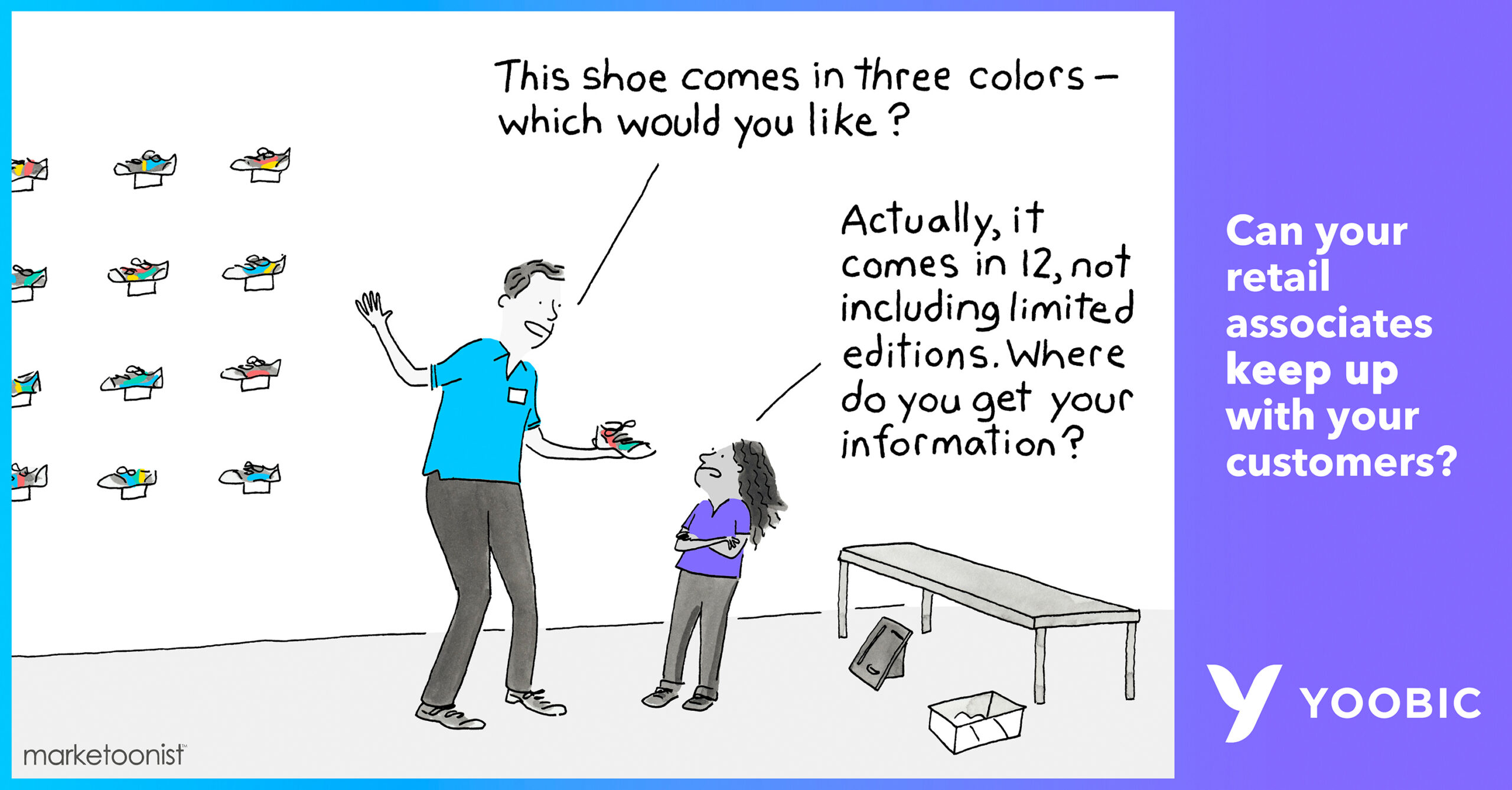
Retail sales training teaches store associates how to turn browsers into buyers: greeting customers, finding out what they need, recommending the right products, handling objections and closing the sale in a way that fits the brand. It combines product knowledge, selling skills and plenty of practice on the floor.
This blog was guest written by Emmanuel Aublet, who has been a pivotal figure in shaping the retail and restaurant industries over the past decade. Emmanuel is the former President at Pizza Hut France, former General Manager for France, Belgium and French Switzerland at Subway and recently broadened his career by writing his first novel!