

The shelf is where retail margin is won or lost. It’s not won in the boardroom or the replenishment system. It’s won when the product a shopper wants is there, priced right, and easy to find. In 2026, that’s getting harder to hold across a large store network.
US retailers lost $112.1 billion to shrink in 2022, according to the National Retail Federation. Process and control failures caused 27% of that, close to the 29% lost to internal theft. That makes day-to-day store execution the biggest controllable loss in retail.
KEY STAT:
$1.73T
the global cost of inventory distortion last year, about 6.5% of global retail sales and roughly $4.7 billion drained every day. Source: IHL Group, 2025.
This guide covers what store execution means in practice and where retailers lose the most when it slips. It also shows how the strongest operators close the gap between what HQ assumes and what’s on the floor. For audits, SOPs, and regulatory standards, see our companion guide to retail store compliance.
What is store execution?
DEFINITION:
Store execution
The consistent, on-time completion of a retailer’s operational standards in every location, from visual merchandising and task completion to food safety and pricing accuracy.
Retailers tend to split store operations into two layers. One is the compliance program: the policies, audits, and regulatory rules that keep stores within the law. The other is execution: whether stores actually carry out the standards HQ has already set. This guide is about the second layer, where most of the day-to-day revenue impact sits.
What is retail execution in stores?
Retail execution in stores is the work that turns a plan into what the customer sees: shelves set to planogram, promotions live on time, checklists completed, and stock where it should be. Strong execution means the same standard is met in every store, not just the flagship, and that HQ can see it as it happens. Platforms like YOOBIC give store teams one mobile place to complete that work and prove it with a photo. HQ then sees execution across the network in real time.

Why execution gaps cost more than retailers think
Execution gaps show up first on the shelf. A 2024 study in Manufacturing & Service Operations Management tracked promotional displays with sensors and found 29% never reached the sales floor. Only 2% went up and came down on the agreed promotional schedule.
29%
Share of promotional displays that never reached the sales floor
a 2024 sensor study published in Manufacturing & Service Operations Management.
And compliance doesn’t hold still. After a reset, teams restock under pressure and shoppers move products around. The gap between the plan and the shelf opens almost immediately.
The revenue impact is direct. When a shopper can’t find a product, part of that sale goes to a competitor or walks out the door. Some of the loyalty goes with it.
20–35 bps
Sales lift from a one-point improvement in in-stock rates
McKinsey
The reverse is just as measurable. Small, consistent gains in availability and compliance add up across hundreds of stores. Execution isn’t overhead. It’s one of the most direct levers you have on sales.
What are the execution areas that matter most?
Execution isn’t one thing to manage. It’s several, and each has a different failure point and a different fix.
Visual merchandising and planogram compliance
Visual merchandising is usually the first thing to slip, and the easiest to fix once it’s visible. SMCP, the group behind Sandro, Maje, and Claudie Pierlot, lifted VM compliance by 30 points with YOOBIC. Store teams now check layouts against reference photos in real time. The Kooples raised store compliance by 33% and cut defective product sales in half with YOOBIC.
Speed matters as much as accuracy. When store photos come back the same morning a campaign goes live, teams fix layout issues before doors open, not after the weekend’s trade.
How do you track visual merchandising compliance?
You track visual merchandising compliance with photo validation, not spot checks. Store teams capture the set against the reference planogram, and the system scores it against brand standards. Regional teams then see completion by store in real time. In YOOBIC, VM Copilot reviews every photo against campaign and brand standards. It tells the store team exactly what to fix. That replaces a subjective walk-through with a clear, comparable record. See how YOOBIC supports visual merchandising execution.
Food safety and operational checklists
Food safety and daily checks carry the highest stakes and the least room for drift. Pret A Manger holds food safety completion above 95% with YOOBIC. It also saves 154,000 hours a year that used to go into paperwork. Lidl maintains 98% cold chain compliance across its network, a standard that’s hard to verify at scale on paper. Hear Frontline Fridays on how to run safer stores without slowing teams down.
154,000 hours
Time Pret A Manger saves each year on food safety checks and paperwork with YOOBIC.
YOOBIC customer study
Task and SOP completion
Task and SOP execution is where daily discipline holds or breaks. Boots completes 95% of SOPs and 80% of daily store walks with YOOBIC. It also cut time spent on daily checks by 78%. Michaels holds 98% compliance on daily readiness walks across 1,350 stores. It saves more than 223,000 hours a year and lifted task completion by 30%. Digitizing task management for store associates is what makes that consistency possible at scale.
Visibility across the network
Multi-site retailers face a different problem. It’s not whether one store is compliant, but whether HQ can see them all at once. Pilot Company moved from limited visibility to 90% to 95% task completion across more than 900 locations with YOOBIC. Hear how on Frontline Fridays: what 900 travel centers teach you about frontline technology. Lidl raised company-wide compliance by 11% after switching from periodic spot checks to real-time monitoring with YOOBIC.
“Real-life drill: in the boardroom, I'm asked about a particular merchandising set. Within seconds, I'm able to pull up the platform, look at execution across the entire chain, and validate whether we've gotten everybody across the finish line or where the gaps are.”
Chris Freeman, SVP Operations, Michaels
Why can’t manual audits keep pace?
Manual audits are too slow to catch execution drift before it costs money. Paper counts and clipboard checks introduce transcription errors. Average inventory accuracy from annual manual counts sits at just 63%, according to the Auburn University RFID Lab.
The bigger issue is latency. A manual audit cycle takes days to complete and weeks to report. During that window, the system assumes stock is where it should be. Automated replenishment stalls while the shelf tells a different story. Digital audits report instantly and flag variance as it happens.
The labor case is just as clear. PureGym saved more than 26,000 hours a year after moving off manual reviews onto YOOBIC. For more on running audits well, see our complete guide to retail store visits and audits. You can also see how YOOBIC digitizes store visits and audits.
26,000 hours
Time PureGym saves each year, about 43 hours per club after moving store reviews onto YOOBIC.
YOOBIC customer study
How do you close the gap between HQ and the shelf?
Even where execution is tracked, the numbers HQ sees rarely match the floor. Corporate systems tend to report healthy in-stock rates while shoppers still find empty shelves. Planners then make replenishment and merchandising decisions on data that’s already wrong.
Visual merchandising shows the same pattern. A POPAI benchmark of 5,643 US stores found only 41% of displays were built as designed, while brand executives expected 70% to 90%. Yet legally required displays, such as lottery and tobacco fixtures, hit 84% to 98% compliance in the same kinds of stores.
Store teams feel this gap directly. Without a current planogram or accurate stock data, teams fill gaps with whatever’s in the back. That creates phantom out-of-stocks, which keep replenishment frozen and HQ in the dark. This is where in-store execution and HQ planning drift apart. Read more on the retail execution gap.
What retail execution software does
Retail execution software gives store teams one mobile place to complete and confirm the work that keeps stores to standard: tasks, checklists, store visits, and visual merchandising, with photo validation and real-time reporting to HQ. It replaces paper, email, and spreadsheets with a single record of what got done, where, and when.
Adoption is now mainstream. About 69% of US retail enterprises use retail execution software, and the market grows steadily each year. The measured returns are consistent: 62% of retailers report better store and promotional compliance, 58% see improved on-shelf availability, and 51% report stronger shelf and planogram visibility.
Automation sharpens this further. AI-based shelf auditing detects placement errors with 93% accuracy and cuts human error by more than a quarter, according to Capgemini. Photo-backed audits can reduce in-store inspection time by up to 60%. That frees store teams from manual checking and puts their time back on the floor, and it’s where AI-powered performance earns its place.
What does retail execution software do?
Retail execution software gives store teams one mobile place to complete and confirm the work that keeps stores to standard: tasks, checklists, store visits, and visual merchandising, with photo validation and real-time reporting to HQ. It replaces paper, email, and spreadsheets with a single record of what got done, where, and when. YOOBIC combines task management, checklists, store visits, and VM Copilot photo checks in one app. Every store works to the same standard, and HQ sees the results live.
Automation sharpens this further. AI photo review checks every submission, not just the small share a VM team can review by hand. Store teams get feedback while the campaign is still live. That frees store teams from manual checking and puts their time back on the floor.

How do you build store execution that holds?
Closing the execution gap doesn’t mean adding more checks. It means replacing slow, manual ones with continuous, real-time visibility. Four moves do most of the work:
- Digitize audits, so variance shows up in real time, not weeks later.
- Give store teams a mobile way to confirm layouts against reference photos, the way SMCP does with YOOBIC.
- Standardize checklists across every location, so task completion is measured, not assumed.
- Put execution data in front of regional and HQ teams as it happens, not in a monthly report.
The retailers closing this gap aren’t doing more execution work. They catch gaps in hours instead of weeks. See how retail task management fits into that loop.
How does YOOBIC support store execution?
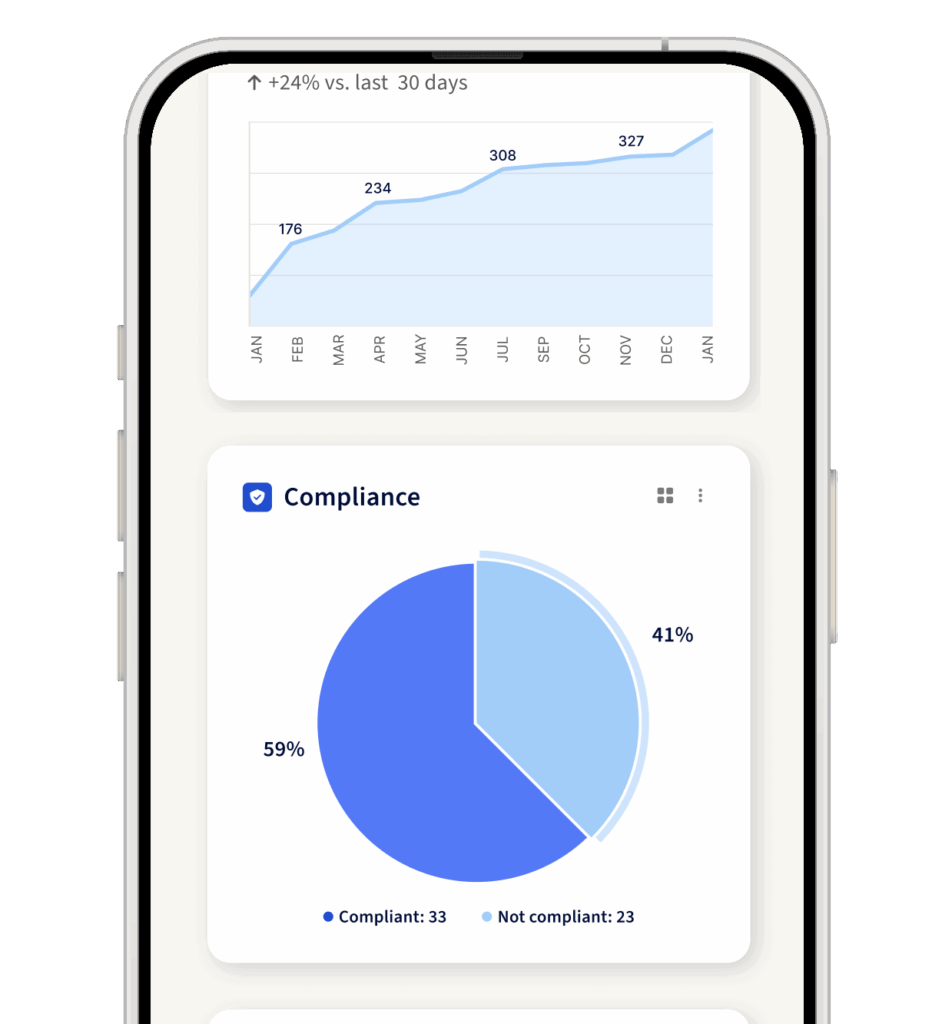
YOOBIC is the Frontline Intelligence and Execution Platform built for enterprise retail. Store teams get one mobile place to run the work. HQ gets a live view of how every store is executing.
- Digitized checklists, store visits, and logbooks, on mobile, with offline capability
- VM Copilot, which scores visual merchandising photos against brand standards, with in-the-moment coaching for store teams
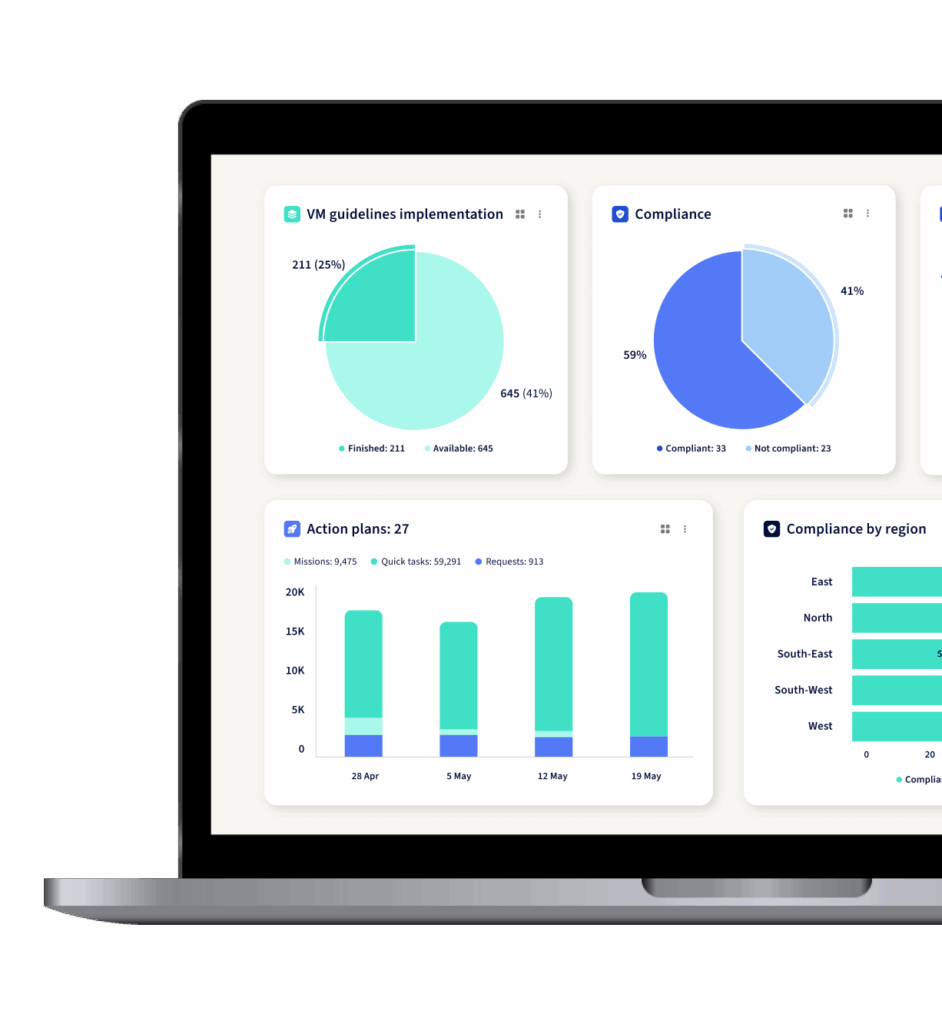
- Real-time dashboards that show task and compliance status by store, region, and category
Store execution in 2026 isn’t about doing more. It’s about knowing what’s actually happening on the floor, in real time, instead of finding out weeks later. Close that gap and the shelf starts working the way the plan intended. For more results like these, browse YOOBIC customer stories, or book a demo.
Book a demo and find out how
Avoid wasted hours, blind spots
and lost revenue with YOOBIC

Frequently asked questions
What is retail execution?
Retail execution is how a plan becomes what the customer sees in store: shelves set to planogram, promotions live on time, checklists done, and stock where it should be. Strong execution means the same standard is met in every store, not just the flagship, and that HQ can see it as it happens. Platforms like YOOBIC make that visible by capturing photo-verified completion from every store in one app.