A visual merchandising audit is faster when AI checks every submitted store photo against brand standards on the spot rather than queuing it for manual review. Instead of a ten-day loop where roughly thirty percent of photos are seen, store teams get feedback in seconds and fix issues while the campaign is still being set up.
Full transcript:
Why a visual merchandising store audit takes ten days
(0:00) How long does a visual merchandising store audit take? For most retailers, ten days from photo to feedback to final in-store fixes.
(0:03) A two hundred store retailer could capture up to four hundred thousand store photos a year. On average only thirty percent get reviewed, and each cycle takes roughly ten days. This is the ten-day review loop, and by the time compliance issues surface the campaign is already half over.
The four problems retailers are solving at once
(0:27) Research from YOOBIC shows retailers face four problems at once: reviewing photos fast enough, holding brand compliance across every store, working out which issues matter most, and coordinating the fix with store teams.
How VM Copilot reviews store audit photos
(0:39) VM Copilot is YOOBIC’s AI for visual merchandising compliance. It reviews every store audit photo the moment it is submitted.
(0:47) Thirty AI agents check each photo against your brand standards and campaign guidelines. Styling, colour, product placement, security tags, garment presentation. Every photo, every store, in seconds instead of days.
What store teams and HQ each see
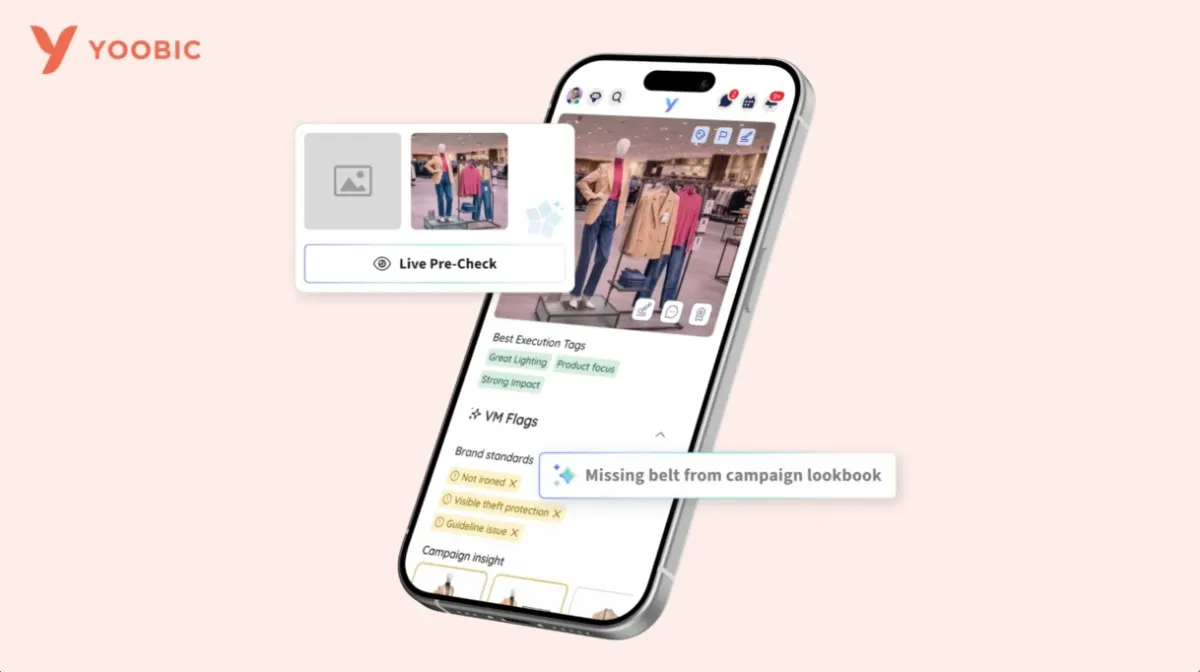
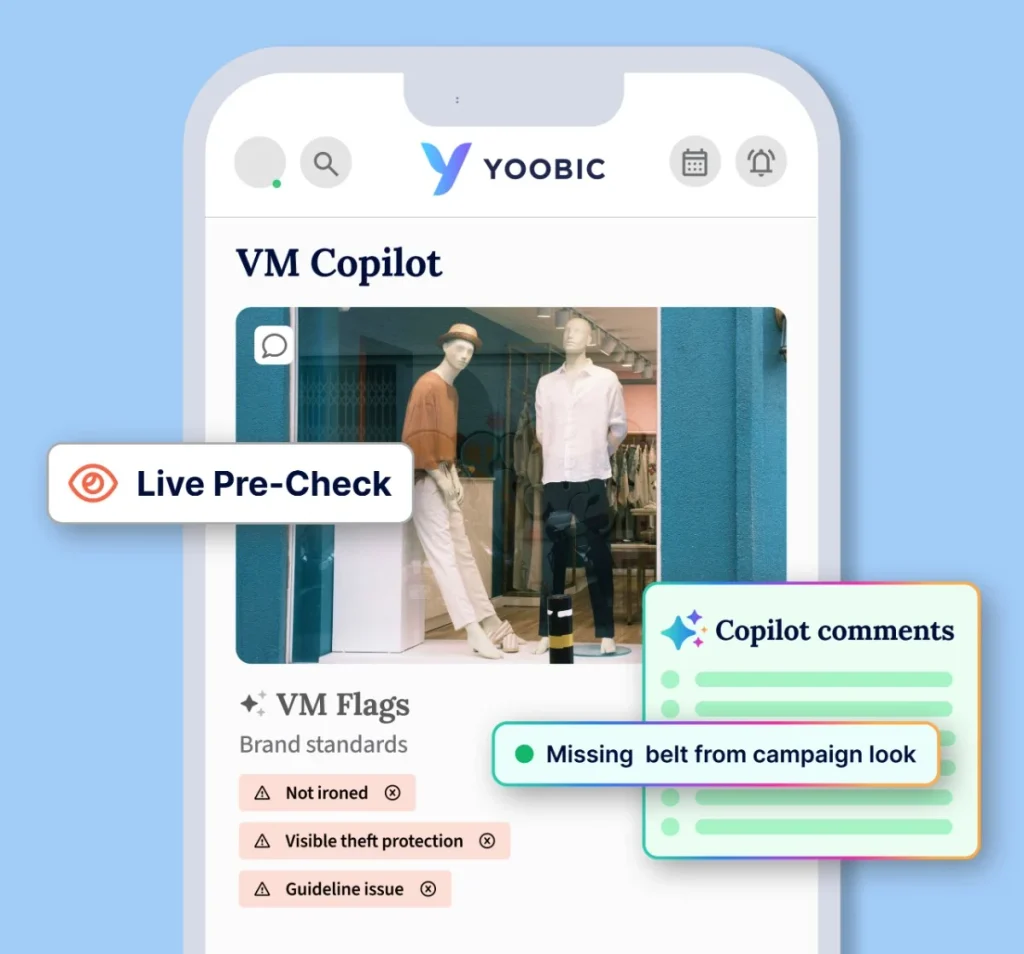
(1:03) Store teams get plain language feedback while they are still on the shop floor. A security tag left visible, an unpressed garment, the wrong shoes against the campaign guide. They fix it while they are still setting up the campaign.
(1:18) HQ sees the whole estate ranked by what actually needs attention, from flagship to franchise. Recurring compliance issues surface as patterns, not one-off comments.
The result
(1:29) Every photo reviewed. Ten days of store audit time won back. Compliance up twenty percent, conversion up half a point, sales up two percent.
(1:34) VM Copilot. AI for visual merchandising compliance. Fix it while the campaign is still live, with YOOBIC.
Why does visual merchandising review take ten days?
The delay is structural rather than a failure of effort. A store submits a photo, it queues for a reviewer at head office, the reviewer works through a backlog, feedback is written and sent back, and only then can the store act. Every handoff adds days, and the campaign does not wait for any of them.
Volume is what makes the queue impossible to clear. A two hundred store estate running regular campaign changes can generate up to four hundred thousand photos a year. No head office team reviews that manually, so in practice around thirty percent get looked at and the rest are stored and never opened. The photos that do get reviewed are not chosen because they are the ones most likely to show a problem. They are whichever ones the reviewer reached.
This is the same pattern that shows up across store visits and audits generally, where the data arrives faster than anyone can decide what to do with it. In visual merchandising the cost is unusually direct, because a display that is wrong for six days was wrong during the days the campaign was supposed to be selling.
What tools review retail store audit photos?
Store audit photo review sits inside retail execution platforms rather than in standalone tools. The distinction worth drawing is whether the platform stores photos for a human to review later or analyses them on submission. The first is a filing system with a search function. The second removes the review queue that creates the delay in the first place.
Three things separate the two in practice. Whether the check runs against the actual campaign guidelines rather than a generic compliance checklist. Whether feedback goes back to the store team that took the photo, or only to head office. And whether the platform reports at estate level, so recurring issues can be seen as patterns rather than read one comment at a time.
A tool that only does the first of those still leaves the store waiting to be told what to fix, which is where most of the ten days sit.
How does AI improve visual merchandising compliance?
AI improves visual merchandising compliance by moving the check from after the fact to the moment of submission. Thirty agents assess each photo against brand standards and campaign guidelines, covering styling, colour, product placement, security tags and garment presentation, and return plain language feedback the store team can act on straight away.
The important part is that the output is instruction, not a flag. A score tells a store associate that something is wrong. A line reading that a security tag is visible on the blue shirt and should be concealed tells them what to do, and takes about forty seconds to act on. That difference is what allows the correction to happen during setup rather than in a follow-up visit.
Retailers using this approach have seen visual merchandising compliance improve by around twenty percent. The mechanism is unglamorous: issues that used to be found late, or not at all, now get found while someone is still standing in front of the display.
How do retailers track visual merchandising compliance across every store?
Tracking works when every photo is assessed rather than a sample. Full coverage means compliance can be reported as a rate across the estate rather than an impression formed from whichever stores happened to be reviewed. Recurring issues then surface as ranked patterns, from flagship through to franchise, instead of as isolated comments.
Partial review does not just miss issues, it misreports them. When only thirty percent of photos are seen, the compliance picture is built from a sample nobody selected deliberately. Flagship stores tend to absorb the attention because they are visited more often and reviewed more carefully, while outlet and franchise locations go longest without a look. The estate then appears more compliant than it is, and the stores furthest from head office are the ones carrying the gap.
Once coverage is complete, review by exception becomes possible. Head office stops reading everything and starts working from a ranked list of what needs attention, which is a different job from the one most store audit teams are currently doing.
What does AI catch that manual photo review misses?
Consistency is the difference. A human reviewer applies judgement that varies by reviewer, by time of day, and by how many photos are left in the queue. An automated check applies the same standard to the first photo and the four hundred thousandth, which is what makes compliance rates comparable between one store and another.
The specific catches are mostly small and mostly expensive. A security tag left visible on a garment. An unpressed item on a mannequin. A pair of shoes styled against the look that does not match the one in the campaign guide. A colour that reads as close enough in the stockroom and wrong on the shop floor. None of these would survive a careful review. All of them survive a review that never happened.
How do HQ teams analyse store audit findings?
Findings become useful when they are ranked rather than listed. Full-coverage analysis groups individual flags into recurring issues across the estate, so a head office team sees that lighting is the leading issue across forty two sites rather than reading forty two separate comments and inferring the pattern themselves.
That ranking is what turns audit data into a plan for the week. It decides which stores a regional manager visits, which issues are worth a network-wide communication rather than a store-level fix, and which strong executions are worth photographing and sending out as the reference. The analysis is only as good as the coverage underneath it, which is why sampling and prioritisation are the same problem rather than two.
What VM Copilot delivers
Research from YOOBIC identifies four problems retailers are solving simultaneously: reviewing photos fast enough, holding brand compliance across every store, working out which issues matter most, and coordinating the fix with store teams. VM Copilot addresses all four through instant compliance checks on submission, real-time coaching back to the store team, and estate-level visibility into which locations need attention first.
Reported outcomes: complete photo coverage rather than a sample, ten days of store audit time returned, compliance improved by twenty percent, conversion up half a point and sales up two percent.
Going deeper on visual merchandising compliance
If you are working through how store audit and compliance data actually gets used day to day, these go further on the pieces around it.
Product and use case pages
Where the visual merchandising and store audit workflows are set out in full.
AI helps store managers by turning yesterday’s retail KPIs into a prioritised action for today. Instead of searching dashboards and spreadsheets, the manager receives a recommendation based on store performance data — what happened, what matters now, and the next best action — in under thirty seconds. Less time searching for data, more time leading the team.
Read the full transcript
Why do store managers struggle to act on performance data?
(0:00) How can AI help retail store managers improve performance management and decide what to do next?
(0:06) In retail, performance is won in the moments that happen every day: the morning briefing, the in-day sales check-in, the coaching conversation on the shop floor.
(0:14) YOOBIC’s retail execution software helps store teams turn sales, labour, inventory and compliance data into prioritised store actions. Today, AI takes that one step further. It helps store managers understand retail performance, prioritise work, and recommend the next best action in seconds.
(0:31) But those moments are under pressure. It’s 8:30 in the morning. Two team members have called in sick. A delivery is running late. The POS Wi-Fi is down. Customers are about to walk through the door.
(0:42) Retail store managers don’t need more dashboards. They need prioritised tasks. Somewhere in reports and spreadsheets is the insight they need, but they don’t have time to search for it. They need to know what happened yesterday, what matters today, and what action will have the biggest impact.
Which software tracks frontline performance?
(1:04) This is where AI changes the workflow. Instead of searching through data, the manager receives AI-powered retail performance recommendations based on their retail KPIs.
(1:13) Last week’s retail KPIs tell a story. Sales beat expectation by 22%. 93% of tasks completed. The store climbed the national ranking.
(1:23) The insight is immediate: the store is executing well, and one category is ready to drive the next gain.
How does AI turn retail KPIs into a next best action?
(1:30) Now the recommendation becomes a prioritised task. Push sport jackets for a 12% lift in category sales. Clear last week’s one overdue task. Aim for the 45,000 target.
(1:41) Instead of saying “Here are last week’s numbers,” the manager says “Here’s what we do next.”
What does an AI-prioritised store day look like?
(1:46) Today’s sales target is €8,000. Expected footfall is 320 customers. The goal is within reach because everyone starts the day focused on the right priorities.
(1:57) In less than thirty seconds, the manager has the insight, the recommendation, and the next best action. The team is aligned. The store has direction. Better operational decisions start before the first customer walks through the door.
(2:09) That’s AI-powered retail execution: turning retail performance data into prioritised tasks, helping store managers take the next best action, driving better store execution every day. Less time searching for data. More time leading teams. Better retail performance, with YOOBIC.
How can retailers improve operational efficiency with AI?
Most store managers don’t lack data. They’re drowning in it. Sales reports, labour schedules, inventory counts and compliance audits all land in separate systems, and none of them says what to do first. Operational efficiency isn’t won by adding another dashboard. It’s won by turning what the data already shows into a single prioritised action the team can take that day.
That’s the shift AI makes. Rather than asking a manager to interpret yesterday’s numbers, AI is already changing retail execution: the platform reads the KPIs, compares the store against similar locations, and surfaces the one intervention likely to move performance most. In the video above, the signal is a below-benchmark average selling price against strong units per transaction. The recommendation writes itself: coach the team on higher-value products. What used to take an analyst an afternoon takes the manager thirty seconds before opening.
What are the best AI tools for retail store operations?
The most useful AI tools for retail operations share one trait: they close the gap between insight and action. A tool that only reports is another dashboard. A tool that recommends, prioritises and assigns the next task is what actually changes a store’s day. When evaluating options, look for three things: whether it connects your existing data sources rather than adding a new silo, whether it benchmarks each store against comparable locations rather than a single company average, and whether its output is a task a colleague can act on rather than a chart a manager has to decode.
How does AI help store managers decide what to do next?
The next best action is the whole point. A store manager’s morning is a series of competing demands: a late delivery, two call-outs, a system outage, and customers at the door. AI helps by removing the question of where to start. It ranks what matters by likely impact, so the manager spends the first thirty minutes leading rather than triaging. Left unmanaged, that daily gap between plan and execution is exactly the retail execution gap that quietly costs stores performance. Over a week the effect compounds: every day begins with the team aligned on the same priority, and performance follows direction.
Going deeper on retail execution
If you’re trying to close the gap between what head office plans and what actually happens in-store, start here:
Retail doesn’t need more insights. It needs to know what to do next.
Retail teams have never had more information at their fingertips.
Sales dashboards. Store audits. Task completion reports. Customer feedback. Training records. Visual merchandising reviews. Operational KPIs. The data is everywhere, and there is more of it every quarter.
So why does store execution still feel so hard?
Because more information has not led to better decisions. KPMG’s latest retail research points to a widening gap between the data retailers collect and the outcomes they actually achieve. Despite years of investment in analytics and digital transformation, most organisations are still wrestling with fragmented data, disconnected systems, and the daily challenge of turning all that information into action on the floor.
And this is not just a problem for the boardroom.
Microsoft found that 41% of frontline employees feel they lack the technology they need to do their jobs well, while workers report losing meaningful chunks of every shift searching for answers instead of acting on them. Meanwhile, McKinsey’s research shows retailers pouring investment into AI to sharpen decisions and lift operational performance, yet most are still stuck in experimentation, unable to embed that intelligence into everyday retail execution at scale.
The issue was never visibility.
It is actionability.
Store managers are buried under competing priorities. Visual merchandising teams fight to hold standards consistent across hundreds of locations. Frontline employees lose time hunting for information. HQ leaders can see what is happening, but not always why, or what should happen next.
The retailers who pull ahead in 2026 will not be the ones with the most dashboards, the most reports, or the most AI tools. They will be the ones who help their people make more confident decisions, faster.
That is the idea at the heart of this release.
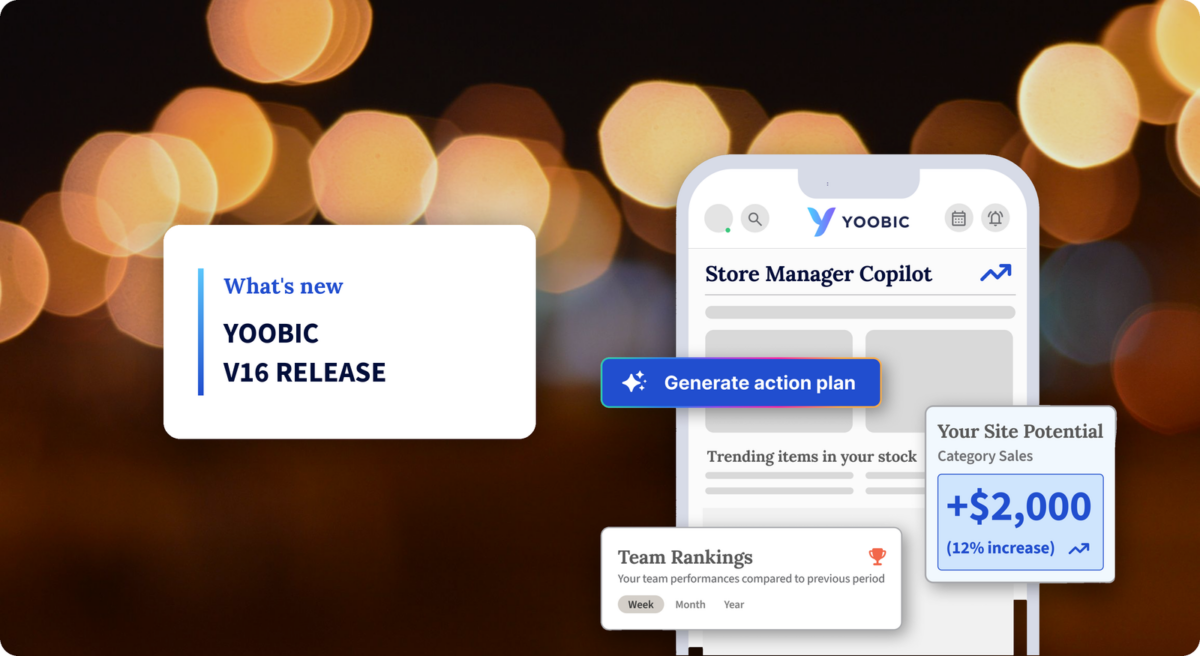
YOOBIC V16 delivers actionable intelligence for every role. Instead of handing teams more information, V16 puts role-specific insights, recommendations and guidance directly into the flow of work, so every employee, from the sales floor to HQ, knows exactly what to do next. It is what separates a retail execution platform that simply distributes tasks from one that closes the loop from data to decision to action.
Here is how it works for each role.
How can AI help store managers improve retail performance?
Store managers sit at the centre of store operations. In a single day they juggle sales targets, employee coaching, operational execution, customer experience and workforce management, switching between all of it in real time.
Their problem has never been a shortage of information. It is knowing which action, right now, will make the biggest difference.
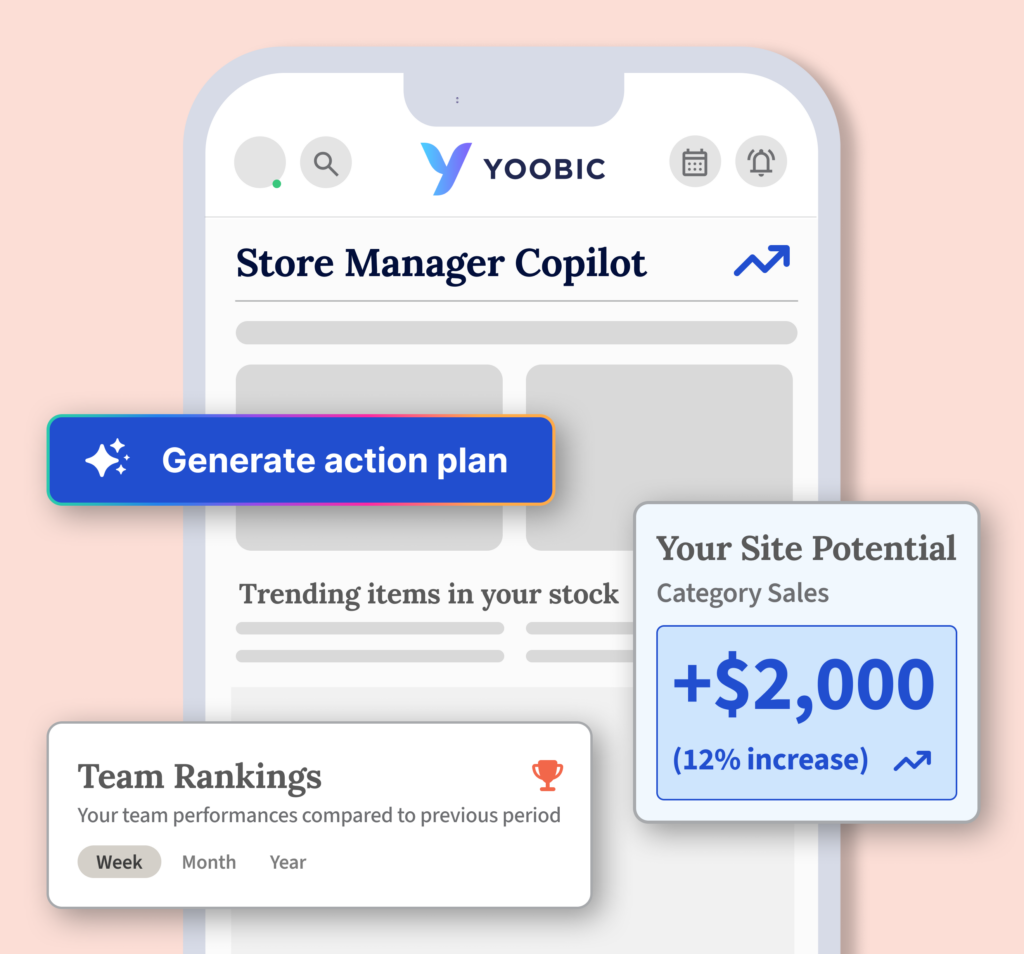
That is the question Store Manager Copilot is built to answer. This AI copilot for store managers turns operational and business data into clear, prioritised recommendations, so managers spend less time reading reports and more time leading the floor.
With Store Manager Copilot, managers can:
Act on opportunities instantly. Turn suggested revenue-driving opportunities into ready-to-go action plans with one click.
Coach with precision. See which employees need support and which deserve recognition.
Stay ahead of performance. Track team trends against the KPIs that matter most.
Plan the day with foresight. Walk in prepared, using traffic forecasts, weather insights and local event information.
Following an early access programme so oversubscribed that demand outstripped every expectation, Store Manager Copilot is now rolling out more widely.
The result is a calmer, more confident, more proactive way to run a store, and a measurable lift in retail performance.
How does AI improve visual merchandising compliance?
Maintaining visual merchandising standards across hundreds or thousands of stores has always come at a cost. Reviewing photos. Writing feedback. Chasing follow-ups. Then doing it all again, week after week, often long after the moment to fix anything has passed.
V16 changes the timing entirely.
VM Copilot brings AI-powered image analysis directly into the visual merchandising workflow. As a visual merchandising compliance solution, Copilot reviews displays against brand and campaign standards and gives store teams immediate feedback before a photo is even submitted. Issues get corrected while the team is still standing in front of the display, not days later in a report.
For visual merchandising leaders, that shift unlocks:
Earlier visibility into execution issues, while there is still time to act.
Less manual reviewing, freeing teams from the photo backlog.
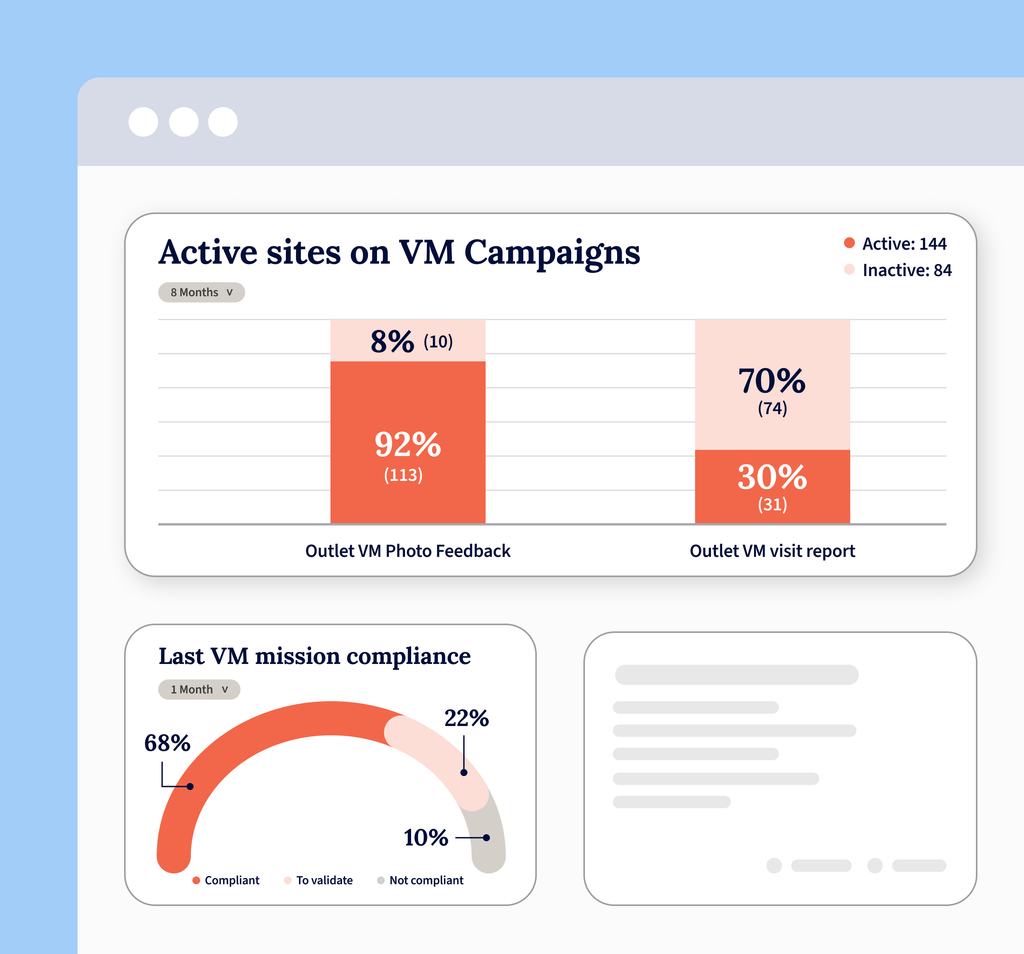
V16 pairs this with a dedicated VM Dashboard Template that pulls campaign performance, compliance metrics, answers and photo evidence into one view.
Less time validating execution. More time improving it.
How can frontline employees find information faster?
Retail moves fast, and frontline employees need to move with it. Product details, operational procedures, campaign guidance, company knowledge: the answer they need is rarely the problem. Finding it is. Too often that knowledge is scattered across systems, documents and chat threads, and the clock is ticking while they search.
V16 brings it all into one place.
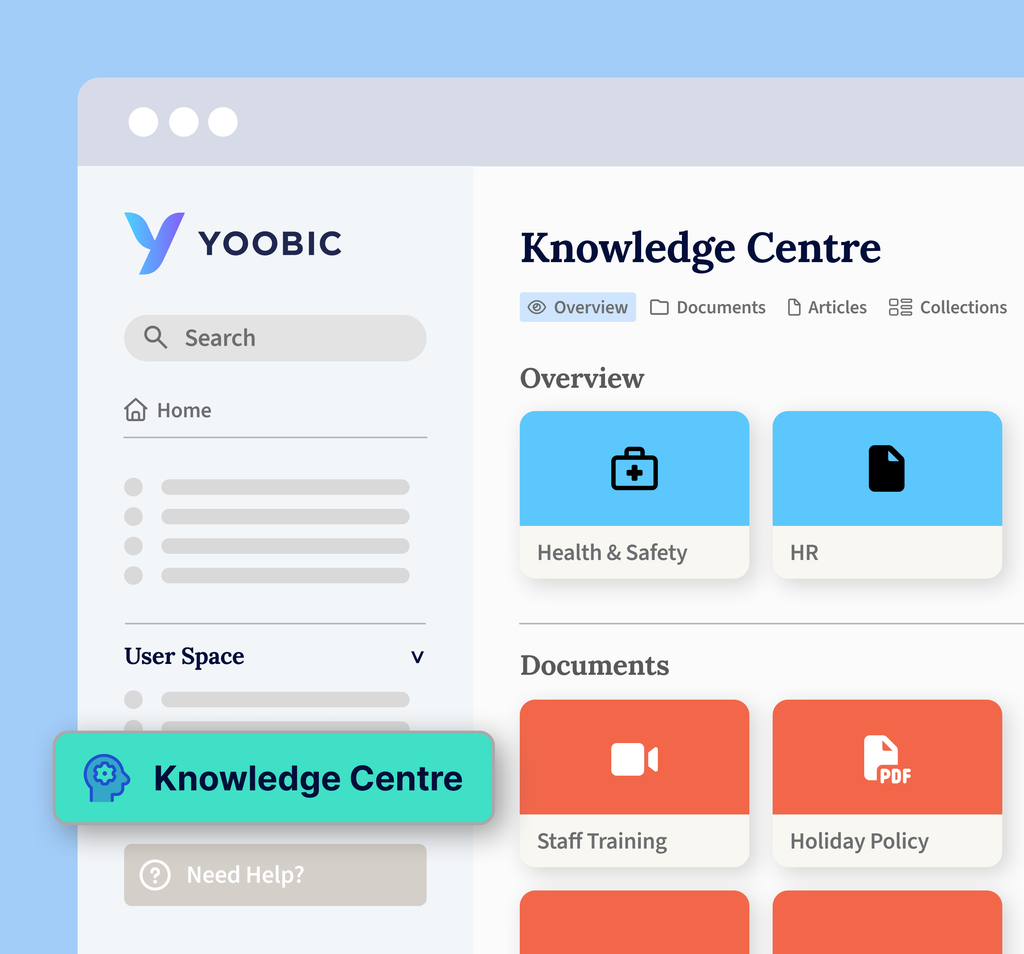
The new Knowledge Centre is a single home for company knowledge, and a genuine step forward for frontline employee knowledge management. Documents, articles and collections now live in one structured, searchable experience that is easier to navigate and easier to keep up to date.
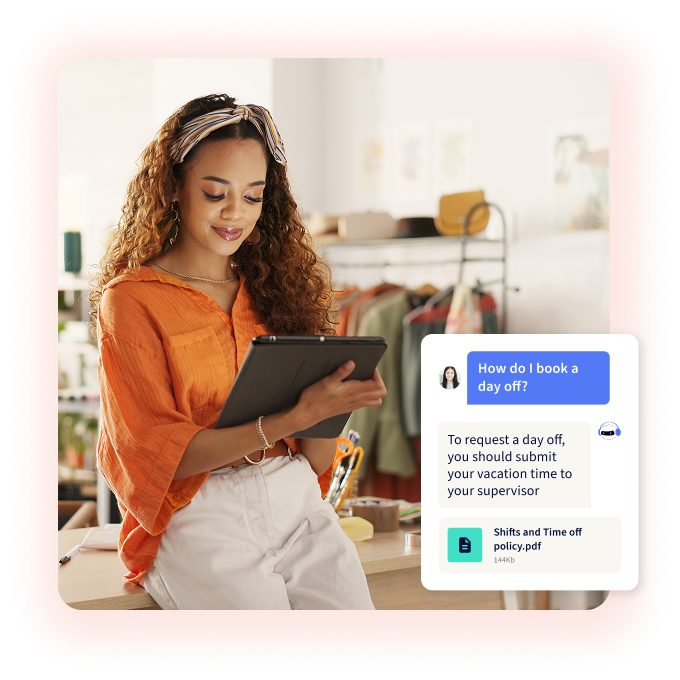
And the YOOBIC AI Assistant gets significantly smarter alongside it. The AI Assistant can now draw on both the Knowledge Centre and the YOOBIC Help Centre, so employees can ask a question in plain language and get a relevant answer in seconds. A new Help Centre Assistant does the same for admins and content owners, surfacing in-app guidance without anyone having to leave the platform.
The outcome is simple. Less searching. Less waiting. More confident execution.
How can retail leaders gain greater visibility into execution?
Most retailers can measure activity. Far fewer can clearly see how store execution is performing across every store, campaign and region, and fewer still can act on it without first disappearing into a spreadsheet.
V16 closes that gap with a set of enhancements built for clarity, improving both retail audit accuracy and operational excellence across the network.
The new VM Dashboard Template gives leaders a centralised view of visual merchandising execution across campaigns, site types and locations, making it easy to identify:
Strong-performing stores
Areas that need extra support
Compliance trends
Campaign execution gaps
Submitted photo evidence and responses
Around it, V16 adds a new dashboard creation experience with pre-built templates and best-practice guidance to get teams up and running faster, plus Dashboard Bookmarks so the reports that matter, and the task visibility leaders rely on, are always one click away. Further reporting enhancements make it easier to analyse execution trends, monitor engagement and understand performance across the whole operation.
The point of all of it is the same: less time building reports, more time understanding the business.
Building a smarter retail operating system
Actionable intelligence is not only about AI. It also takes the right information, workflows and experiences to support a decision at the moment it is made. So V16 also raises the standard across the wider YOOBIC platform, the retail execution and task management backbone that hundreds of brands run on every day.
A redesigned web experience. Simplified navigation helps users move through the platform more efficiently, cutting complexity and lifting adoption.
Smarter planning and coordination. New calendar capabilities make it easier to schedule activities, manage field visits and coordinate retail task management at scale.
Better learning experiences. Learn Certificates let organisations recognise achievement, reinforce compliance and drive engagement with mobile learning and training.
More powerful analytics. Enhanced dashboards, templates and reporting put the right information within reach, faster.
Every one of these improvements shares a single goal: getting the right information to the right person at the right moment, so they can decide with confidence.
The next generation of retail technology
The first generation of retail technology digitised paper processes.
The second generation made operations more efficient.
The next generation is about intelligence. Not intelligence locked inside reports. Not intelligence buried in dashboards. Intelligence embedded directly into everyday decisions.
That is the vision behind YOOBIC V16.
Store managers receive prioritised recommendations. Visual merchandising teams gain real-time execution intelligence. Frontline employees get instant answers. HQ leaders see clearly across their entire organisation. Every role gets the information, context and guidance to act with confidence.
Because when better decisions happen at every level, better outcomes follow.
The future of retail performance is not about collecting more data. It is about helping every employee know exactly what to do next.
Book a demo and find out how
Avoid wasted hours, blind spots
and lost revenue with YOOBIC
Retail execution software helps retailers plan, communicate, execute and measure operational activities across their store network, including tasks, audits, communications, learning and performance management. The most advanced retail execution platforms now add AI-driven recommendations so teams know not just what to do, but what matters most.
What does store operations management include?
Store operations management covers the people, processes and tools that keep stores running consistently: task and checklist execution, visual merchandising compliance, audits and store visits, employee communication, training, and performance reporting. Modern platforms unify these into a single system so HQ standards reliably reach the floor.
How can retailers improve operational efficiency?
Retailers improve operational efficiency by reducing the time teams spend searching for information, standardising store execution, automating manual reporting, and using AI to surface the highest-impact actions for each role so effort goes where it drives results.
What is the best retail store software?
The best retail store software depends on the goal, but leading platforms combine retail task management, visual merchandising compliance, mobile learning and internal communication in one place, then layer AI on top to turn store data into prioritised, role-specific recommendations.
What is an AI copilot for store managers?
An AI copilot for store managers analyses operational and business data to surface sales opportunities, prioritise daily actions, support coaching conversations and help managers focus on the activities most likely to improve store performance. YOOBIC’s Store Manager Copilot is one example.
What is AI-powered visual merchandising?
AI-powered visual merchandising uses image recognition to analyse store photos, identify execution issues, coach store teams in the moment and help retailers hold consistent brand and campaign standards across locations, improving visual merchandising compliance at scale.
How can retailers improve visual merchandising compliance?
Retailers improve visual merchandising compliance by setting clear standards, collecting execution evidence in real time, and using AI to catch issues before they affect store performance, rather than reviewing photos days after the display is already wrong.
How do store managers use AI?
Store managers use AI to identify opportunities, prioritise actions, coach employees, understand performance trends and make faster operational decisions, shifting time away from reviewing reports and toward driving sales on the floor.
What is a retail knowledge management system?
A retail knowledge management system centralises company knowledge, operational guidance, training content and product information, helping frontline employees find accurate answers quickly and consistently across every store.
How can retailers improve frontline productivity?
Retailers improve frontline productivity by reducing the time employees spend searching for information, simplifying workflows, and providing role-specific guidance inside the tools they already use every day.
What app helps store teams execute?
Store teams execute most consistently with a retail execution app that combines guided tasks, visual merchandising checks, communication and learning in one mobile experience, ideally with AI that highlights the priorities for each store, each day.
A Frontline Fridays conversation with David Dawson, VP of Retail and Digital Technology, Pilot Company
TL;DR
Pilot Company operates more than 900 travel centers that never close. For David Dawson, VP of Retail and Digital Technology, that constraint has shaped a technology philosophy built on one principle: if frontline teams are expected to show up for guests 24 hours a day, the tools they rely on have to show up for them too.
In a conversation with Frontline Fridays host Ron Thurston, David shares why simplicity is a discipline, not a default, why the best technology decisions get made closest to the work, and what happens when corporate teams actually spend time on the floor.
Three key takeaways:
Technology that doesn’t simplify the job makes it harder. Complexity is a leadership failure.
You cannot build effective frontline tools from a corporate office. Proximity to the work is non-negotiable.
AI is most valuable on the frontline when it removes friction, not when it adds features.
What is frontline technology in retail?
Frontline technology is the set of tools, systems, and platforms that store associates, store managers, and field teams rely on to run daily operations. In multi-location retail, it covers point-of-sale, task management, internal communications, mobile learning, and the integrations that connect those tools to the wider tech stack.
The shift over the last five years has been from desktop-based, back-office systems to mobile-first platforms designed for the shop floor. The goal is the same in every case: keep store leadership in front of guests and teams, not behind a computer.
The store that never closes
Most retailers get to close their doors at night. Their systems get to reboot. Their teams get to reset.
Pilot Company does not.
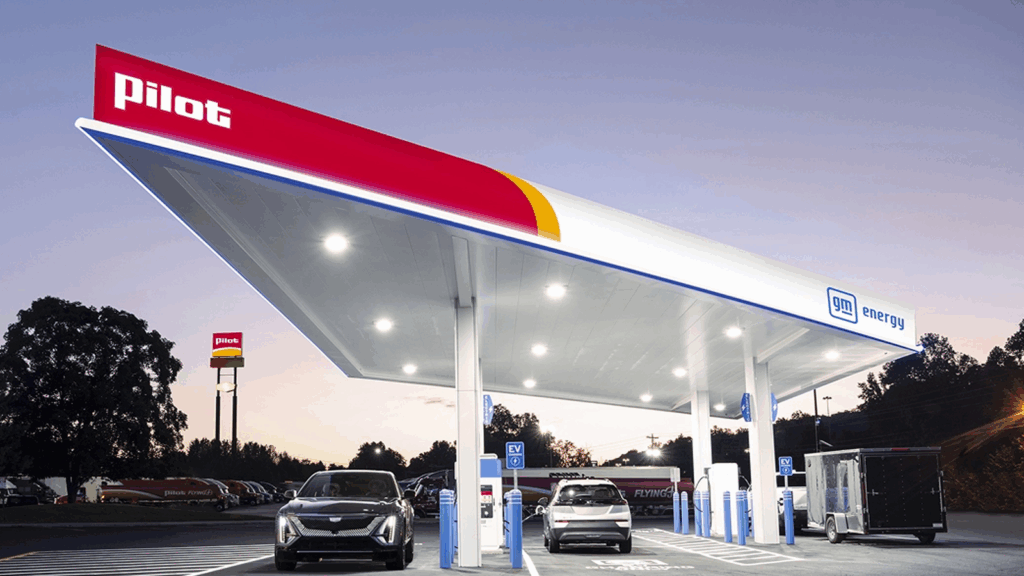
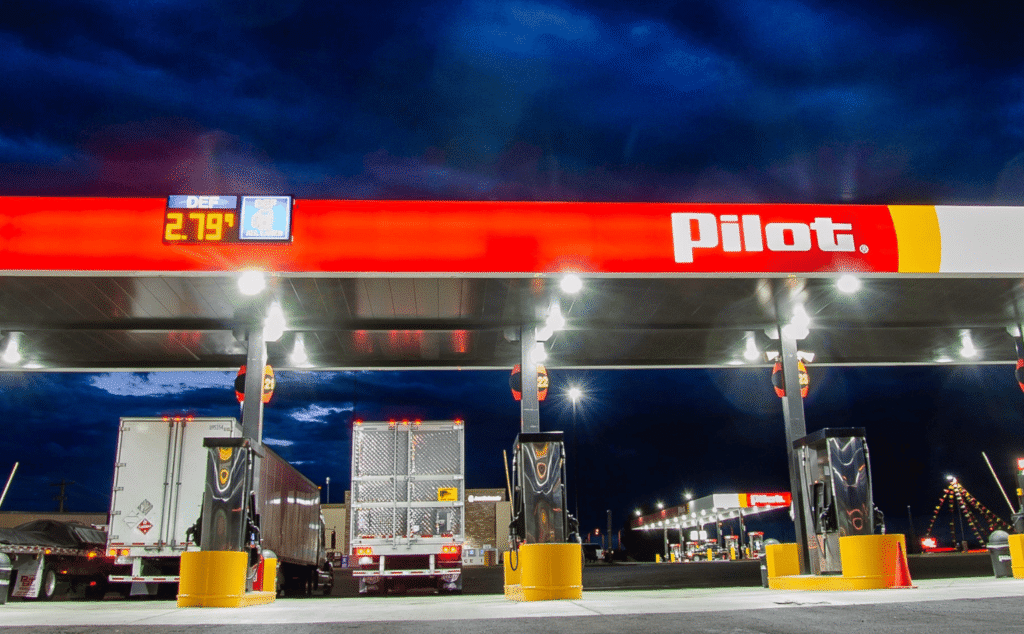
With more than 900 travel centers open around the clock, Pilot serves professional truck drivers, RV travellers, and commuters across 46 states and five Canadian provinces. The operation never pauses. Which means the technology powering it cannot either.
David Dawson has spent nearly 25 years building the systems that keep Pilot running: point-of-sale, payment processing, task management, and the digital tools that help cashiers, maintenance teams, and store managers deliver for guests at every hour of every day.
His perspective is grounded and practical. Technology is not a product. It is infrastructure. And when it fails the frontline, the people paying the price are the ones already doing the hardest jobs.
That belief shapes everything about how David’s team works. And it starts, perhaps surprisingly, with getting out of the office.
How do you build retail technology that actually works for store teams?
Most corporate technology teams build from assumptions. David’s team builds from evidence.
The IT Road Trip program at Pilot is exactly what it sounds like. David loads his technology team into a 15-passenger van, drives out from their base in Knoxville, Tennessee, and visits as many stores as they can reach. No agenda. No presentations. Just time in the stores, working alongside the people who use the systems every day.
The impact is consistent and immediate.
“You almost always see their perspective and their behavior change when they come back from those types of trips. They then think differently about the work that they do. They're much more conscientious about the impact that they have.”
David Dawson, VP of Retail and Digital Technology, Pilot Company
What changes is not just awareness. It is instinct. Engineers who have fronted a cooler, restocked a shelf, or watched a cashier navigate a POS system mid-rush develop a different standard for what the technology they build has to do. They stop optimising for what looks good in a demo and start optimising for what works at 3am on a busy interstate.
David asks visiting corporate staff to front the cooler as a matter of habit: to face every bottle in the cold case so the labels are visible. It is a small, unglamorous task. But it teaches something no dashboard can.
“These are the things that our frontline has to do all day every day in a 24-hour business. A 24-seven business never stops. These are the types of small things you have to do that make a big difference.”
David Dawson, VP of Retail and Digital Technology, Pilot Company
So what: For any organisation building tools for frontline teams, proximity to the work is not optional. Leaders who design systems without regularly using them build systems that serve themselves, not the people on the floor. This is the same operational principle that drives the best area manager store visit programs: closer proximity, better decisions.
Why simplicity is a discipline, not a default
David’s mantra is three words: simplify, simplify, simplify. He said it on stage at NRF. He repeats it inside his team constantly. And the reason he has to keep repeating it reveals something important about how technology organisations tend to drift.
The pull toward complexity is real. When you are deep in a problem, building a sophisticated solution feels like progress. It often is not.
Pilot learned this directly. Several years ago, David’s team built a deli management system for their food production operations. It was technically impressive. It was also, as the store teams put it, like a rocket ship.
“They said that thing is like a rocket ship. I need an advanced degree in astrophysics to use this thing. All I really needed was a camera and a monitor so I could see what's happening on the deli while I'm back in the kitchen.”
David Dawson, VP of Retail and Digital Technology, Pilot Company
The team had spent significant time and resource building something that overshot what the stores actually needed. The real solution was simpler than anything they had designed. And they only found that out by going to the stores.
This is a pattern David has observed repeatedly. Technology teams get excited about capability. Frontline teams need usability. The gap between those two things is where most enterprise technology fails.
The standard David holds his team to is direct: if a new tool does not make the job easier or better, it is not progress. It is a step backwards.
So what: Complexity in frontline technology is not a sign of ambition. It is a sign that the team building the tool has not spent enough time with the team using it. The discipline of simplicity has to be actively maintained, not assumed. The same principle applies to retail audit software selection: tools that overshoot the user’s actual job get abandoned by the frontline.
What does 24/7 retail technology require?
A 24-7 retail operation runs continuously, with no scheduled downtime, no nightly system reboots, and no break in customer service. For technology teams, that means every tool deployed has to operate across calendar-day boundaries, sync without interrupting active transactions, and remain reliable at every hour, including the small hours when support teams are not on shift.
Running a business that never closes sounds like an operational challenge. It is also a technology one.
David describes what most retail operators never have to consider: transactions that span two calendar days. Systems that cannot be rebooted. Routines that have to run continuously without a convenient window to reset or update.
For Pilot, the shift from paper-based operations to digital has been transformational. Store managers used to carry clipboards. Compliance checks happened on paper. Process guidance lived in binders stacked on shelves.
Today, those routines are digitised. Using YOOBIC as a task management platform, Pilot has moved its workforce off the back office and onto the floor. Managers who previously had to sit at a computer to complete administrative tasks can now do that work on a handheld device while they are serving guests.
“We love to see our managers out on the sales floor, having those human interactions, helping with transactions. That's where we really want the management, the leadership in the store to be, not back in the back office doing paperwork.”
David Dawson, VP of Retail and Digital Technology, Pilot Company
The operational implication is significant. In a 24-7 environment, any tool that pulls leaders off the floor is a cost. Any tool that keeps them on it is an investment. This is the same operational logic behind why retailers are digitizing store visit procedures: time recovered on the floor compounds across every shift, every store, every quarter.
AI is extending this further. David’s team is using AI to help frontline workers access information and resolve problems in real time, from troubleshooting a faulty freezer to finding the right process card without digging through binders. The goal is not automation for its own sake. It is removing the friction that slows teams down when every hour matters.
So what: The value of technology in a never-closing operation is measured in minutes, not features. Every time a manager spends less time searching for information or completing back-office tasks, that time moves to the floor, to guests, and to the team. That is the return.
The human behind the counter
Pilot’s business case is well understood: fuel, food, showers, rest stops. What is less visible is the human infrastructure that holds it together.
David describes something that reframes what frontline service means at Pilot. For a professional truck driver on a long-haul route, a Pilot cashier may be one of only one or two human interactions they have in a whole day. The other is usually a loading dock.
That is not a customer service insight. It is a human one.
“We don't take that lightly. We understand the significance of those human interactions. We understand that life on the road can be a challenge. So we try to be there for them.”
David Dawson, VP of Retail and Digital Technology, Pilot Company
It also creates a real operational challenge. Frontline teams at Pilot have to read the room quickly. Some guests need to get fuel, use the bathroom, and get back on the road. Every minute they are not driving is a minute they are not earning. Others are on a mandated break, legally unable to drive, and genuinely need the time and the human contact.
Recognising the difference is not just good service. It is the job. And it is a skill that cannot be automated.
This is where technology and leadership intersect. The role of the tool is to remove everything that gets in the way of that human interaction. The role of the leader is to make sure their team understands why it matters.
So what: Frontline technology that frees up time for human interaction is not just operationally efficient. In businesses like Pilot, it is the whole point. The tools that matter most are the ones that give people on the floor more capacity to be present with the people in front of them. This is the same dynamic behind employee engagement in retail: connectivity makes recognition possible, and recognition is what tells frontline teams the work matters.
Why field experience is not optional for retail tech leaders
Field experience for retail tech leaders is the requirement that anyone building or deploying technology for stores has direct, recurring exposure to the operational realities those stores face. At Pilot Company, that means almost all field leadership has come up through the stores. External hires brought into division-level roles are sent back to run a single store first. The principle is structural: closer proximity to the work produces better decisions about the work.
David is candid about his own position in this. As someone who has spent his career in technology, he does not carry the same credibility on store operations that his field leadership counterparts do. He has earned a different kind of credibility, through the IT Road Trip, through the relationships his team builds with store staff, and through the discipline of listening before building.
“As someone who spent my life in the office working on technology, you can't just plop me into a field leadership position and expect that I'm going to know how to run a region of stores. You have to start from being on the front lines.”
David Dawson, VP of Retail and Digital Technology, Pilot Company
The implication for technology leadership is clear. If you want your team to build tools that work for the frontline, you need people who understand the frontline. Not from a requirements document. From experience.
So what: Organisations that separate their technology teams from their store teams build tools for the wrong problem. Closing that gap is not a cultural nice-to-have. It is a product requirement.
The standard that matters
David Dawson’s philosophy is not complicated. It is just consistently applied.
If the technology makes the job easier, it is doing its job. If it does not, it is getting in the way. And the only way to know which one is true is to spend time with the people using it.
In an industry that tends to celebrate innovation for its own sake, that is a more demanding standard than it looks. It requires technology leaders to stay close to the work, resist complexity, and measure success by what happens on the floor rather than what looked good in the build.
For Pilot, with 900 locations open every hour of every day, there is no room for tools that slow teams down. The frontline does not get a reset. The technology it relies on cannot afford one either.
Key takeaways
Proximity to the work is the foundation of good frontline technology. You cannot build effective tools from a corporate office. David’s IT Road Trip program exists because there is no substitute for seeing the job firsthand.
Simplicity is a discipline that has to be actively maintained. The pull toward complexity is constant. The deli management story is a reminder that impressive technology and useful technology are not the same thing.
In a 24-7 operation, technology is measured in time recovered, not features delivered. Every minute a manager spends off the floor is a cost. Tools that put leadership back in front of guests and teams deliver the real return.
The human value of frontline work cannot be automated. For many Pilot guests, a cashier interaction is one of their only human connections all day. Technology that frees up space for that interaction is not just efficient. It is meaningful.
Field experience is a prerequisite, not a preference. Pilot’s insistence on field leadership coming from the frontline is a structural decision that keeps the organisation grounded in operational reality.
See how leading retailers turn frontline technology into store performance
YOOBIC helps retailers like Pilot Company, Michaels, and Hugo Boss strip administrative load off store managers, simplify the tools their teams use every day, and keep leadership on the floor where it matters most. Book a demo to see how it works in your store network.
Book a demo and find out how
Avoid wasted hours, blind spots
and lost revenue with YOOBIC
How do retailers digitize store operations without disrupting the frontline?
The most successful digitizations replace paper-based, back-office routines with mobile-first workflows that store managers can complete on the floor. Pilot Company moved compliance checks, task management, and process guidance from clipboards and binders to a handheld platform, which kept managers in front of guests rather than behind a computer. The principle is that any tool pulling leadership off the floor is a cost, and any tool keeping them on it is an investment.
What does 24/7 retail operations require from technology?
A 24/7 retail operation requires technology that runs continuously across calendar-day boundaries, syncs without interrupting active transactions, and operates reliably at every hour, including when support teams are not on shift. Systems cannot be rebooted on a schedule. Routines have to run without a convenient window to reset or update. The bar for reliability is significantly higher than in retailers that close overnight.
How can corporate technology teams build better tools for frontline retail workers?
The most effective approach is direct, recurring exposure to the store floor. Pilot Company runs an IT Road Trip program where the technology team visits stores in person and works alongside the people using the systems. Without that exposure, technology teams tend to build for what looks good in a demo rather than what works on a busy shop floor. Proximity to the work is what changes both standards and instincts.
Where does AI add value for frontline retail workers?
AI delivers the most value on the retail frontline when it removes friction rather than adds features. Practical applications include real-time information access (troubleshooting equipment, finding the right process), routine task prioritization, and replacing dashboard sprawl with prioritized recommendations. Hugo Boss saw a 3.2% sales uplift from YOOBIC Store Manager Copilot, an AI tool designed specifically to give store managers clarity rather than another reporting layer to interpret.
Why is field experience important for retail technology leaders?
Field experience for retail technology leaders means having direct, recurring exposure to the operational realities stores face. At Pilot Company, almost all field leadership has come up through the stores, and external hires brought into division-level roles are required to run a single store first. The principle is that organizations separating technology teams from store teams build tools for the wrong problem, and the only reliable way to close that gap is structural proximity to the work.
That’s why the retail training platform market has changed so quickly. Desktop LMS platforms built for office staff are giving way to mobile-first microlearning. These platforms are built around how store teams actually work.
We’ve evaluated the leading platforms on frontline usability, mobile-first design and retail customer base. We also looked at whether they drive measurable outcomes, not just course completion. Every capability in the comparison tables below is taken from each vendor’s own website, reviewed in November 2026.
KEY TAKEAWAYS:
Store associates learn on their phones between customers, so mobile-first design decides whether training gets completed at all.
The strongest retail platforms pair short modules with daily reinforcement, so knowledge sticks after the course ends.
Training connected to tasks and communications shows up in store results, not just in completion reports.
YOOBIC is our top overall pick because it puts learning, tasks and communications in one app for store teams.
Enterprise LMS platforms like Docebo suit broad corporate programs, but they need extra tools to reach the sales floor.
What are the best mobile learning platforms for retail?
The best mobile learning platforms for retail are YOOBIC, Axonify, Mitti (formerly SafetyCulture) and Rallyware. Each one delivers short, mobile-first training built for store associates rather than office staff. YOOBIC is the strongest fit for multi-location retailers that want training tied to store tasks in the same app.
Whichever platform you shortlist, it should meet five criteria that decide whether training works on the sales floor:
Native iOS and Android apps. Associates should open training on their own phone or a shared store device, not a desktop browser.
Login without a company email. Most store associates don’t have one, so look for options like employee ID or single sign-on.
Offline access. Stockrooms and large stores often have weak signal, so content should load and sync without a stable connection.
Modules under five minutes. Training has to fit between customers and around shift changes.
Reinforcement after the course. Daily quizzes or spaced repetition stop knowledge from fading after onboarding.
Mobile delivery on its own isn’t enough for most multi-location retailers. The platforms that change store results also connect each module to the task it supports. An associate can learn a new display standard and set it up in the same app. For the wider picture of building a program, see our retail training guide.
DEFINITION:
Mobile learning platform for retail
A training platform that lets store associates complete short courses on a phone or store tablet during their shift. Progress is tracked by role, store and region.
This table compares each platform on the capabilities that decide whether training works on the sales floor. Each entry reflects what the vendor states on its own website.
Platform
Best for
Mobile app
Microlearning core
AI course creation
Daily reinforcement
Tasks and checklists
Photo verification
YOOBIC
Multi-location retailers that want learning tied to store execution
Yes
Yes
Yes
Yes (SmartQuiz)
Yes
Yes
Axonify
Large enterprises focused on daily microlearning
Yes
Yes
Yes
Yes
Yes
Yes
Docebo
Enterprises with broad, multi-audience learning programs
Yes
Supported
Yes
Not stated
No
No
SAP Litmos
Compliance training and certification at scale
Yes
Supported
Yes
Not stated
No
No
Cornerstone OnDemand
Learning inside a wider HR and talent suite
Yes
Supported
Not stated
Not stated
No
No
360Learning
Collaborative, expert-led course creation
Yes
Yes
Yes
Not stated
No
No
Absorb LMS
Compliance-first programs with audit-ready reporting
Yes
Supported
Yes
Not stated
No
No
Mitti (formerly SafetyCulture)
Operators pairing training with inspections and safety checks
Yes
Yes
Yes
Yes
Yes
Yes
Zipline
HQ-to-store communications and task coordination
Yes
Learning resources
Not stated
Not stated
Yes
Yes
Rallyware
Commission-driven, assisted-selling teams
Yes
Yes
Not stated
Not stated
Yes
Yes
Based on each vendor’s own website, reviewed November 2026.
How does YOOBIC compare to other frontline training platforms?
Retailers comparing training platforms often shortlist YOOBIC alongside Axonify, Mitti, Connecteam, WorkJam and Zipline. All of them reach store teams on mobile, but they start from different places. The table shows where each one starts, and the sections below cover how YOOBIC compares for training specifically.
Platform
Starts from
Training approach
Also includes
YOOBIC
Store execution
Mobile microlearning, learning paths, AI course creation and daily SmartQuiz reinforcement
Tasks, store visits and audits, communications, AI copilots
Axonify
Frontline enablement
Daily microlearning with adaptive reinforcement
Tasks with photo verification, communications, audits through Checkpoint
Mitti (formerly SafetyCulture)
Inspections and safety
Mobile microlearning and AI course creation from the former SC Training and EdApp
Inspections, issue reporting, tasks
Connecteam
Workforce management for deskless teams
Mobile courses and onboarding
Scheduling, time tracking, checklists, chat
WorkJam
Shift and workforce management
Microlearning inside the employee shift view
Scheduling, shift swaps, tasks, messaging
Zipline
HQ-to-store communications
Learning center and SOP library alongside communications
Tasks, store audits, messaging
Based on each vendor’s own website, reviewed November 2026.
YOOBIC vs Axonify for training
YOOBIC and Axonify are both built for frontline teams, and both deliver mobile microlearning with daily reinforcement. Axonify uses adaptive reinforcement to revisit what each employee is likely to forget. YOOBIC’s SmartQuiz does the same job. It picks each learner’s daily questions from their past course results and how long ago they trained.
Both platforms also include tasks, photo verification and communications. The difference is where training sits. In YOOBIC, a module and the task it supports live in the same workflow. An associate who finishes a product module can set up the display and photograph it without leaving the app. Michaels saw a 150% increase in learning participation after rolling out YOOBIC. For a fuller breakdown, see our Axonify alternatives page.
24%
Drop in voluntary turnover at Michaels after rolling out YOOBIC.
Source: YOOBIC customer data, Michaels.
YOOBIC vs Mitti (SafetyCulture) for training
Mitti is the new name for SafetyCulture, which rebranded in August 2026. Its training product, previously SC Training and EdApp, now sits alongside inspections and safety checks. That makes it a strong fit for operators whose main concern is safety and compliance across many sites.
YOOBIC is built for retail store execution. Training connects to visual merchandising, store visits and product launches. Visual Copilot reviews display photos and returns feedback in seconds. That focus suits retailers whose training centers on selling, product knowledge and brand standards.
YOOBIC vs Connecteam for employee training
Connecteam is an all-in-one app for deskless teams. It combines scheduling, time tracking, checklists, chat and mobile courses. It serves businesses across many industries, from cleaning to healthcare.
YOOBIC is built for multi-location retailers running dozens to thousands of stores. Training is targeted by role, store and region. It connects to retail workflows like visual merchandising, store audits and product launches. Over 350 brands, including Lacoste, Boots and GameStop, use YOOBIC across 80+ countries.
YOOBIC vs WorkJam for training and microlearning
WorkJam starts with the shift. Its platform covers scheduling, shift swaps, tasks and messaging, with microlearning inside each employee’s shift view. It’s a natural fit for retailers whose priority is labor scheduling and employee self-service.
YOOBIC starts with store execution and connects to your workforce management system through its integrations. Teams keep scheduling where it already runs. YOOBIC handles the training, tasks and communications that decide how those hours are spent. Our WorkJam alternatives page covers the comparison in more detail.
YOOBIC vs Zipline for training and mobile learning
Zipline is built around HQ-to-store communications and task coordination. It also has a learning center and SOP library. It’s a strong choice when the main goal is getting clear, consistent direction to every store.
YOOBIC treats structured training as a core module alongside tasks and communications. That includes learning paths, AI course creation, gamification and SmartQuiz reinforcement. Completion and quiz results are reported by store and region. See how the two compare on our Zipline alternatives page.
Platforms that come up in comparisons but don’t focus on training
Several platforms that appear in these comparisons aren’t training platforms. StoreForce focuses on labor scheduling and store KPIs. Quorso turns sales, inventory and labor data into prioritized actions for store and field leaders. Pazo and Xenia digitize store checklists and audits, and Staffbase is built for internal communications.
Each offers reference documents rather than structured courses, so retailers usually run training in a separate system. YOOBIC’s Store Manager Copilot also turns operational and performance data into ranked recommendations. When a manager accepts one, Copilot builds an editable action plan. That plan can include a training course for the store team.
YOOBIC is the retail training platform built for store associates. It covers mobile-first learning, onboarding and upskilling programs that improve store performance. Standalone LMS platforms deliver training in isolation. YOOBIC connects every learning moment to store execution through task management and frontline communications. Associates learn, act and prove it in one app.
YOOBIC was named a sample vendor in six 2025 Gartner® Hype Cycle™ reports, including the Hype Cycle for Corporate Learning Technologies.
Make knowledge stick with daily SmartQuiz reinforcement
Training only pays off if associates remember it on the floor. SmartQuiz gives every employee a personalized daily quiz based on their past course results. It uses retrieval practice to revisit knowledge before it fades. Points, streaks and leaderboards bring associates back each day. L&D teams see quiz engagement and scores by store, so knowledge gaps show up before they reach customers.
INSIGHT
Completion rates show who clicked through a course. Daily reinforcement shows who still knows the answer a month later. That is the number that matters on a busy Saturday.
AI translation and automatically generated video captions keep content consistent and accessible across global store networks.
The platform also includes two-way communications and task management with photo verification. Checkpoint, launched in March 2026, adds store audits and inspections.
Considerations: Absorb is a compliance-first enterprise LMS. Its Absorb Frontline app adds mobile communications and training for deskless workers. The platform doesn’t include store task management, photo verification or visual merchandising workflows. Retailers focused on engagement and store execution will need to pair it with other tools.
8. Mitti (formerly SafetyCulture)
Mitti is the new name for SafetyCulture, which rebranded in August 2026. Its training product, previously SC Training and EdApp, offers mobile-first microlearning and AI course creation from existing documents. It also includes gamification and offline access. It sits alongside Mitti’s inspections, issue reporting and task tools in the same platform.
That combination suits multi-site operators who want training to follow from inspections. When an inspection finds a problem, teams can follow up with targeted training in the same place.
Considerations: Mitti is built for operations and safety across many industries, from hospitality to manufacturing. It isn’t designed around retail workflows like visual merchandising reviews or store visit coaching. Retailers whose training centers on product knowledge, selling and brand standards should check how much configuration that requires.
Zipline’s learning capabilities are part of a broader operations platform rather than a standalone training product.
Considerations: Zipline is not a dedicated training or LMS platform. Its learning center gives store teams a library of SOPs, guides and reference content alongside operational communications. Retailers evaluating Zipline mainly for training should check its learning paths, reinforcement and course analytics.
Customer results back this up. UNTUCKit turned training into a sales driver, lifting units per transaction by 15%. TFG increased in-store conversion by 22%. Moschino reached 98% course completion across 150+ stores, and Longchamp’s L&D team saves 10 hours a week on content creation. These aren’t LMS metrics. They’re business outcomes that come from connecting learning to what happens on the store floor.
FAQs
What is the best LMS for retail?
The best LMS for retail is YOOBIC for multi-location retailers, because it combines mobile microlearning with store tasks and communications in one app. Enterprise LMS platforms like Docebo and SAP Litmos suit broad corporate programs. They need extra tools to reach associates on the sales floor.
What are the best mobile learning platforms?
For frontline teams, the best mobile learning platforms are YOOBIC, Axonify, Mitti (formerly SafetyCulture) and Rallyware. They deliver short training through native apps built for people who don’t work at a desk. Look for iOS and Android apps, login without a company email, offline access and modules under five minutes. Daily reinforcement, such as quizzes or spaced repetition, matters too.
What is the easiest LMS to use?
The easiest LMS to use lets a learner open a short module on their phone and finish it without help. For store teams, that means a native mobile app, simple login and lessons under five minutes. Content should also be targeted to each person’s role and store. Test this during evaluation by asking a few new associates to complete a module on their first day.
Which LMS is free?
Some LMS and frontline apps offer free plans, but they’re usually capped by users or features. They suit very small teams. Enterprise retail platforms, including YOOBIC, are priced on a custom basis. Multi-location retailers should compare total cost against onboarding time, turnover and store execution.
What are the best sales training apps?
For retail store teams, the best sales training apps deliver product knowledge and selling skills as short mobile modules. YOOBIC suits multi-location retailers because sales training sits alongside store tasks. UNTUCKit lifted units per transaction by 15% after building a clienteling certification on the platform. Rallyware is also a strong option for commission-driven, assisted-selling teams.
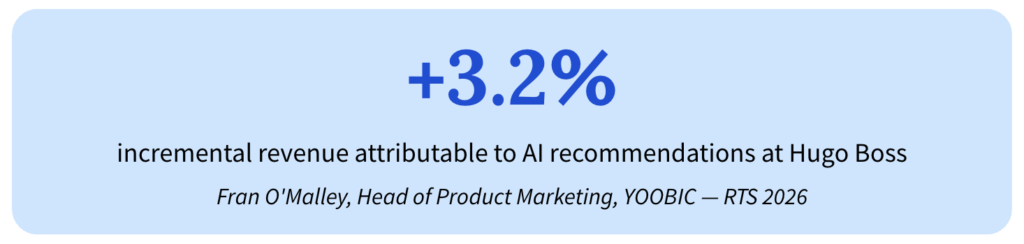
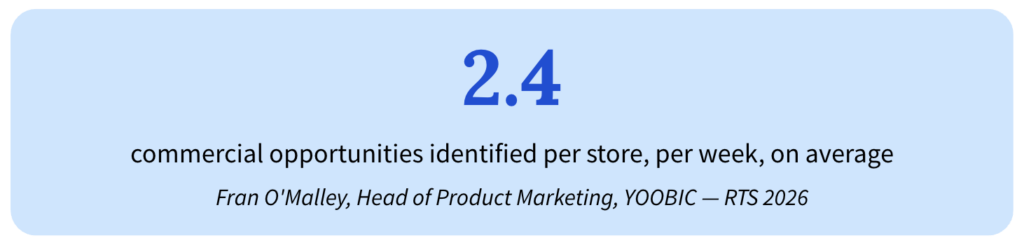
Hugo Boss delivered a 3.2% increase in incremental revenue directly attributable to AI recommendations. The mechanism: an average of 2.4 identifiable commercial opportunities per store, per week, that most networks leave undetected.
Why retail store data alone isn’t enough
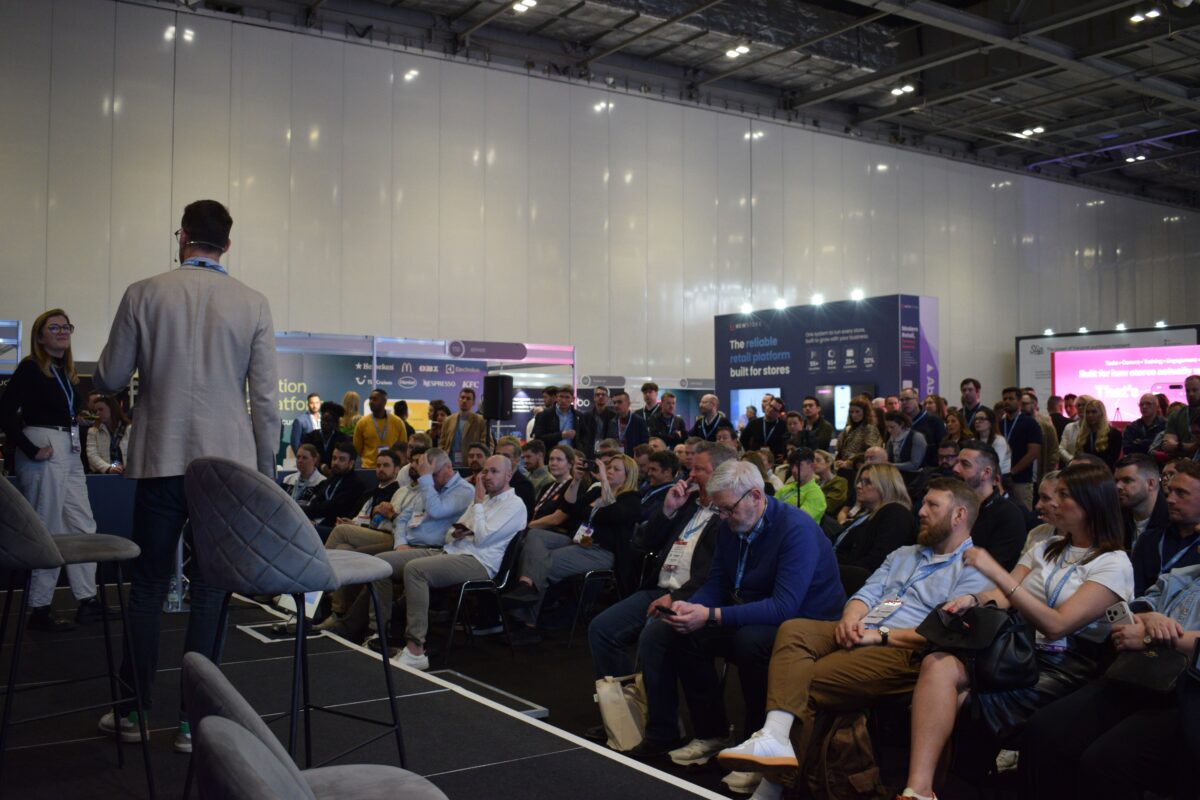
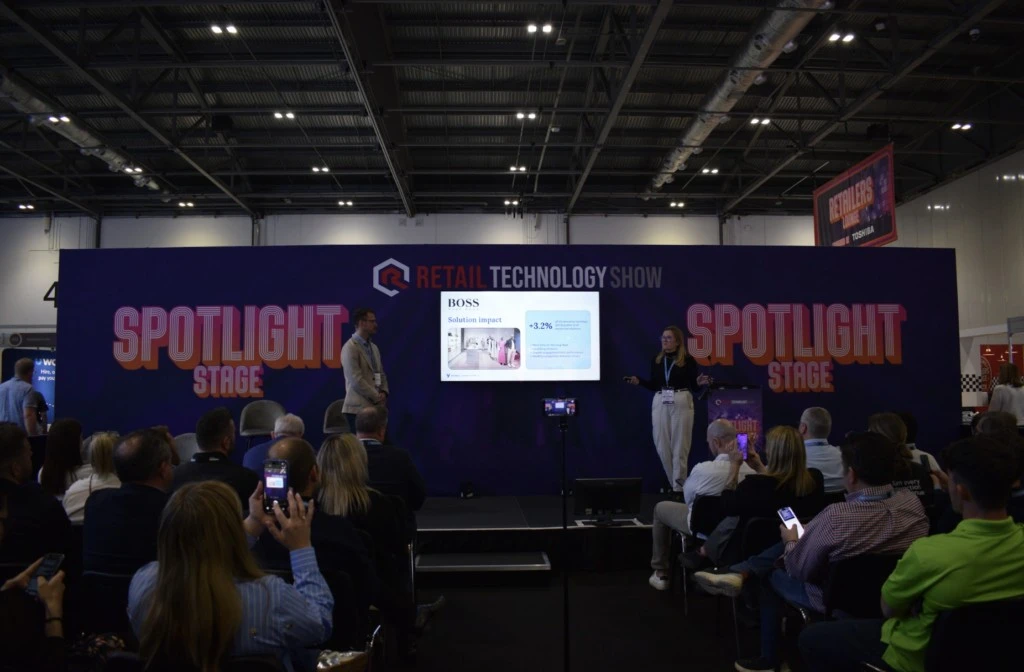
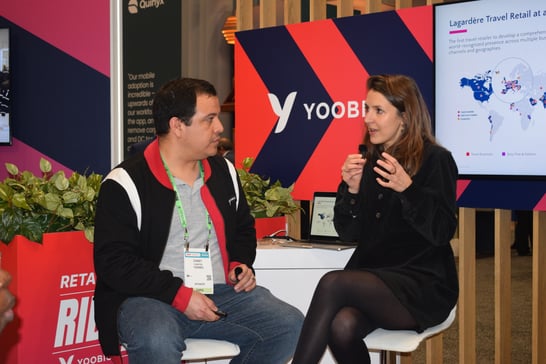
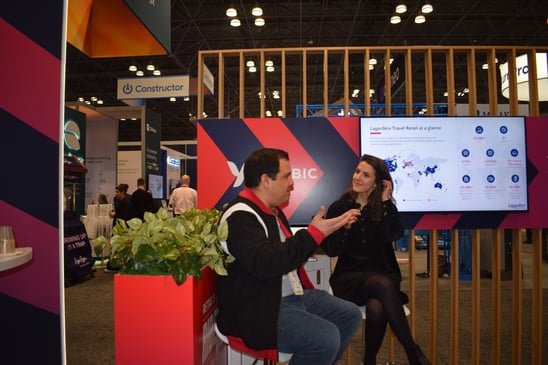
It’s 8:45am. Two people have called in sick, the Wi-Fi is down, and the morning briefing starts in 15 minutes. There is no time for spreadsheets. This is the reality Fran O’Malley, Director of Product Marketing at YOOBIC, used to open the company’s session at the Retail Technology Show 2026.
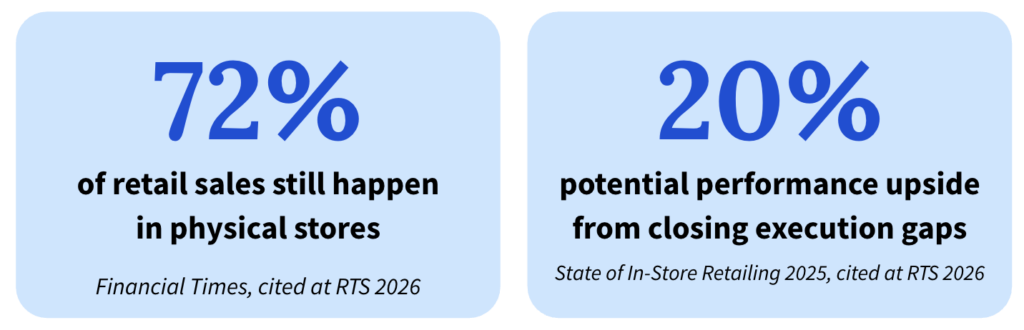
Her point was direct: when 72% of retail sales still happen in physical stores (Financial Times), and when execution gaps — missed product opportunities, non-compliant displays, undetected performance variance — are accumulating across hundreds of locations every day, the cost of getting information to store managers too late, not at all, or in a format that’s difficult to act on is material. Research cited in the session puts the performance upside of closing those gaps at up to 20%.
The session covered two AI use cases that address this directly: the Store Manager Copilot and the VM Copilot. What follows is a structured summary of what was demonstrated, what it means for operations leaders, and why the approach produces measurable results.
Why is consistent store performance so hard to achieve across a retail network?
The problem is not a lack of data — it is a lack of relevant, timely data. Each store operates across a unique combination of cluster, footfall, staffing, assortment, and past performance. Without real-time benchmarking against comparable stores, managers default to instinct. The result: performance variation that tracks manager experience rather than store potential.
Most retail networks hold significant data — sales, inventory, workforce, customer feedback. The structural problem is that this data lives in separate systems, arrives at different intervals, and reaches store managers too slowly to influence decisions made at 9am.
As the RTS session slides framed it, each store needs a personalized set of recommendations based on its cluster, past performance, team composition, location, current KPIs, and assortment. Standard dashboards and weekly trade reports cannot deliver that level of individualization at the speed the shop floor requires.
The outcome, observed across YOOBIC’s customer base, is that performance variation between stores correlates more with manager experience than with structural factors. In the absence of clear, trusted data, all managers rely on instinct. The difference is that more experienced managers tend to focus on the right activities, while less experienced managers often spend time on work that doesn’t drive results.
Operationally, this means: retailers cannot close that variation by hiring better managers or running more training. They close it by giving every manager — regardless of experience — access to the same quality of contextualized, benchmarked insight at the same time.
How does YOOBIC’s AI turn store data into action?
YOOBIC’s AI follows three steps: connect all available store data, apply predictive AI to benchmark performance and rank opportunities by impact, then route a specific recommended action to the specific role that can act on it. The output is not a new report. It is a prioritized task, delivered to the right person before the moment of decision.
This is the same operational shift explored in our guide to retail task management, where store work moves from scattered communication to structured, trackable execution.
YOOBIC described the architecture as three linked stages: connect your data, make it smart, act on it.
How YOOBIC’s AI processes store data
1. Connect — Unify inputs from point-of-sale, inventory, performance data, footfall , and external signals including weather and local events into a single connected view.
2. Analyze — Benchmark each store against a comparable peer group. Identify anomalies and commercial opportunities ranked by likely revenue impact.
3. Route — Deliver the right action to the right person. Store associates receive task guidance. Store managers get performance snapshots and opportunity alerts. District managers see cross-store rankings. HQ operations get portfolio-level compliance and campaign rollout data.
The routing logic is the critical differentiator. Insight that reaches the wrong person, or the right person too late, does not change behavior. Insight that reaches a store manager before the morning briefing — in the form of one specific action — does.
“What we do not want to do is just fire tons of notifications, flood the store, nothing gets done, they just tick that they've done it, and you're in the same place as you started.”
Bradley Capon, VP Sales, YOOBIC
Operationally, this means: AI that floods store teams with low-priority alerts produces the same outcome as no AI at all. The operational value comes from constraint — surfacing the one or two actions most likely to move the KPI that day, for that specific store.
How did Hugo Boss achieve a 3.2% revenue increase with AI?
Hugo Boss had access to data, but translating it into clear, daily priorities at the store level remained a challenge. Store managers were often required to interpret multiple signals and decide where to focus, which led to natural variation in performance. As a result, some revenue opportunities went unaddressed. YOOBIC’s Store Manager Copilot was designed to close that gap. The result: 3.2% incremental revenue directly attributable to AI recommendations, delivered through three specific use cases.
O’Malley grounded the session in Hugo Boss before walking through the product. The brand’s store managers had access to data from multiple sources — spreadsheets, emails, operational systems — but extracting actionable priorities from that data was time-intensive and inconsistent. Decisions defaulted to instinct. Performance varied significantly depending on how experienced the individual manager was.
Hugo Boss: what the challenges looked like before AI
Scattered data — managers were overwhelmed with inputs but unable to identify priorities.
Missed opportunities — teams knew they were leaving revenue on the table but could not identify where.
Beyond revenue, the Copilot produced three secondary outcomes: store managers spent more time on the shop floor and less time in the back office; the team’s understanding of which KPIs actually drive performance improved measurably; and healthy competition emerged between stores once managers could see precisely how they compared to peers.
Operationally, this means: the 3.2% revenue figure is the measurable output, but the underlying change is structural — Hugo Boss moved from a network where performance depended on manager experience to one where every manager operates from the same quality of data-driven briefing.
Use case 1: Smart briefings — replacing the pre-shift spreadsheet review
The smart briefing is a daily, automated performance summary delivered before the store opens. It surfaces yesterday’s results against target, units per transaction, average basket value benchmarked against comparable stores, predicted traffic for the day, and a specific recommended focus.
In a typical scenario, a store might beat its previous day’s target, with units per transaction above average. But average product value could still lag behind comparable stores — a sign the team is optimizing for volume over value. The recommendation: prioritize higher-value products during predicted high-traffic periods. Instead of interpreting multiple reports, the store manager walks into the morning briefing with a clear, data-backed agenda.
Operationally, this means: a manager who previously spent 30 minutes cross-referencing data before a briefing now has that synthesis waiting for them. At scale, that 30-minute saving per manager per day translates into more time on the shop floor, more coaching, and more consistent execution.
Use case 2: Commercial opportunity identification — closing the gap between stores
Every store in a retail network underperforms in at least one product category relative to comparable locations. Most of that variance goes undetected until a monthly trade review — by which point the opportunity has passed.
Operationally, this means: an average of 2.4 opportunities per store per week means the revenue gap from undetected opportunities is not marginal — it is structural and recurring.
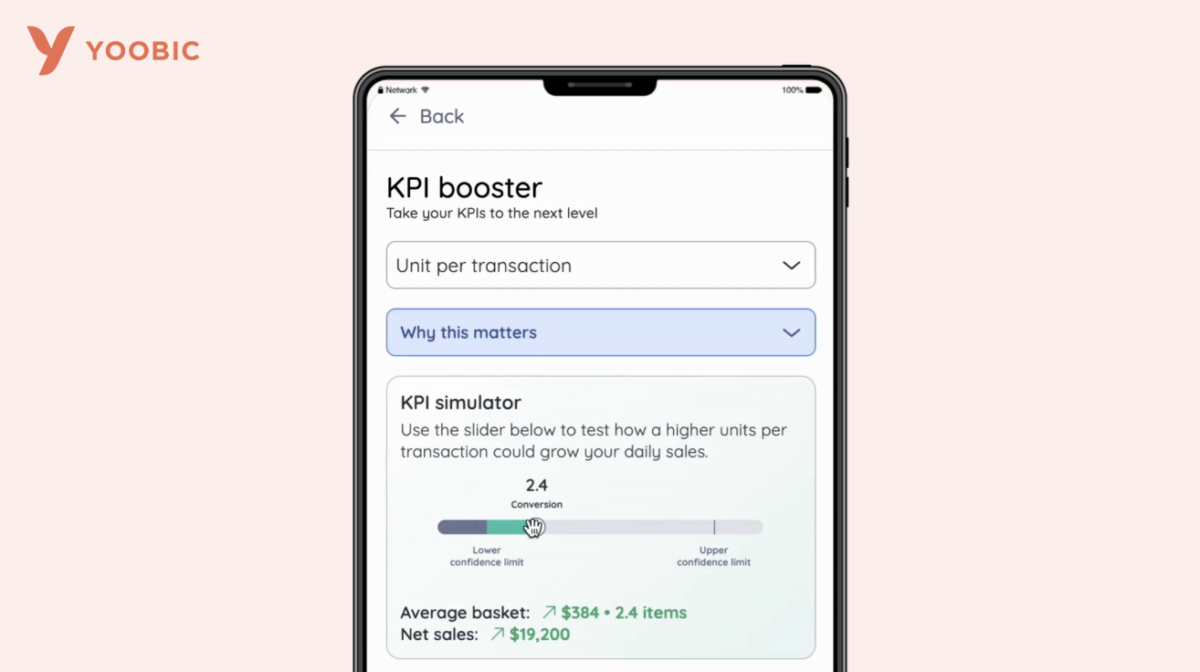
Use case 3: KPI boosters — simulating performance before committing to action
When a KPI falls below target, a store manager faces two questions: is this gap closable today, and what specifically should I do about it? The KPI booster feature answers both.
A manager simulates the effect of a KPI shift — for example, moving units per transaction up by two points — and sees the projected impact on the day’s sales target. The system then surfaces product bundles that are performing in comparable stores, using only items currently in stock.
As Capon noted, the AI is built around the KPI agreed at project start. If average basket value is the priority, the recommendations reflect that. If volume is the focus, the logic changes. The store manager decides what to act on.
Operationally, this means: KPI simulation removes two forms of friction: managers no longer need to estimate whether a gap is closable, and they no longer need to rely on instinct or head-office guidelines to know which products to push. Both decisions are data-backed and stock-verified.
How does AI reduce the time between issuing brand guidelines and achieving compliance?
VM compliance delays are a process problem, not a people problem. Feedback loops — send guidelines, receive photos, review, return feedback, receive corrections — have historically taken days to weeks. YOOBIC’s VM Copilot breaks the loop by analyzing photos in real time at the point of execution, resolving 50% of feedback before it reaches HQ. This compresses the compliance window without adding headcount.
YOOBIC processes 80 million photos per year across its client base. Until recently, every photo required human review. That volume — which grows with every new campaign and every additional store — represents a review capacity constraint that cannot be solved by hiring alone.
YOOBIC built the VM Copilot by first understanding exactly where review time was being lost. The research process: 50 hours of customer interviews, analysis of tens of thousands of photo comments from VM teams. The finding was precise: 50% of all HQ feedback to stores was about basic brand standards — tags showing, garments not folded correctly, boxes in the wrong position. None of this required VM expertise. All of it was consuming VM team capacity.
The Copilot analyzes each photo across three categories:
How YOOBIC’s VM Copilot analyzes each photo
Each photo is assessed against brand standards to identify execution gaps and opportunities for improvement. Store teams receive clear, actionable guidance on how to improve compliance, styling, and overall display quality.
When a store team submits a photo, the Copilot provides feedback at the moment of execution — before the image reaches the HQ review queue. Store teams receive in-moment corrections. HQ teams receive a prioritized view of the images most in need of their attention, with AI analysis already surfaced.
Operational result for VM teams
Store teams receive same-session feedback — corrections happen before the next customer walks past.
50% of HQ feedback volume is resolved at source, before it enters the review queue.
HQ VM specialists see the highest-priority images first, with AI flags already attached.
The compliance loop compresses from days to hours without adding headcount.
Operationally, this means: recovering 50% of HQ VM review capacity does not just save time — it redirects skilled VM specialists away from basic standards enforcement and toward the work that actually requires their expertise: campaign styling, display innovation, and brand elevation.
What changes operationally when AI is in place?
Operational area
Without AI
With YOOBIC AI
Morning briefing preparation
30+ minutes reviewing multiple reports and spreadsheets before store opens
Automated briefing ready before the manager arrives — no preparation required
Commercial opportunity detection
Visible in monthly trade reviews, if identified at all
2.4 opportunities surfaced per store per week, benchmarked against comparable stores, in real time
Performance benchmarking
Network averages only; no peer-store comparison available at store level
Each store benchmarked against comparable sites by cluster, location, assortment, and past performance
Days to weeks, dependent on HQ review queue and team capacity
Real-time in-store coaching at point of execution; 50% of feedback resolved before HQ review
KPI improvement planning
Dependent on manager experience; instinct-driven product selection
KPI impact simulated before action; bundle suggestions verified against current stock
Performance consistency across network
Strongly correlated with individual manager experience level
Data-driven briefings reduce reliance on experience; opportunities identified consistently across all locations
Key takeaways from RTS 2026
1. The value of AI in stores is determined by routing logic, not algorithm sophistication
Insight that reaches the wrong person, or arrives after the decision has already been made, has no operational value. YOOBIC’s approach prioritizes getting the right action to the right role at the moment it can be acted on. Hugo Boss’s 3.2% revenue uplift is a routing outcome as much as a data science outcome.
2. Every store network contains recurring, identifiable revenue gaps
An average of 2.4 commercial opportunities per store per week — each benchmarked against comparable stores and verified against stock — represents a structural, recurring source of revenue that most networks leave undetected.
3. Manager experience is the variable AI is most directly designed to level
Performance variation across Hugo Boss stores correlated with manager experience, not store potential. AI that gives every manager the same quality of benchmarked, context-specific briefing reduces that dependency. The brand moved from inconsistent, experience-dependent decision-making to consistent, data-driven execution — across its entire network.
4. The VM compliance loop is a capacity problem AI solves structurally
50% of HQ VM review time was being spent on basic brand standards that required no specialist judgment. That is not a people problem — it is a process design problem. Placing AI earlier in the review cycle recovers that capacity permanently, without additional headcount, and redirects it toward work that requires genuine VM expertise.
5. The KPI northstar must be defined before deployment, not during it
YOOBIC builds its AI logic around the KPI agreed at project start. That anchor determines what data is surfaced, what opportunities are flagged, and what actions are recommended. AI without a defined priority surfaces noise.
Conclusion
The signal from YOOBIC’s RTS 2026 session was not about AI capability in the abstract. It was about where operational value lands when AI is deployed with a clear brief.
Hugo Boss’s 3.2% revenue increase did not come from a more sophisticated algorithm. It came from routing the right data to the right person at the right moment — before the morning briefing, at the point of photo submission, in the seconds before a KPI decision is made. Replicated across 2.4 opportunities per store per week, across a network of hundreds of stores, the aggregate is material.
For retail operations leaders, the question is not whether AI belongs in stores. According to Bradley Capon, VP Sales at YOOBIC, it will be in every store within a year. The question is what to prepare. The answer from this session is precise: define the KPI you are trying to move, identify where the data that would move it currently sits, and close the gap between those two things.
“We want to make sure that you're using that data effectively to make sure that you can drive sales.”
Bradley Capon, VP Sales, YOOBIC
Book a demo and find out how
Avoid wasted hours, blind spots
and lost revenue with YOOBIC
Most retail leaders invest heavily in planning strategy.
Promotions are mapped months in advance. Vendor funding is negotiated. Merchandising calendars are carefully built. Marketing teams forecast the expected lift from every campaign.
But there is one number most retailers never measure.
It doesn’t show up on a P&L. It rarely appears in executive reviews. And it almost never gets discussed on earnings calls.
Yet it can be one of the largest hidden drains on retail profitability.
That number is the retail execution gap.
The retail execution gap is the difference between what headquarters plans and what actually happens on the store floor. Across large retail organizations, this gap can quietly destroy $10 million to $40 million in value every year, according to Boston Consulting Group.
Not because something catastrophic happens.
Because small execution failures occur every day across hundreds or thousands of stores.
A promotion launches late. Signage is placed incorrectly. A task gets skipped during a busy shift. An associate never receives the briefing for a campaign.
Individually, each issue seems small.
But across an entire retail network, those small misses compound into one of the biggest hidden leaks in retail performance.
What is the retail execution gap?
The retail execution gap is the gap between operational plans created at headquarters and how consistently those plans are executed in stores.
It occurs when store teams:
Do not receive operational communications
Misinterpret instructions
Execute tasks inconsistently
Lack the training or tools needed to follow through
When execution gaps occur across hundreds of locations, they create lost revenue, operational inefficiency, and compliance risk.
In many retail organizations, the execution gap remains invisible until leaders begin measuring store-level performance systematically.
Why do retail leaders often overestimate store execution?
Retail leaders often overestimate store execution because most organizations measure whether instructions were sent, not whether they were executed correctly.
Ask a retail COO or head of store operations what percentage of stores executed a promotion correctly this week.The answer is usually 80–85%.
But when retailers implement structured measurement — through mystery shoppers, photographic store audits and visual verification, or structured reporting — the real number is often closer to 55–65% compliance.
That means there is typically a 15–25 percentage point gap between perceived execution and actual execution.
This gap doesn’t happen because store teams aren’t trying.
It happens because most retailers lack the systems to reliably connect headquarters strategy with frontline execution.
A directive leaves HQ. An email is sent. A manager acknowledges receipt.
But somewhere between the briefing and the start of the promotion, more than one third of stores execute incorrectly or not at all.
How much does poor retail execution cost businesses?
Poor retail execution can cost large retailers millions of dollars each year. When promotions, compliance tasks, and operational processes are executed inconsistently across stores, small failures compound across hundreds or thousands of locations, leading to lost sales, wasted vendor funding, and operational risk.
Retail performance rarely fails because of one major issue.
It fails because of thousands of small execution problems that accumulate across stores.
Consider a typical grocery retailer operating 500 locations.If store-level execution breaks down in just 30% of stores, the financial impact can quickly add up:
$780,000 in lost vendor funding due to poor promotional compliance
$3.9 million in missed promotional sales
$260,000 in lost revenue from uninformed associates
$250,000 in potential regulatory or safety fines
That’s more than $5 million in preventable losses every year.
And that example is conservative.
For many large retail organizations, the cost of poor execution easily reaches eight figures annually.
The retail execution gap is usually caused by structural issues in frontline operations rather than a lack of effort from store teams. In most retail organizations, three operational gaps drive inconsistent execution: communication breakdowns, productivity friction, and workforce turnover. These gaps make it difficult for headquarters strategy to translate into consistent store-level execution.
Across large retail networks, even small operational gaps can compound quickly, affecting communication, productivity, and workforce stability.
1. The retail communication gap
One of the biggest causes of execution failure is simple: store teams never receive or fully understand operational instructions.
Most retailers rely heavily on email to communicate with stores.But email open rates from headquarters to frontline teams typically average 20–30%.Important information often gets buried in inboxes, forwarded across informal messaging apps, or printed and forgotten in back offices.
This kind of information overload is a growing operational challenge in retail. In fact, many retailers are discovering that too many messages can be just as damaging as too few.
As a result, the associate responsible for executing a promotion may never actually read the instructions.
Retailers that close this gap move away from broadcast communication and adopt:
Role-based messaging
Mobile-first communication tools
Read confirmations
Priority-based task delivery
These changes can increase communication engagement by 60–80% and dramatically improve store-level execution.
2. The retail productivity gap
Frontline retail employees often lose 15–25% of their working time to operational friction.
This includes:
Searching for information
Clarifying unclear instructions
Repeating tasks that were executed incorrectly
Navigating outdated administrative systems
The impact of this friction goes far beyond wasted time.It reduces customer-facing availability, slows store operations, and increases employee frustration.
In one large fuel and convenience retail network, operational friction across 15,000 employees was estimated to cost $28 million annually in lost productivity.
The problem isn’t employee performance.
It’s outdated operational infrastructure.
3. The retail turnover gap
Retail has some of the highest workforce turnover rates in any industry.
Many sectors experience 40–70% annual turnover, and in convenience retail it often exceeds 80%.
New employees typically take 6–10 weeks to reach full productivity.During that ramp period, they operate at roughly 60–70% of the effectiveness of experienced associates.
In high-turnover environments, a large portion of the workforce is always in this ramp phase.
That means execution quality is constantly fluctuating.
Research consistently shows that employees who feel informed, trained, and supported are 25–40% more likely to stay beyond the critical 90-day retention period.
Better frontline enablement improves both execution and retention.
How can better store execution increase retail revenue?
Improving store execution can generate significant revenue growth without requiring new stores or new products. When promotions, merchandising standards, and frontline training are executed consistently across locations, even small improvements in compliance can translate into millions of dollars in additional sales.
The retail execution gap is not just a cost problem.It is also a significant revenue opportunity.
Even modest improvements in execution consistency can generate major financial returns.
For example,if promotional compliance improves from 60% to 75%, the revenue impact can be significant.A retailer generating $1.2 million in annual revenue per store across 1,900 locations could see $11.4 million in incremental revenue from just a 0.5% improvement in execution performance.
No new stores. No new product launches.
Just better execution of the existing plan.
Training also plays a critical role.
In many retail categories — especially foodservice, convenience, and specialty retail — trained associates can achieve two to three times higher conversion rates than untrained employees.
Across thousands of customer interactions, that difference creates a major margin opportunity.
Why is the retail execution gap difficult to fix?
The retail execution gap persists because most retailers lack the systems, visibility, and operating models required to manage frontline execution at scale. In practice, three structural issues make the problem difficult to solve: limited visibility into store performance, outdated operational tools, and a rapidly changing frontline workforce.
1. Limited visibility into store execution
Most retailers lack real-time visibility into what is actually happening inside stores. Instead, they rely on delayed reporting from store visits, field audits, or mystery shopping programs.
This means execution issues are often discovered days or weeks after they occur, making it difficult for leadership to identify patterns or correct problems quickly.
2. Outdated tools for managing store operations
Many frontline operations are still managed using tools that were never designed for a mobile, deskless workforce. Frontline employees are often expected to:
Receive communications through email
Complete training through desktop learning systems
Track compliance using paper checklists
These disconnected systems create operational friction. Research shows frontline employees can lose 15–25% of their working time navigating fragmented systems, searching for information, or correcting execution errors.
3. A rapidly changing frontline workforce
Retail has some of the highest turnover rates of any industry, with many sectors experiencing 40–70% annual turnover, and convenience retail often exceeding 80%.
At the same time, the frontline workforce is increasingly made up of Gen Z employees, a generation that communicates through mobile apps, learns through video, and expects faster feedback and clearer guidance at work.
Many retail operating models, however, were designed for a different era. Store teams are still expected to rely on email communications, desktop training systems, and fragmented operational tools.
Retailers trying to manage a mobile-first workforce with legacy systems face a structural disadvantage.
How are leading retailers closing the retail execution gap?
Leading retailers are improving store execution by replacing fragmented communication and manual processes with systems that connect headquarters strategy directly to frontline execution. These systems provide real-time visibility into store performance and give teams the tools they need to execute tasks consistently across locations.
Instead of broadcasting instructions and hoping stores comply, they are building systems that connect strategy directly to execution.
That shift includes:
Targeted frontline communication delivered through mobile devices
Real-time visibility into store execution
Structured task management for store teams
Mobile-first training that accelerates onboarding
Data-driven operational insights for district managers
Retailers like Pilot Company, Vans, Michaels, David Jones, and Strand have implemented modern frontline operations platforms to improve execution consistency across large store networks.
The result is clearer communication, better operational visibility, and stronger store performance.
For retailers looking to operationalise these approaches during high-pressure retail periods, our playbook 6 Strategies for Peak Season Execution explores how leading brands structure frontline communication, task management, and store operations when execution matters most.
How is AI improving retail store execution?
AI is helping retailers improve store execution by identifying operational risks, prioritizing tasks, and giving managers real-time visibility into what is happening across their store networks. Instead of relying on delayed reporting or manual oversight, retailers can use AI to surface execution issues and guide daily operational decisions.
Store managers make more than 200 operational decisions every day, from prioritizing tasks to resolving execution issues in stores.
Frontline AI helps guide those decisions by identifying execution risks and highlighting the most important actions. For example, AI can help answer questions such as:
Which stores are at risk of missing promotional compliance?
Which tasks should managers prioritize today?
Where are execution issues emerging across the network?
Which teams need additional support?
By improving the quality of daily operational decisions, frontline AI drives improvements in:
Promotional compliance
Store productivity
Issue resolution speed
Employee engagement
Revenue performance
Retail execution rarely fails in big moments.
It fails in hundreds of small decisions every day.
AI helps retailers make those decisions better.
How can retailers measure the cost of their execution gap?
Most retail organizations have some level of execution gap between what headquarters plans and what actually happens in stores. The critical question for retail leaders is not whether the gap exists, but how large it is and what it is costing the business each year.
Without structured visibility into store execution, many retailers underestimate the financial impact of missed promotions, inconsistent compliance, and operational inefficiencies.
For many organizations, the cost of the execution gap is larger than the combined impact of several major operational initiatives.
Understanding the size of that gap is the first step toward improving store performance.
How can retailers close the retail execution gap?
Retailers close the execution gap by giving frontline teams the systems and visibility needed to execute strategy consistently across stores. This typically requires improving communication, standardizing operational workflows, and providing real-time insight into store performance.
Retail strategy is created at headquarters.But retail performance is determined in stores.
Closing the execution gap requires giving frontline teams the tools they need to execute consistently, including:
Clear communication
Structured operational workflows
Real-time execution visibility
Continuous training
AI-powered operational insights
When execution improves, small operational gains compound across store networks. Consistent promotions, better-informed associates, and faster issue resolution all contribute to stronger financial performance.
Over time, the millions lost to execution gaps can become measurable gains in revenue, productivity, and customer experience.
Book a demo and find out how
Avoid wasted hours, blind spots and lost revenue with YOOBIC
What is the biggest issue facing retail right now?
One of the biggest challenges facing retailers today is operational complexity across large store networks. Rising labor costs, high employee turnover, and increasingly complex promotions make consistent store execution difficult. As a result, many retailers are focusing on improving frontline operations and gaining better visibility into store performance.
How can retailers identify whether they have an execution gap?
Retailers can identify an execution gap by comparing headquarters plans with verified store-level outcomes. This often involves using store audits, photo verification, compliance reporting, or operational dashboards to confirm whether promotions, merchandising standards, and operational tasks are executed consistently across locations.
What metrics should retailers track to improve store execution?
Retailers typically track metrics such as promotional compliance, task completion rates, execution time for operational initiatives, training completion, and store-level performance indicators like conversion or inventory accuracy. These metrics help identify where execution issues are emerging across the store network.
What tools do retailers use to manage store execution?
Retailers often use frontline operations platforms that combine communication, task management, training, and operational analytics. These systems help ensure store teams receive clear instructions, track task completion, and provide leadership with visibility into execution across locations.
What are the 5 KPIs in retail?
Common retail KPIs include sales per square foot, conversion rate, average transaction value, inventory turnover, and gross margin. Together, these metrics help retailers understand how effectively stores are generating revenue, managing inventory, and converting customer traffic into sales.
Retail task management is how retailers plan, assign, track and verify the daily work in every store, from opening checklists and replenishment to promotion setups and compliance checks. This guide covers examples and types of retail tasks, a seven-step process for managing them across multiple stores, a sample daily checklist, what to look for in retail task management software, and how to measure results.
Retail performance is decided by execution. Strategy is set at headquarters, but results are made on the shop floor, in every store, every day. A promotional display goes up on time. A compliance check gets done. A planogram reset is finished before the first customer walks in.
When that daily work holds together, strategy turns into sales. When it slips in even a handful of stores, the plan quietly leaks value. A 2024 Brightpearl by Sage survey of more than 1,000 US merchants found they spend 332 hours a year on manual admin. That’s time pulled away from customers, coaching, and selling.
That gap between planning and store-level action is often called the retail execution gap. As networks grow and teams get leaner, small breakdowns turn into missed promotions, uneven standards, and lost margin. Retail task management exists to close it.
DEFINITION:
Retail execution gap
The distance between what headquarters plans and what actually happens on the shop floor, measured in missed promotions, uneven standards, and lost sales.
Key takeaways
Retail task management is how retailers plan, assign, verify, and track the daily work that keeps every store running
It matters more now because leaner teams, omnichannel demands, and frontline turnover turn small execution gaps into margin loss
The core elements are planning, distribution, context, enablement, real-time visibility, and analytics
The strongest programs treat “assigned” and “done” as different things and verify high-impact work
YOOBIC unites tasks, communications, and learning in one platform, so priorities become completed, verified action on the floor
What is retail task management?
Retail task management is the system retailers use to plan, assign, track, and verify the operational work that keeps stores running. At its most powerful, it becomes the connective tissue between what headquarters decides and what actually happens on the shop floor. Platforms like YOOBIC bring tasks, communications, and learning into one mobile app, so store teams complete work on the floor and prove it with a photo.
DEFINITION:
Retail task management
The system retailers use to plan, assign, track, and verify store work, so standards set at headquarters are executed the same way in every location.
In practice, a product launch is set up correctly. A promotional display goes live on time. A planogram reset happens the same way across the whole network, not just in the best-run stores.
Generic task tools weren’t built for store task management. Store teams are deskless, and they serve customers while they work. They need tasks that are clear, mobile, and quick to complete between customer interactions. Retail task management software supports that through:
Role-based task distribution across locations
Real-time tracking and prioritization
Photo or timestamp validation
Central visibility for store, district, and HQ teams
Done well, retail task management turns daily store activity into consistent, measurable execution at scale.
What are examples of retail tasks?
Retail tasks are the recurring and one-off jobs that keep a store trading to standard. Most fall into four groups by how often they happen:
How often
Example retail tasks
Daily
Opening and closing checklists, till and cash checks, gap scans and replenishment, price changes and markdowns, cleaning and food-safety logs, click-and-collect picking
Weekly
Planogram and bay checks, stock counts on priority lines, delivery and stockroom organization, rota and coverage review, a store walk with an action list
Monthly or quarterly
Health and safety audits, equipment and maintenance checks, full inventory counts, compliance self-assessments, training and certification renewals
Campaign and one-off
Promotional display setups, seasonal resets, new product launches, product recalls and withdrawals, store events and visual merchandising changes
Types of retail tasks
Retail tasks also differ by how they are structured, which decides how you assign and verify them:
Recurring tasks: routines on a fixed schedule, like opening checks or temperature logs. Automate them so they appear at the right time without anyone resending them.
One-off tasks: single actions with a deadline, like swapping signage or pulling a recalled product. Send them only to the stores and roles they apply to.
Campaign tasks: a set of linked tasks behind one initiative, such as a seasonal reset or product launch, often with one go-live date across the whole network.
Checklist tasks: one task made of several steps, like a store opening routine or a safety audit, where every step needs a clear Pass or Fail.
Corrective tasks: follow-up actions created when an audit, store visit or data signal finds a problem. Each needs an owner, a due date and proof the fix was made.
High-impact tasks of any type should require photo or checklist proof. Low-risk routines can be confirmed with a simple check-off.
Why does retail task management matter more than ever?
Retail task management matters more than ever because each store team now carries more work with fewer people. Omnichannel fulfillment, frequent promotions, product launches, compliance demands, and turnover all land on the same shift. Without structure, that complexity becomes variability, store by store.
Three pressures make execution a commercial issue, not just an operational one.
Brand consistency depends on structure
Every store represents the brand. Missed resets, missing signage, and pricing errors erode customer trust quickly. Retail task management turns brand standards into specific, verifiable tasks and standardized routines. As a result, consistency depends on process rather than good intentions.
Small execution gaps cost revenue
20–35 bps
Sales lift from a one-point improvement in in-stock rates
McKinsey
Availability and promotional compliance are where execution meets sales. When a promotion launches late or a shelf sits empty, the sale is simply lost. When corrective actions are assigned and verified early, small gaps stop compounding across the network.
Labor hours are too expensive to waste
30–60%
Share of frontline managers’ time spent on admin and non-managerial work
McKinsey
Every hour spent clarifying instructions, chasing updates, or redoing work is a paid hour that never reaches the customer. Structured task management removes that friction. It centralizes task assignment, clarifies ownership and deadlines, and cuts duplicate communication.
What are the core elements of retail task management?
The core elements of retail task management are planning, task distribution, context and enablement, real-time visibility, and analytics. Together, they make sure strategy is carried out the same way in every store. When one element is weak, execution gaps widen and performance varies across the network.
1. Planning and standards
Retail task management begins before a task is assigned. Store teams need to know exactly what good looks like before they can deliver it. That clarity starts with headquarters defining:
What needs to happen
Who is responsible
When it must be completed
What “done correctly” looks like
INSIGHT
A task is only as good as its definition of done. If a store can’t tell what complete looks like, no one can verify it either.
In YOOBIC, each task carries its instructions, owner, deadline, and photo standard in one place. Every store works from the same definition of done.
Without that clarity, performance depends on individual interpretation. Stores improvise, rollouts slip, and compliance becomes uneven. Tasks that need clarification or correction also consume paid hours without improving output.
2. Structured task distribution
Once standards are set, retail task management moves priorities through the organization with precision. Tasks should be:
Assigned by role, location, or region
Prioritized by business impact
Delivered with clear deadlines
Supported by planograms, visuals, or step-by-step guidance
Automated where they recur
When priorities arrive through disconnected channels, high-impact tasks compete with low-value ones. Stores are left to decide what matters most. Centralized retail task management replaces that ambiguity with one role-specific source of truth. With YOOBIC, HQ, field managers, and store teams share one live view of what’s assigned, done, and overdue.
3. Context and enablement in the flow of work
A task on its own isn’t enough. Store teams need to understand the purpose and standard behind the work. They also need the know-how to complete it correctly the first time.
That means instructions, visuals, and proof requirements arrive with the task, not in a separate email. Good frontline team communication is built into the work itself, which is how YOOBIC Communications keeps updates tied to the task they describe. It also means training sits next to the work. When microlearning, visual SOPs, and certifications sit next to the task, new associates get up to speed faster. They also make fewer first-time errors.
Michaels saw a 150% increase in learning program participation after putting YOOBIC microlearning into the flow of work.
That support pays off beyond the task itself. Gallup’s 2024 meta-analysis of more than 183,000 teams found the most engaged business units see 23% higher profitability and 28% less shrinkage than the least engaged.
4. Real-time visibility and verification
Retail task management turns store activity into structured, verifiable data. Without it, you rely on delayed audits and fragmented reports. By the time issues surface, they’ve often already hit sales or compliance.
Live task tracking, store- and region-level dashboards, overdue alerts, and photo-based verification change that. With visibility built into daily workflows, managers focus on variance instead of reviewing every location by hand. Earlier intervention stops small breakdowns from compounding across the network.
“Within seconds in the boardroom I can pull up the platform and validate execution across the entire chain.”
Chris Freeman, SVP of Store Operations, Michaels
5. Analytics and continuous improvement
The final element is analytics. Completion rates, compliance trends, and time-to-resolution turn daily activity into insight. They reveal recurring gaps, training needs, and the link between execution and sales.
When that data feeds back into planning and prioritization, each cycle gets more precise. That’s how you close the loop between strategy, action, and performance.
How do you manage retail tasks? 7 steps for multi-store retailers
You manage retail tasks across multiple stores by running a continuous loop: map the work, plan, communicate, execute, verify, monitor, and improve. Each cycle turns strategy into store-level work and uses the results to sharpen the next one. Replacing ad hoc coordination with this repeatable process is what makes retail store task management consistent at scale.
Map the work. List every recurring and one-off task your stores handle, group them by frequency and type, and give each one an owner role. Cut or merge tasks that do not change an outcome. Fewer, clearer tasks get done.
Plan. Standardize recurring processes and set clear scope, owners, and deadlines before work reaches stores. Align labor capacity, compliance requirements, and promotional priorities up front rather than negotiating them store by store.
Communicate. Send tasks through one centralized, role-specific channel. Instructions, visuals, and completion criteria arrive together, so interpretation doesn’t vary from location to location.
Execute. Store teams complete tasks within their daily workflow, on mobile, without leaving the sales floor. See how task management for store associates works on the floor. Execution is measured against defined standards, not informal confirmation.
Verify. Treat “assigned” and “done” as different things. Capture photo, timestamp, or checklist proof for high-impact work. DFS reached 97% task compliance with YOOBIC.
Monitor and escalate. Track task progress, compliance, and variance in real time. Overdue or failed tasks trigger alerts, so field leaders manage exceptions instead of chasing every store.
Improve. Analyze task data for recurring gaps, workload imbalances, and training needs. Then feed what you learn into the next cycle.
97%
Task compliance DFS reached after moving store tasks onto YOOBIC.
DFS
Retail task management works as a feedback loop. Planning guides execution, execution creates data, and data refines future planning. As the cycle repeats, variability drops and store performance becomes more predictable. For a field leader’s take on running this loop, listen to Frontline Fridays: The Six Cs of Execution.
Sample daily store task checklist
Here is what a daily task list can look like once it is structured. Adapt it to your formats. What matters is that every item has an owner, a time and a clear definition of done.
When
Task
Proof
Before opening
Walk the entrance, windows, fitting rooms and sales floor: clean, safe and ready to trade
Checklist
Before opening
Tills open, floats counted, card terminals working
Checklist
Before opening
Promotions live and shelf prices correct on promoted lines
Photo
Morning
Gap scan and replenishment of priority lines
Checklist
Morning
Temperature and food-safety checks logged, where relevant
Log entry
Midday
Click-and-collect orders picked and staged
Timestamp
Midday
Overdue HQ tasks reviewed and reassigned
Dashboard
Afternoon
Planogram or display check in one priority bay
Photo
Closing
Cash-up, safe and key control
Checklist
Closing
Fire exits clear, doors locked, alarm set
Checklist
How does retail task management improve daily store performance?
Retail task management improves daily store performance by turning operational routines into structured, prioritized, and measurable work. Merchandising plans, inventory routines, compliance checks, and launches get done correctly and on time across the network.
Merchandising and planogram compliance
Merchandising execution decides whether strategy converts into sales. Retail task management improves it through:
Role-specific planogram instructions
Deadline-driven resets
Image-based verification
Compliance visibility by store and region
Picture a store team at Sportscene finishing a promotional reset before the morning rush. They photograph the display, and VM Copilot checks it against the brand standard, so any issue is fixed before it reaches a customer. Working this way, Sportscene lifted store execution on visual merchandising and promotions by 60% with YOOBIC. That’s what visual merchandising compliance looks like when photo validation happens in real time, not during a monthly visit.
60%
Lift in store execution on visual merchandising and promotions at Sportscene with YOOBIC.
YOOBIC case study, Sportscene
Inventory and on-shelf availability
On-shelf availability is one of the most direct drivers of revenue. IHL Group estimates that inventory distortion, meaning out-of-stocks and overstocks, cost retailers $1.77 trillion globally in 2023. Many of those losses start in the store. A replenishment check gets missed, a cycle count is skipped, or the backroom and shelf fall out of sync.
Retail task management builds inventory routines into daily operations:
Recurring replenishment checks
Scheduled cycle counts
Exception alerts for discrepancies
Coordination between backroom, shelf, and omnichannel fulfillment
When these routines are structured and visible, preventable stockouts are caught earlier. That protects revenue without adding labor.
Operational coordination and workload
Execution gaps widen when information is scattered across email, spreadsheets, and disconnected systems. Managers end up consolidating updates before they can act on the floor.
“We had managers sitting in the back office printing task lists. That time belongs on the sales floor.”
Tiffany Reese, Director of Workload & Communications, Michaels
One platform that delivers tasks, tracks completion, and captures proof at the point of work gives managers that time back. They spend it on coaching, standards, and customers instead. Michaels saved 223,000 hours, about 2.5 hours per store per week, after replacing paper task lists with YOOBIC. Read the full Michaels customer story.
Compliance management and store audits
At Pret a Manger, daily checks and food-safety processes used to eat into every shift. With YOOBIC Task Management, Pret now saves 154,000 hours a year on checks and processes.
154,000 hours
Time Pret a Manger saves each year on checks and processes with YOOBIC Task Management.
YOOBIC case study, Pret a Manger
Operational breakdowns build up through missed checks, pricing errors, incomplete resets, and slow corrective action. Retail task management turns store compliance into a closed loop. Every failed check becomes an assigned action with an owner, a deadline, and proof that it was fixed.
YOOBIC Task Management supports that loop with:
Recurring compliance workflows
Time-stamped audit trails
Automated reminders and escalations
Central compliance dashboards
When audit findings flow straight into tasks, issues are caught and closed earlier. Lidl raised company-wide compliance by 11% after moving from periodic spot checks to real-time monitoring with YOOBIC. Store visits and audits can then focus on coaching rather than paperwork.
What features should retail task management software include?
Retail task management software should include task distribution, prioritization, execution validation, real-time visibility, mobile workflows, embedded training, and AI guidance. These capabilities keep operational standards consistent across multi-location store networks.
Intelligent task distribution
Retail networks are complex, and not every task applies to every store. YOOBIC Task Management lets you:
Assign tasks by role, region, store format, or cluster
Automate recurring workflows such as opening procedures, compliance checks, and replenishment routines
Attach visual instructions, planograms, and documents to the task itself
Precise distribution reduces noise and keeps store teams focused on what’s relevant to their store.
Prioritization and operational focus
Fragmented communication creates initiative collision. With directives centralized into one ranked view, managers stop reacting to their inbox and work through clear priorities.
Validation, not just completion
Marking a display complete doesn’t prove it meets the standard. Good software verifies execution by capturing:
Confirmation of completion
Validation against defined quality standards
Photo proof of execution
Root-cause reporting when a task can’t be completed
Capturing why a task failed, such as missing stock or staffing gaps, lets you fix systemic issues. You stop assuming compliance.
At Boots, daily checks once pulled managers away from the shop floor for hours. After moving store audits onto YOOBIC Task Management, Boots cut time spent on daily checks by 78%, freeing managers to spend that time with customers.
78%
Reduction in time Boots managers spend on daily checks after moving store audits onto YOOBIC.
YOOBIC case study, Boots
Real-time visibility and mobile-first execution
Frontline task management has to work where the work happens, and operational control depends on live insight. Associates complete and verify tasks on the shop floor from a mobile device. Leaders see store- and region-level dashboards and overdue alerts. As a result, they can step in as variance appears, not in next week’s report.
Embedded enablement
Task execution and training shouldn’t live in separate systems. YOOBIC Learning puts microlearning, SOPs, visual guides, and certification tracking inside the workflow. That speeds up onboarding and strengthens consistency across locations.
AI recommendations for store managers
Retail task management is moving from tracking activity to directing it. Recurring workflows trigger automatically, and AI helps decide what matters most.
Store Manager Copilot, YOOBIC’s AI-powered teammate for store managers, interprets operational and performance data and surfaces ranked recommendations. A manager reviews and accepts a recommendation in one tap. That builds an editable action plan the store team can add to its existing task list. Here’s more on how AI copilots turn store data into action.
District Manager Copilot, coming soon, extends the same approach to multi-store management. It’s designed to help district managers prioritize store visits and draft action plans, so they focus on the locations that need them most.
How do you choose the right retail task management software?
To choose the right retail task management software, weigh how well it closes the loop from data to action on the floor. Feature lists matter less. For a multi-location retailer, the best retail task management system connects intelligence and execution in one platform. It also works for the whole frontline and fits the tools you already use.
Here’s the gap many buyers miss when comparing task management platforms for retail chains. Some platforms surface strong insights but are built for HQ. Those insights rarely reach the associate who has to act. Others distribute tasks well but lack the intelligence to know what to execute or why. The strongest platforms close that loop, so a signal in the data becomes a verified action in the store. YOOBIC does this by uniting tasks, communications, and learning in one app.
Use this framework to pressure-test any vendor:
Criterion
Why it matters
What to ask a vendor
Intelligence plus execution
Insight only helps if it reaches the floor as a clear action
Show me how a data signal becomes a completed task an associate can act on
Built for the whole frontline
Associates, not just managers, do the daily work
Which roles get a purpose-built experience, from associate to HQ?
Validation, not just completion
Marking a task done doesn’t prove it met the standard
How do you verify quality and capture why a task failed?
Enablement in the flow of work
New associates need guidance at the moment of execution
Can training and SOPs sit inside the task itself?
Integration depth
Rip-and-replace stalls rollouts and budgets
Do you connect to our existing stack, and how many integrations do you support?
Proven enterprise scale
Multi-location execution differs from single-site
Which comparable multi-location retailers run on your platform today?
What are the most common retail task management challenges?
The most common retail task management challenges are inconsistent stores, fragmented workflows, weak accountability, delayed visibility, and frontline overload. These gaps make it harder to turn strategy into consistent store-level performance, and even leading retailers run into them.
Inconsistent store performance
Execution variability is highly visible to customers. When planogram compliance, display setup, or promotional timing differ across locations, small deviations compound into measurable performance gaps.
Fragmented workflows and manual systems
When execution depends on disconnected tools, standards end up scattered across emails, spreadsheets, and local processes. That creates version control issues, inconsistent reporting, and gaps between HQ intent and store-level interpretation. Digital task management puts every standard in one place.
Weak accountability
Paper checklists and fragmented reporting leave a gap between reported completion and verified execution. Without structured validation, accountability becomes an assumption rather than something you can measure. Frontline Fridays covers the people side in How to Drive Accountability Without Breaking Your Team.
Delayed visibility
When insight depends on slow reporting cycles, you can’t intervene as execution starts to drift. By the time issues surface, the promotional window may have closed or the compliance deadline may have passed.
Frontline overload
Execution is ultimately human. Ambiguous instructions increase cognitive load, while clear, prioritized tasks increase confidence. When tasks are specific and supported by guidance, consistency improves.
These challenges are usually coordination gaps, not strategic missteps. Across a large store network, variability multiplies their impact.
INSIGHT
Most execution problems are coordination gaps, not people problems. Fix the system and the same store teams perform more consistently.
How do you measure the success of retail task management?
You measure retail task management by how reliably execution translates into performance. Success isn’t defined by activity alone. It’s defined by whether consistent execution improves revenue, productivity, and compliance at scale.
Core execution metrics
ROI measurement starts with operational reliability. Core metrics include:
Task completion rate
On-time completion rate
Promotional compliance rate
Planogram compliance percentage
Audit pass rates
Average task completion time
Store-level performance variance
Issue resolution time
These indicators show whether your strategy reaches the shop floor intact. YOOBIC dashboards track them by store, district, and region, so you can see where execution is drifting.
Productivity and cost recovery
ROI also depends on how much operational waste you remove and how much labor you redirect toward selling. Key indicators include:
Reduction in overtime costs
Time to task completion
Time to compliance
Reduction in execution-related rework
These improvements show up on the P&L. Less overtime lowers direct expense, less rework protects paid hours, and faster execution shortens revenue delay.
Advanced performance analysis
Once execution data is centralized, you can move from tracking to correlation. Compare execution scores with sales, training completion with execution quality, and performance across similar stores. That shows whether underperformance comes from strategy, staffing, training, or execution, so you can intervene earlier.
What’s next for retail task management?
The next stage of retail task management is AI-guided execution. Instead of documenting what happened yesterday, systems help teams prioritize what should happen today.
AI-driven prioritization
Traditional systems distribute tasks broadly and leave managers to work out priority. AI reverses that model. Hugo Boss recorded 3.2% incremental revenue with Store Manager Copilot. The copilot ranks the actions most likely to move store performance, so teams act on them first.
3.2%
Incremental revenue Hugo Boss recorded with YOOBIC’s Store Manager Copilot.
YOOBIC case study, Hugo Boss
INSIGHT
AI doesn’t replace a store manager’s judgment. It ranks what matters most, so managers decide and act faster.
District Manager Copilot, coming soon, will bring that prioritization to district managers, pointing them to the stores and issues that need attention first.
Continuous compliance validation
Compliance is shifting from periodic inspection to continuous validation. Photo checks, exception alerts, and in-task verification surface gaps in real time. Teams don’t wait for the next regional visit.
Connected workforce and operational data
Labor planning and execution quality can’t run in isolation. With 200+ integrations, YOOBIC connects to the scheduling, workforce, and point-of-sale tools retailers already use. That keeps task priorities, staffing plans, and store performance data aligned in one execution layer.
In margin-sensitive retail, that predictability isn’t incremental. It decides whether strategy turns into measurable performance at scale.
The bottom line on retail task management
Retail task management connects your strategy to what actually happens in every store. It structures how work is distributed, verified, measured, and improved across multi-location networks.
Precise planning, validated execution, supported store teams, and real-time tracking make daily operations measurable and controllable. That control shows up in the drivers that matter:
Brand consistency across locations
Promotional and merchandising compliance
Revenue protection during campaigns and launches
Manager accountability and response time
Operational efficiency at scale
Performance gaps build quietly, one missed reset at a time. YOOBIC brings tasks, communications, and learning together in one platform. That’s how you close the gap and turn consistent execution into protected margin. See how Michaels, DFS, and Lidl do it in our customer stories, or book a demo to see the loop in your own stores.
A common example of task management in retail is a promotional display rollout. HQ creates one task with the layout, deadline, and owner, sends it to every relevant store, and each store team submits a photo when the display is done. Managers then see which stores have completed it, which are overdue, and which need a fix.
What is the best software for managing retail stores?
The best software for managing retail stores is a platform that connects task management, frontline communication, and training in one mobile app, so HQ priorities become verified work in every store. YOOBIC is built for this, uniting tasks, communications, and learning for multi-location retailers. When comparing options, look for photo validation, real-time dashboards, and integration with the tools you already run.
What is retail task management software?
Retail task management software is a mobile platform that lets HQ plan, assign, and verify store tasks across every location. It replaces email, spreadsheets, and paper checklists with one system. Each task carries its owner, deadline, instructions, and proof of completion.
How do you manage retail task completion?
You manage retail task completion by giving every task a clear owner, deadline, and definition of done, then verifying it. Photo or checklist proof works best for high-impact tasks. Centralizing tasks shows which stores are on track, and overdue alerts flag exceptions early. Completion data then reveals where processes, staffing, or training need fixing.
How do you reduce missed tasks and improve accountability in stores?
You reduce missed tasks by giving each one a specific owner, deadline, and measurable standard, then verifying completion. A checkbox alone isn’t proof. Prioritizing by business impact keeps critical work from getting buried. Automatic escalation for overdue tasks lets field leaders step in before customers or compliance are affected.
How do you know if store execution is breaking down?
Store execution is breaking down when small inconsistencies start appearing across stores. Examples include missed promotions, incomplete merchandising resets, pricing discrepancies, and delayed compliance checks. Rising overdue tasks and repeat audit failures in the same stores are usually the earliest signals.
When should a retailer invest in retail task management software?
A retailer should invest in retail task management software when email, spreadsheets, or paper checklists start causing missed promotions and uneven standards. It usually happens as the network grows. At that point, HQ can’t see whether tasks were done correctly without calling or visiting each store.
What are examples of retail tasks?
Common retail tasks include opening and closing checklists, replenishment and gap scans, price changes, planogram resets, promotional display setups, cleaning and food-safety logs, click-and-collect picking, stock counts and health and safety checks. Most retailers group them by frequency: daily, weekly, monthly and campaign tasks.
What are the main types of retail tasks?
The main types are recurring tasks on a fixed schedule, one-off tasks with a deadline, campaign tasks linked to one initiative such as a seasonal reset, checklist tasks made of several steps, and corrective tasks created when an audit or store visit finds a problem.
Operating retail in airports is a unique kind of complexity. High footfall. Tight margins. Constant movement. And teams spread across countries, formats, and brands.
For Lagardère Travel Retail, that complexity is amplified by scale. The group operates across more than 50 countries, managing three distinct business lines: Duty-Free, Convenience and Dining.
At NRF, Pauline Fradin, VP of Store Solutions & Quality, joined Casey Fuentes from YOOBIC to share how the organization is simplifying this complexity.
Lagardère approached the rollout as a replacement of systems, not an addition, creating one shared way for HQ and frontline teams to operate.
Here’s how they moved from a local pilot to a global execution standard.
What challenges did Lagardère face before modernizing frontline execution?
Lagardère’s decentralized structure supports local agility, but it also created significant blind spots. With each country’s HQ managing operations independently, there was no consistent way to reach frontline teams or track execution.
The team identified two core friction points:
Fragmented and inconsistent communication: Communication and execution tracking at the point-of-sale level relied on outdated processes and were heavily dependent on local management practices and culture.
Retention pressure: In retail, “turnover is a pain point.” Lagardère recognized that improving retention required improving engagement first, starting with better daily tools for frontline staff.
How did Lagardère approach rollout across a decentralized organization?
Lagardère deliberately started with a single-country pilot in Switzerland. The goal was to test whether a shared execution platform could improve day-to-day operations without disrupting local ways of working.
The results were decisive. After one year of use in Switzerland, the pilot delivered measurable impact:
100% adoption, with 81% weekly active usage
96% of users said they could access the right information more easily
78% reported better communication with HQ, and 83% saw improved collaboration between stores
72% believed the app had a positive impact on sales
Those outcomes gave country teams confidence and created internal momentum. As Pauline Fradin explained:
“If one, two, three countries are adopting a solution they are happy with, they can promote the solution internally. We rely on them to engage and onboard new countries.”
That peer-led momentum created a snowball effect. What began as a Switzerland pilot expanded to seven countries, and now underpins plans to scale to more than 20 countries and over 10,000 users. Lagardère has shared more detail on theSwitzerland pilot and early expansion in this article.
How did the use case evolve over time?
What started as local communication became a global execution mandate.
One of the most important insights from the session was how the platform’s role evolved over time.
Phase 1: local communication and issue resolution The first phase focused on solving a basic but persistent communication problem at the country level.
Reaching frontline staff consistently was difficult. Information was fragmented across multiple channels, and communication depended heavily on individual managers to pass updates on. As a result, messages landed unevenly, and priorities were not always clear on the floor.
YOOBIC was initially used to simplify and standardize that flow:
Communication: Teams received targeted, high-quality updates on new procedures, operational changes, and success stories, improving day-to-day engagement.
Top-down: Country HQs shared opening checklist, signage updates, and daily priorities directly with stores.
Bottom-up: Store teams reported issues in real time, from lighting problems to maintenance needs, without relying on manual escalation.
This removed dependency on informal manager-led communication, reduced fragmentation, and created faster feedback loops. Store teams started shifts with clearer priorities, and HQ teams gained a more reliable view of what was happening on the ground.
Phase 2: global retail execution With local communication stabilized, Lagardère will move to a group-level use case.
Because Duty-Free and Fashion relies on centralized assortments and a shared warehouse in France, the organization needed a consistent way to deploy merchandising plans, new products, in-store animation, and store updates across markets. In this phase, YOOBIC is being rolled out as the group’s execution platform for Duty-Free, replacing an internal homegrown tool that had become obsolete.
Merchandising plans, assortment changes, animations, and execution standards will now be distributed via a single platform across all Duty-Free and Fashion markets, empowering local teams with targeted and qualitative information while ensuring HQ-level consistency.
What changed once frontline routines were digitized?
Digitizing frontline routines has delivered measurable impact:
Time savings: Staff save an average of one hour per shift on daily tasks, freeing time for customers.
Direct access: Frontline teams can message managers directly to resolve issues in real time.
Stronger engagement: Staff report feeling better informed and more connected, supporting Lagardère’s long-term retention goals.
Execution became clearer. Communication became faster. Daily work became more manageable.
How does Lagardère ensure adoption doesn’t stall after launch?
To ensure adoption continues beyond go-live, Lagardère applies a simple but disciplined feedback loop.
One month after go-live in any country, the central team sends a survey directly through the app, asking frontline staff:
Are you happy with the solution?
What do you want to find in the solution?
What can be improved?
Combined with cross-country admin communities that share best practices, this approach ensures the platform continues to evolve rather than stagnate.
What does Lagardère’s journey show about scaling frontline operations?
Global scale doesn’t require rigid control, it requires clarity, trust, and the right systems.
By starting small, leveraging internal champions, and listening directly to frontline teams, Lagardère has built a digital foundation that supports 10,000 users without losing local autonomy.
Execution becomes shared. Visibility becomes real. Scale becomes an advantage.
FAQs
What is frontline execution in travel retail?
Frontline execution refers to how daily operational standards, merchandising plans, and tasks are communicated, completed, and validated by store teams. In travel retail, this must work across countries, formats, and constantly changing environments like airports and transit hubs.
Why is decentralization a challenge at global scale?
Decentralization supports local agility, but without shared systems it can limit visibility and consistency. Country teams may operate effectively on their own, but global corporate teams lack a clear, real-time view of execution across regions.
How did Lagardère Travel Retail approach global rollout without forcing adoption?
Lagardère started with a single-country pilot and relied on peer advocacy to expand adoption. Successful countries promoted the platform internally, creating a “snowball effect” that drove organic scale.
How did the use case evolve from local communication to global execution?
The platform initially supported country-level communication, execution and issue reporting. Over time, it expanded into a global execution layer for Duty-Free, enabling centralized merchandising and assortment changes across markets while preserving local ownership.
What measurable impact did digitizing frontline routines deliver?
Lagardère reported average time savings of around one hour per shift, faster issue resolution through direct manager communication, and improved engagement by giving frontline teams clearer daily priorities.
How does Lagardère ensure adoption continues after launch?
One month after go-live in each country, Lagardère sends a survey directly through the platform to frontline staff, asking what works, what doesn’t, and what can be improved. This feedback is paired with cross-country admin communities to continuously refine execution.
High-touch retail only works when teams know how to use the time they have. For UNTUCKit, that matters more than most.
Many stores operate with a one-to-one associate-to-customer ratio, a rare advantage in retail. But without the right skills, structure, and follow-through, that advantage is easy to waste.
At the National Retail Federation‘s Big Show (NRF 2026), Sandra Scibelli, Head of US Retail at UNTUCKit, joined Melissa Curtis, Senior Account Manager at YOOBIC to unpack how the brand links training directly to conversion, UPT, and clienteling performance.
Here’s how UNTUCKit built a certification-led training model that changed frontline behavior and business results.
What challenge was UNTUCKit trying to solve?
UNTUCKit’s selling model is intentionally complex. It is built around wardrobe construction, relationship-building, and asking the right questions, not quick greetings or transactional add-ons.
That complexity created a clear challenge:
Execution varied widely from store to store
High-touch service was not always translating into higher conversion or UPT
Training existed, but skill application on the floor was inconsistent
With what Sandra described as a “luxury” associate-to-customer ratio, the brand needed to ensure every interaction delivered real value.
The goal was simple: move beyond task completion and directly improve the customer experience in a way that showed up in performance.
How does the clienteling certification work?
UNTUCKit built a multi-step clienteling certification program inside YOOBIC to set a clear, consistent standard for clienteling execution.
To become certified, leaders must:
Complete virtual training sessions
Execute practical clienteling missions
Demonstrate real customer outreach and engagement
Certification is performance-based. Leaders are required to apply skills in real customer scenarios and show they can execute consistently on the floor.
As Sandra shared during the session, not everyone passes on the first attempt. That is intentional. The certification is designed to signal readiness, not participation.
Managers are assessed on execution quality, including:
The substance of SMS outreach
How customers are engaged
Whether skills are applied correctly in live interactions
“It is not just like, ‘Oh, check the box and you’re done.’ You have to prove that you’ve built the skill.”
Sandra Scibelli, Head of US retail, UNTUCKit
Today, 83% of store managers are clienteling certified, giving UNTUCKit a clear benchmark for clienteling capability across the business.
Why does a fail-possible model matter?
Allowing failure protects the credibility of the certification. It turns training into a meaningful standard rather than a compliance exercise.
Over time, this shifted how the program was perceived internally:
Certification became a milestone, not an attendance badge
Passing the program is now a requirement for internal promotion to store manager
The certificate carries weight because teams know it is earned
Certification now acts as a quality gate, ensuring leaders are truly ready to represent the brand in high-value customer interactions.
How did UNTUCKit scale ownership beyond store managers?
To increase impact, UNTUCKit expanded certification to assistant managers.
This shift changed how clienteling operated in stores:
Ownership moved from a single role to shared leadership responsibility
Assistant managers began actively driving outreach and follow-up
Participation increased organically as responsibility spread
So far, 36% of assistant managers are certified, and clienteling is now treated as a core area of responsibility rather than a manager-only task.
The link between certification and performance was clear.
Clienteling-driven sales increased from 5% to 9% of total revenue
48% of certified stores saw an increase in conversion
46% of certified stores saw an increase in UPT
As Sandra noted, the program nearly doubled the volume of sales coming from clienteling, making it one of the most material contributors to recent performance gains.
“We’ve almost doubled the volume of sales coming from clienteling through the clienteling certification program.”
Sandra Scibelli, Head of US retail, UNTUCKit
What is the key lesson for retailers?
Training delivers ROI when it sets a clear bar for execution and proves it on the floor.
UNTUCKit showed that a performance-based, fail-possible certification can turn skills like clienteling into measurable revenue drivers, not just learning objectives. By validating behavior, not attendance, training became a growth lever rather than a support function.
The real shift came from connecting learning, tasking, and communication in one system. Store visits, daily missions, and career progression all reinforced the same expectations, removing silos and making execution consistent across locations. The outcome was not just stronger capability, but a measurable lift in conversion across nearly half of certified stores, powered through YOOBIC.
Clienteling is a high-touch selling approach where associates build relationships, understand customer needs, and drive repeat purchases through personalized engagement.
What problem was UNTUCKit trying to solve with training?
Training existed, but clienteling skills were not being applied consistently on the sales floor or tied directly to performance outcomes.
How does UNTUCKit’s clienteling certification work?
Managers must complete training, execute real clienteling tasks, and demonstrate correct skill application before being certified.
Why is UNTUCKit’s certification “fail-possible”?
Not everyone passes on the first attempt. Allowing failure ensures certification reflects real readiness, not just participation.
How did the certification impact sales performance?
Clienteling-driven sales increased from 5% to 9% of total revenue, with nearly half of certified stores improving conversion and UPT.
Why did UNTUCKit expand certification to assistant managers?
Expanding certification distributed ownership of clienteling and increased engagement without adding operational complexity.