Categories
Employee Engagement

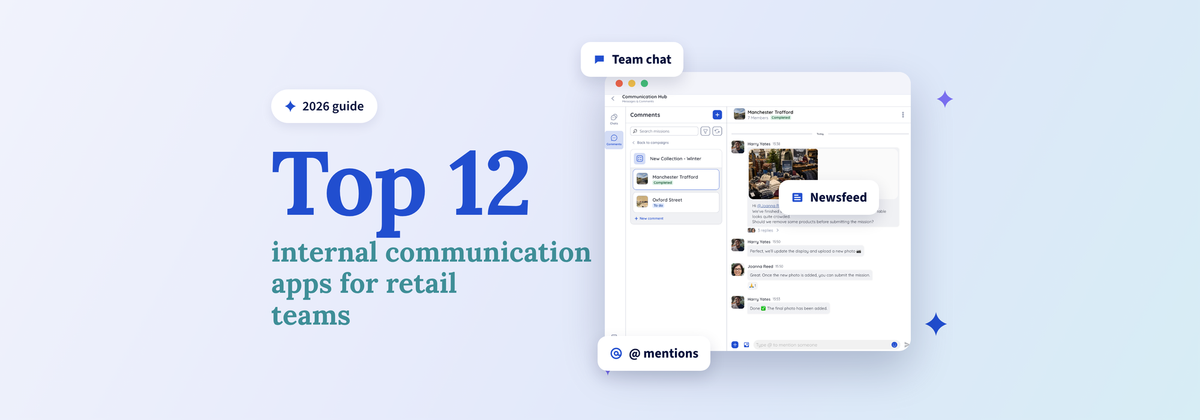
12 best internal communication apps for retail teams (2026)

KEY TAKEAWAYS:

  • Retail internal communication apps reach store teams on the phones they already carry, without a corporate email address.
  • The features that matter most are audience targeting, read tracking, two-way chat and translation.
  • The biggest difference is what happens after a message lands. It either stays as news or becomes a tracked task.
  • Communication-led platforms suit reach and culture. Operations platforms suit retailers who need updates to change what happens in store.
  • YOOBIC is our pick for multi-location retailers that need communication, tasks and learning in one app.

Most store associates don’t have a desk, a corporate email address or time to read a long memo between customers. Yet head office still needs every store to act on the same price change or safety update, often on the same day.

That gap is why retailers invest in internal communication apps. The right app reaches every associate on their phone. It sends each update only to the stores and roles it applies to, and it also shows head office whether the message landed.

The category is crowded, though, and the apps don’t all solve the same problem. Some are built for company news and culture. Some bundle chat with scheduling. Others connect each message to the work it describes. We compared 12 of the most widely used options for multi-location retail and set out where each one fits.

What is an internal communication app for retail?

An internal communication app for retail is a mobile platform that connects head office, field managers and store teams. It replaces scattered emails, printouts and group chats with a single channel built for people who work on their feet.

DEFINITION:

Scale is the reason a dedicated app matters. Store teams are part of a very large deskless workforce that most office tools were never designed to reach.

How we evaluated these internal communication apps

We judged each app on what store teams and head office need day to day, using vendor documentation. Six criteria shaped the list:

  • Reach without email: associates can sign in on their own phone, so hourly and seasonal staff join on day one.
  • Targeting: updates go to specific stores, regions, roles or shifts, not to everyone.
  • Read tracking: head office can confirm who has seen a critical update.
  • Two-way communication: chat, comments and feedback, so questions get answered fast.
  • Translation: multilingual teams read updates in their own language.
  • Link to execution: a message can become a task with a deadline and proof it was done.

Here’s how the 12 apps compare at a glance.

AppBest forStore task depthPricing model
YOOBICMulti-location retailers that need comms, tasks and learning in one appDeepQuote-based
AxonifyRetailers whose priority is frontline trainingModerateQuote-based
StaffbaseLarge mixed desk and frontline workforcesLightQuote-based
FirstupCommunication orchestration at enterprise scaleLightQuote-based
Workvivo by ZoomCulture-led programs and former Workplace from Meta customersLightQuote-based
BlinkMobile-first reach for shift-based teamsModerateQuote-based
LumApps (formerly Beekeeper)One platform for desk and deskless teamsModerateQuote-based
Microsoft TeamsRetailers already on Microsoft 365ModeratePublished per-user licenses
FlipSimple, passwordless access for European teamsModerateQuote-based
ZiplineOperational updates from HQ to storesDeepQuote-based
ConnecteamSmall chains and franchise groupsModerateFree plan for up to 10 users
TheatroHands-free voice coordination on the floorModerate/Quote-based

1. YOOBIC: best for connecting store communication to execution

YOOBIC is a frontline operations platform that brings communications, task management and learning into one mobile app. Head office posts to a company-wide newsfeed and targets updates by role, region or store. Read receipts show who has seen each critical update.

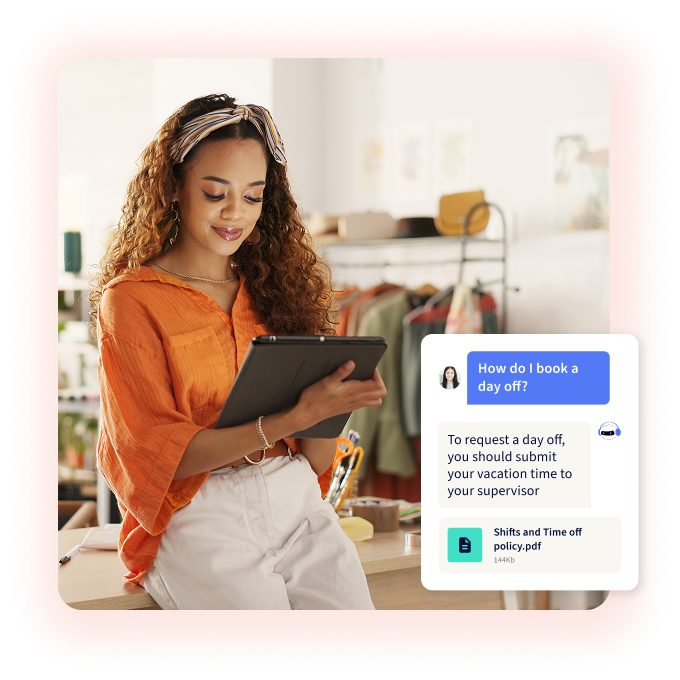
Store teams get 1:1 and group chat, peer communities, polls and auto-translated posts. It all sits in the same app they use for tasks and training, so there’s no second login. The AI Assistant answers common questions from your own policies and procedures, which cuts repeat questions to managers.

What sets YOOBIC apart is what happens after a message lands. A key update can arrive as a task with a deadline and photo proof. That way, head office sees whether an instruction was carried out, not just whether it was read.

Connection matters as much as speed. Fashion brand GANT uses the newsfeed and auto-translated comments to link store teams across countries. 94% of its employees visit the newsfeed monthly.

“With YOOBIC, our store associates in Shanghai are giving tips to associates in Paris. We truly believe this creates a sense of belonging and being part of a greater community.”

Maria Klingh, Global Retail Director, GANT

Best for: multi-location retailers that need every message to turn into consistent action in every store.

2. Axonify

Axonify is a frontline enablement platform best known for microlearning. Its communication tools include targeted announcements, push notifications and two-way feedback, alongside checklists and task workflows in its operations module.

Its main focus is training. The platform is built around short, adaptive learning that reinforces knowledge over time, with communication sitting alongside it.

Considerations: Teams that want communication as the main use case should check how central it is to the day-to-day experience. Scheduling relies on third-party workforce management tools.

Best for: retailers whose priority is frontline training and knowledge reinforcement, with communication as a supporting feature.

3. Staffbase

Staffbase is an employee communications platform with an employee app for frontline teams. Associates can sign in by SMS, QR code or magic link, without a corporate email address. Updates can be targeted by role and location, and the app offers automated translation in more than 110 languages.

Its strength is communication at scale. Staffbase is built for reach, governance and engagement analytics across a large workforce that mixes office and frontline roles.

Considerations: Staffbase leads with communication rather than store execution. Its task features are lighter than on retail operations platforms, so many retailers add a separate execution tool.

Best for: large retailers that need communication reach and governance across both office and store teams.

4. Firstup

Firstup is a workforce communication platform that delivers updates through an employee app, email, SMS and intranet. Messages can be personalized by role, region and shift, with analytics showing how each one performs.

Its focus is orchestration. Firstup suits communications teams that run many campaigns across channels and want detailed engagement data.

Considerations: Firstup is built for reach, not store execution. Retailers that need store tasks, audits or scheduling will need another system alongside it.

Best for: large retailers whose main need is multichannel communication and engagement analytics.

5. Workvivo by Zoom

Workvivo, acquired by Zoom in 2023, is an employee experience platform built around a social feed. It includes communities, recognition, surveys and livestreams, with targeting by role, location and department.

Workvivo was Meta’s only preferred migration partner when Workplace from Meta closed. That made it a common choice for organizations moving off Workplace before its June 2026 shutdown.

Considerations: Workvivo is an engagement and culture platform, not a store execution tool. Task features are light, so retailers that need audits or store workflows will run a second system.

Best for: culture-led communication programs and former Workplace from Meta customers.

6. Blink

Blink is a mobile-first employee app for deskless and shift-based teams. It combines a personalized feed, chat, forms and shift information, and associates can sign in without a corporate email address. Updates can be targeted by store, role and shift, with read confirmations for important posts.

Its strength is ease of access. JD Group, for example, built its JD Now employee app on Blink to reach store teams across its network.

Considerations: Blink is strongest on reach and culture. Store task and audit workflows are lighter than on retail operations platforms.

Best for: retailers whose main gap is reaching a large shift-based workforce.

7. LumApps (formerly Beekeeper)

LumApps completed its acquisition of Beekeeper in July 2025, combining an office intranet with Beekeeper’s frontline app. The frontline app covers feeds, chat, forms, checklists and shift information, with sign-in by QR code or phone number.

Its differentiator is scope. Organizations can run office and deskless teams on one platform, rather than two separate tools.

Considerations: The two products are still coming together, so it’s worth asking how the roadmap affects frontline features. Retail-specific workflows such as visual merchandising checks are less central than on retail operations platforms.

Best for: organizations that want one platform for office and frontline teams.

8. Microsoft Teams (frontline)

Microsoft Teams offers frontline licenses that add chat, channels, push-to-talk Walkie Talkie and the Shifts scheduling app. Head office can also publish tasks to store teams through Planner.

Its advantage is familiarity. Retailers already on Microsoft 365 can extend tools their office teams use every day to the store floor.

Considerations: Teams is built for collaboration, so store channels can fill up quickly without clear rules. Adoption on the floor depends on device setup and governance. Photo-verified tasks and similar retail workflows need extra setup or other tools.

Best for: retailers committed to Microsoft 365 that want one vendor for office and store communication.

9. Flip

Flip is an employee app for frontline teams with a newsfeed, channels, chat and read receipts. Associates can sign in without a password using a QR code or a passkey. Its Ask AI feature answers questions from company knowledge in more than 25 languages.

Its strength is simple access. Flip suits teams where many associates have never had a work login.

Considerations: Task and operational workflows are moderate, so retailers with complex store execution needs should test them closely.

Best for: retailers that want a simple, passwordless app with AI answers for store teams.

10. Zipline

Zipline is a retail operations communication platform. Head office publishes updates by district, store format and role, and tracks reads and task acknowledgments as they come in.

Its focus is the HQ-to-store channel. Zipline is built to turn operational communication into a clear list of what each store needs to do.

Considerations: Zipline is operations-led, so culture, recognition and learning are less central than on engagement platforms.

Best for: retailers that want operational updates and store tasks in one channel.

11. Connecteam

Connecteam is an all-in-one app for deskless teams that covers chat, updates, scheduling, time tracking, forms and training. Associates sign in with a phone number, and announcements can require a read confirmation.

Its strength is accessible pricing. Connecteam offers a free plan for up to 10 users. Paid plans start at $29 a month for the first 30 users.

Considerations: Connecteam is mainly used by smaller businesses. Larger retailers should check whether it handles their store hierarchy, integrations and governance needs.

Best for: small retail chains and franchise groups that want communication and scheduling in one low-cost app.

12. Theatro

Theatro is a voice-first platform for store teams, built around a wearable device with supporting apps. Associates can send hands-free broadcasts, private voice messages and help requests without stopping what they’re doing.

Its strength is speed on the floor. Voice suits moments when an associate needs backup at the register or an answer for a customer right now.

Considerations: Theatro needs hardware, and voice works best for in-the-moment coordination rather than detailed updates. Most retailers use it alongside an app for longer messages and training.

Best for: large-format stores that need hands-free coordination between associates.

What should you look for in a retail internal communication app?

Look for an app that reaches every associate without email, targets updates precisely and shows whether messages led to action. Feature lists look similar from the outside, so test each one against the realities of your stores.

Sign-in without a corporate email

Many store associates never get a company email account. Check that people can join with a phone number, QR code or single sign-on. That way, seasonal hires are reachable from their first shift.

Targeting by store, role and shift

A promotion for large formats shouldn’t land in a small-format store. Precise targeting keeps every feed relevant, and relevant feeds are the ones associates keep reading.

Read receipts and task confirmation

Read receipts tell you who saw an update. Task confirmation tells you who acted on it. For price changes, recalls and safety updates, you need both.

Two-way communication and translation

Store teams need a fast way to ask questions and flag problems. Translation matters too in multilingual teams, where an update only works if everyone understands it.

One app for the work, not just the news

Associates already juggle tills, handhelds and schedules. An app that combines communication with tasks and learning gets opened every shift. Updates are then seen in the flow of work.

INSIGHT

Why do store teams end up on WhatsApp?

Store teams end up on WhatsApp when official tools don’t reach the floor. Group chats on personal phones are fast and familiar. Managers start using them to cover shifts and pass on updates.

The problems build over time. Messages get buried in personal chats, and nobody knows which version of an instruction is current. Former employees can stay in groups after they leave. Head office also has no record of what was shared or read.

Manager relays have a cost too. When updates depend on store managers passing them on by hand, quality varies by store. The strain also lands on the people teams rely on most.

The closure of Workplace from Meta added another push. The platform went read-only in September 2025 and shut down on June 1, 2026. Retailers that relied on it had to find a new home for store communication.

A dedicated app fixes this with one secure channel that is as easy to use as a chat app. It also gives head office the targeting and tracking that group chats can’t.

Why YOOBIC is our pick for retail

Most apps on this list do one part of the job well. Some reach every associate. Some build culture. Some run store operations. YOOBIC connects all three, so an update reaches the right store, gets read and turns into work that’s verified.

The results show up in store operations, not just engagement metrics. PureGym brought seven platforms into one across more than 700 locations. Internal email fell by 58%, and the average task completion rate reached 95%. Michaels reduced voluntary turnover by 24% after giving store teams one place to collaborate and share best practice.

Comparing the wider category? Our guide to employee engagement software for retail covers platforms built for culture and retention. To plan the process first, start with a retail internal communications plan. Our guide to retail communication covers the wider strategy.

Reach every store and see what changed

Send targeted updates, confirm they landed and turn key messages into tasks with YOOBIC.
Frontline worker hero image

FAQs

What is the best app for employee communication?

For retail store teams, the best app for employee communication is a mobile app that works without a corporate email address. Look for targeting by store and role, read tracking and a way to turn updates into tasks. YOOBIC combines these with learning in one app for multi-location retailers. Tools like Microsoft Teams and Slack suit office-based teams.


What are some good internal communication apps for employees?

What are some effective internal communication platforms?

What are internal communication tools?

What are some apps similar to WhatsApp for business communication?

How to get employees to communicate better?

Categories
Employee Engagement

15 frontline employee survey questions that get honest answers

Your frontline teams see everything that happens in your stores. They also leave faster than almost any other workforce. Retail carries the highest voluntary turnover of any major sector, and most of those exits are avoidable.

The problem isn’t that store teams have nothing to say. It’s that most surveys never reach them, or never ask the right things. Better questions are the fix. Here are 15 frontline employee survey questions that surface honest answers, grouped by what they tell you. Each one is short, specific, and written for someone answering on their phone between tasks.

DEFINITION:

frontline employee survey

A frontline employee survey is a short, structured check-in that asks store and deskless workers how work is really going, from schedules and tools to recognition and safety, so HQ can act before problems turn into turnover.

Why frontline surveys need different questions

Most survey tools assume a worker at a desk with a company email and time to fill in 60 questions. Frontline teams have none of that. Around 78% of frontline employees have no corporate email address, so email surveys miss most of the people you need to hear from.

Shifts are busy and physical. A store associate can’t stop for 20 minutes mid-shift, so long surveys get rushed or skipped. And trust runs low. If a question feels traceable, people either stay quiet or give safe answers that tell you nothing. That’s why the questions below are short, plainly worded, and focused on the parts of the job that actually drive whether someone stays. If you want the wider picture first, here’s how to measure retail employee engagement and what tends to sit behind frontline turnover.

INSIGHT

There’s a wide gap between asking and acting. Only 48% of employees feel their feedback leads to change, while 85% of senior executives believe it does. That gap is what quietly kills survey participation over time.

The 15 questions

Use a simple 5-point agreement scale for the statement questions, from strongly disagree to strongly agree. Keep the open questions optional so no one feels forced to write an essay on shift.

Engagement and pride

1. I’m proud to tell people I work here. This is your fastest read on advocacy. When pride drops, people are already halfway out the door, so track it every time.

2. I’d recommend this store as a good place to work. A frontline version of eNPS. It’s honest because it asks about the store, not head office, and store teams answer that plainly.

Schedule and workload

3. My schedule is consistent enough to manage my life outside work. Erratic hours are one of the biggest reasons hourly workers quit. This question surfaces the stress before it becomes a resignation.

4. I get my schedule with enough notice to plan ahead. Advance notice is a practical, fixable driver of retention. A low score here points straight at a scheduling process you can change.

Tools and information

5. The tools and equipment I use on shift are in good working order. Broken handhelds and slow terminals cause daily friction. Frontline teams notice this long before HQ does, so ask them directly.

6. I have the mobile tools and information I need to help customers quickly. This separates a hardware problem from an information problem. Both hurt service, but each needs a different fix.

Communication and recognition

7. I get important updates about store goals and promotions in time to act on them. When updates arrive late or through the rumor mill, execution slips. A low score is an early warning on your comms, not just morale.

8. When I go above and beyond, I feel recognized by my team or manager. Recognition is one of the cheapest retention levers you have. This question shows whether it’s actually happening on the floor.

Their manager

Direct managers drive up to 70% of the variance in team engagement, so two questions here earn their place.

9. My manager treats me with respect and listens to my input. Respect and listening predict retention better than perks. If this dips in one store, you’ve found where to focus support.

10. I feel comfortable being honest with my manager about mistakes or challenges. Psychological safety is what makes every other answer trustworthy. Where it’s low, expect quiet problems you can’t yet see.

Safety and wellbeing

11. Our store has effective ways to handle unsafe or disruptive customer behavior. Frontline safety is physical, not abstract. A low score here needs a fast, visible response to keep trust intact.

12. I can take my breaks during a shift to rest and recharge. Missed breaks are a reliable early sign of understaffing and burnout. This question catches it before people burn out for good.

13. The demands of my job are manageable and don’t leave me burned out. Emotional strain builds quietly and then shows up as sudden resignations. Tracking it gives you time to act.

Growth, and the one open question

14. I can see a path to grow my career here. A missing growth path is a top driver of avoidable exits. Store teams who see a future are far more likely to stay.

15. What’s one thing we could change that would make your shifts better? One open question, kept optional, often surfaces the fix your scale questions miss. Keep it to one so people actually answer it.

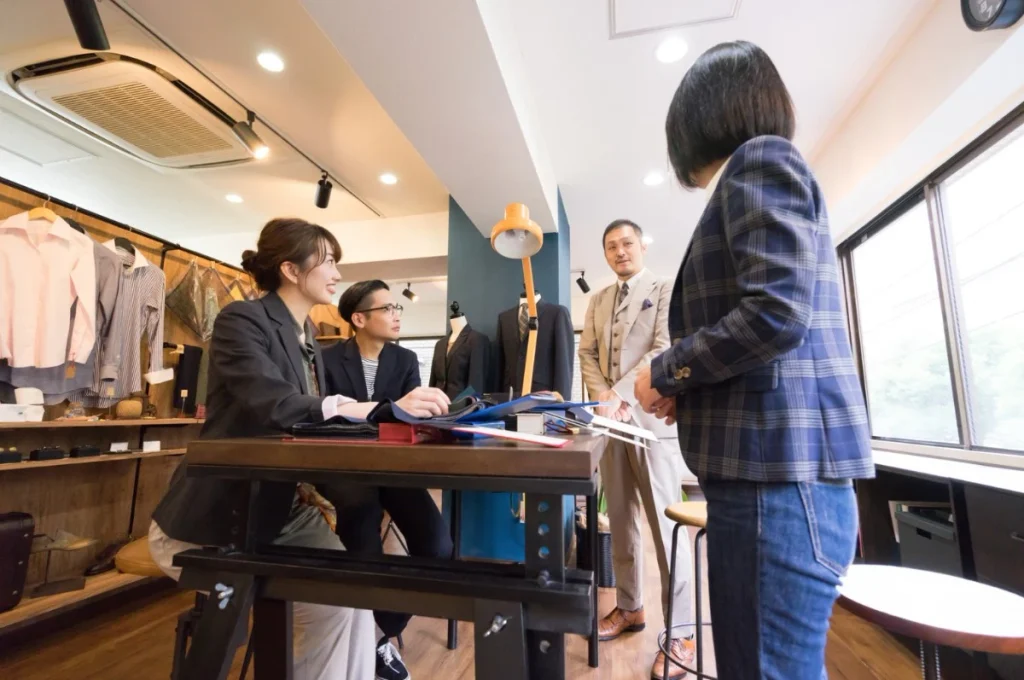
Retail store team in a suit shop

How to get honest answers, not just responses

Good questions only work if the way you ask them earns trust. Four things make the difference.

Ask on mobile, in the flow of work. Delivering a survey to the phone people already carry beats email by a wide margin, and it reaches the workers email never will. Keep it short. A one to five question pulse takes under two minutes and gets answered on shift, where a 60-question annual census gets abandoned.

Protect anonymity. Mask results below a handful of responses per team so no one can be identified, and never tie a manager’s bonus to raw scores, which only invites gaming. Then close the loop. Tell teams what you heard, what you’ll change, and what changed because of them.

INSIGHT

People don’t get survey fatigue so much as a lack-of-action fatigue. When feedback leads to visible change, response rates climb. When it leads to silence, they collapse.

How YOOBIC helps frontline teams get heard

YOOBIC puts listening in the same mobile app your teams use for tasks, communications, and learning, so surveys reach people in the flow of work rather than a back-office inbox. HQ can run pulse surveys and custom surveys, drop quick polls into daily workflows, and read sentiment through Moodscale, where employees pick an emoji for how they’re feeling about work. Communities, Chat, and the Newsfeed keep feedback flowing both ways, not just once a year.

Because surveys land as trackable tasks, they get done instead of buried. That’s the difference DFS saw when they moved feedback into the app.

The pattern repeats across teams that listen this way. Vitalia used YOOBIC surveys to bring colleagues into decisions, and 85% now report feeling more engaged. DFS and others have turned regular listening into action their store teams can see. It’s the same reason Lagardère Travel Retail builds surveys into every rollout.

Start with the 15 questions above, ask them on mobile, and act on what you hear. That’s how a survey stops being a form and starts driving retention. See how YOOBIC makes frontline listening part of the daily workflow with a quick demo.

Start retailing smarter

Team data presentation

Frequently asked questions

What are the 5 C’s of employee engagement?

The 5 C’s of employee engagement are care, connect, coach, contribute, and congratulate. Each one names a behavior managers can practice to make store teams feel valued: caring about their wellbeing, connecting people to each other, coaching them to grow, inviting them to contribute ideas, and congratulating good work. It’s a practitioner framework rather than a single academic model, so you’ll see a few variations, but this is the version used most widely.

What questions should be asked in an employee survey?

What are the 4 pillars of employee engagement?

What are the three P’s of employee engagement?

What makes a good employee survey?

Categories
Employee Engagement

How to fix the retail store manager burnout crisis: a 3-part framework

Retail store manager burnout isn’t a soft HR concern, it’s an operational crisis. Globally, manager engagement fell from 31% to 22% in a single year, the steepest drop on record. In an industry where store managers govern 70% of the variance in team engagement, that 9-point fall isn’t a manager problem. It’s a store performance problem, an execution problem, and a retention problem at the same time.

This piece names what’s driving the crisis, explains why it hits retail harder than any other sector, and gives retail operations leaders a three-part framework for fixing it. By the end, you’ll have a model you can apply to your own store network this quarter.

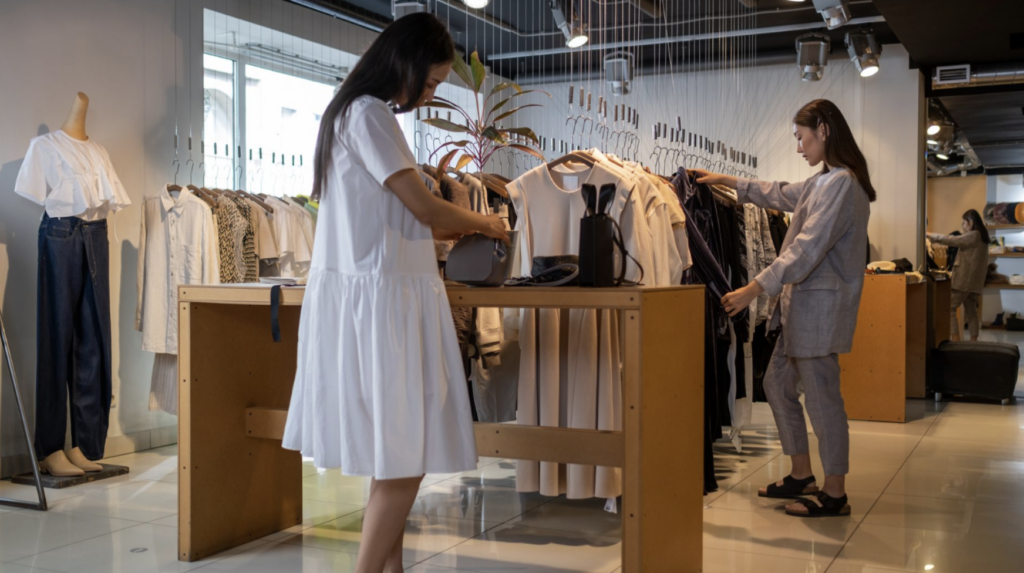
Two shoppers looking through neutral-toned clothing on racks and a central display table in a bright, minimalist store.

What is the retail store manager burnout crisis?

The retail store manager burnout crisis is the 2025 finding, identified in Gallup’s global workforce data, that the engagement of people-managers dropped from 31% to 22% in a single year. It marks the first time on record that manager engagement has fallen below the engagement of the teams they lead. Because managers account for around 70% of team engagement variance, the effect multiplies across store performance, customer experience, and voluntary turnover, and it lands hardest in retail.

What just happened: the data behind the collapse

Three numbers tell the story.

Gallup’s 2025 indicator put manager engagement at 22% globally, down from 31% the year before. That’s a 9-point drop in twelve months. For context, the previous decade of manager engagement data had moved within a 4-point band, so this year’s fall broke the pattern by more than double.

Gallup’s meta-analysis attributes 70% of the variance in team engagement to the direct manager. In plain terms, the manager is responsible for nearly three quarters of how engaged a team feels day to day. If you want to change a team’s engagement, you change the manager’s capacity to coach, recognize, and listen.

And the cost of losing one is steep. Replacing a store manager costs up to 200% of their annual base pay, and roughly 75% of manager-level departures are preventable, according to the Work Institute. For a retailer with hundreds of store managers, the exposure runs well into seven figures before the knock-on effect on team engagement is even counted.

Why it matters more in retail than anywhere else

The manager engagement collapse hit every industry, but it hit retail hardest.

The store manager is the only operational layer that touches customers, store associates, district leadership, and headquarters in the same week. They’re the translation point between what HQ wants and what actually happens on the floor. They’re the recognition source for their team, the feedback channel for their region, and the execution governor for their store. No other retail role carries this combination of responsibilities.

Three structural realities make the position uniquely fragile in 2026:

  • They’ve absorbed administrative load that didn’t exist five years ago. Most store managers now spend 10 or more hours a week chasing information across disconnected tools, compiling reports, and following up on tasks that should never have been duplicated.
  • They’re being asked to lead AI adoption on top of their existing role. Around 60% of leaders lack a clear AI vision, so the manager often becomes the de facto interpreter of new tools for their team without having had time to understand them.
  • They have less coaching time than at any point in the last decade. Margin pressure, tighter labor budgets, and expanded role definitions have squeezed the part of the week where managers can actually develop their teams. The thing they were hired for is the thing they have least time for.

When all three pressures stack, the engagement collapse becomes hard to avoid. The 22% figure isn’t surprising in hindsight. The surprise is that it didn’t happen sooner.

“Every minute a store manager spends buried in spreadsheets is a minute lost from improving the customer experience. With AI, we turn those insights into immediate action.”

Fabrice Haiat, Founder and CEO, YOOBIC

The engagement governor model: a framework for restoring the store manager

If 70% of team engagement variance sits with the manager, then restoring the manager is the highest-leverage operational move retail leaders can make this year. The engagement governor model, drawn from the research and from YOOBIC customers running this work in practice, has three components. Each one addresses a structural pressure named above. Together they restore the manager as the engagement governor instead of leaving them as the engagement bottleneck.

Capacity: strip out the administrative load that makes coaching impossible

Coaching time is the first thing to disappear when managers are overloaded, and the last thing they get back. The fix starts with an audit, not an aspiration. Map every recurring task a store manager performs in a typical week, and for each one ask whether it needs a manager at all, or whether it can be automated, delegated, or eliminated. Most retailers find that 30 to 50% of the manager’s week goes to tasks that fit one of those last three categories. Reclaiming half of that creates 5 to 10 hours of coaching time per manager per week. Across a 500-store network, that’s the equivalent of 250 to 500 full-time coaches without hiring anyone, simply by clearing the administrative load.

Clarity: replace the dashboard sprawl with a single daily action layer

A typical store manager is asked to interpret somewhere between 5 and 12 dashboards across sales, inventory, traffic, audits, training, and engagement. Most update on different cadences, some contradict each other, and none of them on their own tell the manager what to do next. Clarity means collapsing that noise into a single prioritized view. Not another dashboard, but a daily action layer that says: here are the three things that matter most for your store today, based on yesterday’s data. The store doesn’t need more reporting, it needs the report to become a decision.

Coaching authority: equip managers with the rituals and decision rights to act in the moment

Capacity creates time and clarity creates focus, but neither matters if the manager lacks the authority or the structured rituals to act on what they see. Coaching authority means giving managers recognition tools, feedback channels, and decision rights so they can respond to their team without escalating every action to HQ. In practice, that looks like a small monthly recognition budget per store, a structured stay interview cadence, the ability to flex schedules within agreed limits, and a connected platform where the manager’s actions are visible across the network. The point is to make the manager the engagement engine, not just the engagement reporter.

Why the three Cs work together

Capacity without clarity creates time the manager can’t use. Clarity without authority creates a sharper picture of what the manager can’t change. Authority without capacity asks someone to fix everything in time they don’t have. The three components only work as a system. Solve for one and you get marginal improvement. Solve for all three and you get the engagement governor back.

What restoring the manager looks like in practice

Two examples from YOOBIC customers running this work at scale.

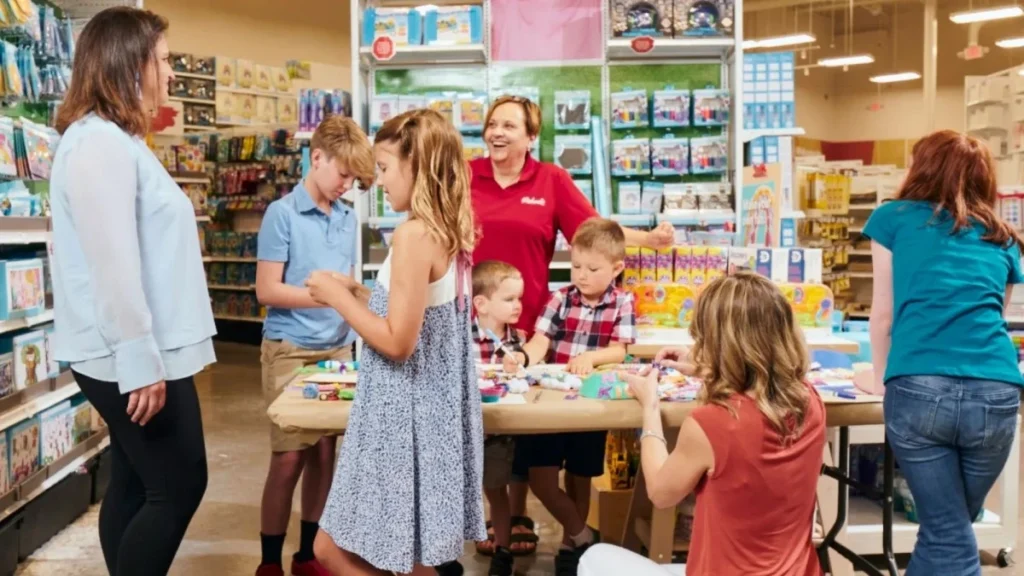
Michaels store associate leading a crafting activity at an in-store table with customers

Michaels: manager time recovered and turnover down

On capacity, Michaels recovered around 4,000 hours of district manager time and saved more than 223,000 hours a year across its 1,350 stores, redirecting management time from checklist administration to the sales floor and generating $1.8 million in incremental revenue. On clarity, store managers stopped jumping between systems and worked from a single mobile platform that pulled tasks, communications, and learning into one feed. On coaching authority, managers gained structured recognition and instant shoutout tools. Alongside investment in frontline learning, Michaels reduced voluntary turnover by 24%, saving over $8 million a year, and lifted engagement from around 30% to between 80 and 90% within weeks of launch.

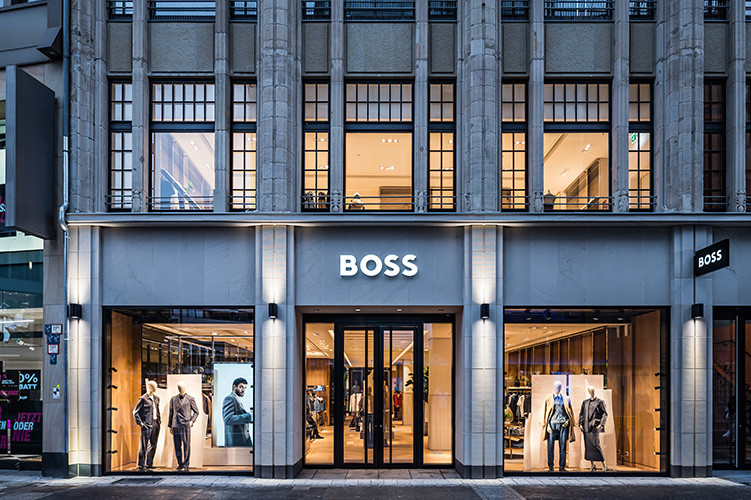
Exterior of a BOSS store lit up in the evening, with menswear and womenswear displayed across large window fronts.

Hugo Boss: a 3.2% sales uplift from restoring the manager’s clarity layer

In a proof of concept, store teams using YOOBIC Store Manager Copilot delivered a 3.2% sales uplift, driven by AI-recommended actions adopted at store level. The Copilot interprets store data, prioritizes the actions that matter most that day, and delivers recommendations in plain language rather than dashboards. The mechanism is concrete: an average of 2.4 commercial opportunities per store each week that most networks leave undetected. This is the clarity component made tangible. The manager moves from interpreting ten dashboards to acting on three prioritized recommendations, and the time that frees up becomes coaching time, recognition time, and customer time.

The AI question: part of the answer, not part of the problem

There’s a version of the AI-in-retail conversation that frames the technology as a threat to store managers. The data tells a different story.

In 2025 and 2026 workforce surveys, 49% of employees were optimistic about AI and 45% reported using it daily or weekly, saving more than 30 minutes a day. The 23% who worried about AI replacing their job were concentrated in roles where AI had been deployed to monitor performance, not to reduce administrative load.

For store managers specifically, the right AI deployment isn’t about replacement, it’s about returning capacity. When AI handles report compilation, data interpretation, and routine task prioritization, the manager gets back the coaching time the role was supposed to involve in the first place. That’s the version of AI that fixes the engagement collapse rather than accelerating it.

The retailers that will thrive through this period are the ones that deploy AI to strip load off the manager, not to add another layer of oversight on top of their role. That’s the AI question retail leaders should be asking, and it’s the one Store Manager Copilot was built to answer.

Five moves to start restoring your store managers this quarter

  • Run a one-week time audit on three store managers. Categorize every task as must-do-by-manager, automatable, delegable, or eliminable. The result is your capacity baseline.
  • Cut the manager’s dashboard count in half. If a manager opens more than five reporting tools in a typical day, the clarity component is broken.
  • Give every store manager a small monthly recognition budget, even $50. Coaching authority needs operational backing, not just permission.
  • Add a structured stay interview cadence at the manager level. The 200% replacement cost makes this the single highest-ROI listening move you can run.
  • Pick one piece of frontline AI to deploy in service of the manager, not the executive. The test is whether the manager gets time back, not whether HQ gets more reporting.

Restore your store managers as your engagement governors

YOOBIC helps retailers like Michaels, Mattress Firm, and Hugo Boss strip administrative load off store managers, narrow the dashboards they have to interpret, and give them the coaching tools to act on what they see. Book a 20-minute walkthrough to see Store Manager Copilot in action.

Want more on supporting frontline managers? Explore the YOOBIC AI-powered performance platform, listen to Frontline Fridays, or browse our customer stories.

Book a demo and find out how

Avoid wasted hours, blind spots
and lost revenue with YOOBIC

Frontline worker hero image

Frequently asked questions

What is the retail store manager burnout crisis?

It refers to the 2025 finding in Gallup’s global workforce data that the engagement of people-managers dropped from 31% to 22% in a single year, the steepest fall on record. In retail specifically, because store managers govern around 70% of team engagement variance, the crisis has a compounded effect on store performance, customer experience, and turnover. It’s the most consequential workforce trend in retail operations heading into 2026.

Why is retail store manager engagement so important?

What’s causing store manager burnout in retail?

How much does it cost to replace a retail store manager?

How do you fix store manager burnout?

Categories
Employee Engagement

Top 10 employee engagement software for retail teams (2026)

Retail runs on its frontline teams, and right now those teams are checked out. Gallup’s 2026 State of the Global Workplace puts global employee engagement at 20%, its lowest level since 2020. For store associates the picture is worse. Fully on-site workers, the people who staff the shop floor, report an engagement rate of just 17%. Disengaged teams don’t just feel flat. They sell less, lose more stock, and leave.

That last point is the expensive one. Frontline retail attrition averages 81% a year, according to Fountain’s State of the Frontline Workplace report. Most of that churn happens early. Around 35% of departures occur within the first 90 days, and replacing a single skilled associate costs $10,000 or more by Deloitte’s estimate. For a chain running hundreds of stores, early-tenure turnover is one of the largest controllable costs on the floor.

Engagement is also one of the clearest levers retailers have. Gallup’s meta-analysis shows highly engaged stores outperform disengaged ones by 18% in sales and 23% in profitability, with lower shrink and lower absenteeism. The problem is reach. Around 89% of frontline workers say they feel disconnected from corporate updates, and most still get key information by word of mouth on shift. Employee engagement software exists to close that gap between headquarters and the store floor.

The category is broad, and not every platform solves the same problem. Some are retail operations platforms that tie engagement to daily tasks, learning, and store visibility. Some are frontline super-apps that bundle communication with scheduling, forms, and surveys. Others are communication-led experience platforms built for reach and analytics rather than store execution. We evaluated the leading options on frontline usability, mobile-first design, engagement and retention impact, and how well they fit real multi-location retail teams.

1. YOOBIC: best overall for retail employee engagement

YOOBIC is the best employee engagement software for retail teams because it connects communication, learning, and recognition to daily store execution in one app. That combination is what makes engagement stick. Communication, learning, and tasks live in one mobile app that store teams open every shift, so associates aren’t logging into a separate tool to feel connected. They stay connected inside the app they already use to do their jobs.

YOOBIC ranks #1 on G2 across Retail Execution and Retail Task Management, and was named in six 2025 Gartner Hype Cycle reports, including Frontline Worker Technologies. Over 350 global brands use the platform in 21+ languages, including Boots, GameStop, Michaels, Morrisons, Lidl, and Lacoste.

Communication that reaches every associate

YOOBIC’s newsfeed gives HQ a direct line to every store, with targeting by role and location and clear visibility into who has seen each update. That reach is where engagement starts. GANT reached 94% monthly newsfeed visitors and a 64% average sentiment score. francesca’s saw 71% active newsfeed users and a 4-point lift in eNPS. When associates can see what’s happening across the business, they feel part of it.

Recognition and connection that build belonging

Engagement grows when associates feel seen and connected to each other, not just managed from above. YOOBIC’s communities let store teams share wins, ask questions, and learn from peers across the network.

“With YOOBIC, our store associates in Shanghai are giving tips to associates in Paris. We truly believe this creates a sense of belonging and being part of a greater community.”

Maria Klingh, Global Retail Director, GANT

Learning that drives adoption, not just completion

Training only builds engagement if associates actually use it. YOOBIC delivers mobile microlearning that store teams complete on the floor, with gamification and recognition built in. GANT lifted course completion by 30%. UNTUCKit kept 79% of store employees active on training.

YOOBIC’s AI course creator also turns existing documents into modules in minutes, which saved Longchamp’s team 10 hours a week on content creation and gave that time back to coaching.

Engagement that shows up in retention

The real test of engagement is whether people stay. Michaels lifted store engagement from 30% to 80-90% and cut voluntary turnover by 24%, worth more than $8M a year. As Lagardère Travel Retail put it, engaging staff is what drives retention afterwards.

Best for: Multi-location retailers that want frontline engagement tied directly to learning, communication, and store execution in one mobile app.

2. Axonify

Axonify is a frontline enablement platform that combines microlearning with communication, task management, and store audits. It delivers short, daily training sessions with reinforcement and gamification. In retail it’s strongest on onboarding, product knowledge, and consistent execution driven by what associates actually retain. Communication is targeted by role and location, and sentiment tracking gives HQ a read on how messages land. Named customers include Kroger, Walmart, Foot Locker, and Bloomingdale’s.

Its clearest differentiator is learning science. The pitch isn’t just reaching stores. It’s changing frontline behavior through repeated, measurable training.

Considerations: Axonify is designed for large enterprises, which can make it a heavier fit for mid-market teams.

3. WorkJam

WorkJam is a frontline orchestration platform for deskless teams. It combines communication, task management, learning, and shift management in one app, with schedule-aware task assignment and a marketplace for shift swaps and open shifts. That connection between work and the actual schedule is its main strength. Named customers include Ulta Beauty, TJX, Marks & Spencer, and American Eagle Outfitters. It supports over 50 languages, which matters for large multi-country workforces.

Its differentiator is depth of workforce orchestration. WorkJam ties communication, tasks, and staffing together so work lands in the context of each associate’s shift.

Considerations: That breadth brings complexity. Reviewers mention app glitches, video lag, and a scheduler that can feel clunky, along with a learning curve during setup.

Retailers who want engagement and communication without a full workforce-management layer may find it heavier than they need.

4. Zipline

Zipline is a retail-specific operations platform focused on HQ-to-store communication and task coordination. It brings together communication, tasks, learning resources, store audits, and analytics, with strong district and regional visibility into who has read a message and completed a task. Named customers include Sephora, Bath & Body Works, L.L.Bean, and Warby Parker.

Its differentiator is retail specificity. The platform is built around read-and-do workflows and gives field leadership clear visibility into execution across stores.

Considerations: Zipline centers on communication and coordination more than deep learning or native scheduling. Retailers who want structured microlearning, adaptive paths, or a built-in labor-scheduling engine will likely need to add another system. Some reviewers note the interface can feel busy when a lot of information arrives at once.

5. Connecteam

Connecteam is an all-in-one management app for non-desk teams, spanning chat, scheduling, time tracking, task management, training, surveys, and recognition. It covers a lot of ground in one mobile app, with free access for small teams. It markets across many industries, including retail, with customers such as FOX Group and Edible Arrangements.

Its differentiator is breadth at the lower end of the market. For small and mid-size operators, Connecteam bundles scheduling, communication, training, and recognition without enterprise pricing.

Considerations: Most of Connecteam’s user base is small businesses, and it’s less retail-specialized than platforms built for store execution. It lacks retail-specific workflows like merchandising verification, planogram checks, or store audits. Reviewers also note pricing can climb as teams grow past the free tier.

Best for: Small and mid-size retail operators who want a broad, affordable frontline app across communication, scheduling, and training.

6. Blink

Blink is a mobile-first employee experience platform for deskless and shift-based teams. It bundles communication, stories, forms, surveys, recognition, and shift information into one app, with no-email onboarding and integrations for systems like Workday and UKG. Named customers include Domino’s, McDonald’s, and JD Group.

Its differentiator is ease of adoption. Blink is built as a simple digital front door for workers who don’t use corporate email, and its case studies emphasize daily use and quick sign-in.

Considerations: Blink is strongest on reach, culture, and communication rather than store execution. Task and audit workflows are lighter than on retail operations platforms, and some reviewers mention feed clutter and admin friction around permissions and integrations. Retailers who need execution depth will likely pair it with another tool.

Best for: Retailers whose main gap is communication reach and culture across a deskless workforce, rather than store execution.

7. Lumapps (previously Beekeeper)

LumApps is an employee experience platform with a frontline app at its core, covering company communication, chat, tasks, forms, workflows, surveys, and shift information, with benchmark analytics on top. The frontline capability comes from Beekeeper, which LumApps acquired and folded into its wider platform. It serves frontline teams across industries, including retail, with named examples such as Royal Farms and Chalhoub Group.

Its differentiator is that combined scope. LumApps pairs the former Beekeeper frontline experience with an office-facing intranet and communications suite, so buyers can run desk and deskless teams on one platform.

Considerations: Training isn’t as prominent as on learning-led platforms, and much of the frontline training story relies on integrations rather than native modules. The Beekeeper-into-LumApps transition is worth weighing for teams that want a pure-play frontline vendor with a clear standalone roadmap. Recognition is supported through communication features rather than a dedicated module.

8. MangoApps

MangoApps is a unified workforce platform that has moved closer to a frontline super-app. It spans targeted communication, recognition, surveys, communities, training, scheduling, digital checklists, and AI search in one place. Named retail customers include PetSmart, AutoZone, and Superdrug.

Its differentiator is breadth. MangoApps covers communication, operations, and people workflows across desk and frontline teams, with analyst recognition across several firms.

Considerations: The same breadth is worth testing. Buyers should confirm how much depth is genuinely retail-specific versus general platform configuration, particularly for store execution and merchandising. Some reviewers note friction around group access and compatibility with certain systems.

9. Staffbase

Staffbase is an employee communications platform with a growing frontline angle. It’s strongest on internal communications at scale, with an employee app, targeted multichannel delivery, surveys, and analytics, plus a newer frontline task layer and AI-powered knowledge delivery. It reaches deskless workers without corporate email, which is the core requirement for store teams. Named customers span large desk-and-frontline workforces, including retail names like Max Mara.

Its differentiator is communications maturity. Staffbase is built for reach, governance, and measurable engagement across a big, distributed workforce, paired with a frontline app to bring store teams into the same network.

Considerations: Staffbase leads with communication, not store execution. Compared with retail operations platforms, its scheduling, native learning depth, and store-specific workflows like audits and merchandising are lighter, so retailers who need execution will pair it with another system. Training is supported more through partners than as a deep native module.

Best for: Large retailers whose main need is communication reach, engagement measurement, and governance across a mixed desk and frontline workforce, rather than in-store execution.

10. Firstup

Firstup is a workforce communication platform rather than a store operations tool. It’s strongest on audience targeting, personalized journeys, an employee app, intranet, and analytics, with AI-assisted content creation.

Its differentiator is communication orchestration at enterprise scale. Firstup fits retailers who want personalization, omnichannel delivery, and detailed engagement analytics across a large workforce. Staffbase sits in a similar space, pairing mature enterprise communication with a newer frontline task layer, and fits the same buyer profile.

Considerations: Firstup is built for reach and communication, not store execution. Retailers who want native scheduling, retail audits, or store task workflows will need integrations or a second system.

Best for: Large retailers whose core need is communication reach, personalization, and engagement analytics rather than in-store execution.

How to choose the right employee engagement software

The platforms above solve different problems, so the right choice starts with naming yours. Work through these questions before you compare feature lists.

Start by naming the problem you’re solving

Most retail engagement projects are really one of three things. A communications problem, where updates don’t reach the floor or land too late. An engagement and culture problem, where associates feel disconnected and leave. Or an execution problem, where teams know what to do but don’t do it consistently. The answer changes your shortlist. Communication-led platforms fit the first. Super-apps and experience platforms fit the second. Retail operations platforms fit the third, and often all three at once. Deciding this first saves you from buying a strong tool that solves the wrong gap.

Design for mobile-first reality

Around 73% of frontline workers get their work information mainly through a mobile device. Any platform that needs a desktop login, a corporate email address, or a VPN loses adoption on day one. The friction is real. In one 2026 study of UK retailers, only 5% of frontline staff said they hit no major friction with in-store technology. Evaluate each platform on how it feels in an associate’s hand, not how it looks in a demo.

Favor pull utility over corporate push

The platforms with the highest adoption give associates a reason to open the app themselves. Checking a schedule, swapping a shift, finding an answer, completing a quick task. Push-only communication gets treated as noise. Pull utility becomes a daily habit, and that habit is what carries the engagement content along with it.

INSIGHT

The platforms with the highest frontline adoption aren’t the ones with the most features. They’re the ones associates open every shift because the app makes their day easier.

Build recognition into the daily flow

Recognition drives retention when it happens often and close to the moment. Annual awards lag too far behind the effort to matter. Platforms that put peer and manager recognition into the daily feed, so a shout-out for a solved problem or a hit target shows up right away, see stronger morale and lower intent to leave. Look for recognition that lives where associates already are, not in a separate quarterly process.

Count the cost of a fragmented stack

Many retailers end up with one app for communication, another for training, and a spreadsheet for tasks. Each has its own login, its own admin overhead, and its own data silo. The hidden cost isn’t just the subscriptions. It’s lower adoption, and the inability to connect engagement to outcomes. Did the recognition program reduce turnover? Did the training improve execution? If the data lives in separate systems, you can’t tell. A single app your teams actually use is worth more than a broader set of tools they avoid.

Equip store managers, don’t just enforce

Store managers drive a large share of the performance gap between locations, and they make or break any rollout. A platform that adds admin to their day gets quietly ignored. One that takes work off their plate, by automating scheduling, task tracking, and reporting, frees them to coach on the floor. Give managers a few hours back each week and they become the champions who carry adoption across the team.

Measure engagement and retention, not just completion

Completion rates tell you associates clicked through content, not that anything changed. The platforms that prove their worth measure deeper. Newsfeed and community activity, sentiment over time, and the outcomes that follow, like turnover, retention past the first 90 days, and sales. Ask each vendor how they connect engagement to those results, and ask for references at your scale.

YOOBIC logo terracotta

Why YOOBIC is the best choice for retail engagement

Most platforms on this list do one part of the job well. Some communicate to stores. Some build culture. Some run execution. YOOBIC connects all three, and that’s what makes engagement last on the floor.

The results show up where they matter. Michaels lifted engagement from 30% to 80-90% and cut voluntary turnover by 24%. GANT reached 94% monthly newsfeed visitors and 30% higher course completion. These aren’t communication metrics. They’re engagement outcomes tied to retention, learning, and connection between HQ and the store floor.

For multi-location retailers who want frontline teams that stay, learn, and perform, YOOBIC brings engagement and execution together in one app store teams actually use.

YOOBIC is the AI-powered retail operations platform trusted by 350+ global brands. Request a demo to see how YOOBIC keeps your frontline teams engaged, connected, and ready for every shift.

Book a demo and find out how

Avoid wasted hours, blind spots
and lost revenue with YOOBIC

Frontline worker hero image
Categories
Employee Engagement

How to measure retail employee engagement: a 4-layer framework for store performance

Most retailers measure employee engagement with one annual survey. It produces a number, the number lands in a slide deck, and nothing operational changes. By the time the next survey runs, the data is twelve months old and the disengaged associates have already left.

This piece lays out a modern framework for measuring retail employee engagement, built on research from Gallup, Workhuman, Engage for Success, the Work Institute, and Qualtrics. It covers what to measure, how often to measure it, and how to turn engagement data into operational decisions that affect store performance.

How to measure retail employee engagement

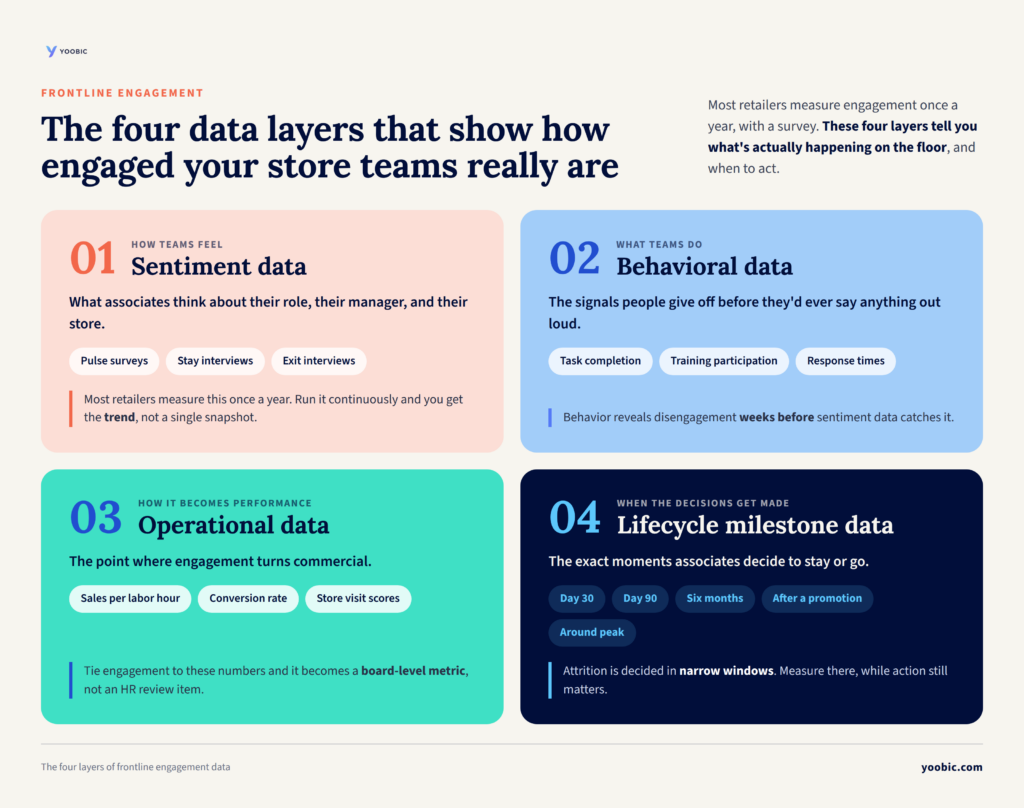
You measure retail employee engagement by combining four data layers instead of relying on one annual survey: sentiment, behavior, store operations, and lifecycle milestones. Used together, these layers can predict turnover with up to 85% accuracy, early enough for store and district managers to act.

Sentiment data comes from pulse surveys, stay interviews, and exit interviews. Behavioral data comes from task completion, training participation, and communication response times. Operational data comes from sales per labor hour, customer compliments, and store visit scores. Lifecycle milestone data comes from key tenure points, including day 30, day 90, six months, post-promotion, and peak periods.

Why engagement measurement breaks down in most stores

The annual engagement survey is the dominant measurement tool in retail, and it’s the wrong one for three reasons.

The first problem is cadence. By the time an annual survey is fielded, analyzed, and reported, the data is already old. The associates who responded are no longer the same associates on the floor, and the conditions they described no longer match the conditions in front of you.

The second problem is format. Surveys produce sentiment scores, not operational signals. A 72% engagement score tells you nothing about which store, which behavior, or which intervention to fix. The score sits inside HR while the action sits inside operations, so the data never makes the trip between them.

The third problem is relying on a single layer. Most retailers measure sentiment and ignore the other three. Behavioral, operational, and lifecycle data all carry stronger predictive signals than sentiment does. Used together, they predict turnover with up to 85% accuracy. Used alone, sentiment predicts very little in time to act on it.

YOOBIC infographic showing the four data layers that reveal store team engagement: sentiment data (how teams feel, from pulse, stay, and exit interviews), behavioral data (what teams do, like task completion and training participation), operational data (sales per labor hour, conversion, store visit scores), and lifecycle milestone data (day 30, day 90, six months, post-promotion, and peak).

The four-layer engagement measurement framework

Effective measurement combines four data layers, and each one answers a different question. Together they form a complete operational picture.

1. Sentiment data: how store teams feel about the work

Sentiment data tells you what associates think about their role, their manager, and their store. It comes from pulse surveys, stay interviews, and exit interviews. It’s the layer most retailers already measure, but most measure it once a year instead of continuously. Quarterly pulse surveys give you trend data instead of a single point. Stay interviews at tenure milestones surface specific operational issues you can act on, and exit interviews diagnose the patterns that drive turnover.

2. Behavioral data: what store teams actually do

Behavioral data reveals disengagement before sentiment data does. It includes task completion rates, training participation, communication response times, and how often frontline teams post and contribute. An associate who stops completing optional training has often disengaged weeks before they’d admit it on a survey. A team whose response time to HQ has doubled is signaling something the next pulse survey won’t catch for months.

3. Operational data: how engagement becomes performance

Operational data is where engagement becomes commercial. It includes sales per labor hour, conversion rate, customer compliments captured, and store visit scores. Engagement measured on its own is an HR metric. Engagement measured against sales per labor hour, customer satisfaction, and absenteeism by store is an operations metric. Retailers that connect the two turn engagement into a board-level conversation rather than an HR review item.

4. Lifecycle milestone data: when engagement decisions are made

Lifecycle milestone data captures associates at the exact moments engagement decisions get made: day 30 post-onboarding, day 90, six months, after a promotion, and before and after peak periods. Most retail attrition is decided in narrow windows, such as the first six weeks, the first promotion that doesn’t come, or the first peak that breaks them. Measuring at these moments gives you actionable intelligence while action still matters.

Why all four layers matter

Each layer on its own is incomplete. Sentiment without operational data is opinion. Operational data without sentiment is a black box. Behavioral data without lifecycle milestones produces patterns no one can interpret. The four layers only work as a system. Measure one and you get noise. Measure all four and you get a signal you can act on.

How often to measure each layer

Cadence matters as much as the metric, and the right cadence is different for each layer.

  • Sentiment data: quarterly pulse surveys, plus stay interviews at every tenure milestone, plus exit interviews on every voluntary departure. An annual survey gives you one data point and leaves the next 364 days blind.
  • Behavioral data: continuously, drawn from the platforms store teams already use. It’s the cheapest layer to collect and the easiest to ignore, so don’t ignore it.
  • Operational data: weekly or monthly, mapped to engagement by store. A weekly view shows you what’s changing, and a monthly view shows you what’s stable.
  • Lifecycle milestone data: at the specific moments named above. The cadence is the milestone, so skip the milestone and the layer disappears.

“The worst thing you can do is get feedback and not do anything with it. That's where the annual survey doesn't serve its purpose. Quarterly is great, because you can track progress, you can see if you're addressing the challenges, and you're learning and acting in real time.”

Steve Worthy,, Founder & CEO of Worthy Retail, on the Frontline Fridays podcast

How to improve retail employee engagement from the data

You improve retail employee engagement by acting on what you measure. Pair each engagement metric with a store performance metric, and put the data in front of store and district managers. Then show associates what changed because of their feedback. Those three practices turn engagement data into store performance.

Tie engagement metrics to store-level outcomes

Pair every engagement metric with a store performance metric. Track sales per labor hour against monthly engagement score. Track customer compliments against quarterly recognition activity. Track absenteeism against pulse survey results. When the two move together, engagement stops being an HR concept and becomes a P&L concept.

Make the data visible to operators, not just analysts

Engagement data that lives inside HR systems never reaches the people who can act on it. The store manager, the district manager, and the regional operations lead all need to see the engagement signal for their stores in the same view as their sales numbers. Platforms like YOOBIC make this practical by consolidating task execution, communications, recognition, and engagement signals into a single mobile platform that store teams already use every day. The store manager sees the engagement signal next to the task list, not in a separate HR report.

Close the loop visibly

Engagement data is only useful if associates can see what changed because of it. When a pulse survey result drives a specific operational change, and that change is credited publicly to the survey, the next survey gets more honest answers. Recognition reinforces the same loop: high-quality recognition has a 0.455 correlation with engagement in joint Gallup and Workhuman research, and well-recognized employees are 45% less likely to have turned over two years later. When the data drives nothing visible, response rates drop and data quality collapses.

Store execution impacts every margin decision

Give frontline teams the tools, visibility, and guidance
to execute consistently across every location.

What good measurement enables in retail operations

Retailers that get measurement right unlock four capabilities that survey-only retailers can’t match.

  • Predictive turnover modeling. Lifecycle-based listening can predict turnover with up to 85% accuracy, which makes most attrition preventable rather than reactive.
  • Store-level engagement comparison. Continuous measurement shows which stores are improving and which are slipping, in time to investigate the difference. Survey-only measurement misses this entirely.
  • Interventions targeted by data. Knowing which layer is breaking, whether sentiment, behavior, operations, or lifecycle, tells you which intervention to deploy. Generic engagement initiatives waste budget, and data-targeted ones move metrics.
  • Connection to commercial outcomes. Engagement measured against sales, customer satisfaction, and absenteeism becomes a board-level conversation, not an HR project, and that conversation unlocks the investment engagement work usually struggles to win.

YOOBIC customers run this work in practice. Michaels combined sentiment, behavioral, and operational data on a single platform, branded internally as Mik Check. Engagement climbed from around 30% to between 80 and 90%, task completion improved by 30%, and district managers saved roughly 4,000 hours. Lidl uses continuous operational and behavioral data to track engagement at the store level across its supermarket network, replacing the periodic survey model with an always-on signal.

How to upgrade your engagement measurement this quarter

  • Pair one engagement metric with one store performance metric. Sales per labor hour against monthly engagement score is the strongest starting pair.
  • Replace your annual survey with quarterly pulse surveys, and move the freed-up budget into behavioral and operational data.
  • Add stay interviews at day 30, day 90, and six months for every new hire. The 85% turnover prediction accuracy lives in this layer.
  • Move engagement data out of HR-only dashboards and into the platform store managers already use daily.
  • Pick one piece of frontline feedback you can act on this month, and publicize the change. Visible loop closure lifts the quality of every future measurement.

Book a demo and find out how

Avoid wasted hours, blind spots
and lost revenue with YOOBIC

Frontline worker hero image

Frequently asked questions

How do you measure retail employee engagement?

Modern retail engagement measurement uses four data layers together: sentiment from pulse surveys, stay interviews, and exit interviews; behavior from task completion, training participation, and communication response times; operations from sales per labor hour, customer compliments, and store visit scores; and lifecycle milestones at day 30, day 90, six months, post-promotion, and peak periods. Annual surveys alone miss most of the signal. The combined four-layer approach predicts turnover with up to 85% accuracy.

What’s wrong with annual engagement surveys?

How often should retailers measure employee engagement?

What’s the difference between engagement data and engagement metrics?

Can engagement data predict retail turnover?

Categories
Employee Engagement

What is a stay interview? The retail manager’s alternative to annual employee surveys

A stay interview is a short, structured conversation between a manager and a current employee, designed to surface what keeps them in the role and what might tempt them to leave. Unlike an exit interview, a stay interview happens while there’s still time to act on the answers. In retail, it’s the most reliable early signal of preventable turnover.

Exit interviews tell you why people left, and by then it’s too late to do anything about it. Stay interviews tell you why people stay, and what would tip them toward leaving, while you can still act on it.

This piece defines what a stay interview is, gives you a question template that works in retail, and explains the right cadence for shift-based teams. By the end, you’ll have a format your store managers can use in their next 1:1.

Why stay interviews matter more in retail than anywhere else

Voluntary turnover in retail and wholesale sits between 26.7% and 32.9%, the highest of any major industry. The Work Institute estimates that 63% of those departures are preventable through targeted management support and clearer development pathways. That preventable percentage is the entire business case for stay interviews. Roughly two thirds of the retail associates who quit this year could have stayed if someone had asked the right questions in time.

The financial exposure is significant. Replacing a frontline retail worker costs around 40% of their annual base pay. For a multi-location retailer, that’s a multimillion-dollar leak that most engagement programs aren’t built to fix.

There’s a measurable upside too. Organizations running lifecycle-based listening strategies, including stay interviews at key tenure milestones, can predict and reduce turnover with up to 85% accuracy.

The three-question stay interview template

The best stay interview questions are simple, open-ended, and easy for a store manager to ask in a 15-minute conversation. Most successful retail managers run their stay interviews around three core questions.

1. What keeps you working here?

This question surfaces what’s working, and the answer tells you what to protect. If three associates in a store mention the same reason, you’ve found something operational, not personal. It might be the schedule, the manager, the customer base, or the discount. Whatever it is, it’s a retention asset, and you should treat it as one.

2. What could we do to best support you?

This question surfaces what’s missing, and the answer tells you what to fix. The best answers are specific: a tool that doesn’t work, a process that wastes their time, a request that hasn’t been heard. Frontline workers know exactly what’s broken. Most retailers just don’t ask.

3. Do you have the tools to do your job well?

This question is the operational diagnostic. If associates say no, you’ve found a friction point in your store execution that’s also a retention risk. Broken systems, slow communication, unclear priorities, and missing training all show up in this answer.

Two follow-ups consistently produce strong answers when you have the time and trust to go further:

  • What surprised you about this job? This surfaces gaps between what was promised and what’s real.
  • What almost made you quit, and what changed your mind? This surfaces near-misses you didn’t know about.

Stay interview versus exit interview

Both interviews collect employee feedback. The difference is when you run them, why you run them, and whether you can do anything about what you hear.

Stay interviewExit interview
Run with current employeesRun with departing employees
Actionable: you can still fix thingsDiagnostic: the loss is already happening
15 to 30 minutes, run quarterly30 to 60 minutes, run once at departure
Predicts turnover with up to 85% accuracyExplains turnover after the fact

“Walk around and ask the associates. Will this work? That operations associate now starts building relationships within their store the same way I would with my regional partners. It's all the same, but we have to continue that habit all the way down.”

Monika Espinoza, Principal Operator, Better Way Operations, on the Frontline Fridays podcast

How often to run stay interviews in retail

Cadence matters more than frequency. The right pattern is anchored to tenure milestones and seasonal pressure points:

  • Day 30 post-onboarding is the single highest-leverage moment, because most new hires who quit decide in the first six weeks.
  • Day 90, after the role is real and before the first wave of disengagement.
  • Six months, once they’ve experienced a full operational cycle, including at least one promo or campaign.
  • After promotions or role changes, when expectations and reality diverge fastest.
  • Before and after peak periods. Pre-peak surfaces stress points you can address, and post-peak surfaces who’s reconsidering.

What to do with the answers

A stay interview that doesn’t lead to visible action is worse than no stay interview at all, because it signals that you listened and chose not to do anything. After every stay interview, do three things:

  1. Capture the answers in your frontline communication platform, so HQ can see patterns across stores.
  2. Commit to one specific action the manager will take in the next two weeks.
  3. Tell the employee what’s changing and why, so they know they were heard.

If you can’t do all three, your stay interview is just theater, and it will erode trust faster than it builds it.

Retail workers behind a counter

Common stay interview mistakes to avoid

  • Treating it like a survey. A stay interview is a conversation, and the moment it feels like a form being filled in, honest answers stop.
  • Skipping the follow-up. If you ask and don’t act, you’ve actively damaged trust. Running zero stay interviews is better than running one badly.
  • Only running them with top performers. Your highest-risk associates are often the average performers nobody talks to, and they’re the ones who quietly leave.
  • Letting them become performance reviews. The moment a stay interview turns into a review, the employee stops giving honest answers. Keep the two clearly separate.

How to start running stay interviews this quarter

  • Train your store managers on the three core questions: what keeps you here, what would help, and what’s missing in your tools.
  • Schedule the first round at day 30 post-onboarding for every new hire. This is the single highest-leverage moment.
  • Keep every interview to 15 minutes maximum. Long stay interviews stop being conversations and start being reviews.
  • Capture answers in a single shared place, so HQ can see patterns across stores, not just stories from one location.
  • Commit to one specific action per interview within two weeks, and publicize the action so store teams see the loop close.

Make stay interviews part of how your store managers work

YOOBIC helps brands like Michaels, GANT, and Lacoste turn frontline conversations into operational action. Capture stay interview answers in the same platform your teams use for tasks, communications, and learning, so HQ sees the patterns and store managers see the loop close. Book a 20-minute walkthrough.

Want more on building a connected listening strategy? Explore the YOOBIC Communications platform, listen to Frontline Fridays, or browse our customer stories.

Book a demo and find out how

Avoid wasted hours, blind spots
and lost revenue with YOOBIC

Frontline worker hero image

Frequently asked questions

What is a stay interview?

A stay interview is a structured 15 to 30 minute conversation between a manager and a current employee, focused on what keeps them in the role and what would tempt them to leave. It happens while there’s still time to act on the answers. Stay interviews are the most reliable early signal of preventable turnover, particularly in retail, where voluntary turnover sits between 26.7% and 32.9%.

What questions should you ask in a stay interview?

How is a stay interview different from an exit interview?

How often should retailers run stay interviews?

Are stay interviews more effective than engagement surveys?

Categories
Employee Engagement Uncategorized

Ready before the rush: how to empower store teams for Black Friday and the holidays

KEY TAKEAWAYS:

  • The holiday rush is decided by what store teams do in the moment, not by plans made weeks earlier.
  • Empowered teams have three things: targeted communication, training on the floor and clear authority to act.
  • Black Friday traffic can run more than three times a normal Friday, so teams need to reprioritize in minutes.
  • Seasonal hires need answers from their first shift, without waiting on a manager.
  • Start before November: map where teams wait on decisions and fix those first.

The holiday rush is predictable. Execution isn’t. The National Retail Federation forecasts US holiday sales will pass $1 trillion across November and December. It also expects retailers to hire 325,000 to 375,000 seasonal workers to handle it. Most of those hires start weeks, sometimes days, before Black Friday.

When traffic spikes, the teams on the floor make hundreds of small calls. Which task comes first? What happens with an empty shelf? How do they answer a pricing question? If every one of those waits on a manager or an email, queues build and sales walk out the door.

This guide covers how to empower frontline teams before the rush starts, and what it looks like when it works.

DEFINITION:

Why does empowerment decide holiday performance?

Frontline teams hit the pressure first. When they wait on approvals or dig through scattered messages for an answer, queues build and conversion drops. As seasonal crews get leaner, each decision on the floor matters more.

Engagement isn’t a soft metric here. It tracks directly to output and profit.

McKinsey adds that retailers with the best employee experience are twice as likely to deliver the best customer experience. The way you equip teams before peak shows up in the numbers your stores post in December.

What the holiday rush asks of store teams

The holiday peak doesn’t arrive all at once. It builds from the first seasonal hires in early November. Then it spikes on Black Friday and peaks again just before Christmas. Each spike asks teams to switch priorities fast.

The rush also runs late. According to Kantar, the busiest day of last year for UK grocery was Monday 22 December, three days before Christmas. Displays, promotions and staffing all have to hold up right to the end.

INSIGHT

What does frontline empowerment require?

Empowerment isn’t handing over unchecked authority. It’s giving teams clear priorities, fast communication, just-in-time learning and the confidence to make the right call. Three building blocks make that real.

1. Targeted, consistent communication

Short, targeted updates beat long all-store emails. Send role- and store-specific messages so each team sees only what applies to them. Use photos to show what good looks like, and keep a channel open so questions get answered fast. Targeted store communications make this the default, not an extra step.

2. Training in the flow of work

The fastest way to train seasonal and part-time staff is to teach one task at a time, right before they need it. Peak leaves no room for week-long onboarding. Instead, give new hires short mobile lessons they can take between tasks, plus quick guides for tasks that change each week.

Seasonal hires reach full speed sooner when learning happens where the work happens. Our onboarding workflows show how to set this up across every store.

3. Clear authority to act

Set simple decision rules so teams know what they can handle alone, such as a price match, a damaged display or a return. Pair new hires with experienced colleagues and coach with real scenarios. When people know the boundaries, they act with confidence instead of waiting.

What this looks like in practice

Sportscene, the South African sports and lifestyle retailer, gave its store teams one place to communicate, learn and execute. Training used to need reps to travel to every store. Now short mobile video lessons reach 160 stores in two to three days.

“Implementing YOOBIC has self-funded itself. We've seen a 22% jump in sales conversion, dramatically improved clearance sales, and created a whole new way of communicating across our stores.”

William Train, Head of Operations, Sportscene

Black Friday is the clearest test. With tasks and pricing updates executed cleanly across stores, Sportscene saw an 87% increase in Black Friday sales. The team links that result directly to frontline readiness.

UNTUCKit took a similar path with its store visits, shifting them from tick-box checklists to coaching conversations. After teams were certified on the behaviors that drive sales, clienteling grew from 5% to 9% of revenue. Units per transaction rose 15%. You can see the same principle in how stores drive frontline employee engagement day to day.

How can stores boost employee morale during the holiday rush?

Stores boost morale in peak season by making the work feel doable. That means clear priorities for every shift, fast answers when something goes wrong and same-day recognition. Morale drops when teams feel stuck, and in the rush they usually get stuck waiting for permission or information.

That makes empowerment a morale lever, not just a productivity one. Recognize good work in front of the team and share photos of strong displays across stores. Then let people solve the problems they can see. Michaels built this into daily routines and cut voluntary turnover by 24%. Read the full Michaels case study.

How YOOBIC helps store teams own the rush

Empowerment holds up when communication, learning and tasks live in one place, so teams aren’t switching between tools mid-shift. YOOBIC brings them together in one mobile platform:

  • Targeted comms: messages by role and store, so each team only sees what applies to them.
  • Answers on demand: the AI Assistant answers new hires from your own procedures, by voice or text.
  • Microlearning: short lessons keep skills current without pulling people off the floor.
  • Live task tracking: managers see what’s done and what’s slipping in real time. See our guide to retail task management.
  • Daily priorities: Store Manager Copilot opens each shift with a summary of where to focus today.

That live visibility is what makes fast decisions safe. Managers spot a bottleneck early, redirect the team and act before a small issue becomes a lost sale.

How to get store teams ready before the rush

You don’t need a full rollout to make progress. Pick your highest-pressure window, such as Black Friday weekend, and fix a few things end to end.

  • Map where teams wait on decisions during that window, and remove the biggest waits first.
  • Write three to five decision rules, so teams know what they can resolve on their own.
  • Move one high-friction task to mobile and add photo proof, so head office can see execution without a store visit.
  • Give every seasonal hire a short mobile onboarding path they can finish in their first week.
  • Send short, role-specific updates each week, and invite questions back.

For the people side of the season, read our guide to keeping frontline teams through peak season.

Get every store ready before the rush

Give store teams the communication, training and authority to act when traffic spikes.

Frontline worker hero image

FAQs

How can stores boost employee morale?

Keep communication short, recognize good work as it happens and give teams the authority to solve problems themselves. Morale climbs when people feel informed, trusted and able to make progress without waiting for permission.

How to train seasonal and part-time retail staff quickly?

How to drive retail employee engagement?

How to train frontline workers quickly?

How do you prepare store teams for Black Friday?

Categories
Employee Engagement

Team belonging: 5 ways to keep frontline teams through peak season

Peak season is won on the shop floor, by the people serving customers when it matters most. Many of them are seasonal hires: NRF expects US retailers to hire 325,000 to 375,000 seasonal workers for the 2026 holidays. Most start in November, and how quickly they feel part of the team decides how many are still on the schedule in December.

This is a practical companion to our guide to retail employee retention strategies. Below are five ways to build belonging that keeps seasonal teams engaged, productive, and on the floor, with results from brands already doing it.

DEFINITION:

Team belonging

Team belonging is the felt sense that you are a valued, connected part of a team and that your work matters. For seasonal retail hires, it is the fastest lever you have for engagement, performance, and retention.

The holiday peak builds over weeks, from the first November hires to the returns rush in January. Through all of it, stores depend on teams who can execute under pressure, often after only days on the job.

The five ways at a glance

WayWhat it delivers
1. Hire for mission alignmentPeople who believe in your brand from day one
2. Onboard seasonal hires fastConfidence and competence in days, not weeks
3. Make managers the engine of belongingTrust built through brief, regular check-ins
4. Build recognition into the routineMotivation that holds when the pressure is on
5. Connect every store into one communityA frontline that shares knowledge and stays

1. Hire for mission alignment, not just availability

Seasonal employees join with little context and even less time, so hire for culture fit, not just availability. When new hires connect with your mission from day one, they ramp faster, stay motivated longer, and deliver better results. Pair values-based interviews with a fast, structured start, and lean on what already works for training seasonal employees.

2. Onboard seasonal hires fast

Peak leaves no time for week-long onboarding. Bite-sized, mobile learning gets new hires confident from day one, not after the season ends. Michaels launched a social-style app that needed no training and lifted engagement from 30% to between 80 and 90 percent within weeks, with a 150% jump in learning participation. Build it into the flow of work and start from a proven onboarding program for retail teams.

3. Make managers the engine of belonging

Managers set the tone for the whole team, especially when the pace picks up. Equip them to build trust through brief, regular check-ins and real-time recognition, even in short-term roles. Michaels paired this with leadership training so managers could put people first. Belonging only sticks when you can see it, so pair it with the frontline engagement metrics that matter, part of wider frontline employee engagement.

4. Build recognition into the daily routine

Consistent, visible recognition keeps teams engaged when the pressure is on. Make it part of the daily rhythm, through team shoutouts or quick peer-to-peer acknowledgments. Michaels ran recognition campaigns that celebrated top-performing stores across the network, keeping morale high through peak. It is one of the simplest levers for employee motivation in retail.

5. Connect every store into one community

Frontline employees do not sit at a desk, so it is easy for them to feel cut off from the wider team. A dedicated space to connect builds a knowledge-sharing culture where associates trade tips and best practices that raise standards everywhere. GameStop rebuilt how its teams communicate, and recognition kept morale high. Get the basics right with internal communications that reach the frontline.

“YOOBIC has given us a route to connection, and true connection, not just sending a message and waiting for a response. It’s completely changed how we communicate.”

Matthew Goodfriend, Senior Manager, Learning and Development, GameStop

INSIGHT

Belonging is not a perk. It is what turns a wave of seasonal hires into a team that executes, and one that comes back next peak.

That is why belonging pays twice: teams execute better, and they stay longer. See how Michaels masters the holiday rush and read the full Michaels story.

How to put these into practice

You do not need to do all five at once. Pick the way that solves your biggest problem, prove it in a few stores, then build from there. For the full framework, from the barriers to the metrics that matter, see our retail employee retention strategies and our guide to frontline employee engagement.

Key takeaways

Belonging is the fastest lever for seasonal engagement and retention. The five practical moves are mission-aligned hiring, fast onboarding, manager-led check-ins, daily recognition, and store-to-store connection.

Each is backed by a brand seeing real results, led by Michaels: a 24% drop in voluntary turnover and $8 million-plus saved. Belonging pays twice, in execution and in retention. Start with one move, prove it, then scale.

Book a demo and find out how

Avoid wasted hours, blind spots
and lost revenue with YOOBIC

Frontline worker hero image

Frequently asked questions

How can retailers reduce seasonal staff turnover?

Start before day one. Hire for culture fit, deliver fast mobile onboarding so new hires feel competent quickly, and build daily recognition and community so seasonal staff feel they belong. Michaels used this approach to cut voluntary turnover by 24% against a 60% seasonal turnover rate.

How do you onboard seasonal retail hires quickly?

How do you build team belonging during a busy peak season?

Does employee engagement affect retail sales and retention?

Categories
Employee Engagement Operations

How to reduce turnover in retail: what works in 2026

To reduce turnover in retail, fix schedule predictability first, then invest in store manager capability, then structure the first 90 days. Those three levers carry the strongest published evidence behind them. Pay matters, but it rarely works on its own. Recognition programs and mobile apps only move the number when the operating conditions underneath them have already changed.

That order matters more than the individual tactics. Most retailers work the list backwards, starting with the visible programs and leaving the operational friction in place. This guide walks through what the evidence actually supports, what it does not, and how retailers have sequenced the work in practice.

DEFINITION:

Retail employee turnover

Retail employee turnover is the rate at which store employees leave and are replaced over a set period, usually measured annually. Voluntary turnover counts people who choose to leave. Involuntary turnover counts dismissals and role eliminations. Most retail turnover is voluntary, and most of it happens early in tenure.

Why the old playbook stopped working

In 2022, McKinsey found that a lack of workplace flexibility was the single most common reason frontline retail workers gave for thinking about leaving. Retail was the only major sector where flexibility outranked every transactional factor, including pay.

By 2024 that ranking had moved. McKinsey’s frontline update put career growth first, pay second, and leadership quality third. Flexibility had slipped to fourth, not because it stopped mattering, but because more retailers had done something about it.

The Work Institute analysis of 123,297 exit interviews, published in 2025, puts career issues at 18.9% of all voluntary quits, health at 12.4%, and work-life conflict at 11.9%. It also found that 75% of departures were preventable.

INSIGHT

The reasons people leave have shifted from situational to structural. Burnout and safety drove exits in 2022. Career stagnation, pay compression, and manager quality drive them now. A retention plan built on 2022 assumptions is solving a problem that has already changed shape.

Mercer’s 2026 research adds a useful detail. Pay is still the top factor for both attraction and retention, at 37% and 32%. But only 59% of hourly retail employees are satisfied with their flexible working options, the lowest satisfaction rate of any sector measured. For a fuller picture of what that costs, see our breakdown of the hidden cost of high turnover in retail.

Start with schedule predictability

The strongest evidence in this entire field sits here, and it is the lever most retailers reach for last.

The Stable Scheduling Study, run with Gap Inc. and published in Management Science, was a randomized controlled trial across 28 stores and 2,331 employees. Treatment stores published schedules two weeks ahead, removed on-call shifts, fixed daily start and end times, guaranteed a floor of 20 weekly hours for core part-time associates, and let associates swap shifts directly without manager approval.

Labor productivity rose 5.1%. Sales rose 3.3%. The treatment stores generated $6.20 more revenue per labor hour and $2.9 million in additional revenue across 19 stores over 35 weeks. Voluntary turnover fell significantly among experienced associates, and that was where the sales gains came from.

The Shift Project at Harvard found the same pattern at scale, tracking more than 19,800 hourly service and retail workers. Clopening shifts, short-notice changes, and canceled shifts all predict quitting. Roughly 45% of that effect runs through job dissatisfaction and 25% through conflict with family life.

There is an important caveat, and it comes from the same research team.

In September 2025, they evaluated a self-scheduling software rollout across 15 IKEA locations. Only 8% of workers updated their availability in the app. Only 7% used it to swap shifts. Fewer than 3% picked up open shifts. The rollout produced no measurable reduction in turnover at all.

The reason was operational rather than technical. Managers had not been trained to align store labor budgets with the availability workers entered, and shift rules blocked open-shift pickups. The tool worked. The conditions around it did not.

INSIGHT

Scheduling tools reduce turnover only when the rules and budgets around them change too. Software on its own does not move the number. This finding applies to every category of frontline technology, including ours.

Fix the store manager job before anything else

retail staff and store manager having a conversation

Gallup research attributes 70% of the variance in team engagement to the direct manager. In stores, where head office feels distant, the store manager is effectively the employer as far as an associate is concerned.

The causal evidence is unusually strong. Hoffman and Tadelis, publishing in Management Science, found that raising a manager’s people-management quality by one standard deviation causes a 12% reduction in employee turnover. Moving a manager from the 10th to the 90th percentile causes a 60% drop.

The most practical study is smaller and cheaper. Friebel, Heinz and Zubanov ran a field experiment with a large retail chain in which executives simply told store managers in treatment stores to prioritize retention and do what they could to support their teams. Managers shifted their time toward communication, scheduling flexibility, and supervisory support. Turnover fell 25% and stayed down across a nine-month follow-up. No new budget was involved.

The obstacle is that store managers are now the most stretched group in the business. Gallup recorded manager engagement falling from 31% in 2022 to 22% in 2025. Over 64% report that restructures pushed extra duties onto their teams, and 70% received no formal training on managing shift-based teams. We covered this pattern in more detail in store manager burnout and the real reason your best store managers are leaving.

So the practical move is to take work off the manager rather than add a retention program to their list.

UNTUCKit did this by digitizing daily business analysis and store visits. Market managers moved from three days a week in stores to four, and store visits went from four to six hour checklist audits down to one-hour coaching sessions.

“Before YOOBIC, store visits were honestly just checklists. Now they’re focused on behaviors, coaching and building the wardrobe, and that’s what helped move our UPT.”

Michael A. Saldaña, Senior Retail Operations Manager, UNTUCKit

Michaels took a similar route and cut store admin time by 67%, keeping associates on the shop floor and giving managers real-time visibility across the chain from their own devices. The full story is in the Michaels case study.

“Every time an experienced associate leaves, we lose product knowledge, service quality drops, and managers spend time hiring instead of running the business.”

Tiffany Reese, Director of Workload and Communications, Michaels

Make the first 90 days worth surviving

Retail turnover is concentrated at the start of tenure. Between 30% and 43% of new frontline hires leave within their first 90 days, and SHRM benchmarking puts 20% of all voluntary turnover inside the first 45 days. We looked at this window closely in why retail employees quit in their first year.

Structured onboarding works on this. Field research puts the reduction in first-year voluntary turnover at 24% to 32% when milestone-based onboarding replaces informal shadowing. Yet Gallup finds only 12% of employees strongly agree their organization onboards well.

There is a fade-out effect worth knowing about. Structured onboarding reliably cuts attrition through months one and two. If schedules stay unpredictable and managers stay stretched, the quit rate climbs again between months three and six. Onboarding buys time, it does not fix the underlying job.

Grand Fitness replaced ad hoc induction with a structured New Team Member Learning Path, delivering role-specific microlearning from day one. SoulCycle cut time to onboard by half. Practical guidance on building these sits in our retail onboarding guide and our walkthrough of effective onboarding programs for retail teams.

Make the next job visible

Retail store team in a suit shop

Career stagnation is now the leading preventable reason people leave. Associates who cannot see a next step start treating the role as temporary, and they behave accordingly.

Funded education programs produce striking numbers among the people who enroll. Harvard Business School and Burning Glass Institute research shows participants in tuition and credentialing programs have 30% to 50% lower voluntary turnover than peers in identical roles. The catch is participation. It typically runs between 2% and 8% of the hourly workforce, so the store-wide effect stays under 3% unless the program is paired with visible internal promotion milestones.

The cheaper version is to make the path explicit and attach it to something people already do. UNTUCKit built a clienteling certification and made completing it a formal requirement on the route to store manager. Training stopped being a compliance task and became the visible first rung. The detail is in the UNTUCKit case study and in how UNTUCKit turned training into a sales driver.

Be honest about what recognition does

Recognition programs are close to universal in retail, and the evidence for them is weaker than most people assume.

A field experiment published in Management Science tested unannounced public recognition across 993 workers. Task performance rose 16% immediately. The study found no statistically significant effect on long-term voluntary turnover. Recognition also loses its effect when spread evenly across everyone, and risks resentment when reserved only for top performers.

That does not make recognition worthless. It makes it a performance tool rather than a retention tool. Treated as the former, it does its job well.

Where it does contribute to retention is as part of a connected store culture rather than a standalone scheme. GANT built peer recognition into a global newsfeed that automatically translates posts, so associates in Shanghai swap tips with associates in Paris. Course completion rose 30%.

“We barely got time to do things once, never mind twice or three times.”

Maria Klingh, Global Retail Director, GANT

Where technology actually helps

The IKEA finding should set expectations here. Technology accelerates practices that already exist. It does not create them.

What it does well is remove friction that store managers cannot remove on their own. Admin comes off the manager’s day. Training arrives in the flow of work instead of requiring back-office computer time. Communication becomes traceable rather than scattered across personal messaging apps. New hires get one place to go.

In practice that means task management that gives managers a single view of what is pending and overdue across their stores, communications with targeted posts and read receipts so critical updates are verifiable, learning delivered as short mobile modules with role-based learning paths, and AI-powered performance tools such as Store Manager Copilot, an AI-powered teammate that produces a briefing on staffing gaps, compliance and sales before the store opens.

DFS Group saw what happens when scattered tools are consolidated into one place store teams will actually open. Within eight weeks of launch, 67% of colleagues were active users, almost double the 35% they had reached on their previous platform. Survey responses jumped from 90 to more than 500 in a single week, which changed what leadership could hear from the shop floor. The DFS Group case study has the detail, and more examples sit in our customer stories.

Lagardère Travel Retail took the same approach with a workforce spread across airports and travel hubs, replacing homegrown tools with direct two-way channels between country head offices and store staff. Active use of the newsfeed reached 93%. The Lagardère Travel Retail case study has the detail.

“They are using YOOBIC to engage the staff, which is really important for us, because engaging is retention afterwards.”

Pauline Fradin, VP Store Solutions and Quality, Lagardère Travel Retail

What the sequence looks like in practice

A store associate helping a customer choose a patterned garment among busy clothing racks in a vintage store.

Michaels ran this work in a deliberate order while facing 60% seasonal turnover. The order is instructive, because the operational fixes came before the engagement programs.

First, they digitized frontline operations. Paper checklists and store walks became structured mobile tasks, which cut store admin time by 67% and gave managers visibility across the chain.

Second, they connected teams to leadership through a single mobile hub, with a dedicated Field Leadership Meeting Hub keeping stores aligned without flooding manager inboxes.

Third, they built community and recognition, launching function-based communities for teams such as Framing and Holiday, and running Gold Star Moments campaigns to celebrate top-performing stores publicly.

Fourth, they moved to mobile microlearning and career pathing, delivering short modules in the flow of work and adding Leadership Essentials training for managers.

Where to start

If you are choosing one thing to do this quarter, audit your scheduling practice. Count how many shifts change with less than 72 hours notice, how many clopenings you run in a typical week, and how far ahead your stores actually publish. That data usually makes the case on its own.

If scheduling is already stable, look at what sits on your store managers. Add up the hours going into admin, reporting and manual checks, then ask what coaching time is left once those are done. The answer explains a lot of turnover.

Everything else works better once those two are handled. For the wider strategic view across the whole retention picture, see our guide to retail employee retention, and for the financial case, the hidden cost of high turnover in retail.

Start retailing smarter

Team data presentation

Frequently asked questions

How to improve turnover in retail?

Improve retail turnover by fixing schedule predictability first, then store manager capability, then the structure of the first 90 days. Publishing schedules at least two weeks ahead, removing on-call and clopening shifts, and guaranteeing a minimum weekly hours floor carries the strongest published evidence of the three, with the Gap Inc. randomized controlled trial recording a 5.1% rise in labor productivity alongside a significant fall in voluntary turnover among experienced associates. Manager capability comes next, because Gallup attributes 70% of the variance in team engagement to the direct manager, and a Management Science field experiment found turnover fell 25% when executives asked store managers to prioritize retention without adding any budget. Pay, recognition programs and new software all tend to underdeliver when the operating conditions underneath them stay the same.

What are ways to reduce turnover?

Why is turnover so high in retail?

What are the top 5 reasons for turnover?

What are the 5 C’s of retention?

Categories
Employee Engagement

Employee retention in retail: the five drivers that decide who stays

KEY TAKEAWAYS:

  • US retail loses about 45% of its workforce each year, not the 60% that is still widely quoted.
  • Five drivers decide who stays: schedules, pay, the store manager, the first 90 days, and recognition with a path forward.
  • The 5 C’s and three R’s of employee retention describe the same drivers in different words.
  • The store manager sits behind every driver, so giving managers time back is the first fix.
  • Track retention by store, role and tenure, not only as one company-wide number.

Every retail leader knows the pattern. A new associate starts on Monday and finishes training by Friday. Then they leave before the end of the quarter, and the store hires and trains all over again.

Employee retention in retail is the share of store employees who stay with you over a set period, usually a year. It’s the flip side of turnover. It’s also one of the clearest signals of how well your stores are run.

This guide covers what retail retention looks like in 2026 and the five drivers behind it. It also shows how the most common retention frameworks apply to store teams. For a full program, see our complete guide to retail employee retention.

DEFINITION:

What does employee retention in retail look like in 2026?

Retail turnover is lower than the industry’s favorite number suggests. A figure of 60% a year still appears in articles and AI answers. However, federal data tells a different story.

The US Bureau of Labor Statistics tracks separations by industry every month. Through 2025, the total separations rate for retail trade ran at roughly 3.6% to 4.3% a month. Over a full year, that adds up to about 45% of the workforce.

That’s still high. In practice, a 100-person store team replaces close to half its people every year. The average also hides where the losses land. Hourly associates leave far more often than store managers, and many exits happen in the first few months.

The cost goes beyond hiring, too. Each departure takes product knowledge and customer relationships with it. It also pulls managers off the floor to recruit. Our breakdown of the hidden cost of high employee turnover in retail covers the full calculation.

Why does retail have such high turnover?

Retail turnover is high because the job is hard to plan around and easy to leave. Pay sits close to local wage floors, and shifts often change at short notice. Meanwhile, similar jobs are a few doors away. So when a role is unpredictable and replaceable, small frustrations turn into resignations.

The store manager decides how much of that frustration reaches the team. As far as most associates are concerned, the manager is the employer.

Most retail turnover also happens early. New hires decide quickly whether a job is worth keeping. Yet only 12% of employees strongly agree their organization onboards well, according to Gallup. We looked at this window closely in why retail employees quit in their first year.

What are the 5 main drivers of employee retention in retail?

The five main drivers of employee retention in retail are predictable schedules, competitive pay, the store manager, the first 90 days, and recognition with a visible path forward. Each one works on a different stage of an employee’s time with you.

1. Predictable schedules

Associates plan childcare, study and second jobs around their shifts. When schedules land late or change at short notice, they look for work that lets them plan. For that reason, publish rotas well ahead, keep core hours steady and make shift swaps easy to arrange.

Scheduling rules are also tightening. For example, Fair Workweek laws in cities such as New York, Chicago and Seattle require retailers to post schedules in advance. As a result, predictability is now a compliance issue as well as a retention one.

2. Pay that keeps pace

Pay won’t keep people on its own, but low pay will push them out. Retail workers can often move to a nearby store for a small hourly raise. Therefore, benchmark wages against local competitors at least once a year. Also check that the gap between associate and shift lead pay rewards the step up.

3. Store managers with time to lead

Managers can’t coach when admin fills their day. Retention depends on regular, specific conversations, and those only happen when managers spend time on the floor.

UNTUCKit freed that time by moving store visits into YOOBIC. As a result, visits went from four to six hour checklist exercises to one-hour coaching sessions focused on selling behaviors. In addition, 79% of store employees are now active on training. Read the full UNTUCKit case study.

“Before YOOBIC, store visits were honestly just checklists. Now they're focused on behaviors, coaching and building the wardrobe, and that's what helped move our UPT.”

Michael A. Saldaña, Senior Retail Operations Manager, UNTUCKit

4. A first 90 days that works

New hires leave when they feel lost. A structured start fixes that. It gives them a clear role, a named person to ask and training in short pieces on the job, instead of one long session.

With YOOBIC Learning, store managers assign role-based paths and mobile microlearning from day one. They can also see who’s progressing and who needs help before a new hire falls behind.

5. Recognition and a visible path forward

People stay where they feel seen and where they can see a next step. Recognition works best when it’s frequent, specific and tied to real work on the floor. Similarly, career paths work when the steps from associate to shift lead to manager are written down.

For practical ideas your store managers can use this week, see our 12 retail employee recognition ideas.

How do the 5 C’s and three R’s of employee retention apply to store teams?

Retention frameworks give HR teams a shared language. However, most were written with office workers in mind. Here’s what each element means on a sales floor, and what a store leader can check.

The 5 C’s of employee retention

The 5 C’s of employee retention are most often listed as communication, connection, culture, contribution and career development. Some versions swap in compensation or commitment, but the idea stays the same.

  • Communication. Store teams get the right update before the shift starts, not through a chain of texts. Check whether associates know today’s priorities when they clock in.
  • Connection. Associates know colleagues across shifts and stores, not only the people on their rota. Check whether teams have a shared space to swap tips and celebrate wins.
  • Culture. The store runs to the same standards as head office describes. Check whether what managers praise matches what the company says it values.
  • Contribution. Associates can see how their work affects the store’s results. Check whether teams hear about the sales and service wins they helped deliver.
  • Career development. The next step is written down and reachable. Check how many shift leads and managers you promoted from inside last year.

The three R’s of employee retention

The three R’s of employee retention are respect, recognition and reward. Respect is the foundation, because recognition and rewards carry little weight where people don’t feel treated fairly.

  • Respect. Fair rotas, honest feedback and visible action on what teams raise.
  • Recognition. Specific praise in the same week, shared where the wider team can see it.
  • Reward. Pay that keeps pace, plus incentives tied to store goals that reward the whole team.

INSIGHT

How Michaels cut voluntary turnover by 24%

In 2024, Michaels faced estimated seasonal turnover of 60% across its North American stores. Experienced associates were leaving and taking product knowledge with them. Meanwhile, managers spent their time hiring instead of running stores.

“Every time an experienced associate leaves, we lose product knowledge, service quality drops, and managers spend time hiring instead of running the business.”

Tiffany Reese, Director of Workload and Communications, Michaels

The retailer fixed operations first. It replaced paper checklists and scattered messages with Mik Check, its YOOBIC app, which cut time spent on store admin by 67%. Next, it built community and recognition, with team communities and Gold Star Moments campaigns for top-performing stores. Finally, it moved training to mobile microlearning, which lifted learning participation by 150%.

Engagement also rose from 30% to between 80% and 90% within weeks of launch. Read the full Michaels case study.

How do you measure employee retention in retail?

Measure retention at the level where you can act on it. A single company-wide figure hides the stores, roles and tenure bands where people leave. Instead, track these five measures:

  • Retention rate: employees who stayed for the full period, divided by headcount at the start, multiplied by 100.
  • 90-day retention: the share of new hires still employed after three months, which shows whether onboarding works.
  • Voluntary turnover: resignations only, tracked separately from dismissals and layoffs.
  • Retention by store and manager: a comparison of stores in the same format, to find the managers whose teams stay.
  • Store manager tenure: how long managers stay, since a manager leaving often comes before a rise in team turnover.

Review these numbers monthly by region. Look for patterns across stores rather than reacting to single resignations.

Where to start with retail employee retention

Start with the driver that costs you most today. If most exits happen in the first three months, fix onboarding first. If strong and weak stores differ mainly by manager, give managers time back before anything else.

For the full set of tactics, from onboarding to scheduling, read our retail employee retention strategies.

Keep more of the people you hire

Give store teams a clear start, managers time to coach and recognition that reaches every store.

Frontline worker hero image

FAQs

What are the 5 C’s of employee retention?

The 5 C’s of employee retention are most often communication, connection, culture, contribution and career development. Together they cover whether people know what’s happening, feel part of a team, share the company’s values, see their work matter and can grow. Some versions list compensation or commitment in place of one of these.

What are the three R’s of employee retention?

What are the 5 main drivers of employee retention?

Why does retail have such high turnover?

What is a good turnover rate in retail?

Is 20% employee turnover high?

What is an acceptable employee retention rate?